Saint statues have been an essential part of Christian art for nearly two thousand years. Found in churches, cathedrals, gardens, cemeteries, and public squares, these sculptures are visual expressions of faith, memory, and spiritual ideals.
I have hosted Catholics from all over the world, and their demand for statues of saints is ceaseless.
Whether carved in marble, cast in bronze, or crafted in modern fiberglass, saint statues continue to bridge the gap between art and devotion. Each figure tells a story: of courage, sacrifice, compassion, or divine inspiration.
This article explores 16 of the most famous saint statues in history, grouped by their symbolic meanings and artistic influence.
1. Saints of Protection, Courage, and Strength
These saint statues are often associated with protection, victory over evil, and spiritual strength. They are commonly placed at church entrances, public monuments, and elevated landscapes.
1.1 Saint Michael Statue — The Warrior Archangel
Saint Michael is one of the most powerful figures in religious sculpture. Usually depicted defeating a dragon or Satan, Saint Michael symbolizes divine justice and protection.
His dynamic pose makes him a favorite in large outdoor sculptures, especially in bronze and marble, where movement and strength can be dramatically expressed.
You could learn more: Common Poses of St Michael the Archangel Statue and Their Meanings

1.2 Saint George and the Dragon
The statue of Saint George represents the eternal battle between good and evil. Mounted on horseback, he is shown defeating a dragon, a motif widely used in European squares and cathedral decorations.
This sculpture became especially popular during the medieval period, symbolizing chivalry and moral courage.

2. Saint Statues That Symbolize Peace and Compassion
These sculptures reflect serenity, kindness, and spiritual devotion. They are commonly used in gardens, meditation spaces, and memorial areas.
2.1 Saint Francis of Assisi — Patron Saint of Nature
Saint Francis of Assisi is often depicted surrounded by animals and nature.
His statues represent harmony between humans and the natural world, making him one of the most popular choices for garden sculpture worldwide.

2.2 Saint Teresa in Religious Sculpture
Saint Teresa of Ávila is frequently portrayed in moments of spiritual ecstasy or deep prayer.
Baroque artists, in particular, captured her emotional intensity, making her one of the most expressive figures in religious sculpture history.

3. Apostles and Foundational Saints in Christian Art
These saints are central figures in Christian theology and are often found in cathedrals and major religious institutions.
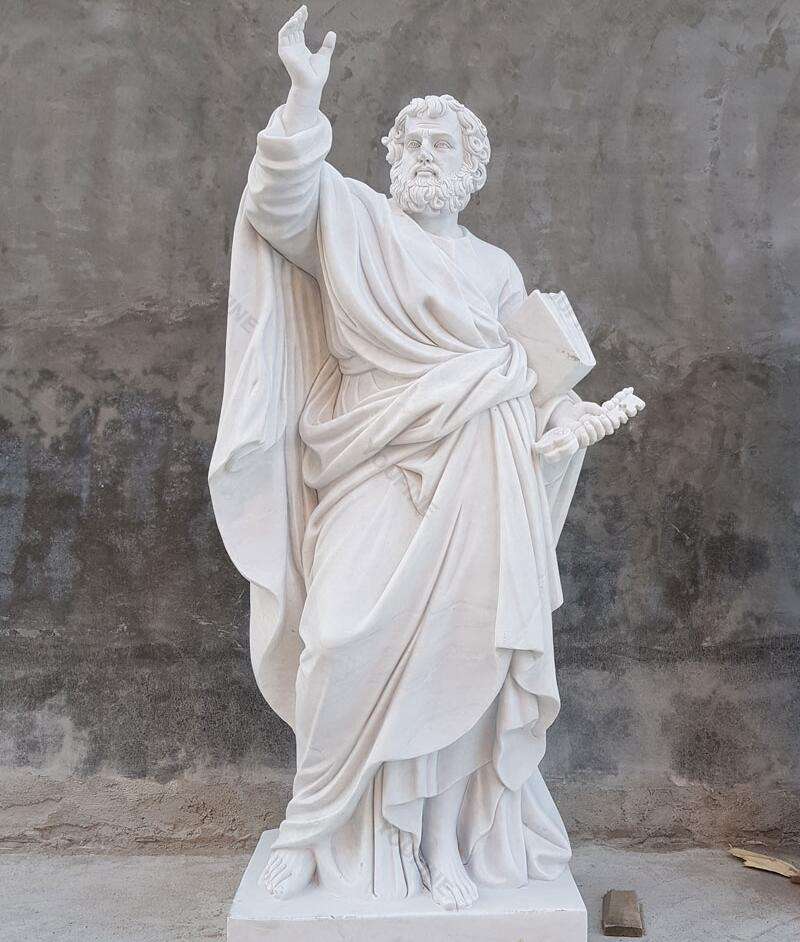
3.1 Saint Peter
Saint Peter is traditionally depicted holding keys, symbolizing the “keys to heaven.”
His statues are often placed at church entrances, representing authority and spiritual leadership.
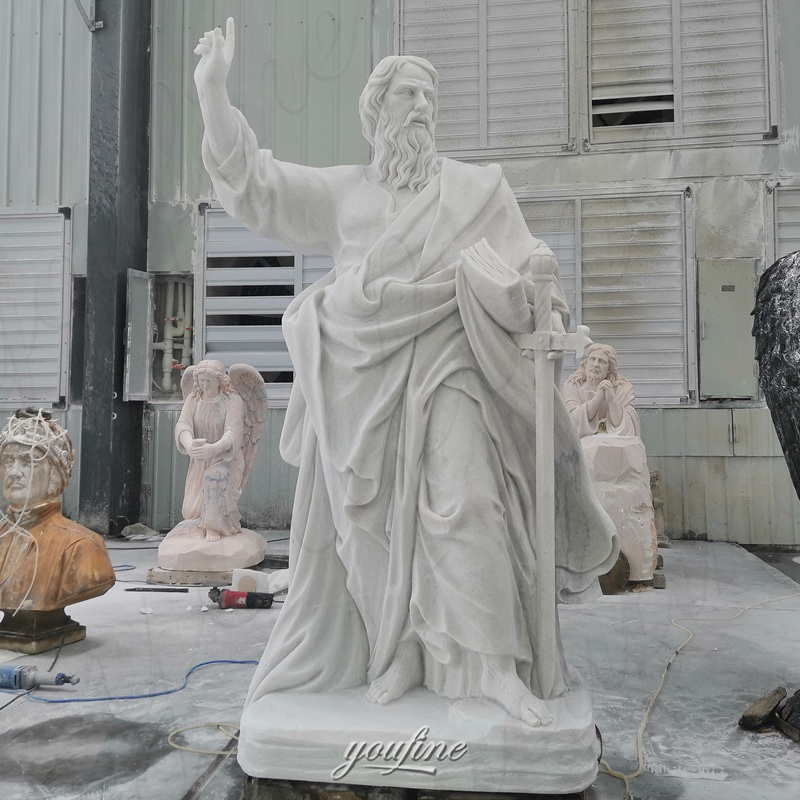
3.2 Saint Paul
Saint Paul is commonly shown holding a sword and a book, symbolizing his martyrdom and theological contributions.
He represents the spread of early Christianity and intellectual devotion.
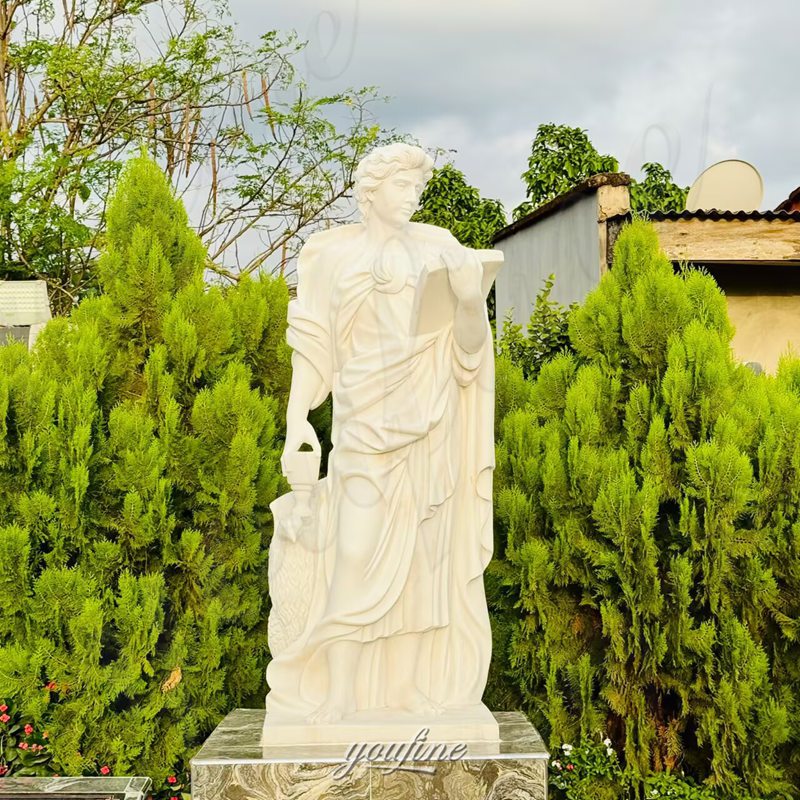
3.3 Saint John
Saint John is often portrayed as youthful and contemplative, symbolizing purity, vision, and divine revelation.
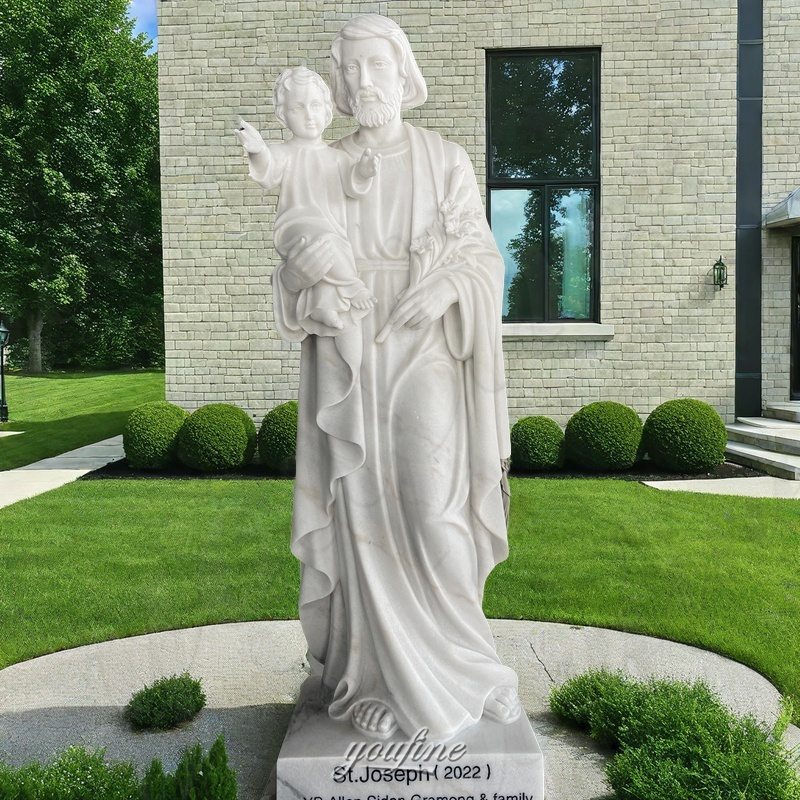
3.4 Saint Joseph
Saint Joseph represents family, protection, and responsibility. His statues are frequently used in churches and family-oriented religious spaces.
4. Famous Saint Sculptures That Became Artistic Masterpieces
Some saint statues are not only religious symbols but also milestones in the history of world art.
4.1 Saint Sebastian
Saint Sebastian is often depicted tied and pierced with arrows, representing endurance and faith under suffering. Renaissance artists used his figure to explore human anatomy and emotion.

4.2 Saint Patrick
Saint Patrick statues are widely found in Ireland and the United States, symbolizing missionary work and cultural identity.

4.3 Saint Dominic
Founder of the Dominican Order, Saint Dominic is often shown with a star above his head or holding a book, symbolizing wisdom and preaching.

4.4 Saint Anthony of Padua
Saint Anthony is known as the patron saint of lost items. His statues are common in both churches and private devotional spaces.

5. Saints Famous for Miracles and Devotion
These saints are associated with healing, visions, and miraculous events.
5.1 Saint Jude
Saint Jude is known as the patron saint of desperate cases. His statues are often found in places of prayer and hope.

5.2 Saint Bernadette
Saint Bernadette is linked to the Marian apparitions in Lourdes, France. Her statues reflect humility and spiritual vision.

5.3 Saint Catherine
Saint Catherine represents wisdom and intellectual faith, often shown with a wheel symbolizing her martyrdom.

6. Materials Used in Saint Statues Through History
Saint statues have been created using various materials, each offering a different artistic expression.
Marble: Classical, pure, and ideal for churches and sacred interiors
Bronze: Durable, powerful, suitable for outdoor monuments
Resin/Fiberglass: Lightweight, flexible, ideal for modern installations
The choice of material often influences the emotional tone of the sculpture.

7. Why Saint Statues Still Matter Today
Despite changing architectural styles and modern design trends, saint statues remain deeply relevant.
They are still widely used in:
- Churches and cathedrals
- Memorial gardens
- Private prayer spaces
- Public squares
- Educational and religious institutions
They continue to serve as spiritual anchors in physical space.

8. How to Choose the Right Saint Statue for Different Spaces
Choosing the right saint statue depends not only on the spiritual meaning, but also on the environment, scale, and visual focus of the space. Different saints naturally suit different architectural and landscape settings.
Space / Setting | Recommended Saint Statue | Why It Works | Suggested Style |
Church Entrance | Saint Michael / Saint Peter | Represents protection, authority, and spiritual guardianship at the threshold of sacred space | Large-scale marble or bronze, strong vertical composition |
Garden / Landscape | Saint Francis of Assisi | Symbol of harmony with nature, widely used in outdoor peaceful settings | Natural stone, bronze, or weather-resistant resin |
Memorial / Cemetery | Virgin Mary / Saint Joseph | Conveys compassion, comfort, and remembrance | Soft expressions, marble preferred for solemn tone |
Cathedral Courtyard / Plaza | Saint Paul / Saint Peter | Represents foundation of the church and spiritual leadership | Monumental bronze or classical marble |
Chapel Interior | Saint Teresa / Saint Catherine | Reflects devotion, contemplation, and inner spirituality | Detailed marble carving or refined resin finish |
Educational / Religious School | Saint Thomas / Saint Dominic | Symbolizes wisdom, learning, and teaching tradition | Balanced proportions, durable materials |
9. YouFine Custom Case: Archangel Saint Raphael Statue
One of the most representative examples of modern saint statue customization is the Archangel Saint Raphael project completed by YouFine.
Saint Raphael is often associated with healing, guidance, and protection. Because of its symbolic importance, many clients prefer a highly personalized interpretation when commissioning a statue.
In this project, the client provided an initial design concept with specific requirements for posture, facial expression, and overall spiritual feeling. Instead of directly moving to carving or casting, the process followed a traditional fine sculpture workflow:
- First, our sculptors created a clay model (mud prototype) based on the approved design
- The client reviewed and confirmed proportions, gesture, and symbolic details
- After final approval of the clay model, the statue moved into the casting stage
- Finishing, surface treatment, and patina were completed according to the intended artistic effect
This process ensures that every detail—from emotional expression to structural balance—matches the client’s vision before permanent production begins.
Such customization reflects a core principle in high-end religious sculpture today:
faith-inspired art must also be precision-crafted architecture in form.

Conclusion
Saint statues have endured for centuries not only as religious symbols, but as powerful expressions of art, culture, and human belief. From monumental church sculptures to intimate garden figures, each statue carries a story that connects faith with craftsmanship, and history with the present.
If you are planning a church project, a memorial space, or a private garden installation, choosing the right saint statue is more than a design decision—it is about creating a lasting spiritual presence within the space.
For custom designs, proportions, and artistic interpretation tailored to your project, professional sculpture craftsmanship can help turn your vision into a lasting work of sacred art.