Over the years, many of our clients have been drawn to one particular type of marble artwork—the veiled female bust. Whether placed in a quiet garden, an elegant villa entrance, or an indoor classical hall, this kind of sculpture always creates the same reaction: people stop, stare, and wonder how solid marble can appear as soft as a layer of transparent fabric.
That sense of impossibility is exactly what makes veiled sculpture so captivating. Beneath the delicately carved veil, the face remains visible yet partially hidden, creating a beauty that feels mysterious, refined, and almost alive. For centuries, veiled sculptures have been admired not only as decorative masterpieces, but also as one of the highest demonstrations of marble carving skill.
So what exactly is a veiled sculpture, why is it so difficult to create, and why do these statues continue to fascinate collectors around the world today?
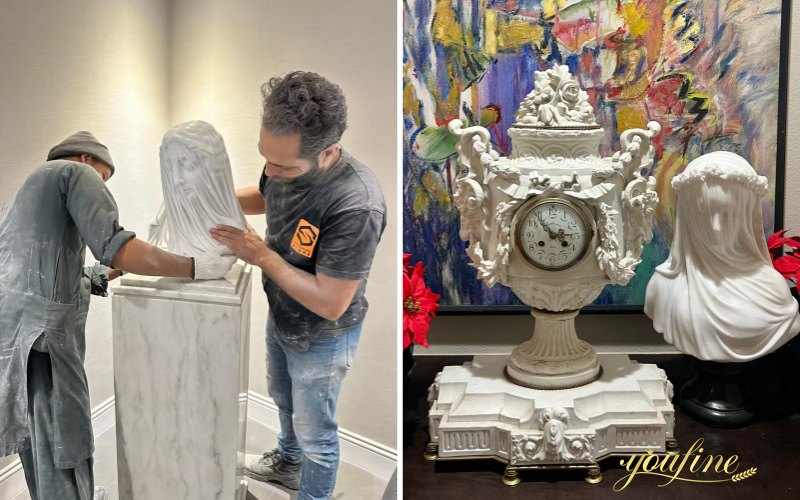
What Is a Veiled Sculpture?
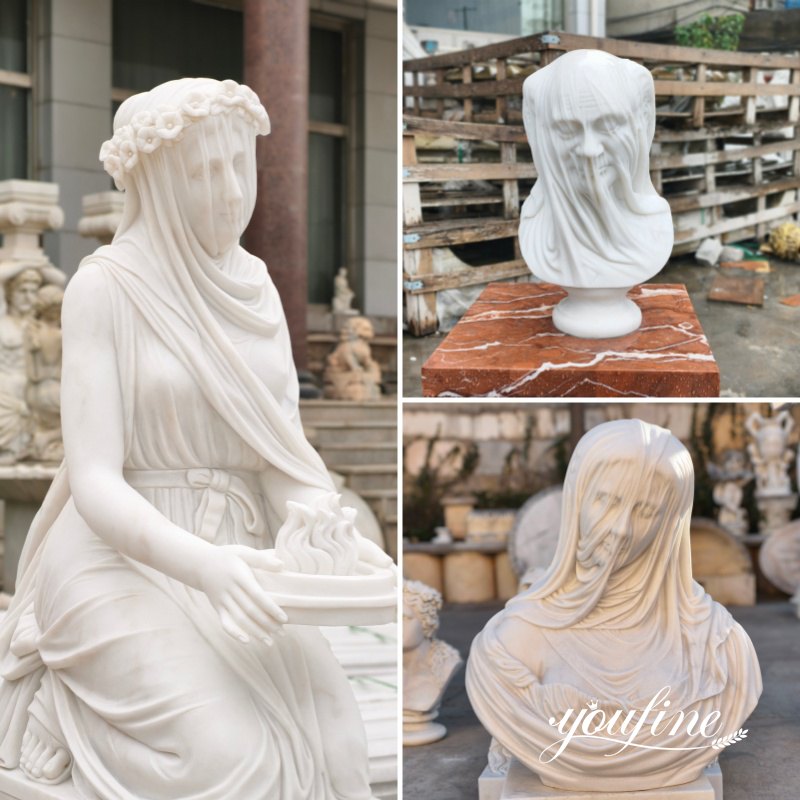
A veiled sculpture is a statue, most often carved from marble, in which a thin translucent veil appears to cover the subject’s face or body while still revealing the anatomical form beneath. Unlike ordinary draped figures, its purpose is not simply to represent clothing, but to create the illusion that rigid stone has been transformed into soft, transparent fabric.
In the academic study The Veiled Statuary: A Lesson from Sculpture to Vision Psychology, researchers describe veiled statuary as an “impossible challenge” in which opaque marble is made to appear light, elastic, and diaphanous. This optical illusion is precisely what defines the artistic fascination of veiled sculpture.
The sculptor must allow viewers to perceive two layers at once: the delicate veil itself and the human features beneath it. Lips, nose, eyelids, hair, and even subtle facial expressions remain visible, yet they are softened by the flowing surface above. The figure feels hidden and revealed at the same time, creating a sense of mystery and magical realism.
Because of this extraordinary combination of realism, illusion, and technical precision, veiled sculptures are widely regarded as some of the most sophisticated masterpieces in classical marble carving.
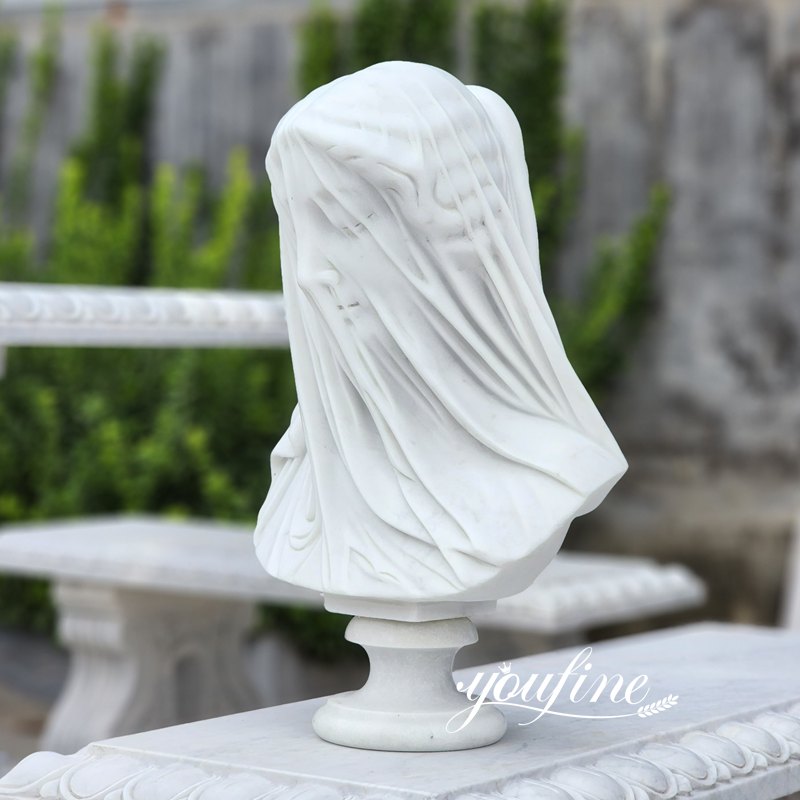
A Brief History of Veiled Sculpture
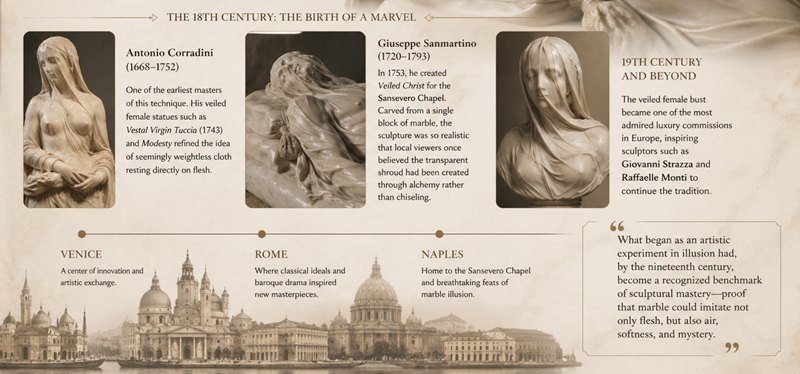
Although the symbolic use of veils can be traced back to ancient religious and funerary art, veiled sculpture did not become a true marvel of marble craftsmanship until the eighteenth century. It was in Italy—particularly Venice, Rome, and Naples—that sculptors began pushing marble beyond traditional drapery and toward a far more astonishing illusion: fabric so thin that the human form beneath remained fully perceptible.
One of the earliest masters of this technique was Antonio Corradini, whose veiled female statues such as Vestal Virgin Tuccia (1743) and Modesty refined the idea of seemingly weightless cloth resting directly on flesh. Art historians widely regard Corradini’s late works as the foundation of the veiled marble tradition that later inspired an entire generation of European sculptors.
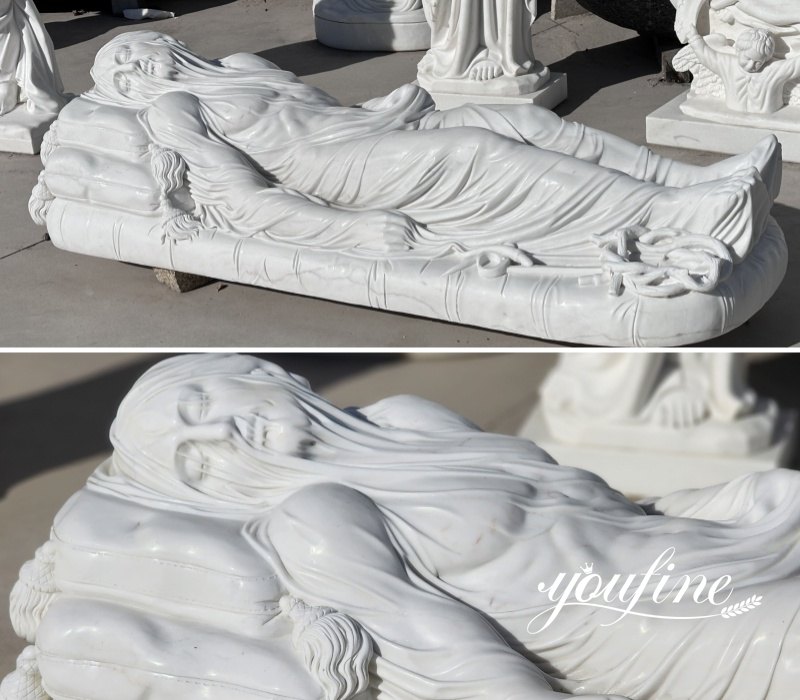
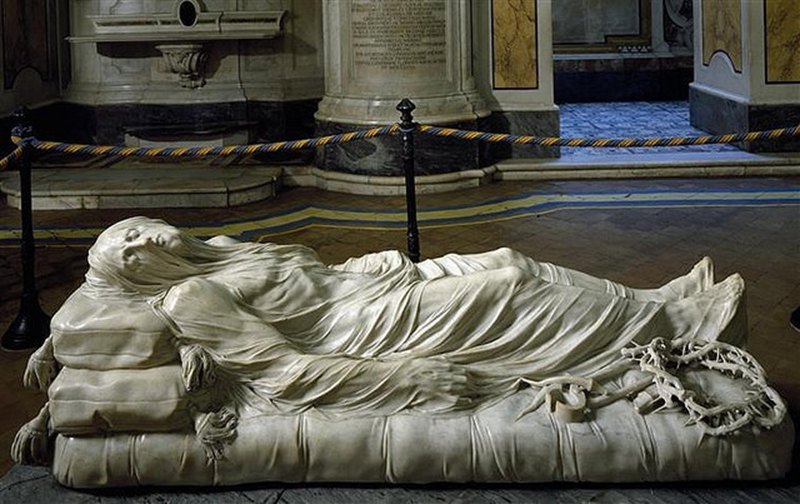
The technique reached its most legendary expression in 1753 with Veiled Christ by Giuseppe Sanmartino, created for the Sansevero Chapel. Carved from a single block of marble, the sculpture was so realistic that local viewers once believed the transparent shroud had been created through alchemy rather than chiseling. The museum itself still describes it as one of the most impressive artworks in the world.
By the nineteenth century, the veiled female bust had become one of the most admired luxury commissions in Europe, inspiring sculptors such as Giovanni Strazza and Raffaelle Monti to continue the tradition. What began as an artistic experiment in illusion had, by then, become a recognized benchmark of sculptural mastery—proof that marble could imitate not only flesh, but also air, softness, and mystery.
Why Is Veiled Sculpture So Difficult to Carve?
The beauty of a veiled sculpture lies in the fact that it looks almost effortless, yet it represents one of the most unforgiving challenges in marble carving. From the eighteenth century onward, artists such as Antonio Corradini became famous precisely because they could make solid stone appear weightless and translucent—a feat later art historians described as the “dematerialization” of marble form.
The first difficulty is structural. The veil must appear paper-thin, but the marble itself cannot actually become fragile enough to break. Sculptors therefore remove only minimal layers of stone, preserving hidden thickness while creating the visual impression of transparency. In masterpieces like Veiled Christ, the shroud was carved from the same single block as the body beneath, which is one reason viewers historically believed the veil had been created by alchemy rather than chiseling.
The second challenge is anatomical precision. Before the veil can be carved, every facial detail underneath—the eyelids, lips, cheekbones, and nose—must already be fully sculpted. The outer veil then has to soften these contours without erasing them, so the viewer can still sense flesh through stone. This is what gives veiled sculptures their haunting “hidden yet visible” realism.
The final challenge lies in surface control. If the folds are carved too heavily, the work simply looks like ordinary drapery. Masters such as Corradini gradually refined their veils to become thinner, smoother, and less voluminous so that light could glide across the marble and create the illusion of soft fabric resting on skin.
For this reason, veiled sculpture leaves almost no room for correction. As many modern viewers still remark when seeing these masterpieces, the effect feels physically impossible—as if the sculptor had somehow persuaded marble to behave like cloth.
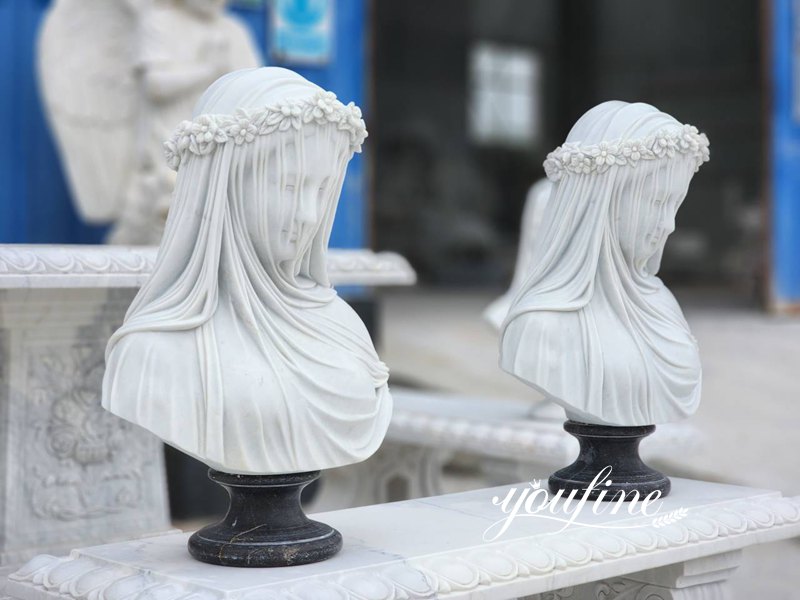
The Symbolic Meaning Behind the Veil
Part of the emotional power of veiled sculpture comes from symbolism. A veil is never just fabric—it is a boundary between what can be seen and what remains hidden. That tension gives these sculptures their mysterious presence.
In many works, the veil symbolizes purity and modesty, especially when covering female saints or idealized women. In other cases, it suggests spirituality, as if the figure belongs partly to this world and partly to another. Some veiled sculptures even carry a funerary meaning, representing the thin separation between life and death, body and soul.
What makes veiled sculpture so compelling is that it conceals beauty while simultaneously revealing emotion. The viewer can see the face, but never with complete clarity. This partial concealment invites imagination, which is why these sculptures often feel intimate, sacred, and untouchable all at once.
Famous Veiled Sculptures That Inspired the World
Several masterpieces have defined the global fascination with veiled marble art. Among them, three works stand above all others.
Veiled Christ
Perhaps the most famous veiled sculpture in history, Veiled Christ depicts the body of Christ lying beneath an impossibly transparent shroud. Every contour of the face and torso remains visible under the marble veil, creating a deeply moving image of sorrow and divinity. It is widely regarded as one of the greatest technical achievements ever carved in stone.
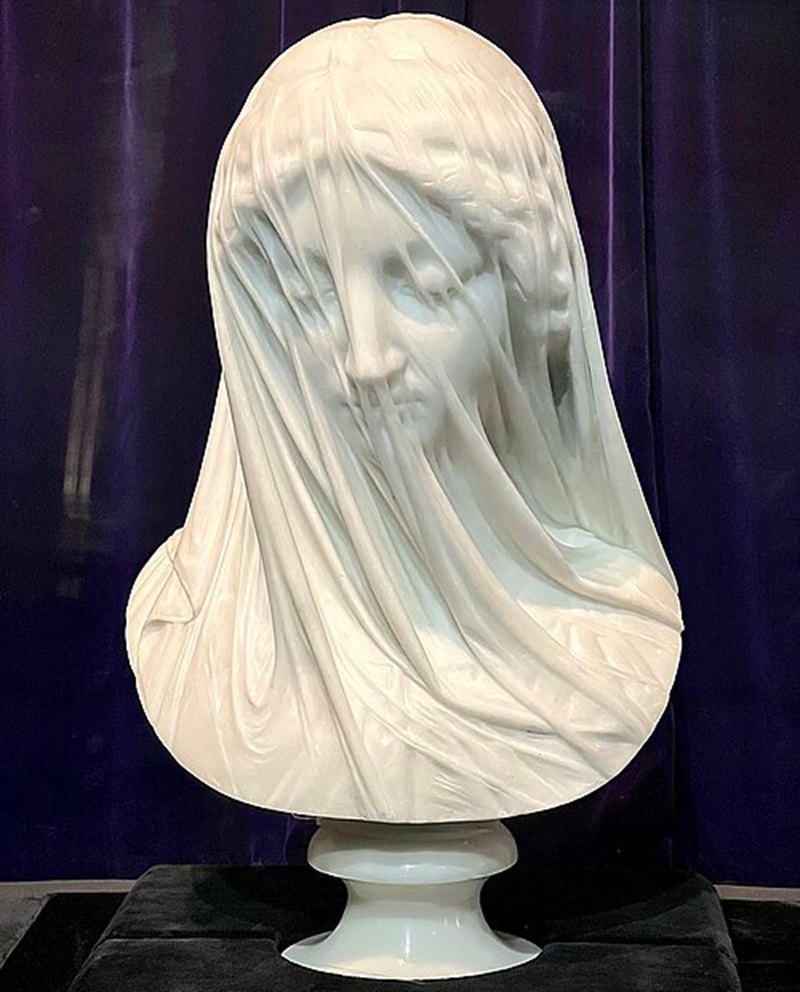
The Veiled Virgin
This nineteenth-century masterpiece presents the Virgin Mary with a soft veil flowing over her serene face. Unlike the dramatic emotion of Veiled Christ, this sculpture is admired for its quiet purity and extraordinary softness. The transparency of the marble makes the Virgin seem both human and ethereal.
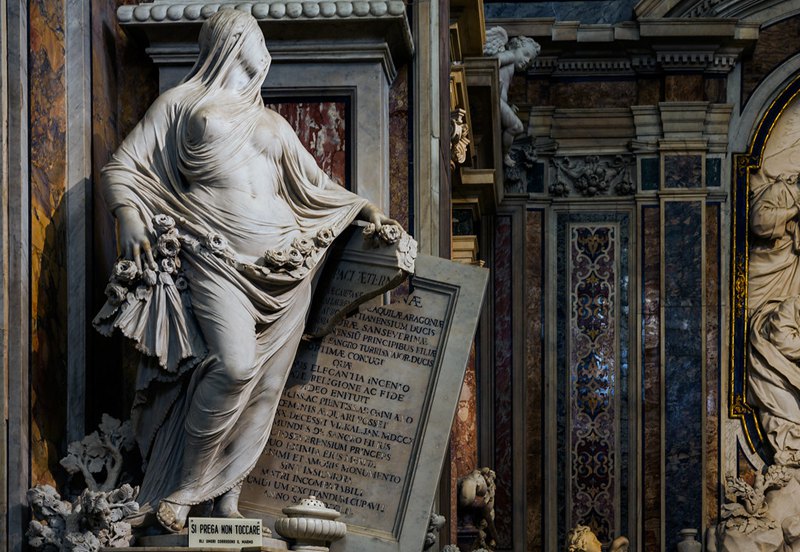
Modesty
Created by the Venetian sculptor Antonio Corradini, Modesty is one of the finest examples of the female veiled figure in European art. The veil clings delicately to the body while still maintaining elegance and restraint, perfectly expressing the symbolic relationship between beauty and concealment.
Veiled Nun
The Veiled Nun is another remarkable nineteenth-century work that demonstrates the refined technical evolution of veiled marble busts. The soft veil covering the face enhances the sculpture’s emotional depth, making it one of the most admired devotional figures in marble art.
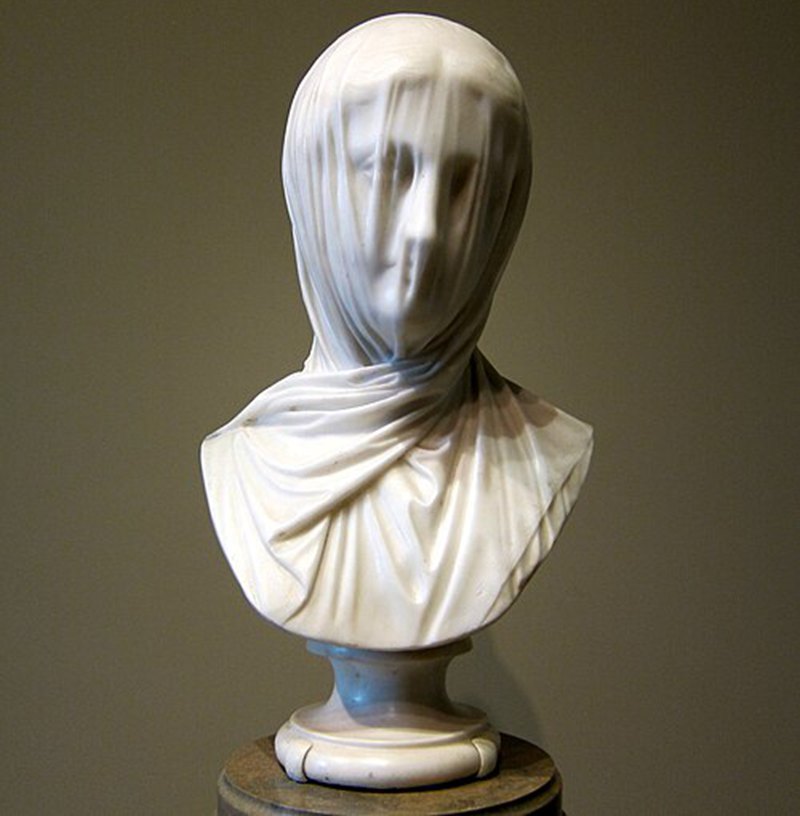
Veiled Lady (Raffaelle Monti)
Veiled Lady showcases the peak of nineteenth-century British-Italian sculptural refinement. Monti’s work is especially known for its extreme precision in rendering facial features beneath a nearly transparent marble veil, creating a striking optical illusion.
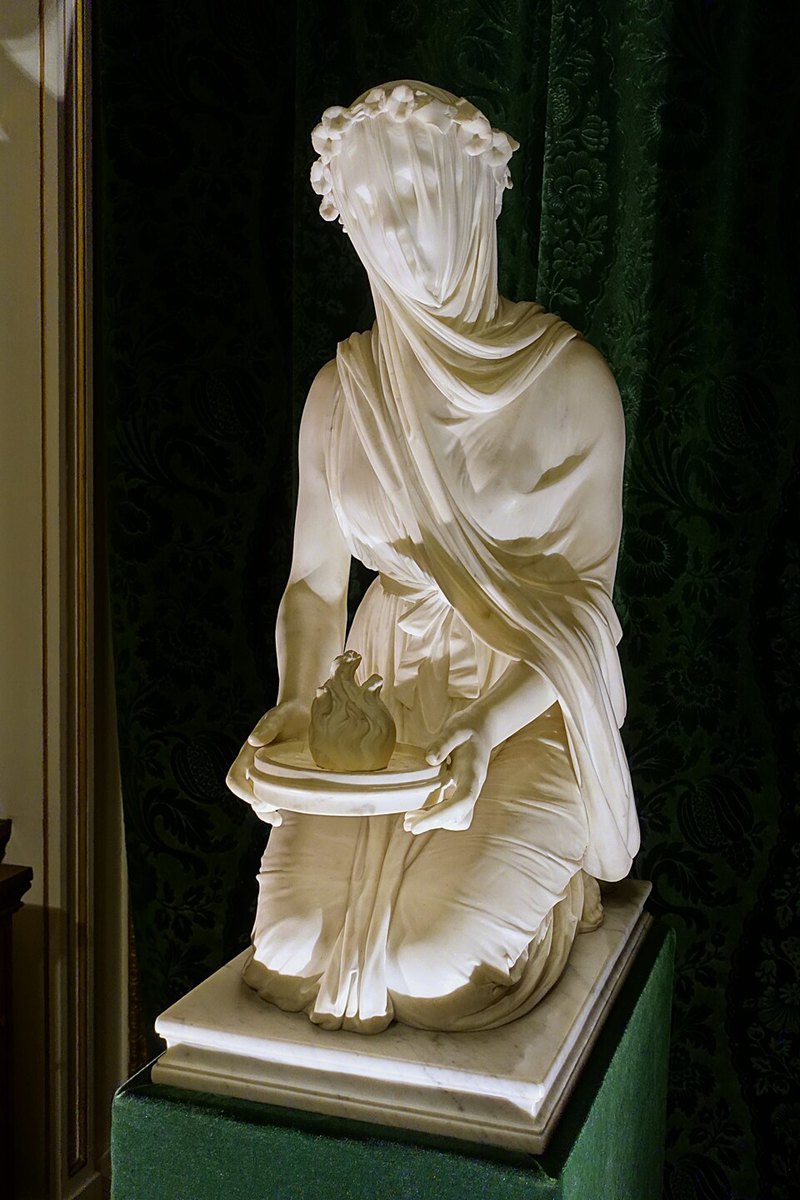
Faith
Faith represents a deeply spiritual interpretation of the veiled figure. The sculpture emphasizes emotional stillness and inner devotion, using the veil as a symbol of belief and transcendence.
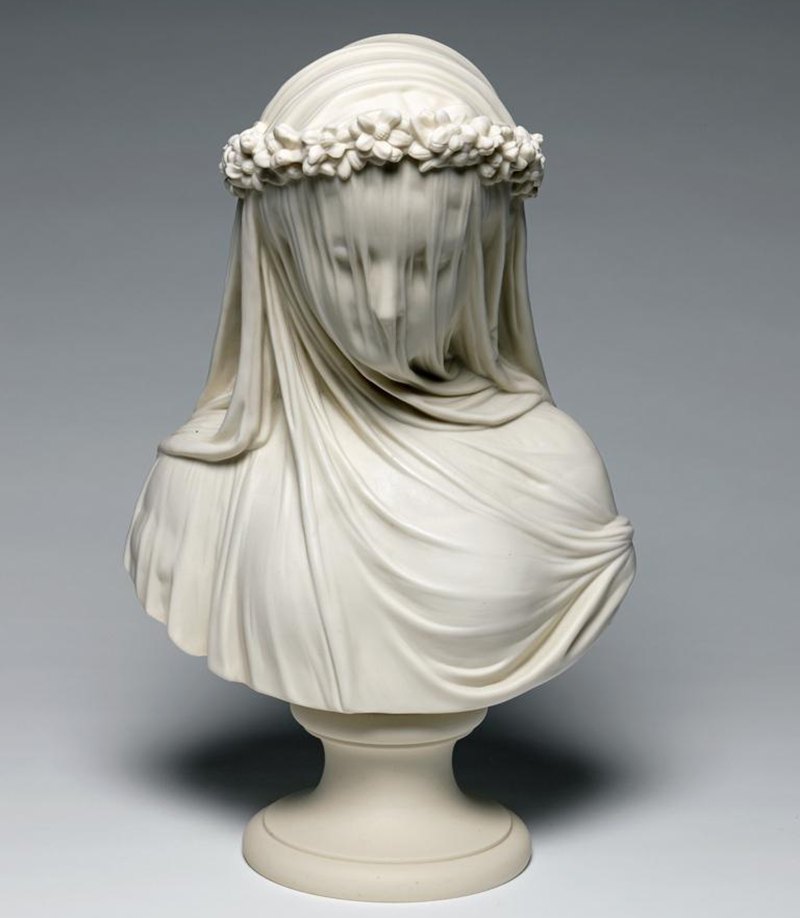
The Veiled Rebecca
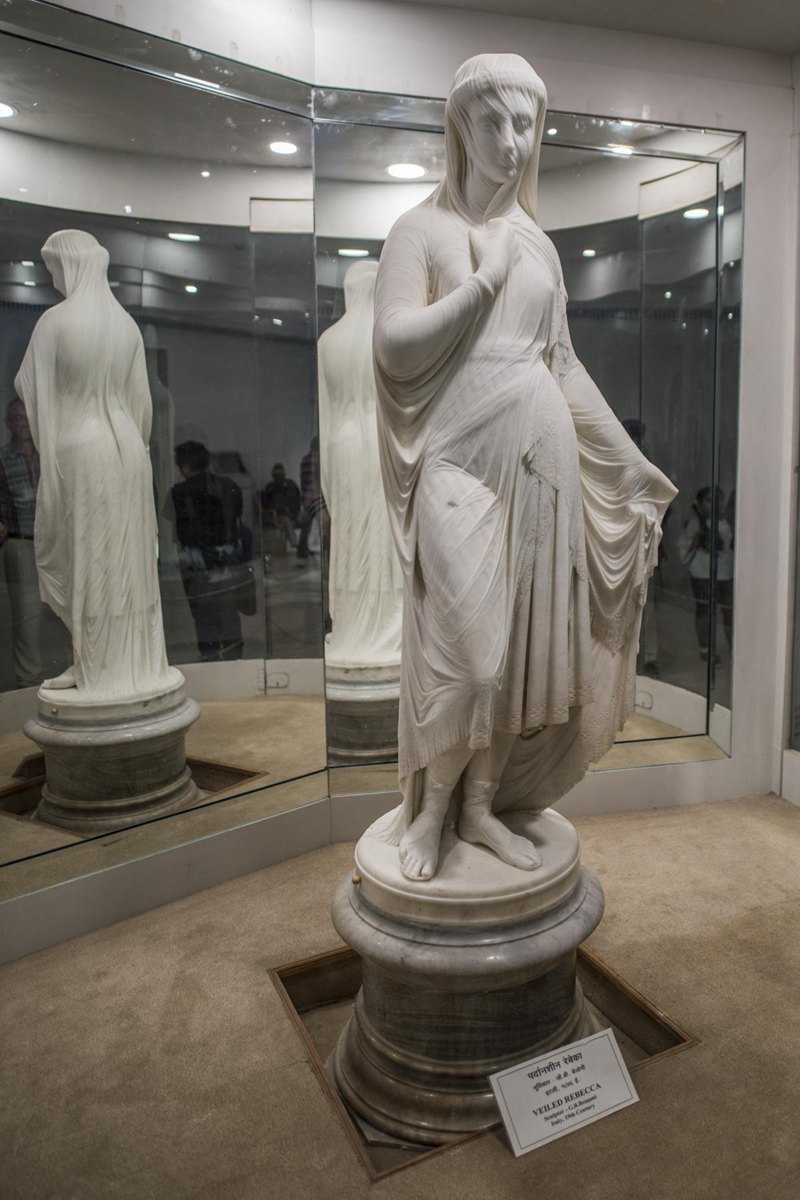
Veiled Rebecca is one of the most recognizable neoclassical veiled sculptures, depicting the biblical figure Rebecca with a finely carved veil that enhances both elegance and narrative symbolism.
These masterpieces proved to the world that marble could do far more than imitate flesh—it could imitate air, fabric, and emotion.
Can You Buy or Custom a Veiled Sculpture Today?
Although historical veiled sculptures are museum treasures, custom veiled marble sculptures are still commissioned today. Because they require exceptional hand-carving skill, they are considered premium works rather than ordinary decorative statues.
Collectors often order veiled sculptures as classical art reproductions, while churches and memorial projects choose them for their spiritual symbolism. Luxury homeowners may also commission veiled female busts or full statues as statement pieces for gardens, halls, and courtyards.
The key factor is choosing a workshop with true marble carving experience. Reproducing a convincing veil effect cannot be achieved by machine polishing alone; it depends on the sculptor’s understanding of depth, anatomy, and surface transitions. Professional marble studios such as YouFine, with experienced hand-carving masters, are able to recreate famous veiled masterpieces or develop custom veiled sculptures based on specific client requirements.
Conclusion
A veiled sculpture is far more than a demonstration of marble technique. It is a perfect union of hardness and softness, visibility and mystery, reality and illusion. Beneath a carved veil, stone seems to breathe, and that impossible transformation is what continues to leave viewers speechless centuries later.
Whether admired in a museum or custom carved for a private collection, the veiled sculpture remains one of the highest expressions of sculptural artistry ever created.