Bronze sculptures have been admired for thousands of years for their beauty, durability, and timeless value. From ancient civilizations to modern public art, bronze remains one of the most trusted materials for sculpture.
But have you ever wondered: how are bronze statues actually made?
In this guide, I will walk you through the complete process—from the first clay model to the final patina finish—based on over 40 years of hands-on experience in bronze sculpture production.
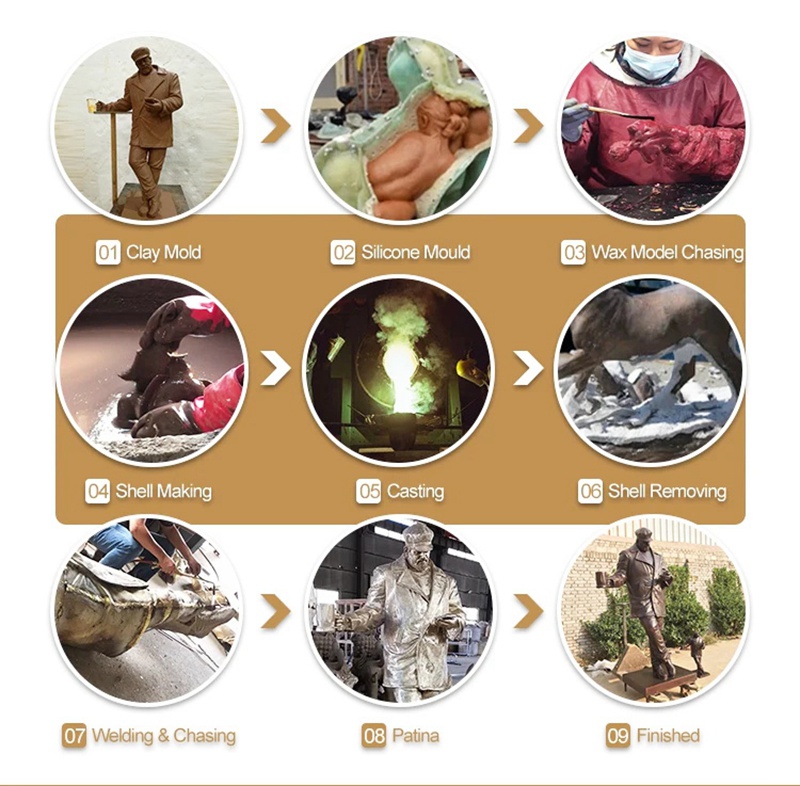
Overview of the Bronze Casting Process
High-quality bronze statues are typically made using the lost-wax casting method, a traditional technique that allows for exceptional detail and durability.
The process includes:
- Clay modeling
- Mold making
- Wax casting and refinement
- Shell building
- Bronze pouring
- Welding and polishing
- Patina coloring
- Surface protection
Each step plays a critical role in the final result.
Step 1: Creating a 1:1 Clay Model (The Artistic Foundation)
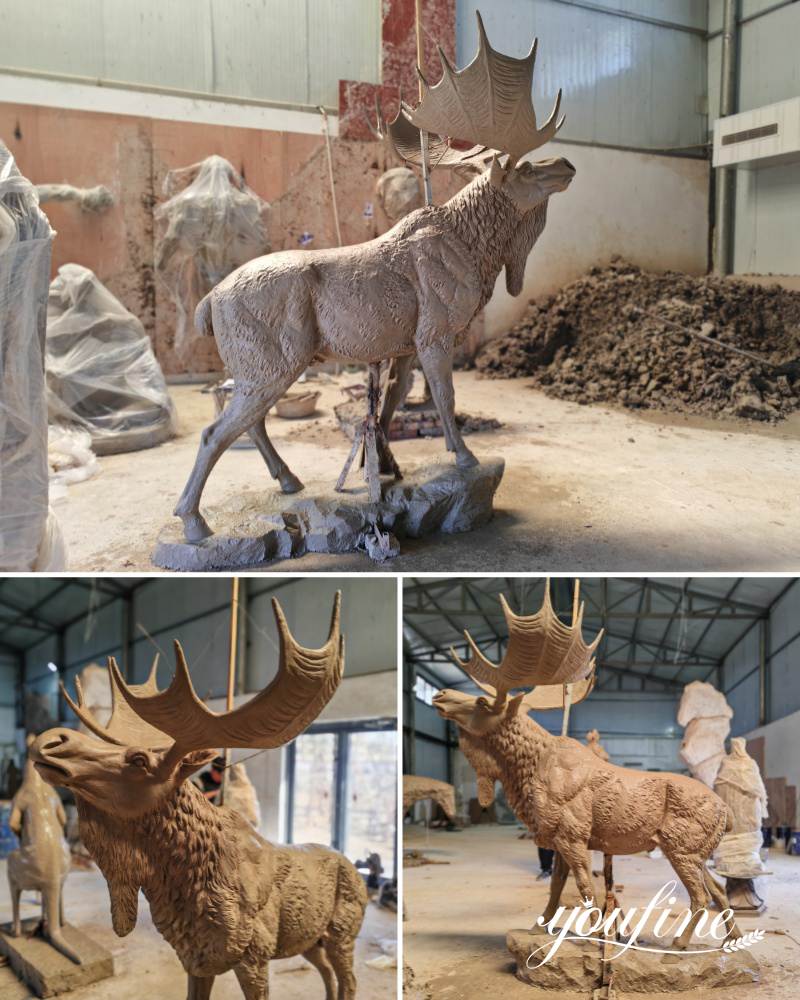
Every bronze statue begins with a full-scale clay model.
This is the most important artistic stage, where the sculpture truly comes to life. A skilled artist shapes the form, proportions, and fine details such as facial expressions, muscles, and movement. You could learn more: What is clay modelling?
At You Fine, our artists create a 1:1 clay model for every custom sculpture, ensuring accuracy and realism. With over 30 years of experience, our team continuously refines their techniques to achieve lifelike results.
Step 2: Making a Silicone Rubber Mold
Once the clay model is complete, a silicone rubber mold is created.
Liquid silicone is carefully applied over the entire surface of the sculpture. As it cures, it captures every detail—down to hair strands, skin texture, and subtle expressions.
This mold becomes the foundation for reproducing the sculpture accurately.
Step 3: Wax Mold Creation and Chasing
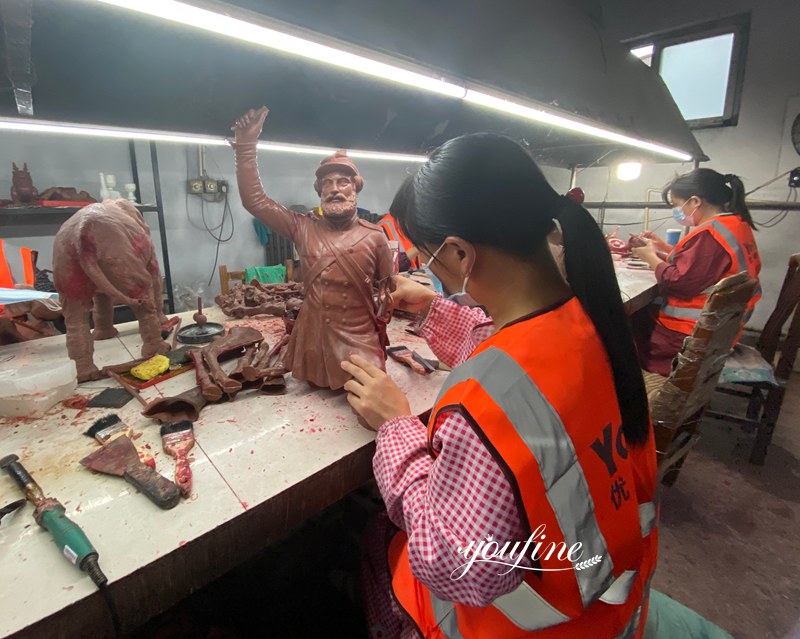
Next, molten wax is poured into the silicone mold to create a wax replica.
After the wax model is removed, skilled artisans refine it using tools such as carving knives and needles. This step, known as wax chasing, ensures that every detail matches the original design and client requirements.
Unlike machine production, this is a fully manual process that guarantees precision and artistic integrity.
Step 4: Shell Making (Investment Casting Process)
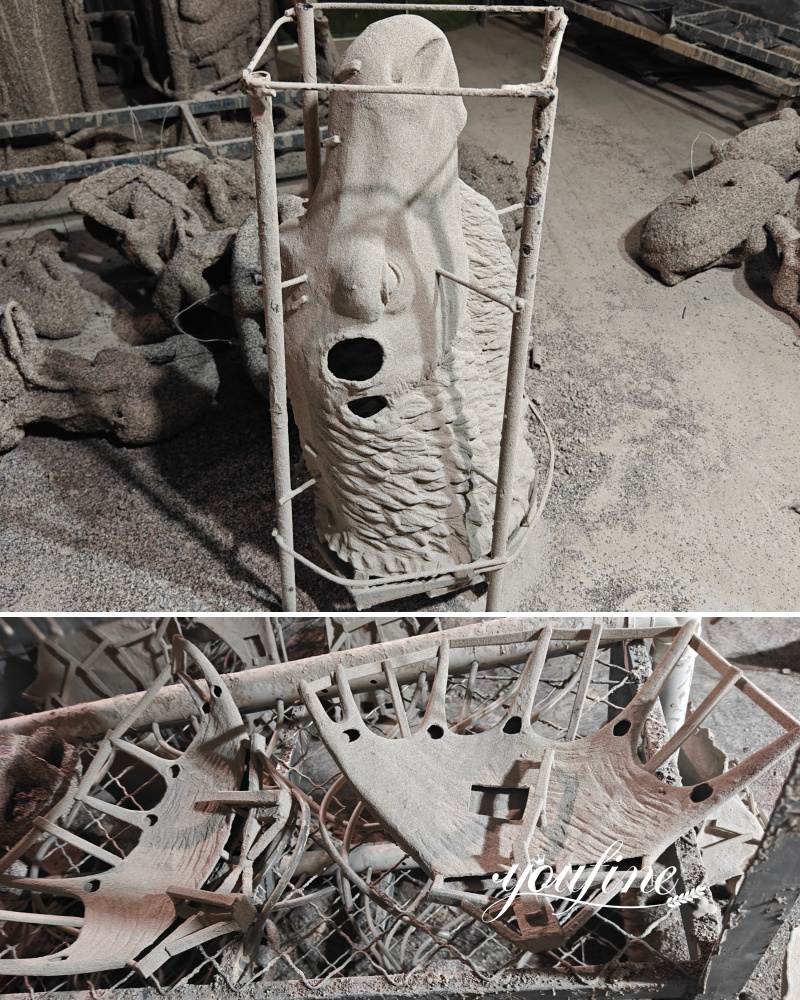
This stage transforms the wax model into a durable casting mold.
Fine Sand Coating
The wax model is repeatedly coated with fine sand and slurry to build a hard outer shell. The quality of sand is critical—finer sand results in a smoother bronze surface.
We use high-quality fine sand selected for its consistency, ensuring clean and detailed finishes.
Silica Sol vs Traditional Materials
Instead of traditional ammonia-based materials, we use silica sol, an advanced material with strong chemical stability.
This prevents common issues such as:
- White spots on the surface
- Corrosion after rain exposure
This difference significantly improves the long-term appearance of the sculpture.
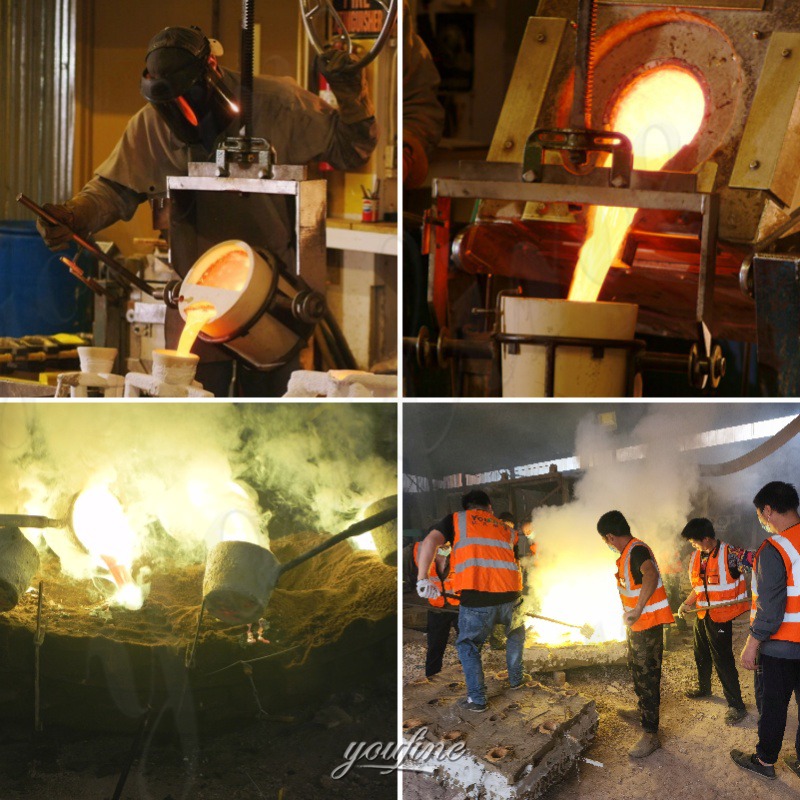
Step 5: Bronze Casting (Pouring Molten Metal)
The shell is heated, causing the wax inside to melt and drain out—this is why it’s called the lost-wax method.
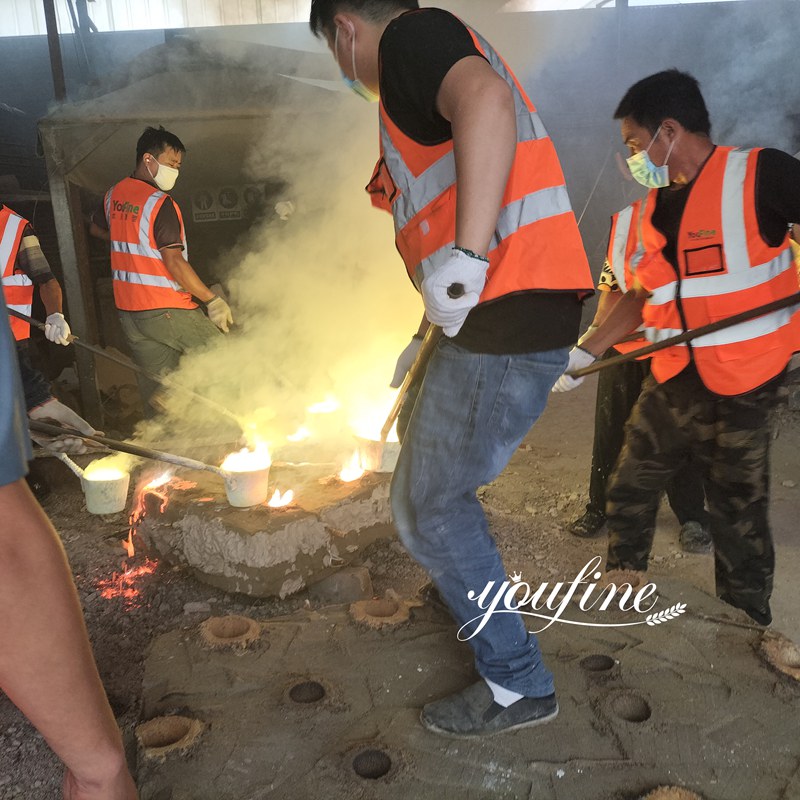
Molten bronze is then poured into the hollow cavity.
At You Fine, we use electric furnaces instead of traditional coal heating, allowing:
- More stable temperature control
- Cleaner and more environmentally friendly production
Once cooled, the shell is broken away to reveal the raw bronze form.
Step 6: Welding and Assembly
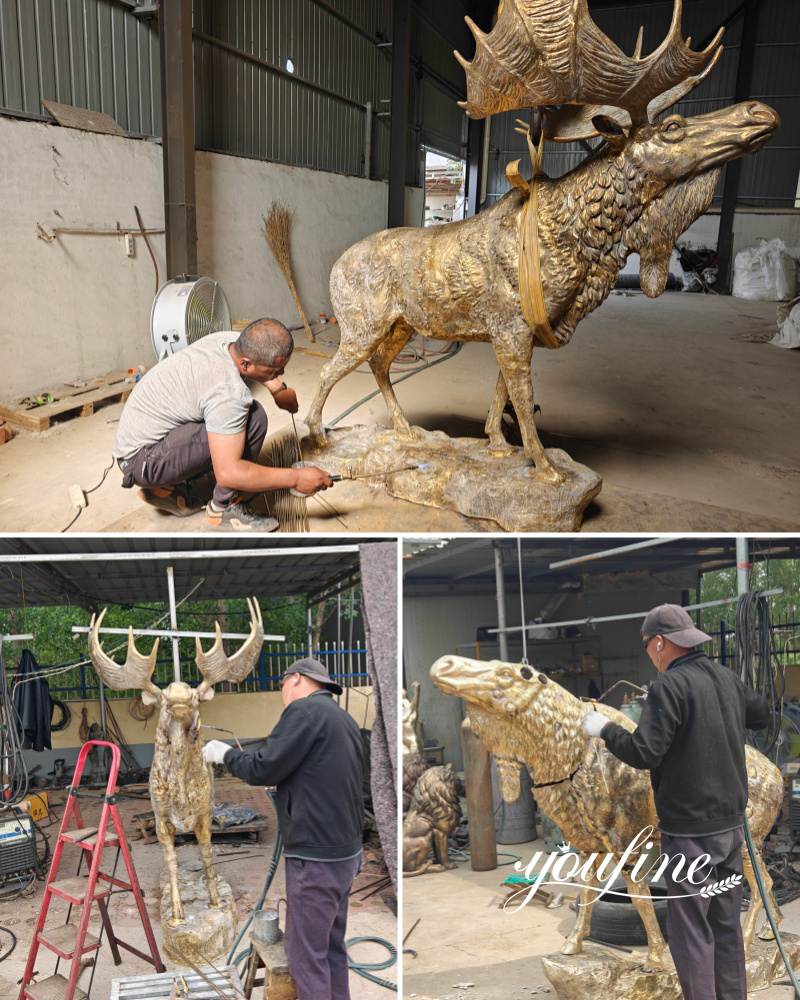
Large sculptures are cast in multiple sections and then welded together.
This step requires not only technical skill but also a deep understanding of the sculpture’s structure and proportions. Poor welding can distort the entire artwork.
Our welders carefully follow the original design to ensure structural accuracy and artistic consistency.
Step 7: Fine Polishing (Surface Refinement)
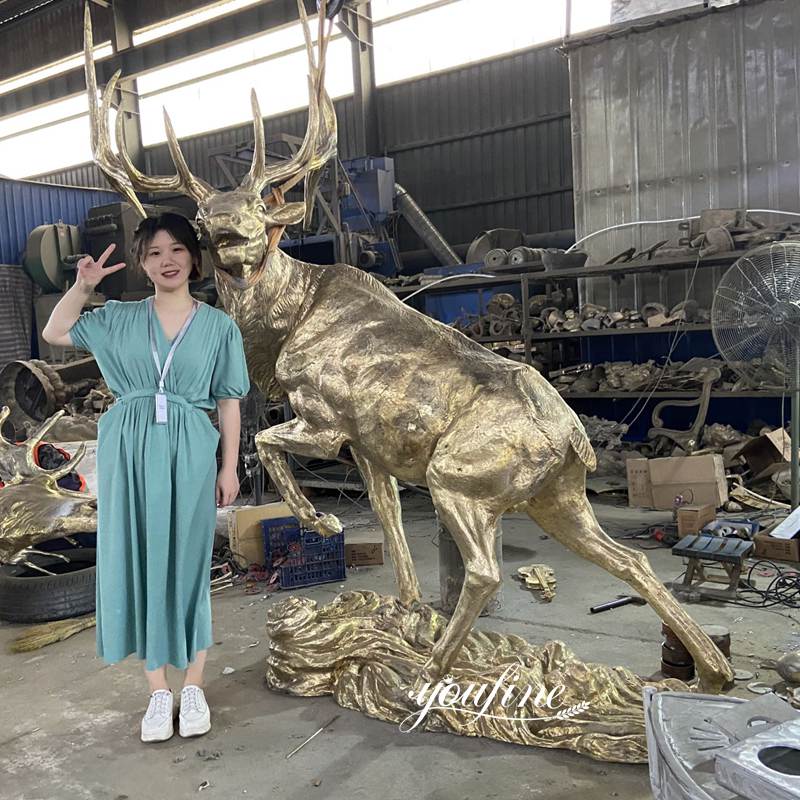
After welding, the sculpture undergoes detailed polishing.
This step must be handled with precision:
- Over-polishing can remove fine details
- Under-polishing can leave the surface rough
Our master craftsmen strike the perfect balance, preserving intricate textures such as hair and fabric while enhancing the overall finish.
Step 8: Patina (Coloring the Bronze)
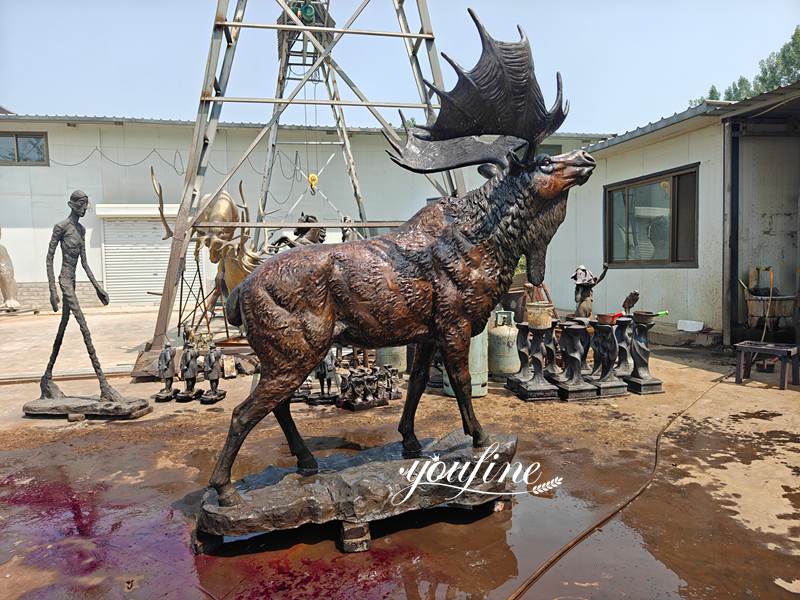
Patina is the process of applying color to the bronze surface using chemical solutions and heat.
By layering different treatments, artists can achieve a wide range of finishes, including:
- Classic brown
- Antique green
- Deep black
Unlike paint, patina becomes part of the metal surface. Over time, it develops a more natural and rich appearance rather than fading.
Step 9: Surface Protection and Maintenance
To protect the finished sculpture, a final coating is applied.
Wax Protection: Hot wax is applied and sealed onto the surface, forming a protective layer that enhances durability in outdoor environments.
Varnish Coating: A transparent varnish can also be used to create a smooth protective film against dust, moisture, and weather.
Both methods help preserve the sculpture’s beauty for many years.
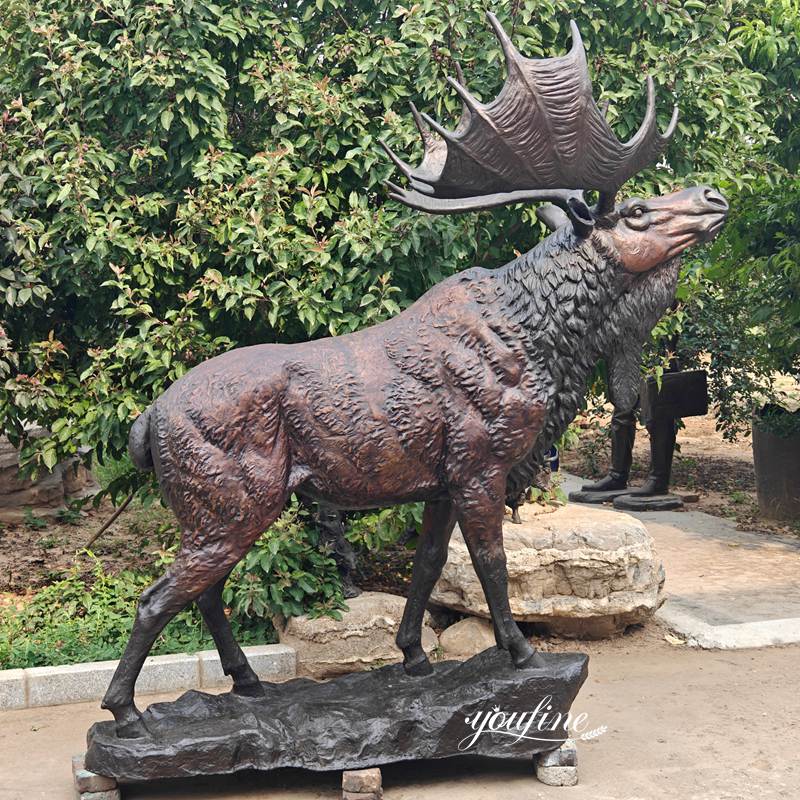
Why Craftsmanship Matters in Bronze Sculpture
Not all bronze statues are created equal. The final quality depends on:
- The skill of the artists
- The materials used (such as copper consumption, silica sol vs inferior alternatives)
- Attention to detail at every stage
At You Fine, we focus on high-end craftsmanship rather than mass production, ensuring each piece meets the highest standards of artistry and durability.
Conclusion
Creating a bronze statue is a complex process that combines art, engineering, and experience. From the first clay model to the final protective coating, every step contributes to the final masterpiece.
A well-made bronze sculpture is more than decoration—it is a lasting work of art that can be enjoyed for generations.
If you are looking for a custom bronze statue, working with experienced craftsmen makes all the difference.
FAQ
- How long does it take to make a bronze statue?
Depending on size and complexity, it typically takes 30–60 days.
Because of the labor-intensive process, skilled craftsmanship, and material costs.
- Do bronze statues rust?
No. Bronze does not rust like iron, but it develops a natural patina over time.
- Can bronze statues be customized?
Yes. Most sculptures can be fully customized in size, design, and color.
- How long does patina last?
With proper care, patina can last for decades and even improve in appearance over time.