From my experience working in the marble statue industry, I have learned that a useful carving estimate starts with the design—not just the height of the statue. A simple standing figure and a figure with layered clothing, delicate fingers, and an elaborate base can require very different amounts of work, even when they are the same size.
A marble statue with a conventional design generally takes about three weeks to one month to carve. However, I treat that as a starting point, not a promise for every order. The actual schedule depends on the statue’s dimensions, design complexity, stone quality, production method, and available workshop capacity.
It is also important to separate carving time from the complete order timeline. Design approval, marble selection, packing, shipping, customs clearance, and installation can all add time beyond the carving itself.
In this guide, I explain how to assess a realistic schedule, where machine assistance helps, and what I recommend confirming before ordering a custom marble statue.
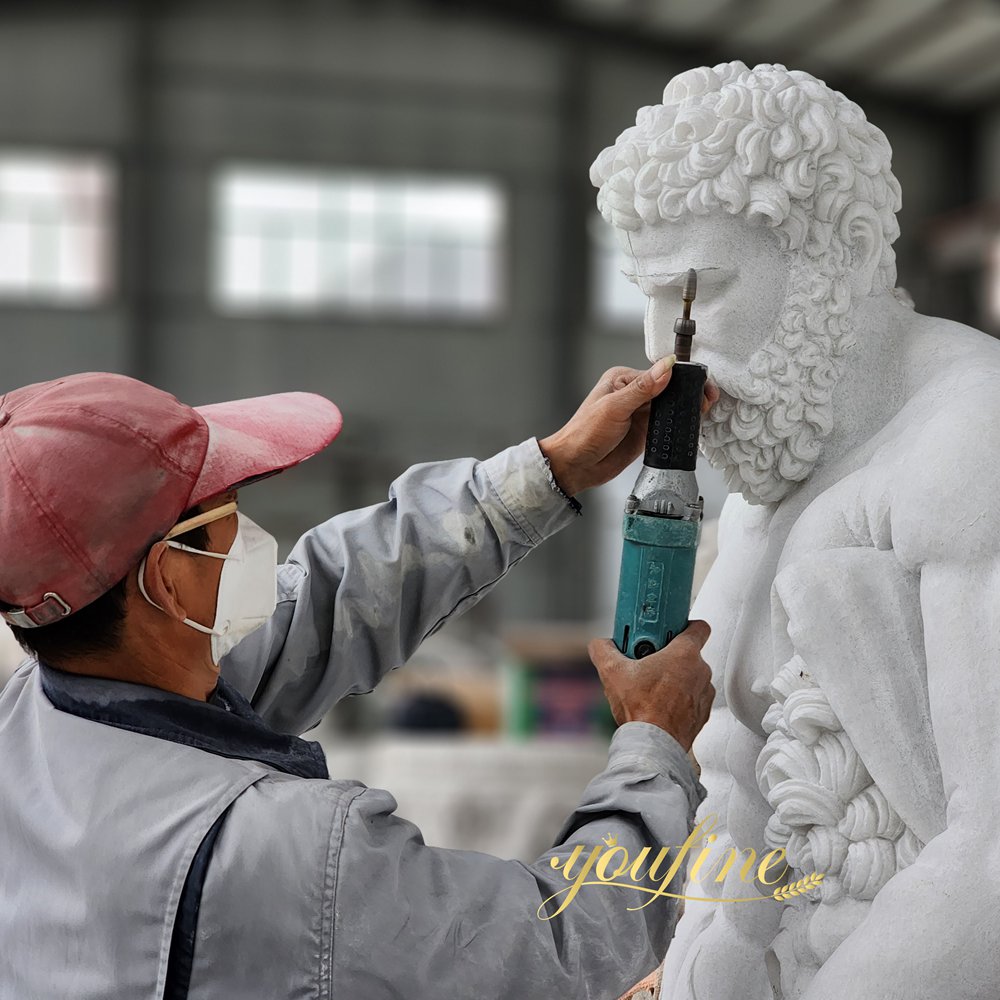
How Long Does It Take to Carve Different Types of Marble Statues?
I would not assign a fixed carving period based on size alone. Dimensions are a useful starting point, but they need to be considered alongside the design.
The three-week-to-one-month range is most useful for conventional designs after the main requirements are clear. Larger, more intricate, or technically demanding statues need an individual production estimate.
I use the following size categories to explain how the work changes, rather than to suggest guaranteed deadlines.
| Size Category | Estimated Carving Time | Typical Scope | What Influences Carving Time |
|---|---|---|---|
| Small or tabletop statue | 3–6 weeks. Basic pieces may take a few days to 1 week. | Compact figure, bust, or decorative piece | Fine details can take substantial time despite the small size |
| Medium-size statue | 1–2 months | Garden feature, pedestal figure, or interior sculpture | Pose, clothing, facial detail, and base design affect the schedule |
| Life-size statue | 2–4 months. Traditional hand-carving by a master sculptor can take 3–12 months. | Human figure at approximately natural scale | Anatomy, hands, expression, and viewing angles require careful refinement |
| Oversized or monumental statue | 6–12 months or longer | Large architectural or landscape feature | Block handling, structural planning, access, and complex carving can extend production |
My practical advice is to send both the intended dimensions and a clear reference image. “Life-size marble statue” is not enough information for a dependable estimate.
For example, a figure with its arms close to the body is different from one with an extended arm holding a separate-looking object. The second design may need more careful planning and support during carving. Likewise, a small portrait bust can be demanding if achieving a specific likeness is essential.
Does a larger statue always take longer?
Not necessarily. A larger statue usually involves more stone removal and handling, but a smaller sculpture with intricate ornament may require more detailed handwork.
I look at the combination of size, pose, detail, and finish. That combination gives a better indication of the schedule than height alone.
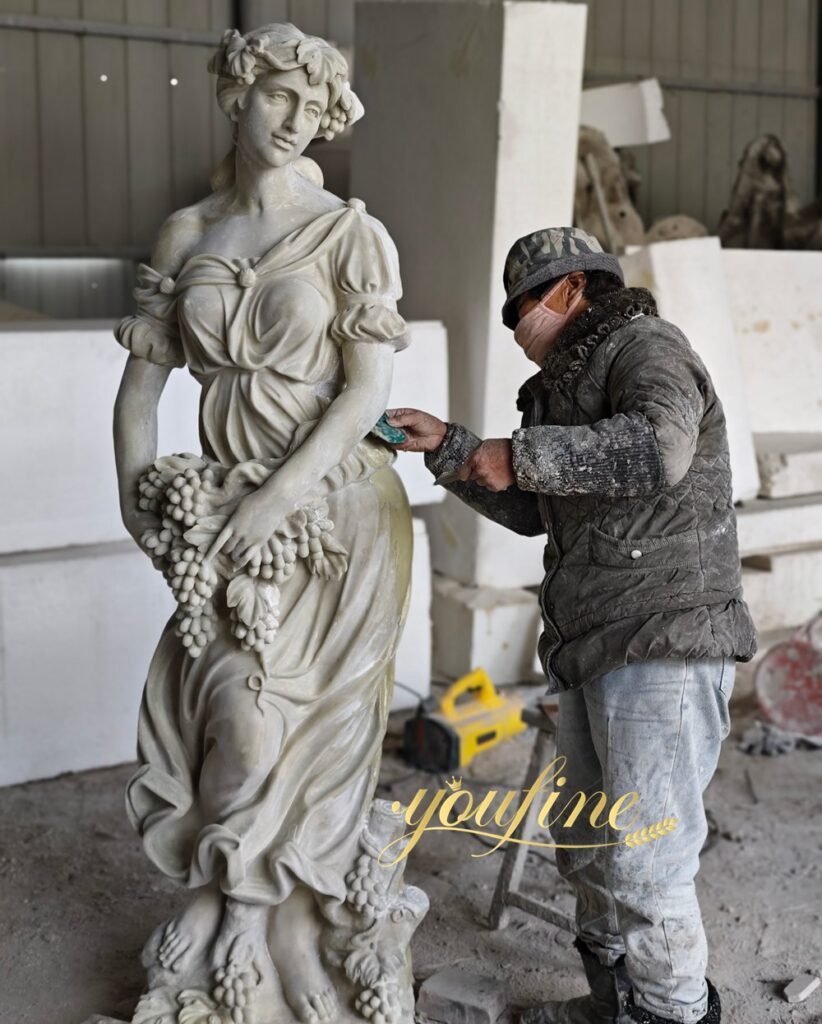
What Factors Affect the Time Required to Carve a Marble Statue?
When I discuss timing, I focus on the factors that change the actual work. These help explain why two quotations for apparently similar statues may include different production periods.
Size and Dimensions of the Statue
Height, width, and depth all matter. A tall, narrow statue is not equivalent to a wide composition with projecting wings, outstretched arms, or multiple figures.
The overall dimensions influence:
- The size of the marble block needed.
- The amount of stone that must be removed.
- How the block is lifted and positioned.
- Whether all carved areas can be accessed easily.
- How delicate sections must be supported during production.
I also recommend specifying whether the quoted height includes the base. A misunderstanding here can change the block requirement, proportions, and schedule after work has already been planned.
Design Complexity and Artistic Details
Complexity is often the most important reason a statue takes longer than expected.
Faces, hands, hair, deep clothing folds, floral ornament, and accurate portrait features require careful refinement. Undercutting—removing stone behind or beneath a feature to create depth1—can also demand more controlled work.
I recommend identifying the details that matter most before production begins. If facial likeness is the priority, say so. If the sculpture will be viewed mainly from a distance, explain that too. The intended viewing conditions help define the appropriate level of detail.
A clear design is not simply a photograph. It should also settle the pose, proportions, base, accessories, and any modifications to the reference.
Marble Type and Stone Quality
Marble is a natural material, so its internal structure is not perfectly uniform. Veins, fissures, and variations in the stone can affect how a block behaves during carving.2
A fissure is a natural separation within the stone. Its location matters, especially around thin or projecting features. A block that looks attractive in a photograph may still need closer assessment for a particular design.
I recommend choosing marble for both its appearance and its suitability for the sculpture. For background on material choices, see how many types of marble there are. If you are still deciding whether marble suits your project, why marble is used for sculptures provides useful context.
Hand Carving vs. Machine-Assisted Carving
From my experience, the important distinction is between creating the statue’s broad form and completing its artistic details.
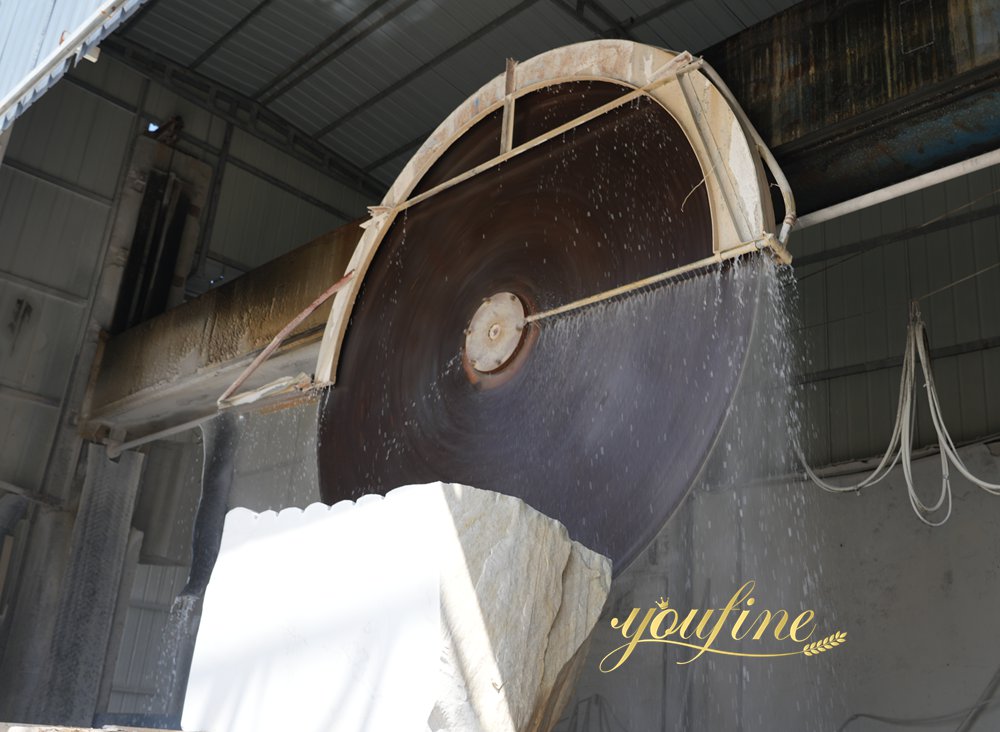
Machine assistance can remove excess material and establish the general shape. However, in the process discussed here, the fine details still depend on hand carving. The machine-cut form is not the finished sculpture.
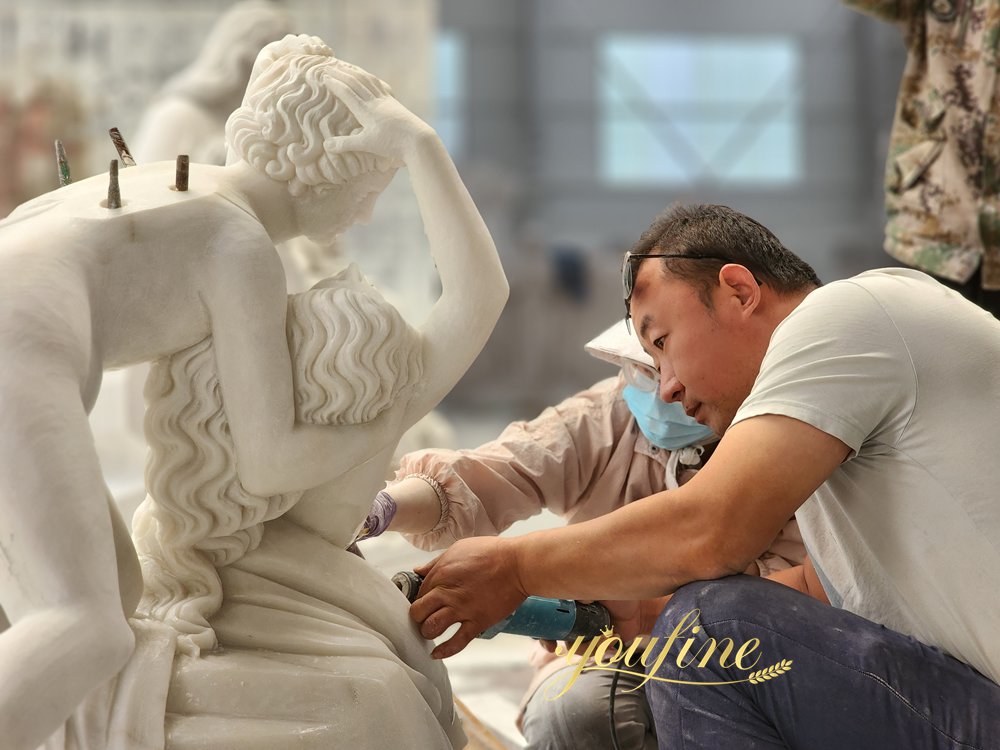
I would therefore be cautious about a production estimate that accounts only for machine cutting. Faces, fingers, clothing, edges, and surface transitions still need time for manual refinement.
Sculptor’s Experience and Workshop Capacity
A sculptor’s experience can influence how efficiently the work progresses, but experience does not eliminate the need for careful carving.
Workshop capacity is a separate issue. The time needed to make a statue and the time before a workshop can start it are not necessarily the same.
I recommend asking for both:
- The expected production start date.
- The estimated working period after that date.
Here is how I translate the main factors into useful purchasing questions.
| Factor | What to Clarify | Why It Matters |
|---|---|---|
| Dimensions | Height, width, depth, and base size | Defines the block and handling requirements |
| Design detail | Face, clothing, accessories, and ornament | Determines the amount of detailed handwork |
| Stone suitability | Marble choice and block condition | Reduces the risk of material-related disruption |
| Production method | Machine roughing and manual finishing scope | Shows what the schedule actually includes |
| Workshop capacity | Available start date and assigned resources | Separates queue time from carving time |
| Approval process | Review stages and response expectations | Helps prevent avoidable pauses |
My advice is to use these questions when comparing suppliers. A short lead time is only meaningful when the scope and starting point are clear.
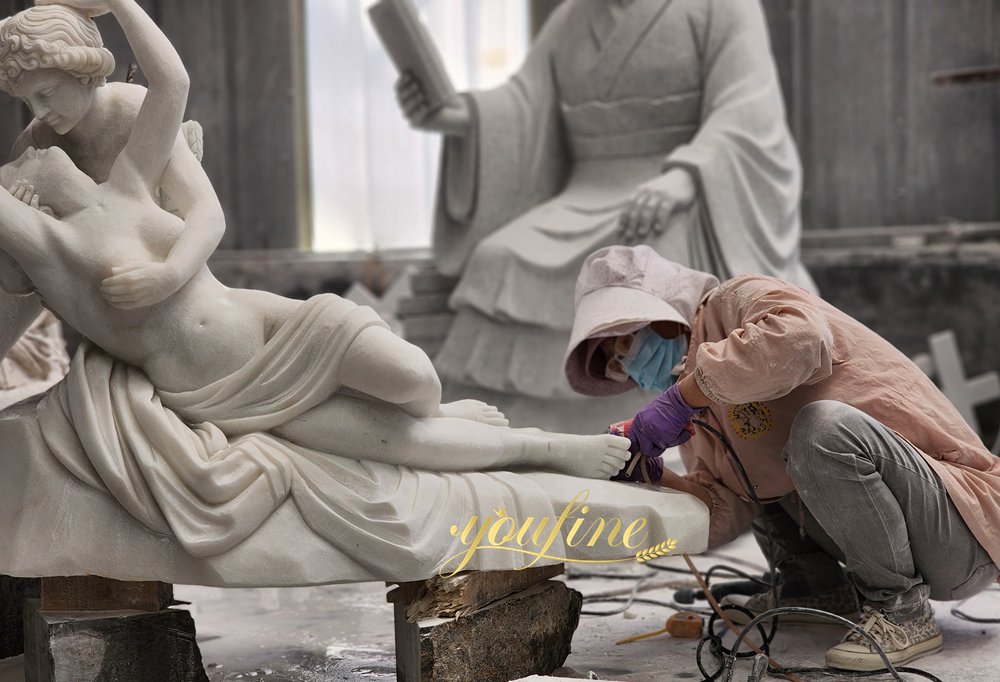
What Is the Complete Production Timeline for a Custom Marble Statue?
I recommend treating a custom marble statue as a sequence of approvals and production stages, rather than one uninterrupted carving period.
The stages below explain the complete manufacturing process. Their duration varies by project, so I would not divide the general three-week-to-one-month carving estimate into fixed daily allowances.
Design Confirmation
The first step is to agree on what will be made.
I recommend confirming the reference design, dimensions, pose, base, marble appearance, finish, and any inscription. For a custom figure, additional drawings, views, or a model may be needed to resolve the form.
Ask which design-development steps are included in the quotation. Do not assume that every supplier follows the same approval process.
Once the design is approved, later changes may affect both the price and the completion date.
Marble Selection
Next, a suitable block must be selected or sourced.
I would ask whether the proposed marble is already available and whether the actual block can be reviewed before carving. Color and veining should be understood as natural variations rather than perfectly repeatable patterns.
If a buyer requires a very specific appearance, material selection may take longer than it would for a more flexible specification.
Block Preparation
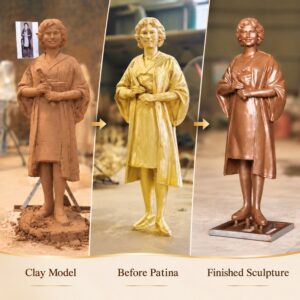
The selected block is prepared for carving. This can involve cutting it to a suitable working size, positioning it securely, and marking the sculpture’s proportions.
I consider this an important planning stage. The design must fit within the available stone, with attention to projecting details and the orientation of visible veins.
Rough Carving
Rough carving removes the main excess stone and establishes the sculpture’s overall shape.
This is where machine assistance can be particularly useful. The broad outline, major volumes, and general pose begin to emerge.
I would not evaluate artistic quality solely from photographs at this stage. A rough-carved statue is intentionally unfinished, and many important features have not yet been refined.
Detailed Hand Carving
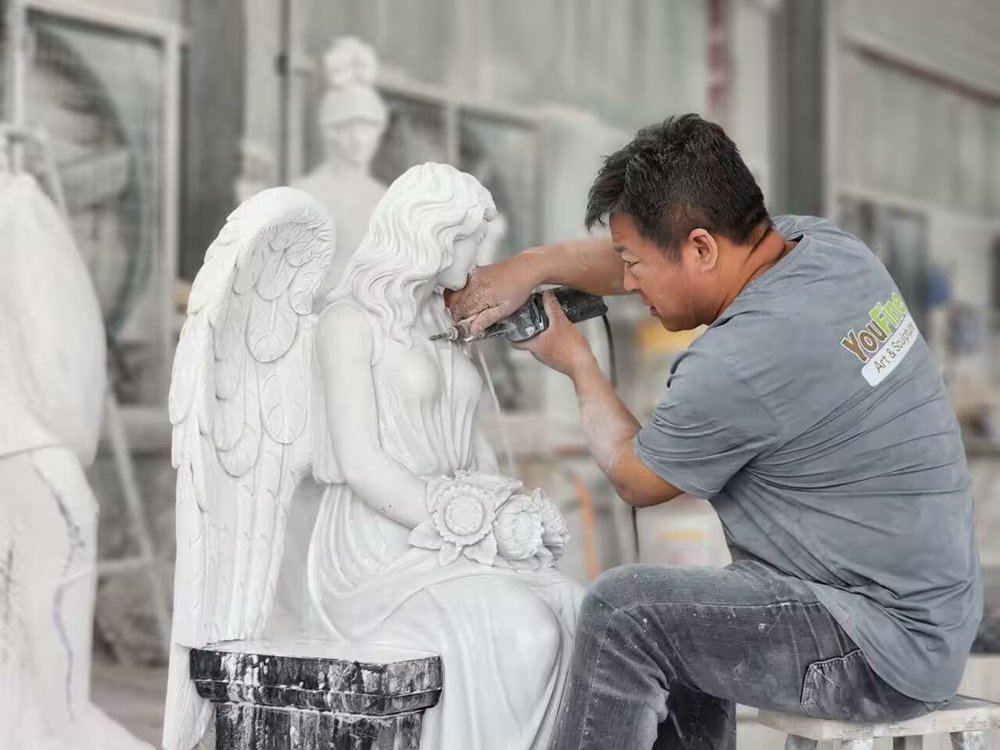
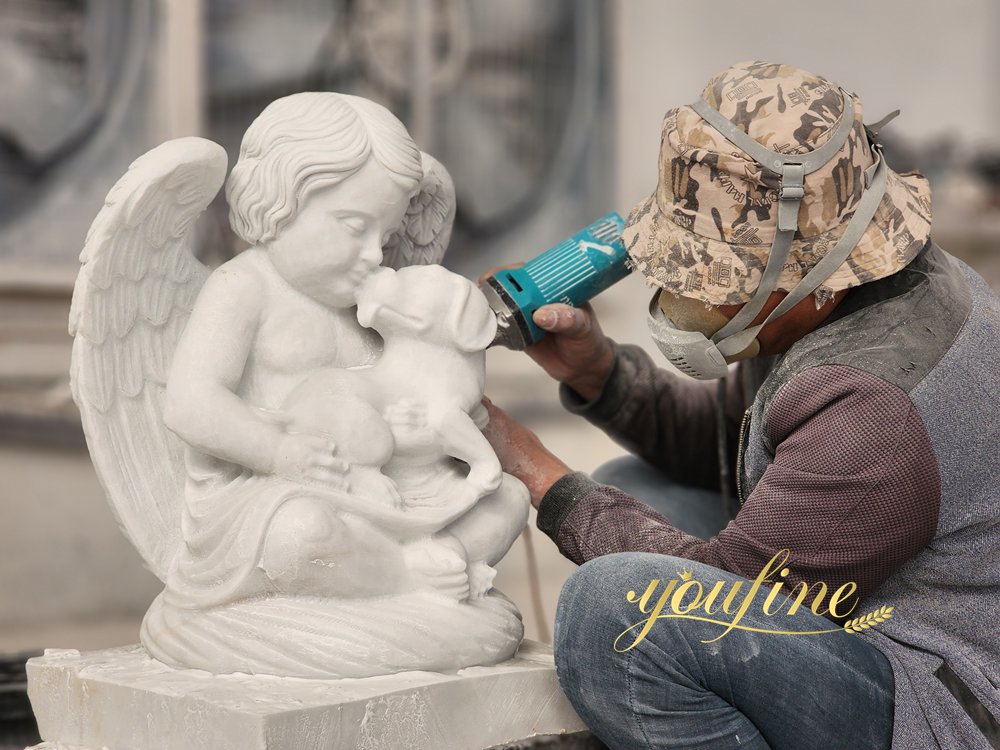
The sculptor then develops the anatomy, expression, clothing, hair, and decorative elements.
This is the stage I would protect most carefully when setting a deadline. It is not just about removing more stone; it is about controlling proportions, depth, transitions, and visual balance.
If progress reviews are agreed, feedback should distinguish between an actual design issue and a detail that has not yet been completed.
Polishing and Finishing
Finishing refines tool marks and creates the agreed surface appearance. It does not always mean a highly reflective polish.3
Some designs call for a soft, matte surface, while others benefit from polished areas or contrasting textures. I recommend approving the desired appearance early because it affects the finishing work.
| Finish | General Appearance | What I Recommend Confirming |
|---|---|---|
| Matte or honed | Smooth with limited reflection | Desired smoothness and treatment of fine details |
| Polished | More reflective surface | Which areas receive polish and the intended sheen |
| Textured or mixed | Different textures across selected areas | Exact locations and a reference for each texture |
The finish should support the design, not simply follow a default workshop preference.
Quality Inspection and Packing
Before packing, the statue should be checked against the approved requirements. Relevant checks include dimensions, visible carving details, surface finish, base contact, and any agreed installation provisions.
I recommend requesting final photographs from several angles and close-ups of vulnerable features.
Packing then needs to protect the statue from movement and pressure on delicate parts.4 The packing plan should reflect the actual sculpture, particularly if it has projecting arms, accessories, or thin edges.
For a broader explanation of the manufacturing sequence, read how marble sculptures are made from raw stone to a finished sculpture.
Where shipping fits into the schedule
I always advise buyers to confirm what “completion” means. Ready for inspection, packed for collection, and delivered to the project site are different milestones.
International transport, customs clearance, local delivery, unloading, and installation sit beyond the carving schedule. If the statue is needed for an opening ceremony or construction handover, planning should work backward from the required installation date.
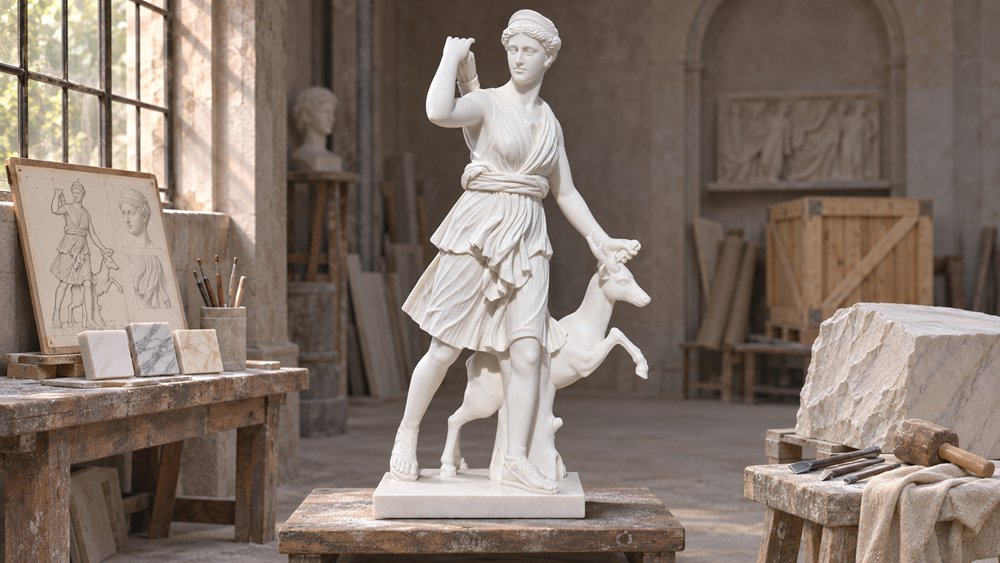
Can Machine-Assisted Carving Reduce Marble Statue Production Time?
Yes, machine assistance can reduce time spent on rough shaping.5 However, I would not describe it as a replacement for detailed hand carving.
The practical benefit is that a machine can establish the larger forms before the sculptor refines the surface and artistic features. This can make the early production stage more efficient, especially when an approved digital model is available.
Here is the distinction I recommend keeping in mind.
| Production Task | Role of Machine Assistance | Role of Hand Carving |
|---|---|---|
| Removing excess stone | Can speed up bulk removal | Completes areas requiring controlled access |
| Establishing broad proportions | Can follow an approved digital form | Checks and refines the resulting shape |
| Developing facial expression | Provides an initial form | Refines subtle features and transitions |
| Carving fine clothing details | Establishes larger folds | Adds depth, edges, and natural-looking detail |
| Final artistic refinement | Does not complete the full result in this process | Brings the sculpture to its intended appearance |
My main recommendation is to ask what happens after the machine finishes. A shorter roughing stage is useful only if enough time remains for handwork and finishing.
Machine preparation also depends on an accurate model or design file. If the design remains unsettled, machine assistance cannot remove that uncertainty.
How Can You Avoid Delays When Ordering a Custom Marble Statue?
From my experience, one of the most effective ways to avoid delays is to make the design as clear as possible at the inquiry stage.
A vague inquiry may produce an initial estimate, but it does not give the workshop enough information to plan a dependable schedule.
1. Prepare a complete inquiry
I recommend sending the following information together:
- Reference images, including side and rear views when available.
- Overall height, width, depth, and base dimensions.
- Required changes to the reference design.
- Preferred marble color and acceptable natural variation.
- Desired finish.
- Indoor or outdoor installation location.
- Delivery destination and site access conditions.
- Required arrival or installation date.
If an item is undecided, identify it openly. It is better to flag a pending choice than to let the quotation rely on an assumption.
2. Agree on approval points
I recommend asking when your input will be needed and who has authority to approve the work.
For commercial projects, conflicting feedback from several stakeholders can interrupt production. A single authorized contact can collect comments and send one clear decision.
Design revisions are easiest to resolve before stone removal begins. Once marble has been carved away, some changes may no longer be possible.
3. Plan delivery and installation early
Do not leave logistics until the statue is finished. I would confirm the packing dimensions, handling requirements, unloading method, and installation responsibilities while production is being planned.
I also recommend discussing long-term care when choosing the finish and location. The guide to how long marble statues last is relevant when considering placement and maintenance.
This table summarizes the delay risks I would address first.
| Potential Delay | Preventive Action |
|---|---|
| Unclear design | Submit references and written specifications together |
| Late design changes | Complete stakeholder review before approval |
| Pending marble choice | Confirm appearance and availability early |
| Slow feedback | Assign one approval contact and agree on review expectations |
| Unclear completion milestone | Separate carving, packing, dispatch, and arrival dates |
| Unprepared installation site | Confirm access, lifting arrangements, and base readiness |
The aim is not to remove every possible uncertainty. It is to resolve the decisions that are within the buyer’s control.
Why Choose YouFine for Custom Marble Statue Carving?
For a custom marble order with You Fine Art Sculpture, I recommend starting with a project-specific discussion rather than relying on a general lead-time claim.
The approach I emphasize is straightforward: clarify the design, assess the dimensions and details, and explain the difference between machine roughing and hand finishing. These are the foundations of a useful production estimate.
I would also encourage you to evaluate YouFine—or any prospective supplier—through the same practical questions:
- Does the quotation describe the approved design clearly?
- Is the production start date distinguished from the carving period?
- Is the hand-carving scope explained?
- Are progress reviews and final approval arrangements defined?
- Are packing, delivery, and installation responsibilities clear?
My recommendation is to choose based on the clarity of these answers, not simply the shortest promised deadline. For a custom statue, a schedule that accounts for the real work is more useful than an attractive estimate with unclear exclusions.
FAQs
1. Can a marble statue be carved in two weeks?
Two weeks is shorter than our usual estimate of three weeks to one month for a conventional design. I would only confirm a shorter schedule after reviewing the dimensions, details, stone availability, and workshop schedule.
2. Does the carving estimate include shipping?
I recommend assuming nothing until the quotation defines it. Carving time normally describes manufacturing work, while packing, transport, customs clearance, and site delivery are separate activities. Ask for each milestone to be identified.
3. Can I change the design after carving starts?
Some adjustments may be possible, but others are limited by the stone already removed. I recommend settling the pose, proportions, and major details before carving begins. Any later change should be assessed for feasibility, additional work, and schedule impact.
4. Is a fully hand-carved statue always better than a machine-assisted one?
I would not judge quality by that label alone. Machine-assisted roughing can be part of a careful production process. The important questions are how the design is interpreted, how much refinement follows, and whether the finished sculpture meets the approved requirements.
5. What should I send to get an accurate lead-time estimate?
I recommend providing reference images, dimensions, customization details, marble preferences, finish requirements, and the delivery destination. Include your required arrival date and explain whether it is flexible or tied to a fixed event.
Final Summary: Plan Around the Complete Project
A conventional marble statue generally takes about three weeks to one month to carve, but size and design complexity can change that estimate. I recommend treating this range as an initial guide until the actual sculpture has been reviewed.
Machine assistance can speed up the broad shaping stage. Detailed hand carving remains essential to the finished result in the process described here.
For a dependable schedule, my advice is to confirm the design early, establish approval points, and separate carving completion from packing, shipping, and installation.
Discuss Your Marble Statue With YouFine
If you are planning a custom marble statue, send You Fine Art Sculpture your reference images, dimensions, preferred marble appearance, and required delivery date. I recommend including the details you want changed and any decisions that are still open. A clear inquiry is the best starting point for a realistic production discussion.