Marble has been one of the most admired natural stones for thousands of years, widely used in architecture, interior design, and especially sculpture. From ancient statues to modern luxury installations, marble continues to be a symbol of elegance, durability, and artistic expression.
A common question many buyers, designers, and architects ask is: how many types of marble are there?
The answer, however, is not as simple as a single number.
In general, marble can be grouped into 6 to 10 main categories based on color and characteristics, but globally, there are over 100 to 200+ named marble varieties. These variations come from differences in quarry locations, mineral composition, veining patterns, and colors.
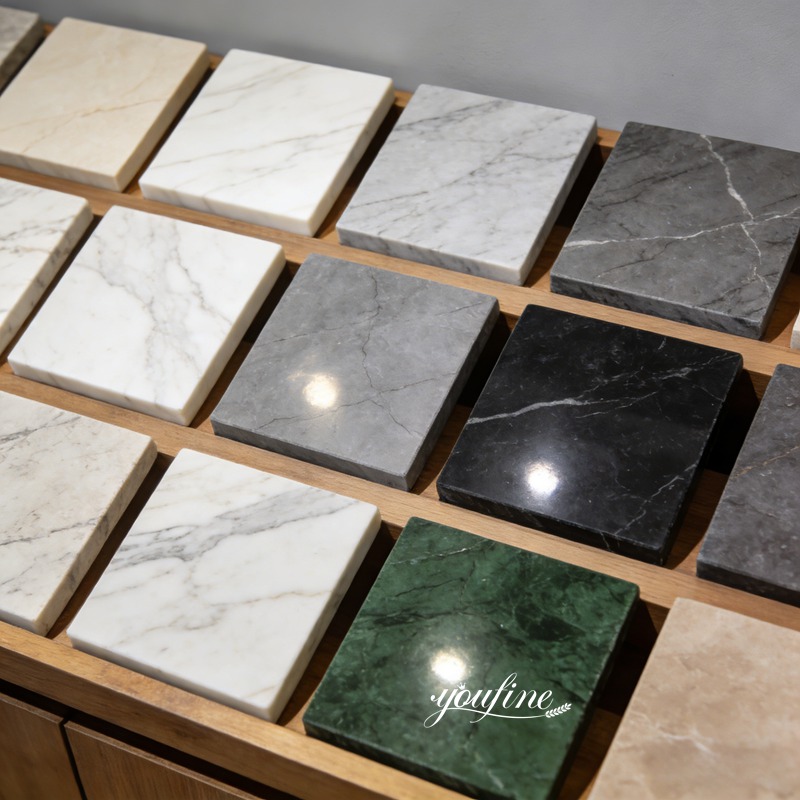
Why There Is No Exact Number of Marble Types
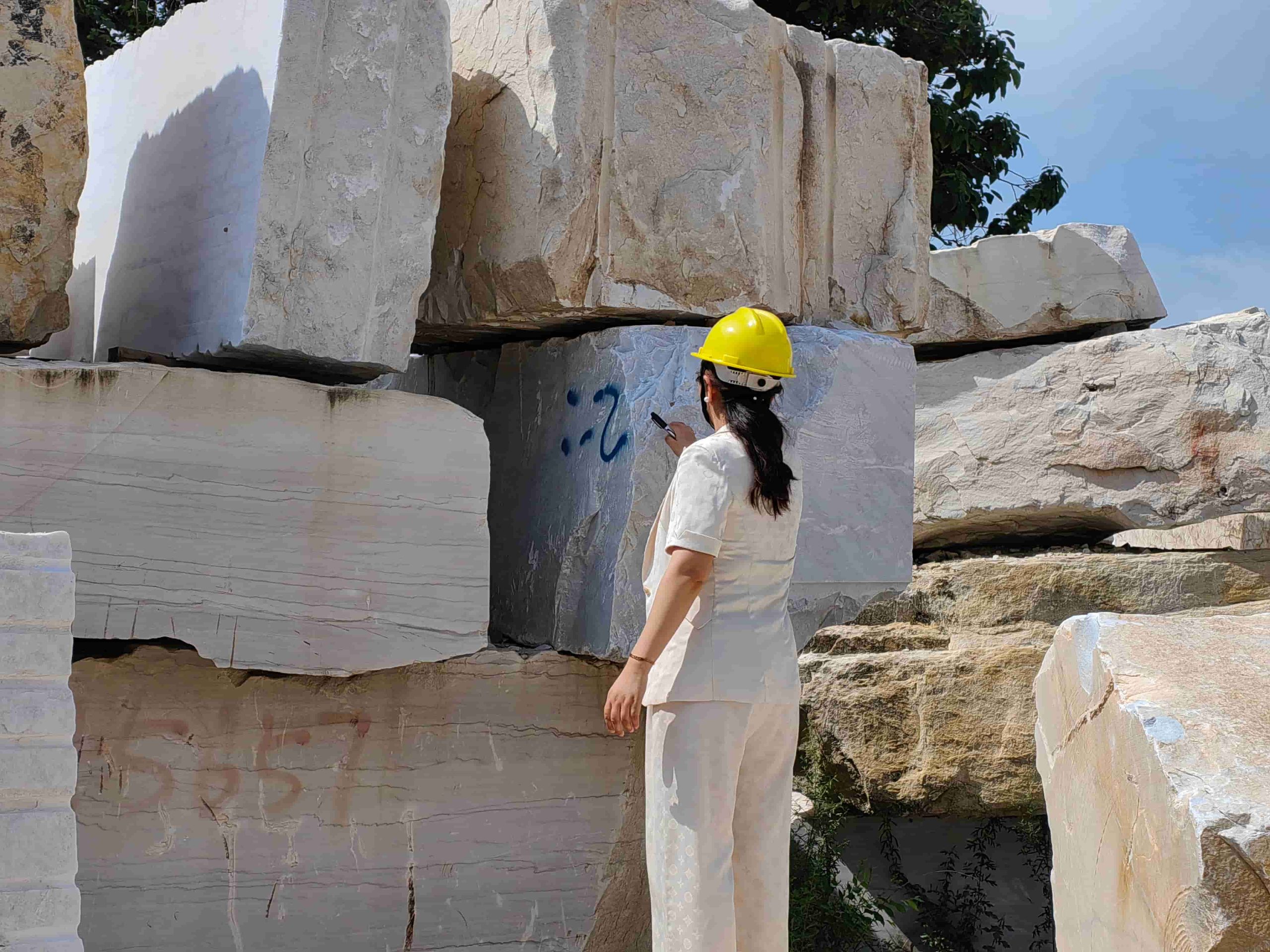
Unlike manufactured materials, marble is a natural stone formed through geological processes over millions of years. This means that every marble quarry produces slightly different materials.
There are several reasons why the number of marble types is not fixed:
1. Naming Based on Quarry Location
Many marbles are named after the region or quarry where they are extracted, such as Carrara marble from Italy or Makrana marble from India. Even within the same region, different quarries may produce distinct variations.
2. Color Variations
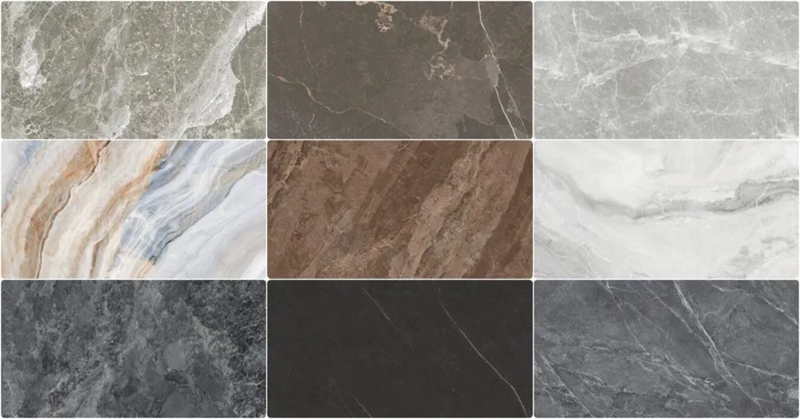
Marble can appear in a wide range of colors, including white, black, green, grey, red, yellow, and beige. Each color category can contain dozens of subtypes.
3. Veining and Patterns
The unique veining patterns in marble—caused by mineral impurities—create further distinctions. Some marbles have soft, cloudy patterns, while others have bold, dramatic veins.
4. Commercial vs Geological Classification
From a geological perspective, marble types are nearly endless. However, in the commercial stone industry, they are grouped into manageable categories to simplify selection and usage.
Because of these factors, the total number of marble types continues to grow as new quarries are discovered and new variations are marketed.
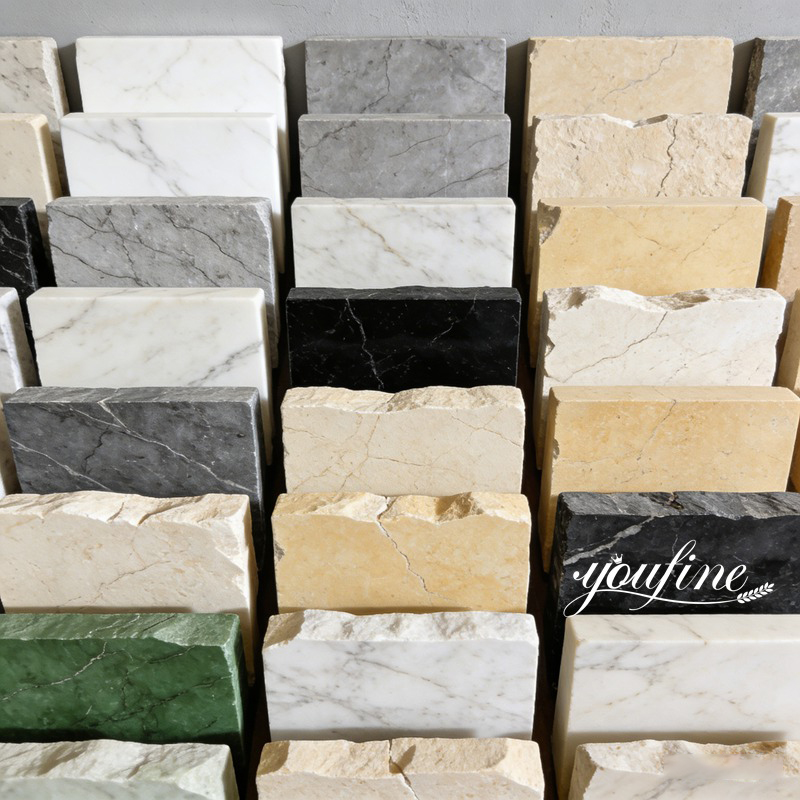
Popular Marble Types Around the World
Marble is sourced from many regions, each offering unique varieties.
Europe
Italy: Carrara, Calacatta, Statuario
Spain: Crema Marfil, Rojo Alicante
Asia
India: Makrana Marble, Green Marble
China: Various white and grey marbles
Middle East
Iran: Pietra Grey Marble
Africa
Egypt: Beige and cream marbles
Each region’s marble differs in density, color, and durability, which directly affects its suitability for sculpture and construction.
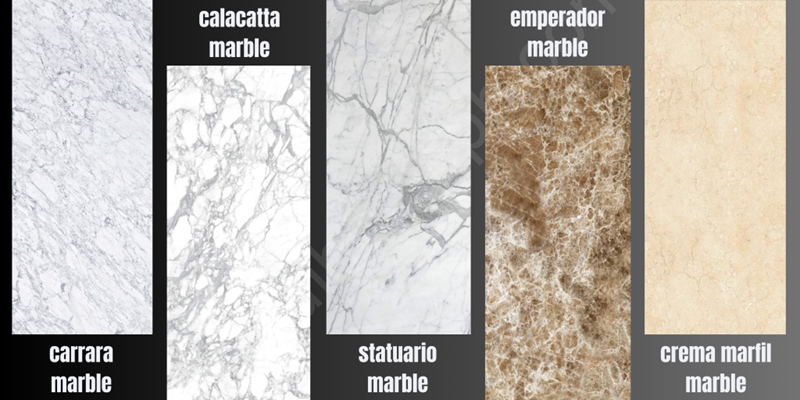
Marble Types by Color
Color is one of the most practical ways to classify marble in real-world applications.
Common categories include:
- White marble (best for fine sculpture)
- Black marble (modern designs)
- Green marble (decorative use)
- Grey marble (architectural use)
- Beige marble (outdoor projects)
Choosing marble by color helps designers quickly match materials with project requirements.
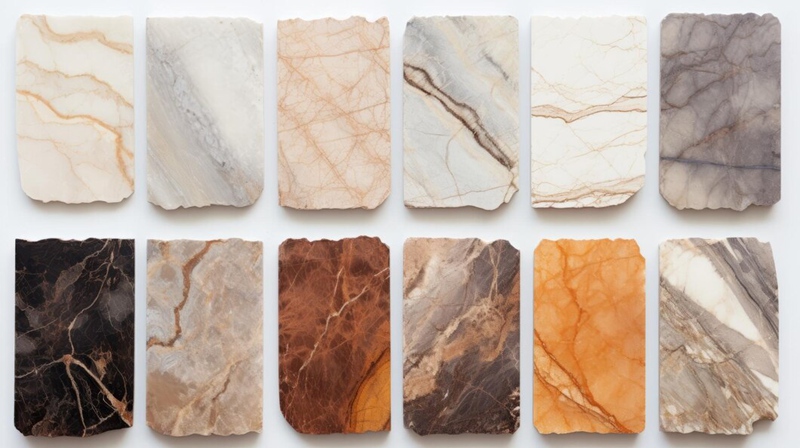
Marble Types by Pattern and Veining
Another important classification method is based on marble patterns.
Main pattern types:
- Veined marble: Strong linear patterns, ideal for artistic designs
- Uniform marble: Minimal variation, suitable for clean designs
- Breccia marble: Fragmented patterns, very decorative
- Cloudy marble: Soft, natural textures
The pattern significantly influences the final visual effect of a sculpture or structure.
Main Types of Marble and Their Best Uses in Sculpture
To better understand marble selection—especially for sculpture and architectural projects—it is helpful to classify marble into major categories based on color and characteristics.
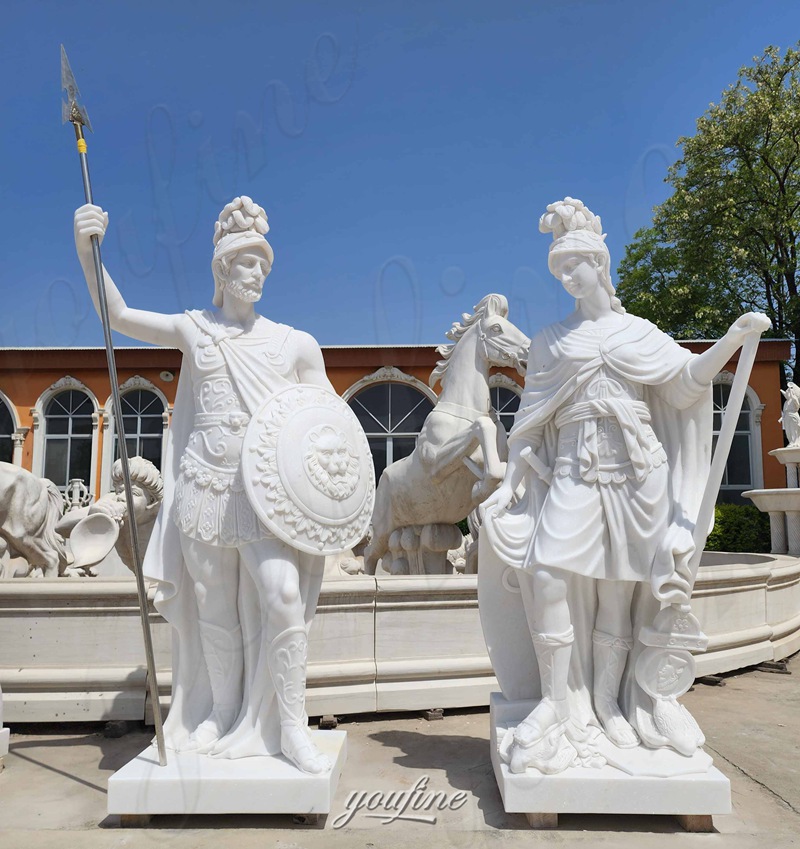
1. White Marble (Best for Fine Art Sculptures)
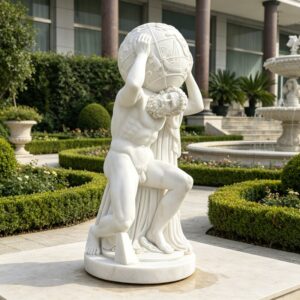
White marble is the most iconic and widely used type of marble in sculpture.
Popular varieties include:
- Carrara Marble
- Calacatta Marble
- Statuario Marble
Key characteristics:
- Fine and uniform grain
- Soft and workable texture
- Excellent light reflection
- Smooth polishing finish
Best for sculpture:
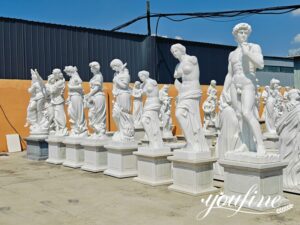
- Human statues
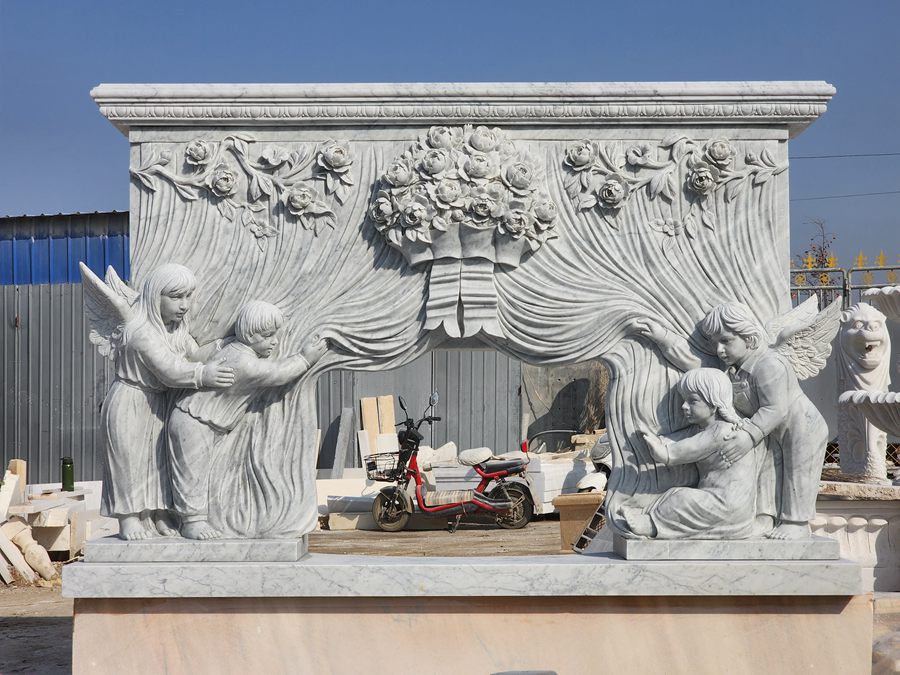
- Religious sculptures (such as angels or saints)
- Museum-quality artworks
- Relief carvings
White marble has been the preferred material for classical sculpture for centuries because it allows artists to achieve extremely fine details. Its consistent texture makes it easier to carve facial expressions, drapery, and intricate forms.
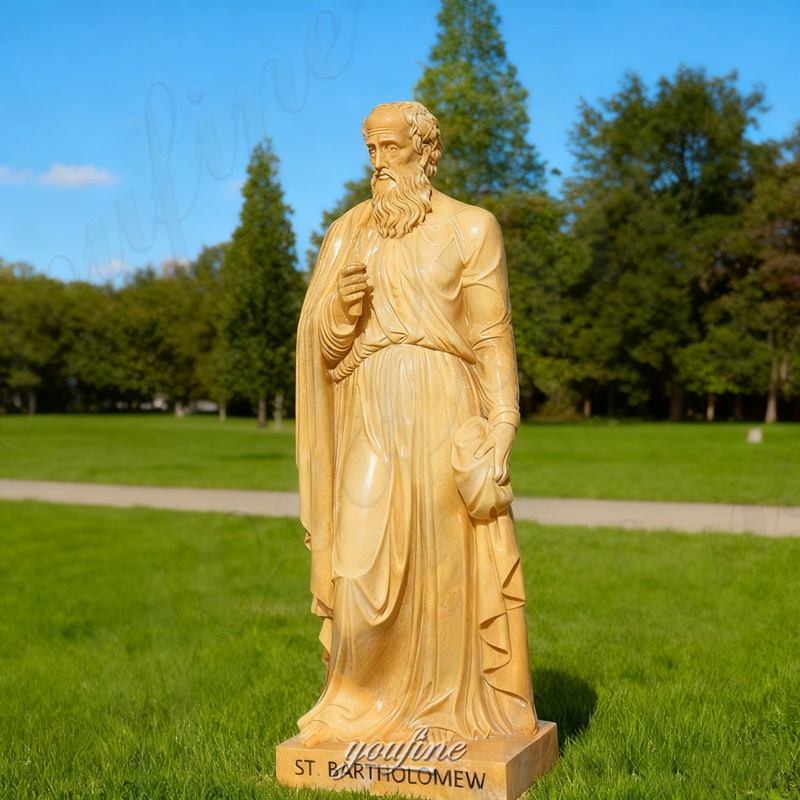
2. Beige & Brown Marble (Best for Outdoor Sculptures and Classical Designs)
Beige and brown marble are among the most practical choices for outdoor use.
Popular varieties include:
- Emperador Marble
- Crema Marfil
Key characteristics:
- Warm, natural tones
- Good weather resistance
- Less visible staining
Best for sculpture:
- Garden statues
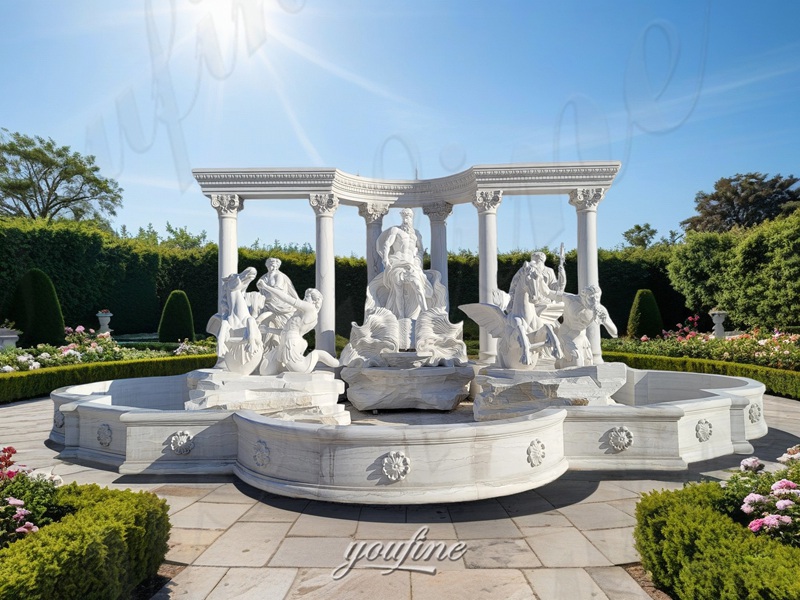
- Outdoor fountains
- Marble gazebos
- Classical architectural carvings
These marbles are highly favored in landscaping and exterior decoration because they blend naturally with outdoor environments and maintain their appearance over time.
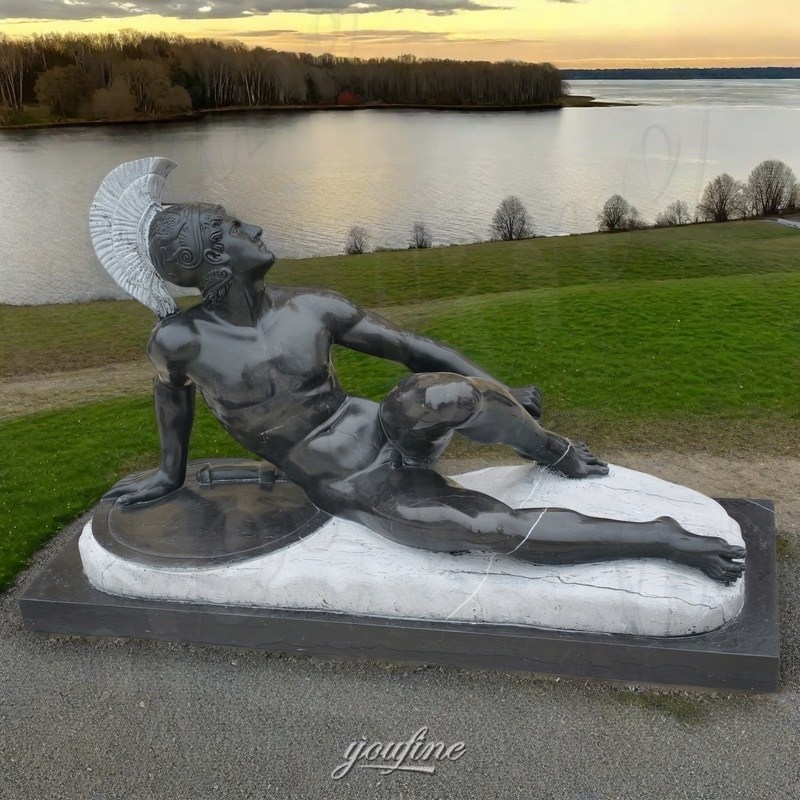
3. Black Marble (Best for Modern & Decorative Sculptures)
Black marble offers a striking and contemporary appearance, often used in high-end design projects.
Popular varieties include:
- Nero Marquina
- Black Galaxy Marble
Key characteristics:
- Deep, rich color
- High contrast veining
- Glossy surface finish
Best for sculpture:
- Modern art sculptures
- Abstract forms
- Interior decorative pieces
- Memorial sculptures
Because of its bold visual impact, black marble is often chosen for sculptures that emphasize shape and contrast rather than intricate detail.
4. Grey Marble (Best for Architectural Carving)
Grey marble provides a balanced and neutral aesthetic, making it ideal for architectural elements.
Popular varieties include:
- Pietra Grey
- Bardiglio Marble
Key characteristics:
- Subtle and elegant tone
- Moderate hardness
- Versatile appearance
Best for sculpture:
- Columns and balustrades
- Garden sculptures
- Public installations
- Exterior decorative carvings
Grey marble is widely used in large-scale projects where both durability and visual harmony are important.
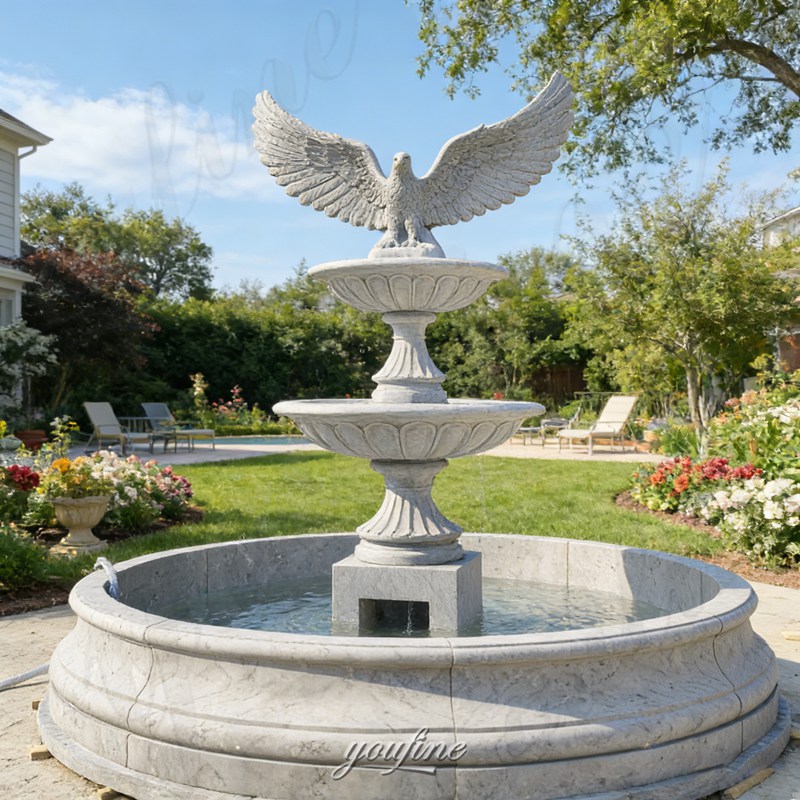
5. Green Marble (Best for Decorative & Statement Sculptures)
Green marble stands out due to its unique color and bold veining.
Popular varieties include:
- Verde Alpi
- Guatemala Green
Key characteristics:
- Rich green tones
- Strong natural patterns
- High visual impact
Best for sculpture:
- Decorative sculptures
- Landscape features
- Fountain designs
- Statement pieces
Green marble is often used when a project requires a luxurious and eye-catching element. It is especially effective in outdoor environments such as gardens and resorts.
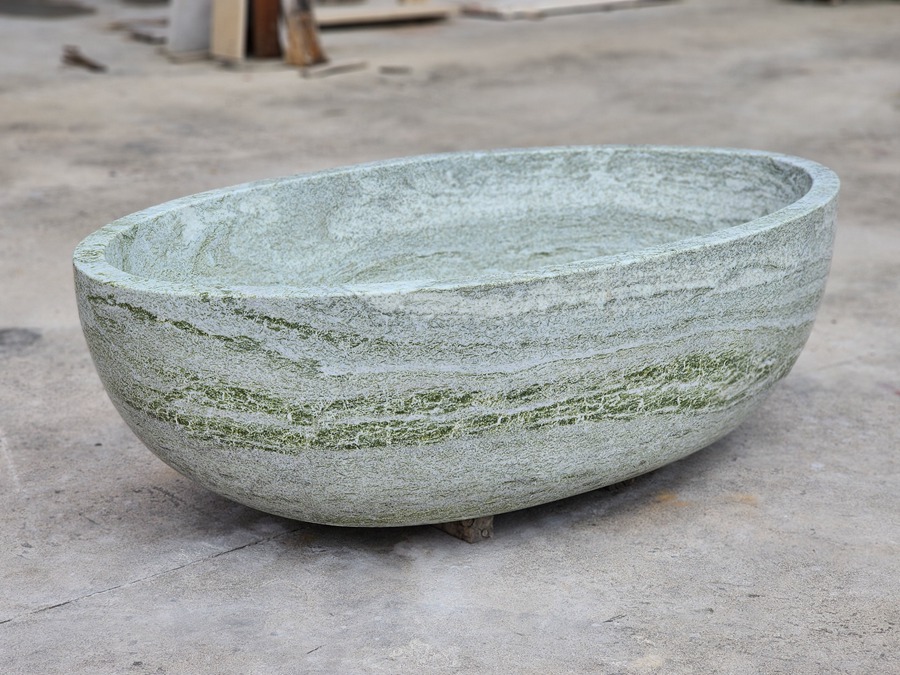
6. Red & Pink Marble (Best for Artistic and Cultural Sculptures)
Red and pink marble are less common but highly decorative.
Popular varieties include:
- Rosa Portugal
- Rojo Alicante
Key characteristics:
- Strong color presence
- Unique aesthetic appeal
- Decorative texture
Best for sculpture:
- Artistic sculptures
- Cultural monuments
- Interior display pieces
These marbles are often used in projects that aim to stand out visually or convey cultural symbolism.
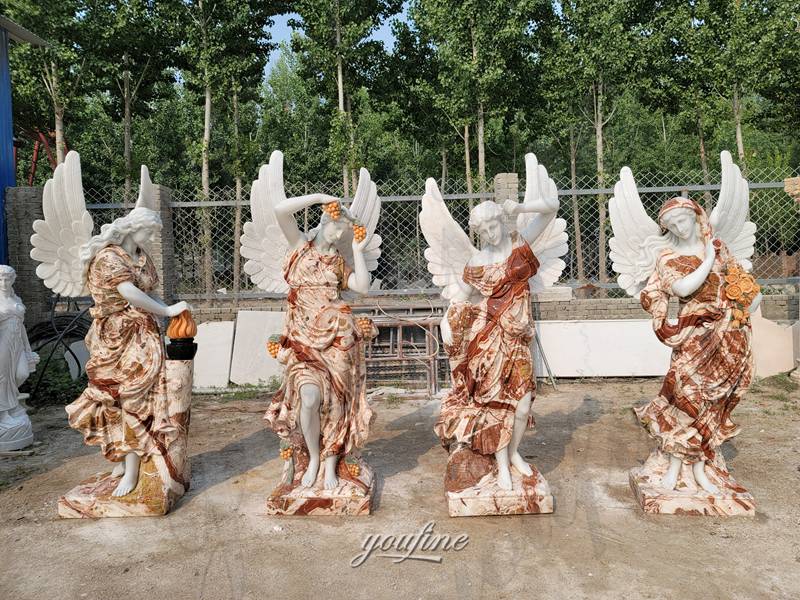
7. Yellow Marble (Best for Ornamental Sculptures)
Yellow marble adds warmth and brightness to any design.
Popular varieties include:
Triana Yellow
Key characteristics:
- Light, warm tones
- Classic European style
- Soft visual effect
Best for sculpture:
- Ornamental carvings
- Fireplace surrounds
- Architectural decorations
Yellow marble is frequently used in classical European-style projects where elegance and warmth are desired.
How to Choose the Right Marble for Sculpture
Selecting the right marble depends on several factors:
1. Purpose of the Sculpture
Fine art → White marble
Decorative → Green or black marble
Outdoor → Beige or grey marble
2. Environment
Outdoor sculptures require marble with better weather resistance and lower porosity.
3. Level of Detail
Highly detailed carvings require fine-grained marble such as Carrara or Statuario.
4. Budget
Some marbles, especially rare white varieties, are significantly more expensive.
Which Marble Type Is the Most Expensive?
Among all marble types, Calacatta and Statuario marble are considered the most expensive.
Reasons include:
- Limited quarry supply
- Distinctive veining
- High demand in luxury markets
These marbles are often used in premium sculptures and high-end architectural projects.
Quick Comparison of Marble Types for Sculpture
Marble Type | Best Use | Indoor/Outdoor | Workability |
White | Marble Statues, fine art | Indoor | Easy |
Black Marble | Modern sculpture | Indoor | Medium |
Grey Marble | Architectural carving | Both | Medium |
Green Marble | Decorative sculpture | Outdoor | Hard |
Beige Marble | Garden statues, fountains | Outdoor | Easy |
Red Marble | Artistic sculpture | Indoor | Medium |
Conclusion
Marble is a highly versatile natural stone with hundreds of varieties worldwide. While it can be broadly classified into several main categories based on color and characteristics, each type offers unique advantages depending on the application.
For sculpture and architectural carving:
- White marble remains the top choice for fine art
- Beige and grey marble are ideal for outdoor projects
- Green and black marble are perfect for decorative designs
Choosing the right marble is not just about appearance—it also involves durability, workability, and project requirements.
Looking for Marble Sculptures or Custom Projects?
If you are planning a marble sculpture, fountain, gazebo, or architectural project, working directly with a professional factory ensures better quality, customization, and pricing.
YouFine specialize in:
- Marble statues
- Garden fountains
- Architectural carvings
- Custom stone projects
Feel free to contact us for catalogs, design support, and quotations.