When I discuss a custom bronze sculpture schedule, I start with the design, size, and approval requirements—not just the delivery date. A bronze statue made from an available model can follow a different schedule from a fully custom portrait or a large sculpture with several figures.
YouFine’s general production timeframe for a custom bronze sculpture is about one to three months, depending on its size, design complexity, and actual project requirements. I would use this as an initial planning range, not a guaranteed deadline for every bronze commission.
I also recommend separating production time from the total project timeline. Design discussions, customer approvals, international shipping, customs clearance, and installation may require additional time.
In this guide, I explain what affects the schedule, what happens during production, and what I recommend preparing before requesting a firm delivery plan.
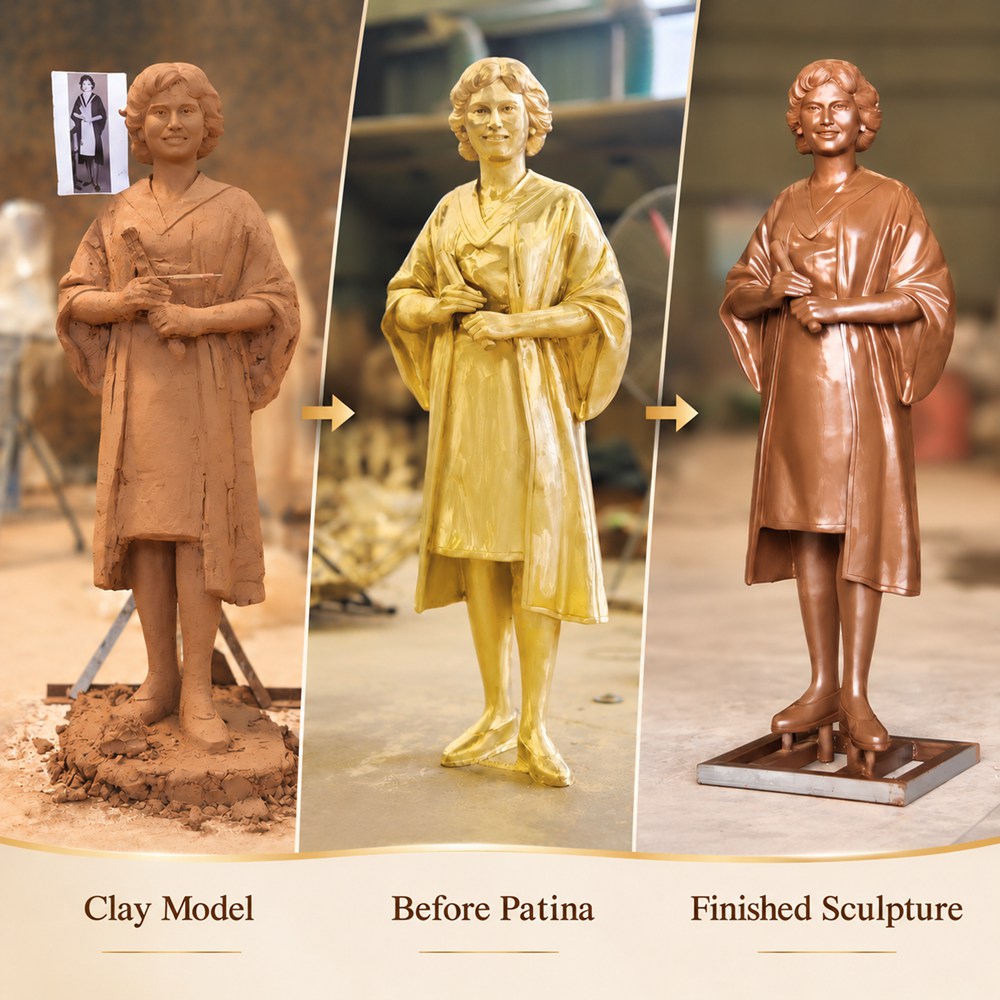
7 Factors That Affect Bronze Sculpture Lead Time
I assess a bronze sculpture timeline by looking at the whole project. Casting is important, but modeling, approvals, finishing, and delivery arrangements can be just as significant.
1. Sculpture Size and Design Complexity
Size affects the amount of modeling, mold-making, casting, and finishing work. Complexity affects how carefully each part must be developed and checked.
For example, a standing figure with a simple silhouette is different from a group composition with overlapping limbs, detailed clothing, and separate accessories. A portrait also needs careful review because small changes can affect the likeness.
I use these design features to identify where extra work may be needed:
| Design Feature | Production Implication | What to Confirm Early |
|---|---|---|
| Large overall dimensions | More handling, mold work, and possible casting sections | Height, width, depth, and access limits |
| Detailed faces, hands, or clothing | More modeling and surface refinement | Important details and reference images |
| Multiple figures or projecting elements | More assembly and connection planning | Composition, supports, and attachment points |
My advice is to provide all three dimensions, not height alone. The sculpture’s width, depth, and pose can change the production and transport plan.
2. Existing Models vs. Fully Custom Designs
An available model may reduce the amount of original modeling required. However, I would first confirm whether that model matches the requested dimensions, pose, and details.
The important distinction is between reusing a suitable model and creating a new sculpture:
| Starting Point | Work That May Be Required | Likely Schedule Effect |
|---|---|---|
| Suitable existing model or mold | Condition check and confirmation of requested details | May reduce early development time |
| Existing design with changes | Remodeling and potentially new molds | Depends on the extent of the changes |
| Fully custom design | Design development, original modeling, and approval | Requires more early-stage work |
I would not assume that a sculpture shown in a catalog is ready for immediate casting. Model availability, mold condition, and the requested customization should all be confirmed.
3. Clay Modeling and Design Approval
Clay modeling turns drawings and reference images into a three-dimensional form. It is also a major approval point.
I recommend reviewing the model from several angles. For a portrait, this includes facial proportions and expression. For an animal or public artwork, it may include anatomy, movement, composition, and the relationship to the base.
Repeated revisions can extend the schedule, especially when comments arrive separately from several decision-makers. I advise collecting feedback into one clear response and identifying which changes are essential.
Approval should be documented before mold making begins. Changes after that point may require more than a simple adjustment to the clay.
4. Bronze Casting Method and Production Scheduling
Custom bronze sculptures commonly use lost-wax casting, a process in which a wax version of the sculpture is replaced by molten bronze inside a heat-resistant mold.1
This process involves several linked steps. Large or complex sculptures may be cast in sections and assembled afterward.2 Each section needs preparation, casting, and finishing.
I would ask the supplier to confirm the casting approach and workshop schedule for the actual design. The availability of a model does not automatically mean a casting slot is immediately available.
A realistic production plan must account for both the required work and the workshop’s current capacity.
5. Patina Color and Quality Inspection
A patina is a surface color or effect created through controlled treatment of the bronze.3 It can strongly influence how the finished sculpture looks.
I recommend agreeing on the intended color and overall appearance before finishing begins. A reference image helps, but lighting and photography can change how a color appears. Where practical, an approved sample or clear finish reference can reduce uncertainty.
Final inspection also needs time. Connections, surface details, stability, and finish consistency should be checked before packing. I would not treat inspection as optional time that can simply be removed to meet a deadline.
6. Packaging, Shipping, and Installation Requirements
Production completion is not the same as arrival at the project site.
I separate these milestones when discussing a delivery schedule:
| Milestone | What It Means | What Can Affect It |
|---|---|---|
| Production complete | Sculpture has passed the agreed final inspection | Finishing and any necessary corrections |
| Ready for dispatch | Packing and shipping preparation are complete | Crate design, handling needs, and documents |
| Delivered to destination | Shipment has reached the agreed delivery point | Transport, customs, and local delivery |
| Installed | Sculpture is positioned and secured | Site access, equipment, base readiness, and installers |
For a fixed opening date, I recommend planning backward from installation—not from the day casting ends.
7. Base, Structural, and Site Coordination
The sculpture may depend on work outside the bronze workshop. A pedestal, foundation, anchor layout, or lifting plan can affect whether installation proceeds on time.
I advise confirming these interfaces early, particularly for large outdoor sculptures. The supplier and the appropriate local installer or engineer should clarify their responsibilities.
Late changes to the base or fixing arrangement may affect the sculpture itself. Even if production finishes on schedule, an unprepared site can delay the completed project.
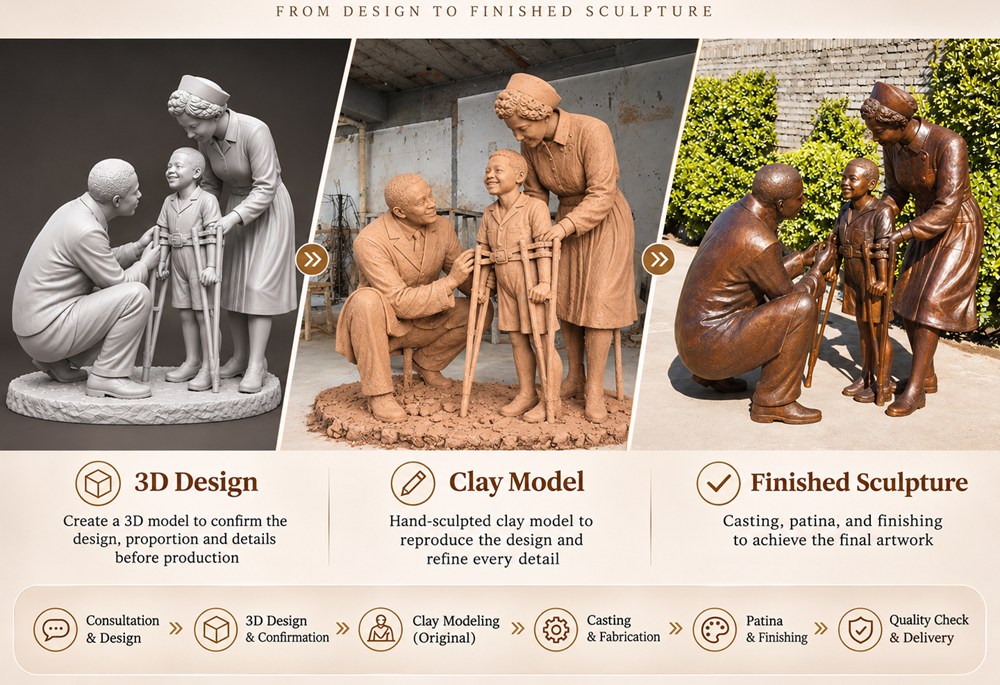
What Are the Main Stages of Custom Bronze Sculpture Production?
I find that a stage-based schedule is more useful than a single completion date. It shows the buyer when decisions are needed and where progress can be checked.
The exact workflow depends on the sculpture, but a typical lost-wax bronze project includes the following stages.
Design Development and Approval
The project begins with defining the subject, dimensions, pose, important details, finish, and installation conditions.
I recommend preparing a written brief alongside reference images. Images communicate appearance, while the brief explains what must be retained, changed, or customized.
Before modeling starts, the main design direction should be clear enough to avoid unnecessary rework.
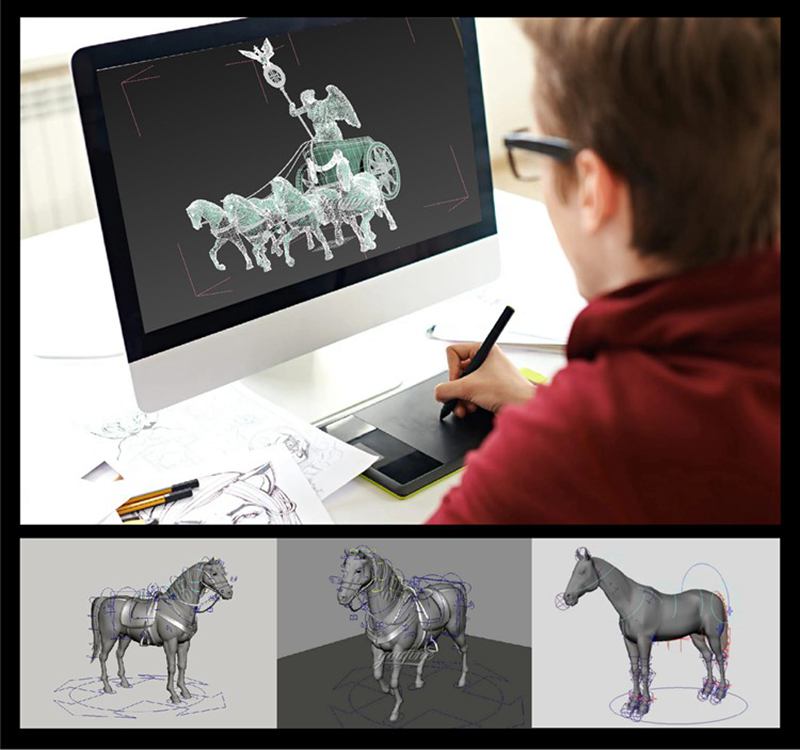
Clay Modeling and Sand Shell Making
The sculpture’s form is developed in clay or another suitable modeling material. The approved model becomes the basis for mold making.
A mold captures the model’s shape and surface details so that wax patterns can be produced.4 Depending on the design, the mold may consist of several parts.
I treat model approval as a key checkpoint. This is the stage for confirming the pose, proportions, expression, and composition before the form moves into casting preparation.
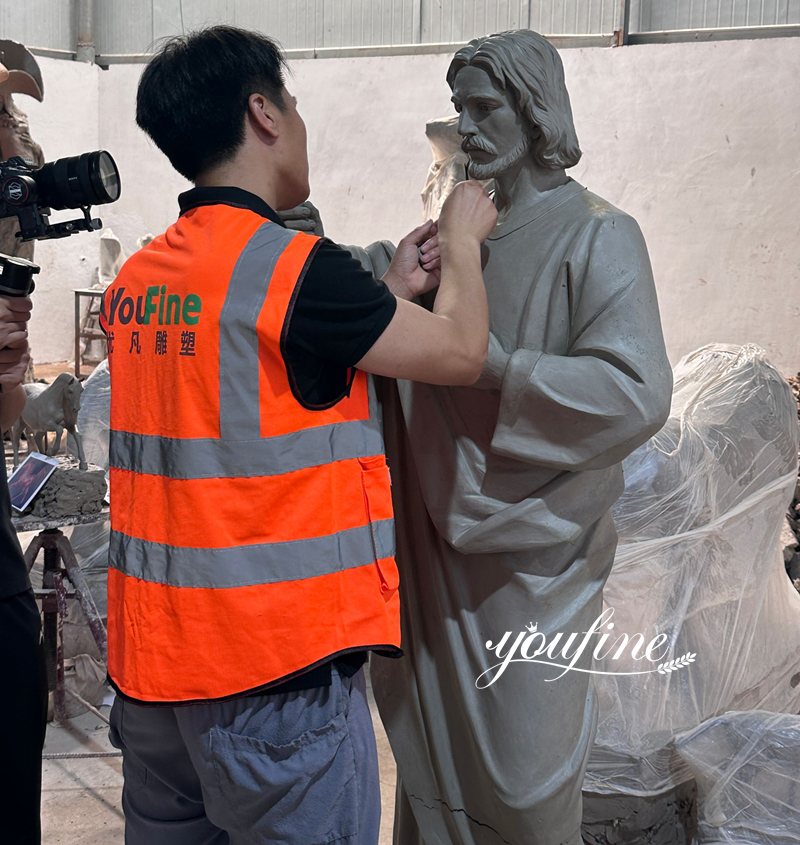
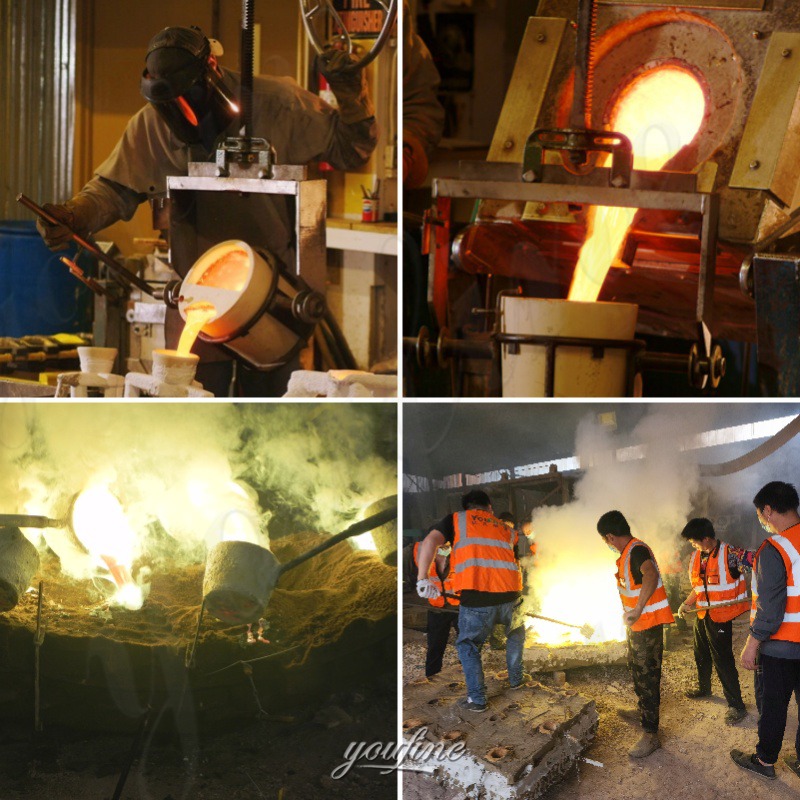
Wax Pattern Preparation and Bronze Casting
A wax copy is made from the mold and checked for detail. Wax channels are added to create paths for molten metal and escaping gases during casting.5
A heat-resistant mold is then formed around the wax. The wax is removed, leaving a cavity into which bronze is poured.
After cooling, the casting mold is removed and the bronze parts are cleaned. I recommend allowing time for checking the castings and addressing any issues before assembly.
Welding, Chasing, and Surface Refinement
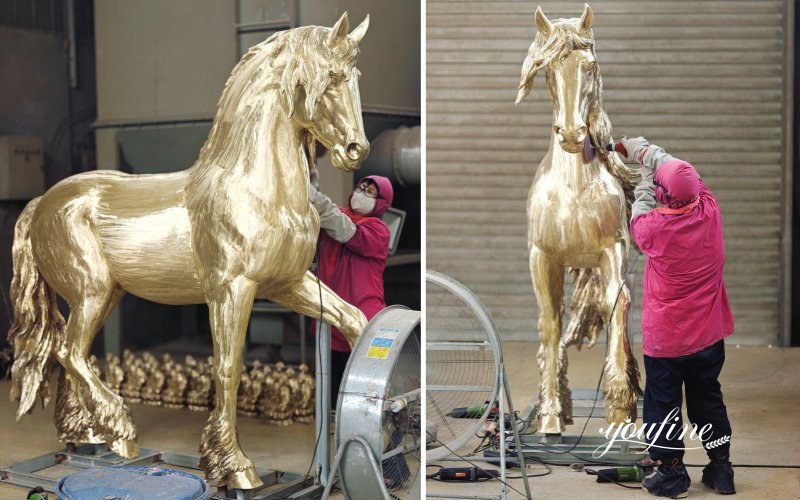
Separate bronze sections are joined where necessary.
Chasing means refining the cast surface, including removing casting marks, blending joints, and restoring details around seams.6 It is an important part of making an assembled sculpture look visually continuous.
I would evaluate this stage by the quality of the finished form, not only by whether the sections have been connected. Poorly refined joints can remain visible after patina application.
Patina Application and Final Inspection
Once the surface is ready, the agreed patina is applied. A suitable protective treatment may follow, depending on the finish and intended location.
I recommend checking the completed sculpture against the approved design and finish reference. Final photographs should show the whole sculpture as well as important details.
Any required corrections should be resolved before the packing stage.

Packing and Dispatch
Packing should protect the sculpture’s surface and support it securely during handling.7 Projecting arms, thin accessories, and other vulnerable features require particular attention.
I recommend confirming the packed dimensions, handling requirements, shipping documents, and delivery scope before dispatch.
For a large sculpture, the receiving site should also know how the crate will be unloaded and how the artwork will be moved into position.

How to Get Your Custom Bronze Sculpture on Schedule
I cannot make a complex production process predictable simply by choosing an ambitious deadline. What I can recommend is removing avoidable uncertainty early.
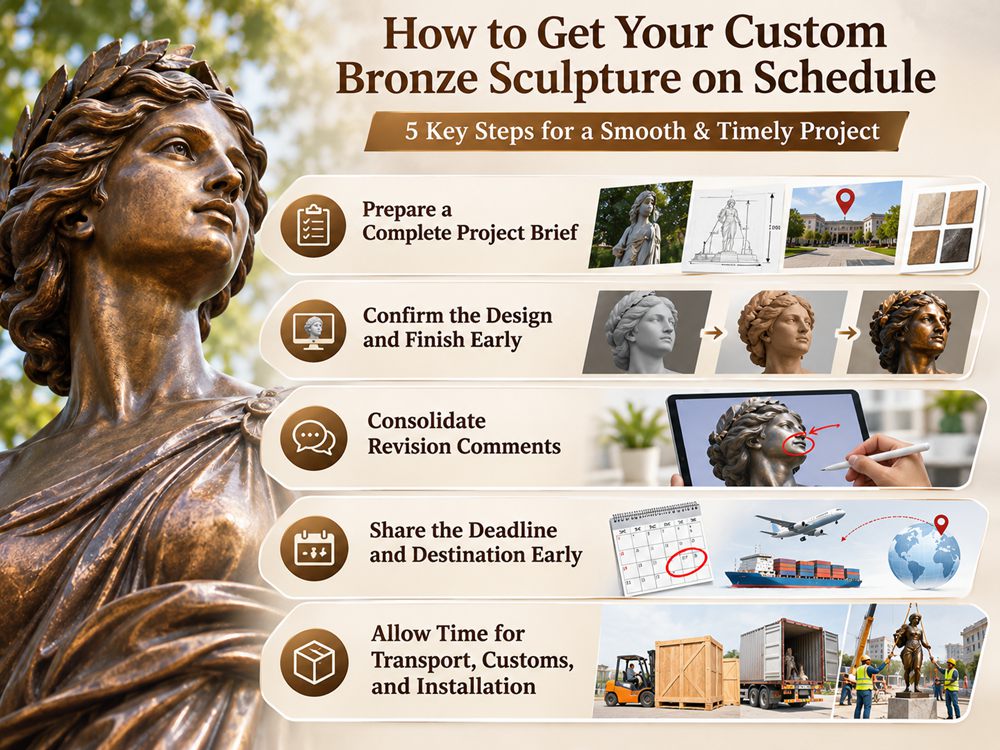
Prepare a Complete Project Brief
Provide reference images, dimensions, quantity, intended location, finish preferences, and customization requirements.
I also recommend stating whether the sculpture is for a private property, commercial space, memorial, or public installation. This helps identify approval and installation requirements at the start.
Confirm the Design and Finish Before Production
Agree on the main design before modeling progresses too far. Confirm the final model before mold making, and settle the finish direction before patina work begins.
I would ask the supplier to identify each approval checkpoint and explain what happens if changes are requested afterward.
Consolidate Revision Comments
Choose one person to submit the final feedback. Collect comments from other stakeholders first, then send one coordinated list.
I recommend marking revisions directly on photographs when possible. Clear visual instructions are often easier to interpret than broad comments such as “make it more elegant.”
Share the Deadline and Destination Early
Tell the supplier whether the required date means dispatch, arrival, or completed installation.
I also recommend providing the destination and any access restrictions early. These details help shape the transport plan and show whether the requested deadline is realistic.
Allow Time for Transport, Customs, and Installation
Do not use the full available schedule for production alone. Shipping arrangements, customs clearance, unloading, and installation need their own allowance.
For a date-sensitive project, I suggest requesting a milestone schedule with approval deadlines and a practical contingency margin. The amount of extra time should reflect the route, sculpture, and site—not an arbitrary promise.
FAQs
1. Can a custom bronze sculpture be completed in one month?
YouFine’s general custom sculpture production range starts at about one month, but I would not promise that timeframe without reviewing the project. Model availability, design complexity, approvals, and workshop scheduling all matter. Shipping and installation should be confirmed separately.
2. Does an existing mold guarantee faster production?
No. I would first check that the mold is available, usable, and suitable for the requested sculpture. Changes to size, pose, or details may require remodeling or a new mold, reducing the time advantage.
3. What can increase both cost and lead time?
Major design revisions, intricate details, multiple casting sections, special finishing requirements, and complicated installation arrangements can affect both. I recommend asking for the schedule and quotation to reflect the same confirmed project scope.
4. Is international shipping included in the one-to-three-month estimate?
I would not assume so. The stated range is a general production benchmark. Ask for separate confirmation of production completion, dispatch, transit, customs arrangements, and the agreed delivery point.
5. How can I compare suppliers’ production timelines?
I recommend comparing what each timeline includes. Ask about modeling, revision allowances, casting, finishing, inspection, and packing. A shorter estimate is not necessarily more useful if approval time or essential finishing work has been omitted.
Final Summary: Plan Beyond the Casting Date
YouFine’s general custom sculpture production timeframe is about one to three months, with the actual schedule depending on the project. For a custom bronze sculpture, I recommend confirming the design, model availability, approval process, casting plan, finish, and installation requirements before relying on a completion date.
The most useful schedule distinguishes production completion from dispatch, arrival, and installation. Clear references, coordinated feedback, and early site planning help reduce avoidable delays.
Contact YouFine to Get a Production Timeline for Your Custom Bronze Sculpture
If you are planning a commission with You Fine Art Sculpture, send your reference images, dimensions, customization requirements, destination, and required installation date.
I recommend including whether you want an existing design adapted or a completely new sculpture. With a clear brief, you can request a project-specific production timeline, approval checkpoints, and shipping plan before committing to the order.
References
- Lost-wax casting – Wikipedia ↩︎
- Guidelines for the Technical Examination of Bronze Sculpture ↩︎
- Guidelines for the Technical Examination of Bronze Sculpture ↩︎
- Guidelines for the Technical Examination of Bronze Sculpture ↩︎
- What is Lost-Wax Casting? Complete Bronze Casting Guide ↩︎
- Guidelines for the Technical Examination of Bronze Sculpture ↩︎
- Five Steps to Safe Shipment – Canadian Conservation Institute (CCI … ↩︎