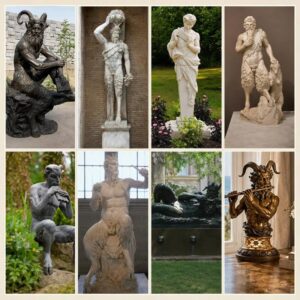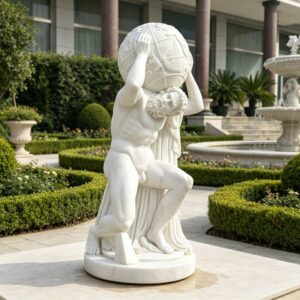
Classical mythological statues can bring a distinctive sense of history, character, and artistic depth to a garden, villa, or estate. Among the most recognizable figures in classical sculpture are Satyrs, Fauns, and Pan. Their appearances often overlap, featuring pointed ears, horns, animal legs, or other characteristics associated with nature and woodland mythology.
However, these figures are not exactly the same. Satyrs are associated with ancient Greek mythology, Fauns are primarily connected with Roman mythology, and Pan is a specific Greek deity associated with shepherds, wild landscapes, and the pan flute. Understanding these distinctions can help you choose a sculpture that matches your preferred artistic style and the atmosphere you want to create.
If you are planning to purchase a classical garden statue, commission a custom sculpture, or select a decorative centerpiece for a luxury property, this guide explains how to distinguish Satyr, Faun, and Pan statues and what to consider before buying one.
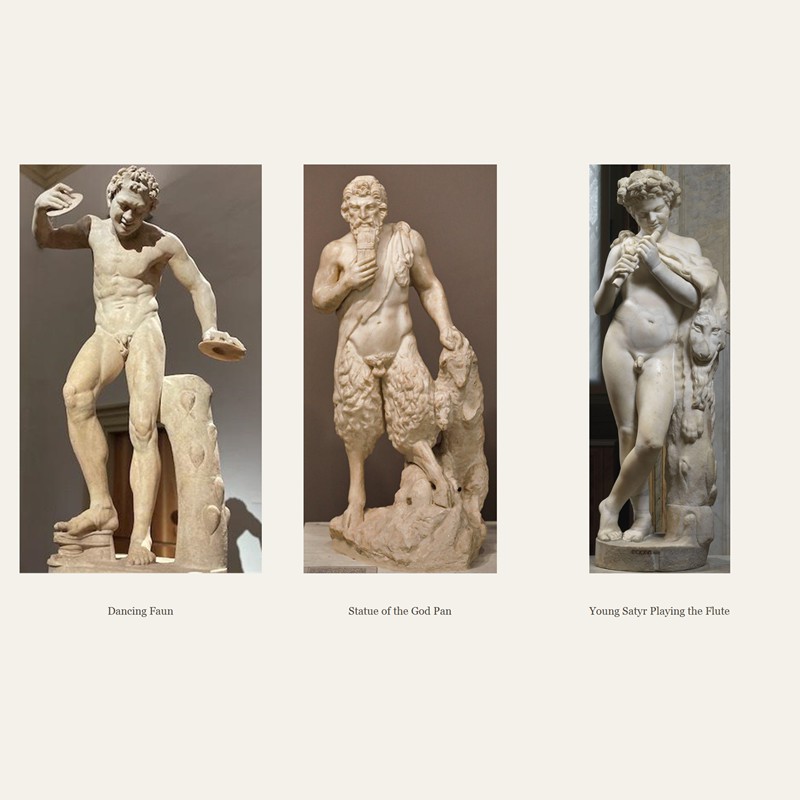
What Is a Satyr Statue?
A Satyr is a mythological creature from ancient Greek tradition, commonly associated with Dionysus, the god of wine, festivity, and ecstatic celebration. Satyrs frequently appear in ancient art as lively, mischievous, and sometimes theatrical figures connected with music, dancing, wine, and the untamed aspects of nature.
In sculpture, Satyrs can express a wide range of personalities. Some appear playful and energetic, while others are portrayed in relaxed or contemplative poses. Their distinctive combination of human and animal characteristics makes them particularly expressive subjects for classical sculpture.
Common Features of Satyr Statues
Satyr statues do not follow one universal design. Their appearance varies according to the historical period, artistic tradition, and sculptor’s interpretation. Nevertheless, several features are commonly associated with them:
Animal-like ears: Pointed or animal-shaped ears are frequent identifying characteristics.
Tails and animal legs: Some representations feature tails, hooves, or goat-like lower bodies, while others have predominantly human proportions.
Expressive facial features: Satyrs may have playful expressions, exaggerated features, or a more mature, rustic appearance.
Dynamic poses: Dancing, reclining, playing instruments, and interacting with other mythological figures are common artistic themes.
Because Satyr imagery evolved over time, it is best to consider the entire figure rather than relying on a single physical feature.
Where Do Satyr Statues Work Best?
Satyr statues are suitable for spaces where the owner wants to introduce movement, personality, or a dramatic classical accent.
In a formal villa garden, a marble Satyr can complement stone pathways, clipped hedges, ornamental fountains, and traditional architectural details. In a wine estate or themed hospitality property, the association with Dionysus and festivity can also provide a meaningful decorative connection.
For collectors, a Satyr statue with a distinctive pose or expressive face can serve as an artistic focal point rather than simply another garden ornament.
A marble Satyr is often a good choice for buyers seeking a traditional classical appearance, while a bronze version can emphasize texture, shadow, and movement.
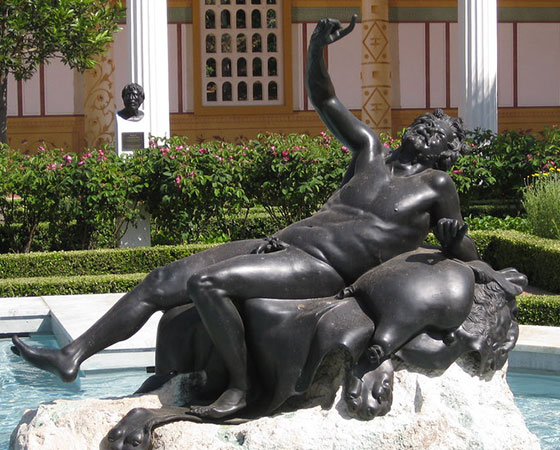
What Is a Faun Statue?
A Faun is a mythological figure primarily associated with ancient Roman tradition. Fauns are connected with forests, fields, shepherds, and rural life. They share similarities with Greek Satyrs, and the two figures became increasingly difficult to distinguish in later European art.
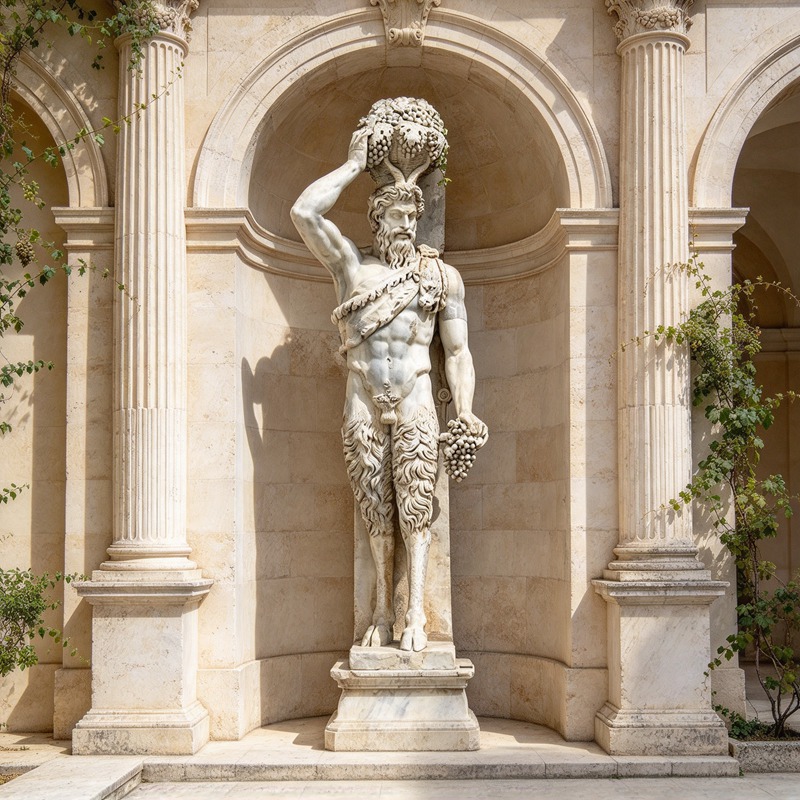
Faun statues are especially appealing to buyers who appreciate the pastoral character of classical mythology. Their designs can range from youthful and graceful figures to more rustic representations with pronounced animal characteristics.
Common Features of Faun Statues
Fauns are frequently represented with a combination of human and goat-like features. Depending on the artistic tradition, these may include:
Goat-like horns or pointed ears: These features often contribute to the figure’s woodland character.
Animal legs and hooves: Some sculptures emphasize the connection between the Faun and the natural world through a goat-like lower body.
Musical instruments: Flutes and other pastoral instruments may appear in representations of Fauns.
Relaxed or natural poses: Fauns are often shown resting, standing among natural elements, or interacting with the surrounding landscape.
Not every Faun statue includes all these characteristics. In particular, horns and goat legs are not exclusive to Fauns, so the intended identity of a sculpture should also be considered.
Where Do Faun Statues Work Best?
Faun statues are particularly well suited to gardens designed around natural materials, greenery, and a romantic atmosphere.
Imagine a marble Faun placed beside a stone pathway, partially framed by climbing plants and mature trees. The figure becomes part of the landscape, creating the impression of a character emerging from a classical woodland scene.
Faun statues can also complement:
English-style and European-inspired gardens.
Private estates with naturalistic landscaping.
Courtyards featuring stone benches and ornamental planters.
Boutique hotels and resorts seeking a classical, romantic atmosphere.
Woodland paths and secluded garden corners.
When selecting a Faun statue, consider the surrounding planting and viewing distance. A design with delicate facial details may be best positioned where visitors can approach it closely, while a larger, more expressive figure can work as a focal point in a spacious garden.

What Is a Pan Statue?
Pan is a specific deity in ancient Greek mythology, associated with shepherds, flocks, wild places, and rustic music. Unlike Satyr and Faun, which refer to broader types of mythological figures, Pan is an individual god with his own mythology and recognizable artistic identity.
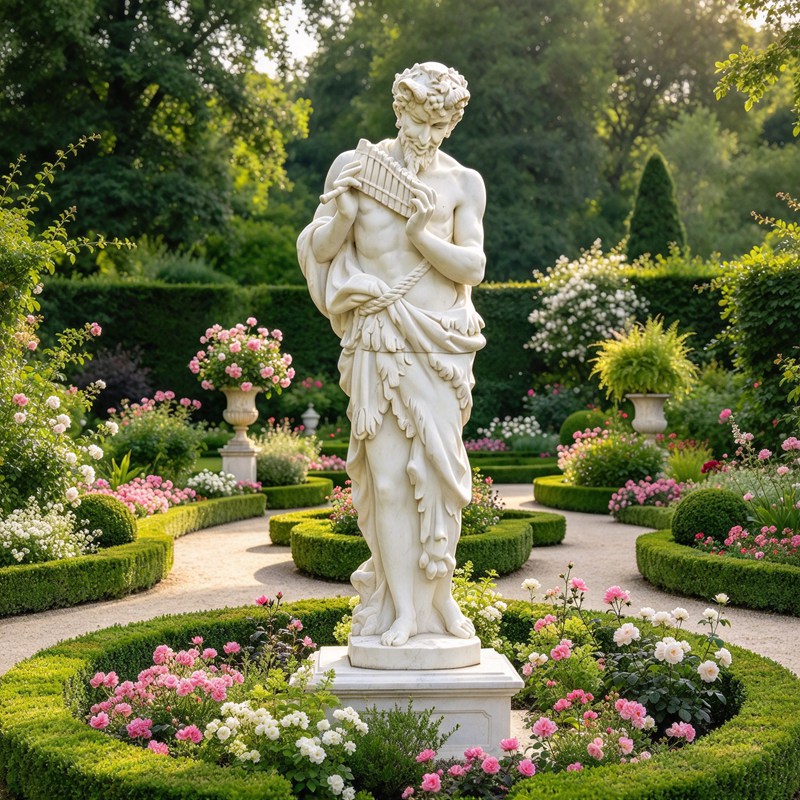
Pan is particularly associated with the pan flute, an instrument traditionally connected with his mythology. His imagery often combines human and goat-like characteristics, creating a distinctive appearance that has inspired sculptors for centuries.
How to Recognize a Pan Statue
When identifying a Pan statue, look at the overall composition and the attributes that connect the figure to the god.
Goat-like characteristics: Horns, pointed ears, and animal legs are common in representations of Pan.
The pan flute: A figure playing or holding a set of reed pipes is a strong visual clue.
A rustic setting: Trees, rocks, shepherding elements, and other natural motifs may reinforce the subject.
A distinctive mythological identity: The figure may be designed to represent Pan specifically rather than a generic woodland creature.
The presence of a pan flute is helpful but not essential. Some Pan statues depict the god in other poses, and the instrument alone does not establish a figure’s identity.
Where Do Pan Statues Work Best?
Pan statues can be particularly effective in large gardens, estate landscapes, and outdoor spaces built around classical or mythological themes.
A Pan statue playing the flute can create a calm, contemplative focal point near a pond, fountain, or secluded seating area. A more dramatic interpretation may suit a rocky garden, woodland setting, or landscape with a stronger sense of wilderness.
Pan is also a compelling subject for collectors who want a recognizable mythological figure rather than a more general woodland character.
For large properties, the statue can be integrated into a broader composition with stone pathways, water features, planting, and architectural elements. The goal is to make the sculpture feel connected to its surroundings rather than isolated within the landscape.
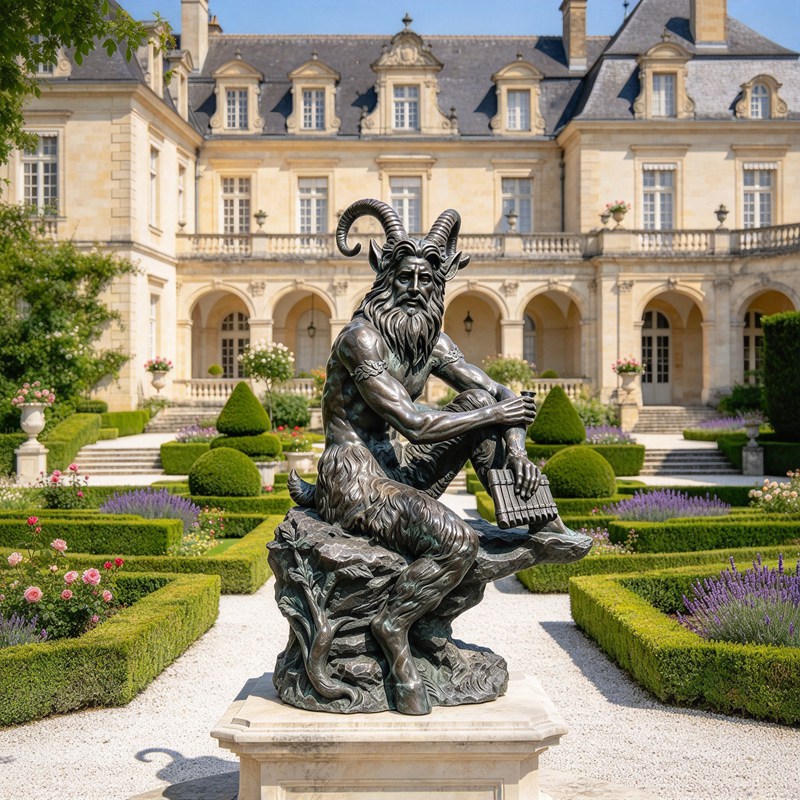
Satyr vs Faun vs Pan: What Are the Main Differences?
Although these three subjects share visual similarities, their mythological identities and artistic associations differ.
| Feature | Satyr | Faun | Pan |
|---|---|---|---|
| Mythological tradition | Ancient Greek | Ancient Roman | Ancient Greek |
| Type of figure | A class of mythological beings | A class of nature-associated beings | An individual deity |
| Main associations | Dionysian celebrations, music, dance, and wild nature | Rural life, fields, forests, and pastoral themes | Shepherds, wild places, and rustic music |
| Common visual features | Animal ears, tails, or goat-like characteristics, depending on the period | Often goat-like features and pastoral attributes | Frequently goat-like features and sometimes a pan flute |
| Typical artistic mood | Playful, energetic, or theatrical | Rustic, pastoral, or romantic | Wild, musical, or mythological |
| Garden applications | Classical gardens and expressive decorative settings | Naturalistic gardens and romantic landscapes | Estate gardens and mythological focal points |
These distinctions are useful starting points, not rigid rules. Greek and Roman mythology influenced one another, and later European artists frequently combined their visual traditions. As a result, a sculpture described as a Satyr in one collection might resemble a Faun or Pan in another.
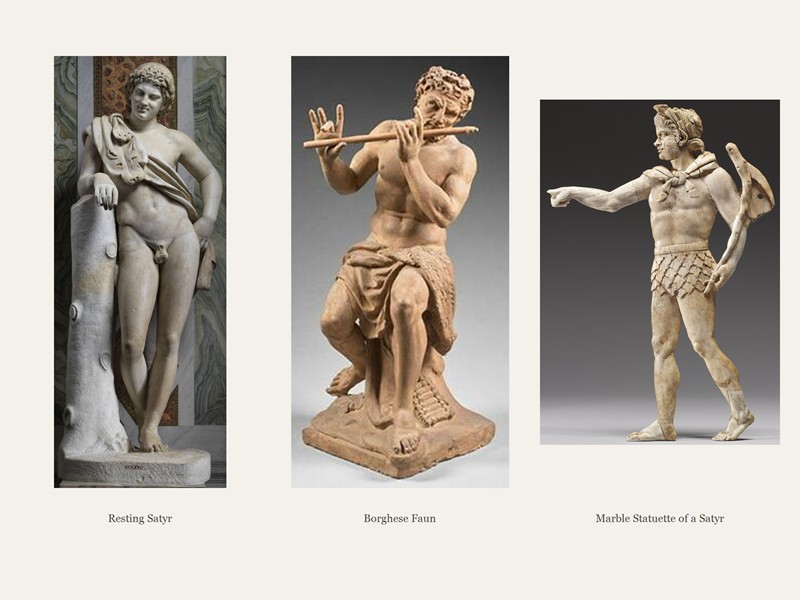
Why Are Satyr, Faun, and Pan Statues Sometimes Confused?
There are three main reasons for this overlap.
First, all three subjects are connected with nature and the animal world. Their sculptures may share pointed ears, horns, hooves, and human-animal proportions.
Second, their representations changed throughout history. Ancient Greek and Roman artists did not always use the same visual conventions, and later sculptors developed their own interpretations of classical mythology.
Third, modern product catalogs sometimes use these names loosely. A seller may describe a woodland figure as a Faun, Satyr, or Pan based primarily on its appearance rather than a documented historical source.
If you are purchasing a sculpture to represent a specific mythological figure, ask the supplier to clarify the intended subject and provide reference images or historical information when available. If your priority is decorative appeal, you may have more flexibility in choosing a design based on its pose, proportions, and overall character.
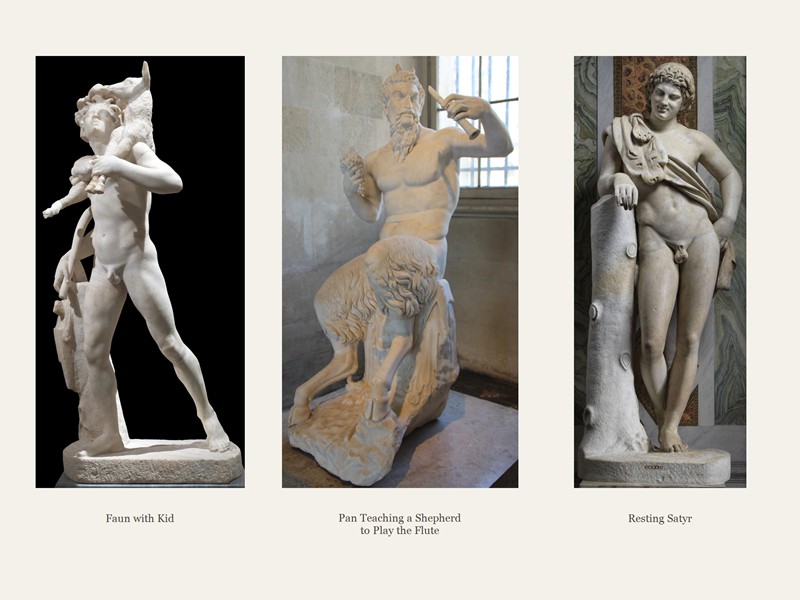
Which Statue Should You Buy for Your Garden or Property?
The right choice depends on more than mythological accuracy. Your garden style, architectural setting, available space, and preferred visual effect should all influence the decision.
Choose a Satyr for a Lively Classical Garden
A Satyr is a strong option if you want a sculpture with personality and movement. Dancing poses, expressive faces, and associations with music or festivity can bring a sense of energy to a traditional garden.
Satyr statues may work especially well in:
Formal villa gardens with classical architectural elements.
Wine estates and hospitality properties.
Courtyards featuring fountains and stone ornamentation.
Landscapes that incorporate multiple mythological sculptures.
A dynamic Satyr can create an interesting contrast with symmetrical planting and orderly architectural lines. For a more understated setting, choose a relaxed pose and a restrained finish.
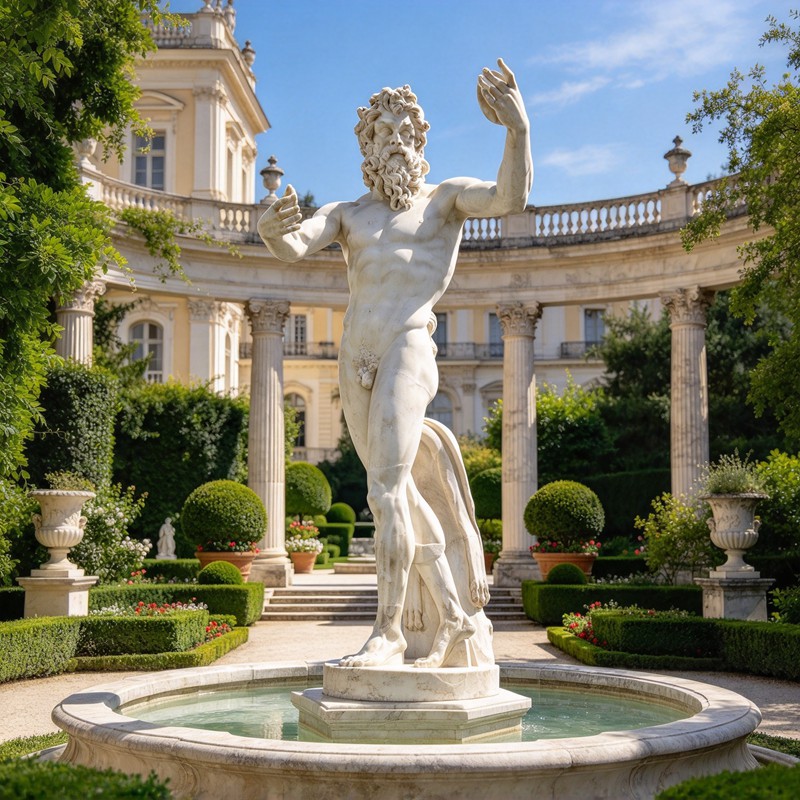
Choose a Faun for a Natural and Romantic Garden
A Faun is often the better choice when the desired atmosphere is pastoral, peaceful, or closely connected with nature.
Consider a Faun statue if your property features:
Mature trees and layered greenery.
Curving paths and natural stone.
Romantic garden seating areas.
Traditional European landscaping.
Secluded corners intended for quiet contemplation.
The sculpture does not need to dominate the entire garden. A smaller Faun placed among plants can create a subtle artistic moment, while a larger marble figure can anchor a more formal landscape composition.
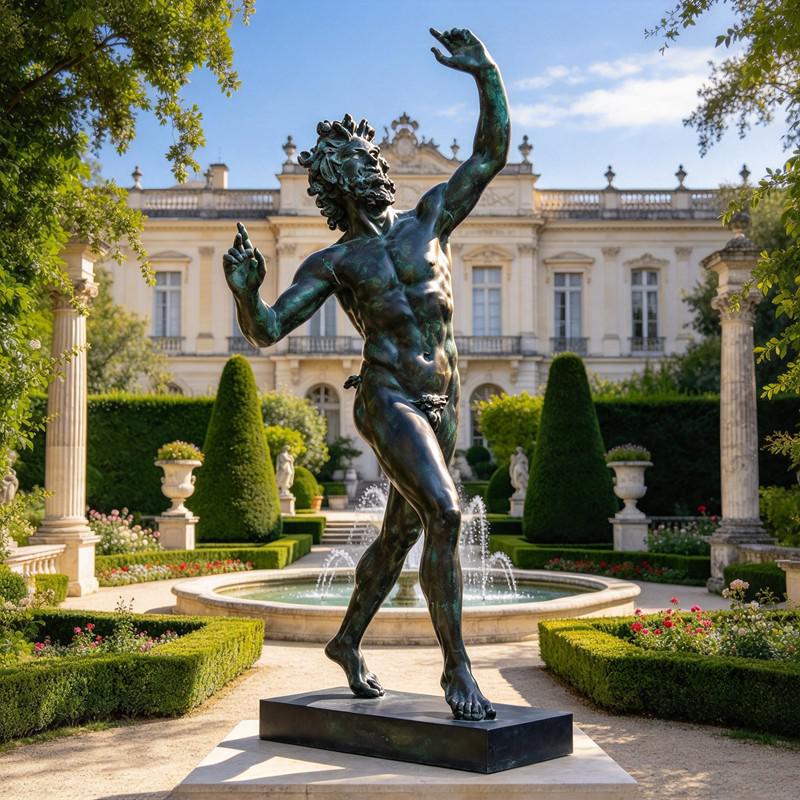
Choose Pan for a Distinctive Mythological Focal Point
Pan is a particularly appealing option when you want a sculpture with a specific mythological identity and recognizable attributes.
A Pan statue can become a focal point beside a garden pond, at the end of a stone pathway, or within a large estate landscape. A composition featuring the pan flute can also introduce a musical theme that distinguishes the sculpture from more generic woodland figures.
For larger projects, consider the statue’s viewing angles. A figure holding an instrument or featuring prominent horns may need enough surrounding space for visitors to appreciate its details from different directions.
Consider the Overall Landscape Before Making a Decision
Even when you have chosen the right mythological subject, the sculpture must fit the property.
Before ordering, evaluate the following:
Architectural style: Does the figure complement the building and existing garden features?
Viewing distance: Will visitors see the sculpture from a nearby pathway or from across a large lawn?
Landscape composition: Will it stand alone or form part of a group of statues?
Visual weight: Does the sculpture have enough presence to balance nearby trees, fountains, walls, or other structures?
Desired atmosphere: Should the figure feel playful, romantic, contemplative, or dramatic?
A well-chosen sculpture should contribute to the overall design rather than compete with every surrounding feature.
What Should You Consider Before Buying a Satyr, Faun, or Pan Statue?
Once you have selected the subject, the next step is to evaluate the material, dimensions, craftsmanship, and installation requirements.
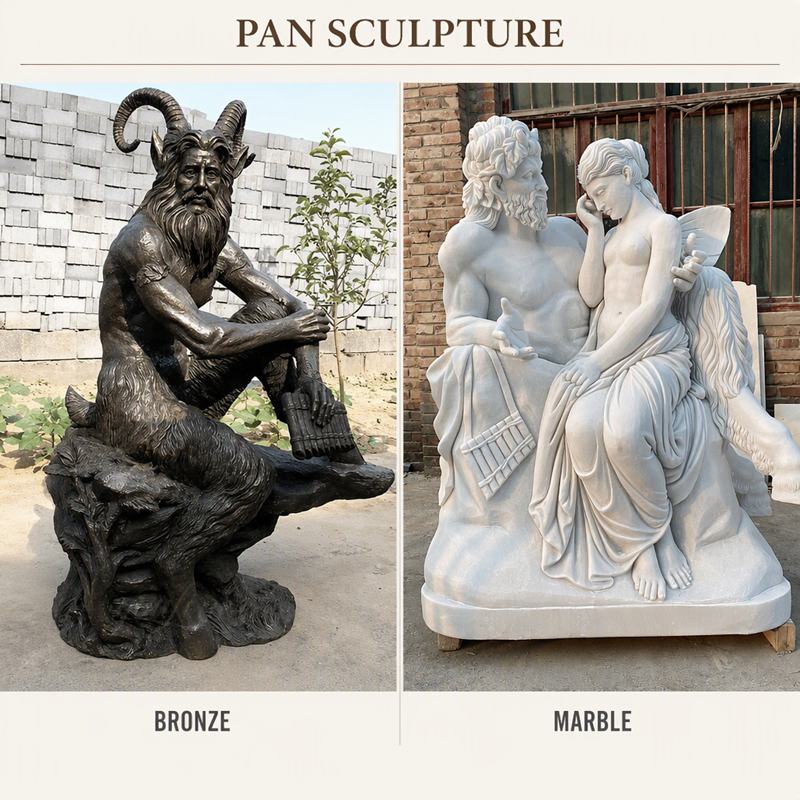
1. Marble, Bronze, or Another Material?
Material selection influences the sculpture’s appearance, surface detail, weight, maintenance requirements, and cost.
Marble statues
Marble is a traditional choice for classical mythological sculpture. Its natural veining and light-colored surface can highlight facial expressions, flowing hair, muscular anatomy, and intricate details.
Marble Satyr, Faun, and Pan statues are particularly suitable for formal gardens, classical courtyards, and estate landscapes. However, marble is a natural stone, and its suitability for outdoor use depends on the stone type, local climate, workmanship, and maintenance.
Bronze statues
Bronze is another popular material for mythological figures. Its surface can emphasize texture and create strong contrasts between illuminated and shadowed areas.
Bronze Satyrs, Fauns, and Pan statues can work well in both traditional and contemporary landscapes. Different patinas offer a range of appearances, from warm brown and dark bronze to selected greenish finishes.
For outdoor bronze sculptures, ask about alloy specifications, casting quality, wall thickness where relevant, drainage, protective finishing, and the intended installation method.
Which material should you choose?
Choose marble if you prefer a traditional stone appearance and classical architectural character. Consider bronze if you want a different surface texture, a patinated finish, or a design that emphasizes sculptural movement.
The best material depends on the specific design, project budget, climate, and intended use.
2. Choose the Right Size and Proportions
A statue that looks impressive in a product photograph may appear too small or too large when installed on your property.
For a garden corner or intimate courtyard, a smaller statue may provide enough visual interest without overwhelming the space. For an estate entrance, large lawn, or hotel landscape, a larger sculpture may be necessary to remain visually prominent from a distance.
Before ordering, measure the available area and consider the height, width, depth, and base dimensions of the sculpture.
If the statue will be placed beside a fountain, planters, or architectural columns, evaluate the proportions of the entire composition. A supplier can help you assess alternative dimensions using photographs, measurements, or design drawings.
3. Check the Details of the Sculptural Design
Because Satyr, Faun, and Pan statues share certain visual characteristics, small details can make a significant difference.
Confirm the intended subject and discuss the following elements:
Facial expression and overall anatomy.
Shape and size of horns or ears.
Human and animal proportions.
Pose, hand position, and any musical instrument.
Surface texture and level of detail.
Base design and relationship to the surrounding landscape.
If you are trying to match a historical sculpture or an existing statue on your property, provide clear reference photographs from several angles. This helps the manufacturer understand which details are essential and which can be adapted to suit the project.
4. Consider Outdoor Durability and Installation
A garden statue needs to be suitable for its actual environment.
For marble, consider local freeze-thaw conditions, moisture exposure, stone characteristics, and appropriate cleaning practices. For bronze, discuss the alloy, surface finish, drainage, and maintenance requirements.
Installation also deserves attention. Larger sculptures may require a suitable foundation, secure anchoring, lifting equipment, and access for delivery. The appropriate approach depends on the statue’s weight, construction, location, and local site conditions.
For commercial landscapes or large private estates, discuss the installation plan before production is completed. Early coordination can reduce the risk of access problems or unexpected foundation work.
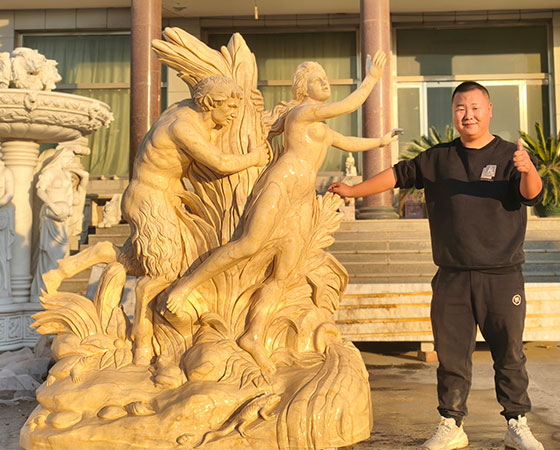
Custom Satyr, Faun, and Pan Statues for Gardens and Estates
Sometimes, a ready-made statue does not match the dimensions, artistic preferences, or architectural character of a particular property. In these cases, a custom sculpture may offer greater flexibility.
YouFine works with clients seeking marble and bronze sculptures for private gardens, villas, estates, and commercial landscape projects. Depending on the design and project requirements, customization may include the following elements.
Custom Size and Proportions
A sculpture can be developed around the available installation space and desired viewing distance. This is especially useful for estate entrances, large courtyards, and landscape compositions in which the statue must relate to other architectural or decorative features.
Pose and Artistic Details
If you prefer a particular Satyr, Faun, or Pan design, reference images can help establish the intended pose and defining characteristics. Depending on the project, details such as facial expression, musical instruments, body proportions, and decorative elements can be discussed during the design process.
Marble and Bronze Options
The material can be selected according to the desired appearance, project budget, and installation environment. Discussing these factors early helps align the design with the practical requirements of the finished sculpture.
Base Design and Project Coordination
The base is an important part of the finished composition. Its proportions, finish, and installation requirements should complement the sculpture and the surrounding landscape.
For larger projects, it is also helpful to coordinate dimensions, packaging, shipping, and installation requirements before production begins.
If you are planning a custom mythological sculpture, share your reference images, preferred material, approximate dimensions, and intended installation location with YouFine. These details provide a practical starting point for discussing a suitable design.
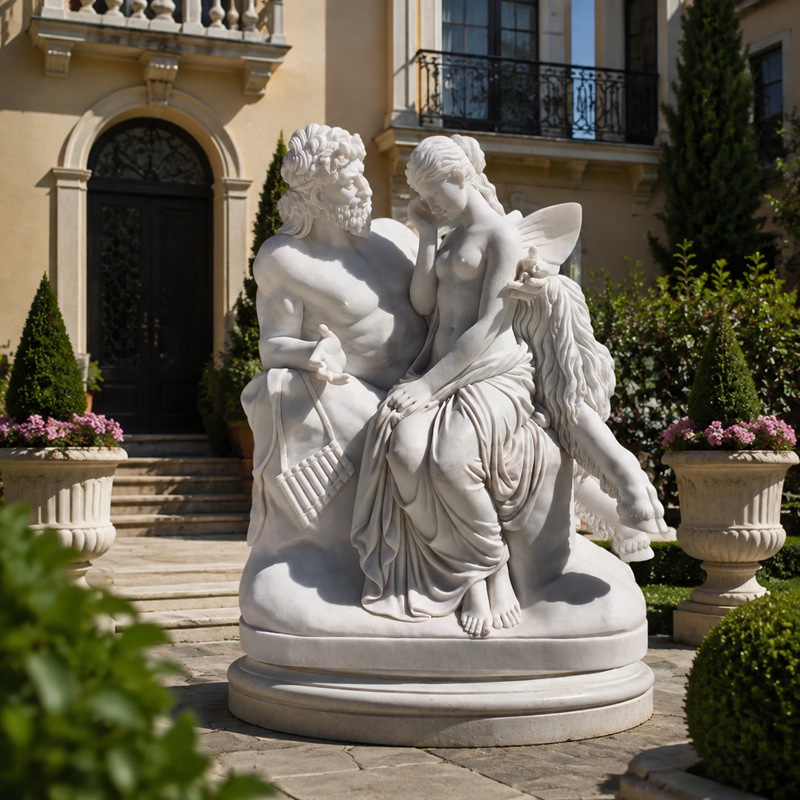
Find the Right Classical Mythological Statue for Your Project
Satyr, Faun, and Pan statues share a rich visual heritage, but each offers a different way to introduce classical mythology into a garden or architectural setting.
A Satyr may be the right choice for a lively, expressive composition. A Faun can complement a romantic, naturalistic landscape, while Pan offers a distinctive mythological identity associated with rustic music and the wild outdoors.
Once you have chosen your preferred subject, consider the material, dimensions, sculptural details, and installation requirements to ensure that the finished piece suits your property.
At YouFine, we help clients explore marble and bronze sculpture options for private gardens, villas, estates, and commercial projects. Whether you have a specific reference image or are still comparing different mythological figures, you can contact our team to discuss your preferred design, material, dimensions, and customization requirements.
Looking for a Satyr, Faun, or Pan statue for your garden or estate? Contact YouFine to discuss a sculpture tailored to your project.
FAQs
1. Are Satyr and Faun Statues the Same?
Not exactly. Satyrs belong primarily to Greek mythology, while Fauns are associated with Roman mythology. Their appearances and mythological roles overlap, particularly in later art. For buyers, the distinction is most useful when selecting a historically specific subject rather than a general woodland figure.
2. How Can You Tell a Pan Statue from a Satyr Statue?
Pan is a specific Greek deity, while Satyr refers to a broader category of mythological beings. A pan flute is a useful clue for identifying Pan, although not every Pan statue includes one. The overall design, accompanying attributes, and historical reference are more reliable than any single physical feature.
3. Are Pan Statues Always Depicted Playing a Pan Flute?
No. Although the pan flute is strongly associated with Pan, sculptors portray him in a variety of poses. Some figures emphasize his connection with shepherds and the natural world, while others focus on his animal-like appearance or mythological character.
4. Are Marble or Bronze Statues Better for Outdoor Gardens?
Both can be suitable, depending on the design, climate, and installation conditions. Marble offers a traditional stone appearance, while bronze provides different surface textures and patina options. Consider durability, maintenance, cost, and the visual character of your landscape before deciding.
5. Can I Order a Custom Satyr, Faun, or Pan Statue?
Custom orders may allow you to specify the statue’s dimensions, material, pose, finish, and base design. Providing reference images and information about the installation site helps the manufacturer understand your requirements and evaluate the project.
6. What Size Mythological Statue Is Best for a Villa or Estate Garden?
There is no single ideal size. The right dimensions depend on the viewing distance, available space, architectural proportions, and surrounding landscape features. Measure the intended location before ordering, and consider how the statue will look from the main approach as well as from nearby pathways.