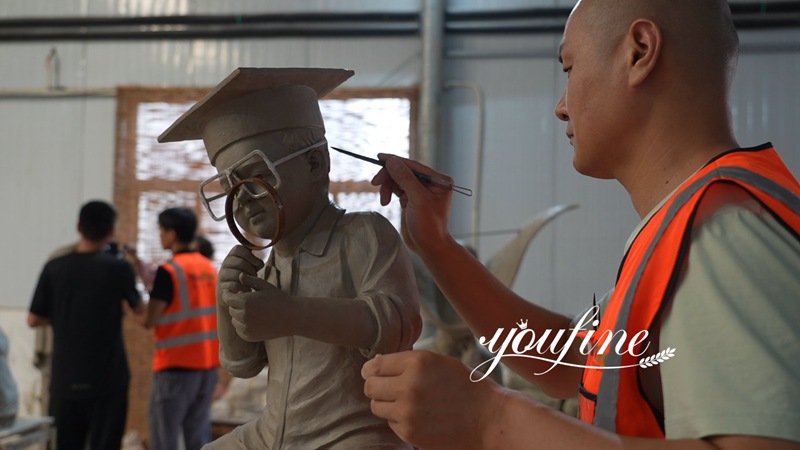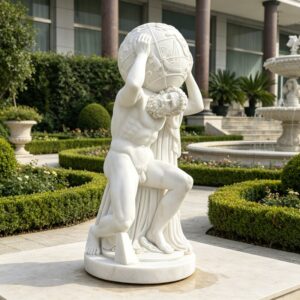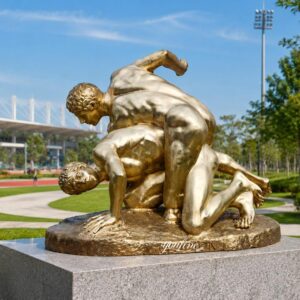
Before a bronze sculpture comes to life, there is always a crucial stage that defines its success—clay modelling. Whether it is a life-size human figure or a monumental public artwork, the entire project begins with shaping clay by hand.
At YouFine, we consider clay modelling not just a technical step, but the foundation of artistic quality and accuracy. Without a precise and well-crafted clay model, it is impossible to achieve a high-quality bronze sculpture.
What Is Clay Modelling Used for?
Clay modelling is the process of shaping a three-dimensional form using specialized sculpting clay. Artists use their hands and tools to build up details such as anatomy, movement, texture, and expression.
In bronze sculpture production, the clay model serves as the original prototype. It is the physical version of the design idea and acts as the base for all subsequent steps, including mold making and casting.
Unlike digital designs or sketches, clay modelling allows artists to:
- Work in real scale and proportions
- Adjust details freely
- Create a tangible preview of the final sculpture
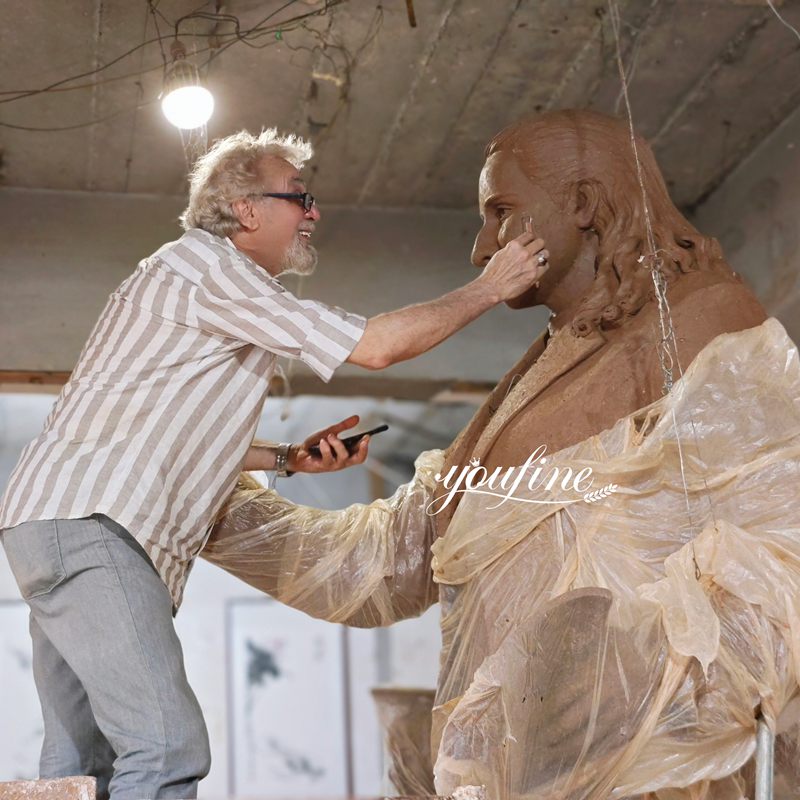
Why Clay Modelling Is Essential in Bronze Sculpture
Full Control Over Every Detail
All artistic elements—facial expression, muscle structure, posture, and fine textures—are defined during the clay modelling stage. Once the sculpture is cast in bronze, changes become extremely difficult and costly.
Flexible and Easy to Modify
Clay is highly workable. Artists can refine, reshape, or completely rework any part of the sculpture during this phase. This flexibility ensures the final result meets both artistic and client expectations.
A True Preview of the Final Work
A completed clay model gives clients a realistic, full-scale view of the sculpture before casting begins. This eliminates uncertainty and ensures confidence in the final outcome.
YouFine Clay Modelling Process
At YouFine, we follow a structured and client-focused approach to clay modelling, especially for custom bronze sculptures.
For Life-Size and Medium Sculptures (Up to 3 Meters)
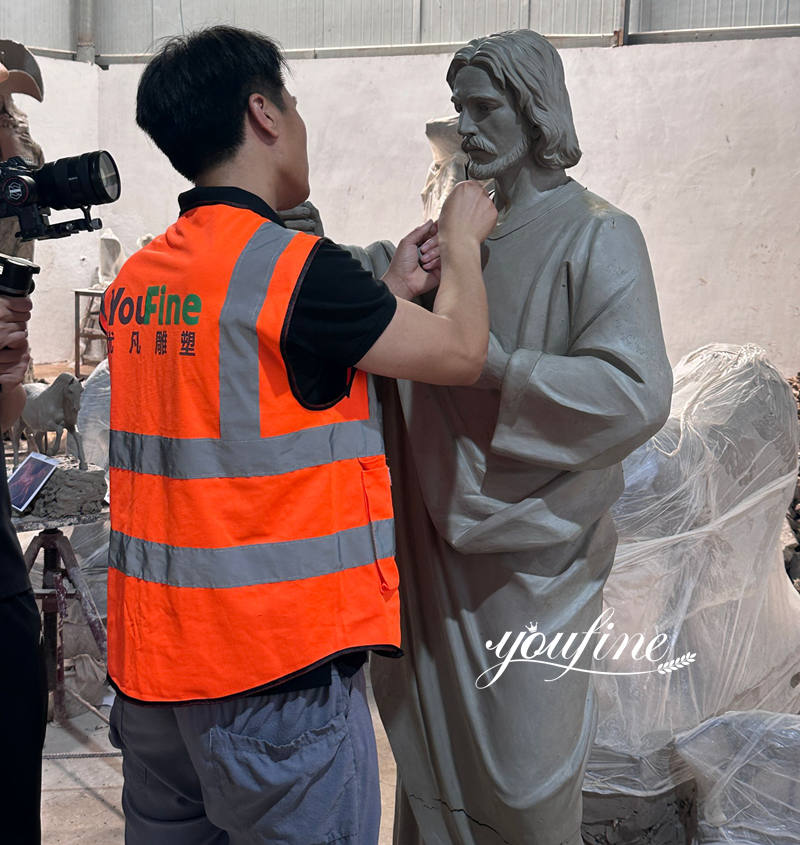
For sculptures within 3 meters, our artists create a 1:1 full-scale clay model based on the approved design.
During this process:
- Every proportion is carefully refined
- Surface details are fully developed
- Clients are invited to review and confirm each stage
We only proceed to the lost-wax casting method after receiving full client approval. This ensures that what you see in clay is exactly what you get in bronze.
For Large-Scale Sculptures (Over 3 Meters)
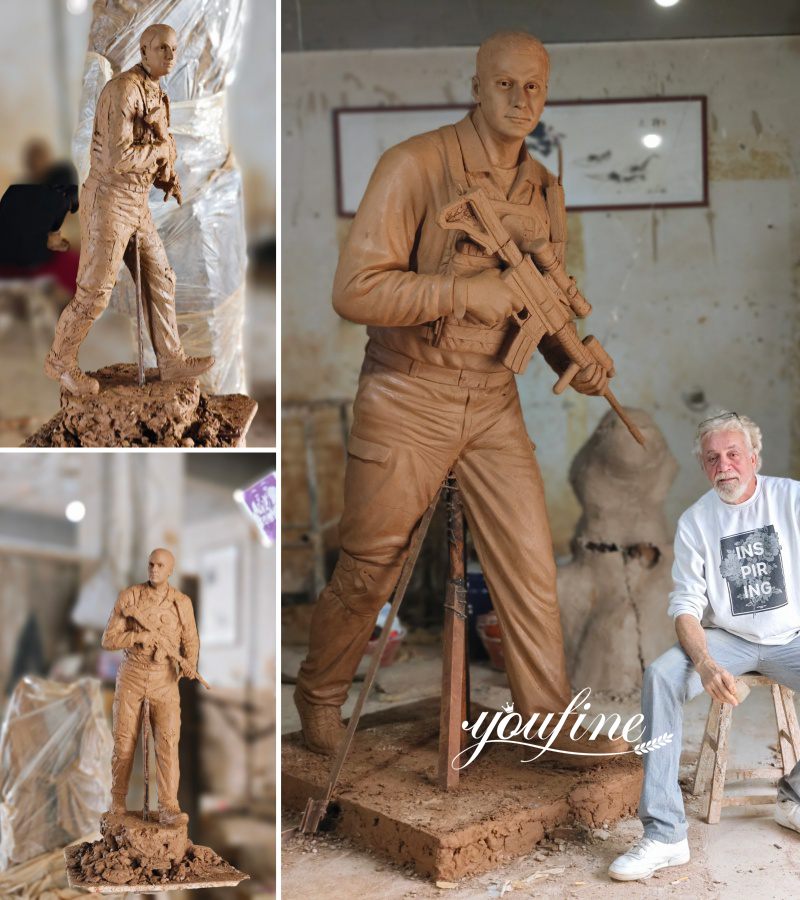
For monumental projects, we use a two-step modelling approach to ensure accuracy and reduce risk.
Step 1: Small Clay Model (Approx. 50 cm)
- A scaled-down version is created
- Focus on overall composition, proportions, and design concept
- Client reviews and confirms the direction
Step 2: Full-Scale Clay Model (1:1)
- The sculpture is enlarged to full size
- Detailed refinement is completed
- Final confirmation before mold making
This staged process allows for better control, clearer communication, and safer execution of large custom sculptures.
From Clay Model to Bronze Sculpture
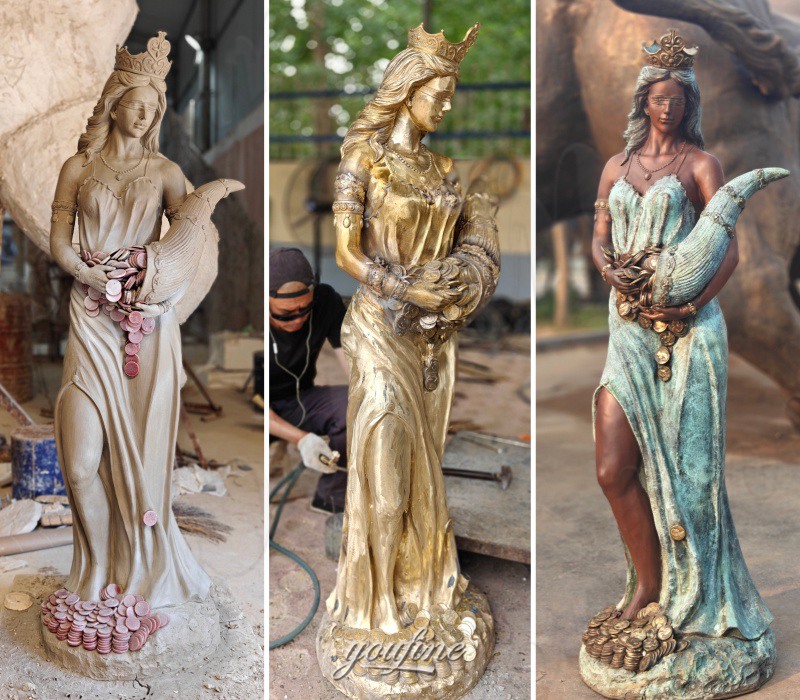
Once the clay model is approved, it moves into the bronze casting process:
- Clay modelling (prototype creation)
- Mold making (creating a negative mold)
- Wax model production
- Lost-wax casting
- Welding and assembly
- Surface finishing and patina coloring
It is important to understand that over 80% of the final artistic quality is determined during the clay modelling stage.
Our Artists: Experience You Can Trust
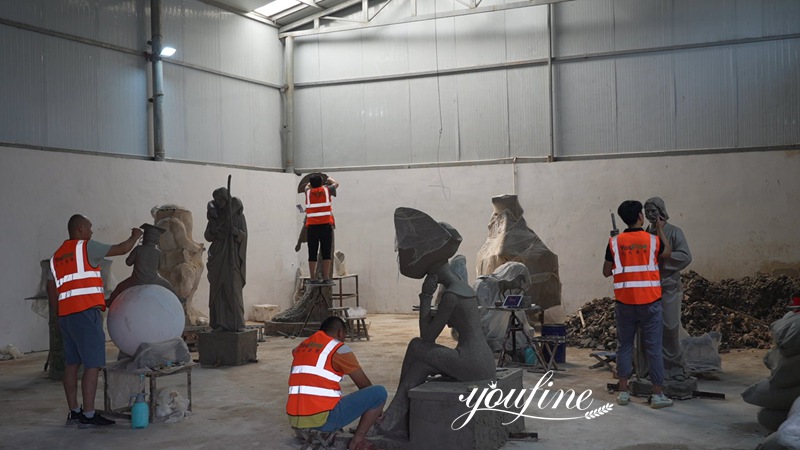
At YouFine, our clay modelling is handled by highly experienced sculptors with an average of over 20 years in the field.
We have specialized artists in different categories, including:
- Figurative sculptures (human forms)
- Animal sculptures
- Decorative and architectural sculptures
This specialization ensures that each project is handled by an artist who deeply understands the subject—whether it’s human anatomy, animal movement, or artistic styling.
For us, clay modelling is not just preparation—it is where art truly begins.
Real Case: Why Clay Modelling Delivers Better Results Than 3D Design Alone
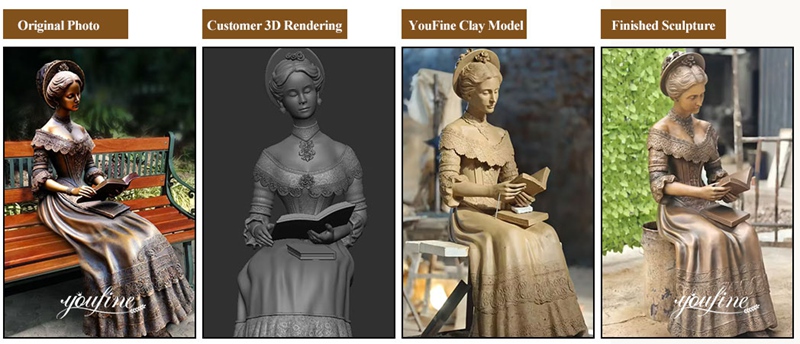
To better illustrate the importance of clay modelling, here is a real project we completed for one of our clients.
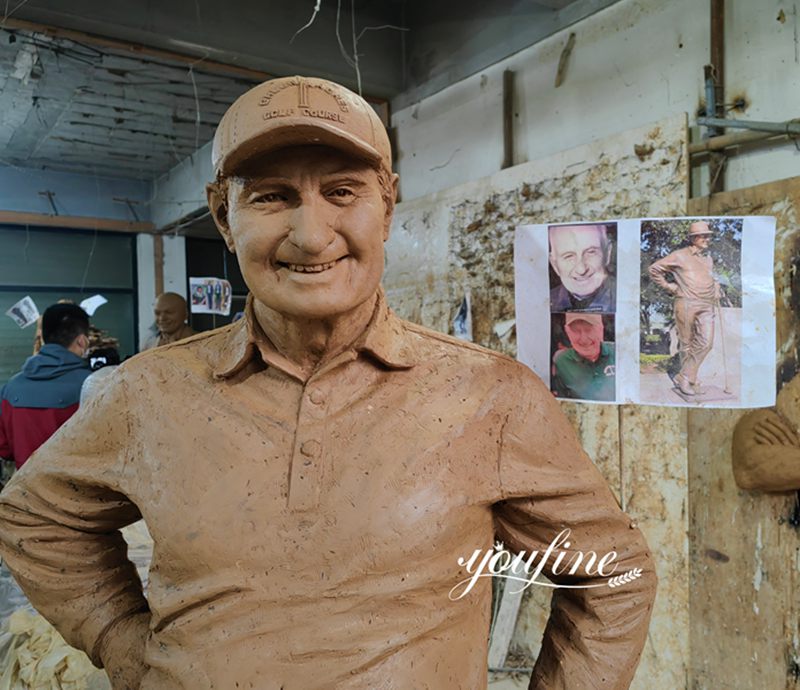
At the beginning, the client preferred to have a designer create a 3D model based on reference images he provided. At that time, he still had some doubts about our clay modelling capabilities. However, despite multiple revisions, the 3D model failed to accurately capture the spirit, expression, and overall appearance the client was looking for.
After reviewing the situation, YouFine suggested switching to our traditional clay modelling approach.
Below, you can compare:
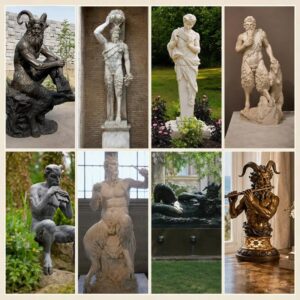
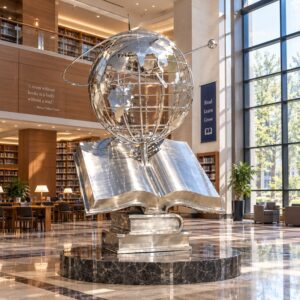
- The initial 3D design
- The original reference image provided by the client
- The clay model created by YouFine artists
- The final bronze sculpture
The difference is clear. Our clay model—and the final cast piece—achieved a level of precision, depth, and artistic expression that the 3D design could not deliver.
This case highlights an important point: While 3D modelling can be useful, it often lacks the subtlety and artistic sensitivity that experienced sculptors bring through hands-on clay modelling.
Common Questions About Clay Modelling
- How long does clay modelling take?
It depends on the size and complexity. A life-size sculpture typically takes several weeks, while large projects may take longer.
- Can I request changes during the process?
Yes. In fact, this is the best stage to make adjustments. We encourage client feedback before casting begins.
- Do I need to approve the clay model before casting?
Absolutely. We proceed to bronze casting only after you fully approve the clay model.
- Is clay modelling necessary for custom sculptures?
Yes. It is the most reliable way to ensure accuracy, detail, and satisfaction in custom bronze work.
- What happens if clay modelling is skipped?
Skipping this step greatly increases the risk of errors, poor proportions, and costly corrections after casting.
Conclusion: The Foundation of a Perfect Sculpture
Clay modelling is the most critical stage in creating a bronze sculpture. It transforms an idea into a physical form and sets the standard for everything that follows.
At YouFine, we combine structured processes, client collaboration, and decades of artistic experience to ensure every clay model meets the highest standards before casting begins.
If you are planning a custom bronze sculpture, the journey always starts with a clay model—one that you can see, review, and fully approve.
Looking to create a custom bronze sculpture?
Contact YouFine today to begin with a professionally crafted clay model—and turn your vision into a lasting work of art.