Bronze sculpture is one of the most durable and timeless forms of art. Whether placed in a private garden, church courtyard, hotel lobby, memorial plaza, or indoor collection, a quality bronze statue can remain beautiful for decades—even generations.
But there is one important condition: bronze must be cleaned correctly.
Many owners assume bronze can be treated like ordinary metal and polished until it shines. In reality, aggressive cleaning often does more harm than dirt itself. The dark brown, antique green, or warm golden tones on a bronze sculpture are not “stains.” They are part of the sculpture’s patina, an intentional finish that gives bronze its depth, elegance, and protective surface.
Professional conservators consistently note that the goal of bronze maintenance is not to strip away age, but to keep the surface stable, protected, and visually balanced.
In this complete guide, we will show you exactly:
- how to clean bronze sculpture safely,
- how to care for indoor and outdoor bronze statues,
- what products should never be used,
Why Bronze Sculpture Needs Special Cleaning
Bronze is an alloy primarily made from copper. Because of this, it naturally reacts with oxygen, moisture, sunlight, airborne pollutants, and even oils from human skin.
This reaction creates what is known as the patina layer—the rich surface coloration that makes bronze sculpture look noble, aged, and artistic.
A finished bronze sculpture usually has three protective surface elements:
- a chemically created or naturally developed patina,
- a sealed wax coating,
- and a dense metal surface beneath.
These layers work together to provide:
- visual depth,
- weather resistance,
- anti-corrosion protection,
- and a soft warm luster.
However, if the sculpture is cleaned with household chemicals, abrasive pads, acidic products, or random metal polish, the wax can dissolve and the patina can wear away permanently. Once that happens, the bronze may begin oxidizing unevenly and lose its intended artistic finish.
This is why cleaning bronze sculpture is not about making it “look new.”
It is about helping it age beautifully.
Before Cleaning: Identify What You Are Actually Removing
One of the biggest mistakes people make is trying to remove everything they see on the surface.
Not everything on bronze should be removed.
In fact, many professional sculptors and conservators repeat the same warning: Patina is not dirt.
Community discussions among art conservators also stress that over-cleaning often destroys collector value because owners mistake intentional surface variation for grime.
Before cleaning, determine which of these conditions you have:
1. Dust and Fingerprints
This is the most common and safest to remove. Indoor sculptures often only need light dusting.
2. Outdoor Dirt and Environmental Film
Rain deposits, bird droppings, pollen, pollution residue, and soil splash may accumulate on outdoor pieces.
3. Dull Wax or Uneven Dryness
Sometimes the sculpture is not dirty—it simply needs a new protective wax coat.
4. Active Corrosion
Bright powdery green spots may indicate harmful corrosion rather than artistic green patina. This requires prompt treatment.
Understanding the difference prevents unnecessary damage.
What You Need to Clean Bronze Sculpture Safely
Prepare these simple materials:
- soft microfiber cloth
- cotton gloves
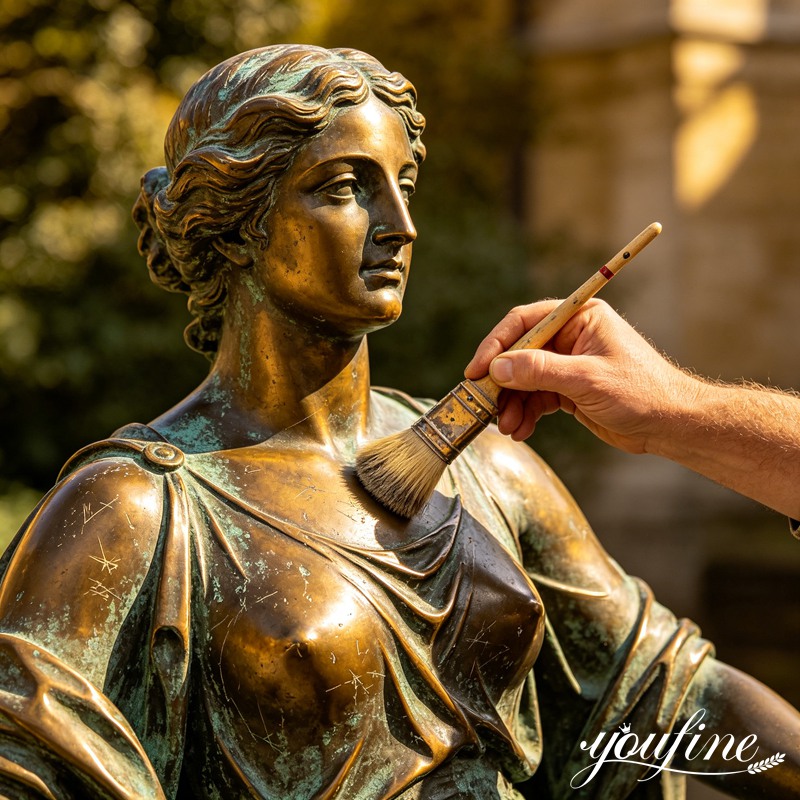
- soft natural-bristle brush or paintbrush
- lukewarm distilled water
- mild pH-neutral soap
- dry lint-free towel
- clear paste wax or museum-grade microcrystalline wax
These are enough for nearly all normal bronze maintenance.
Never Use These on Bronze Sculpture
Do not use:
- steel wool
- abrasive sponge
- sandpaper
- acidic cleaner
- ammonia cleaner
- bleach
- furniture polish
- random brass polish
- aggressive commercial metal cleaners
Most bronze care specialists specifically advise avoiding solvents and harsh chemical products because they can strip the patina and soften the wax barrier.
If a cleaning product advertises “instant shine,” it is usually the wrong product for art bronze.
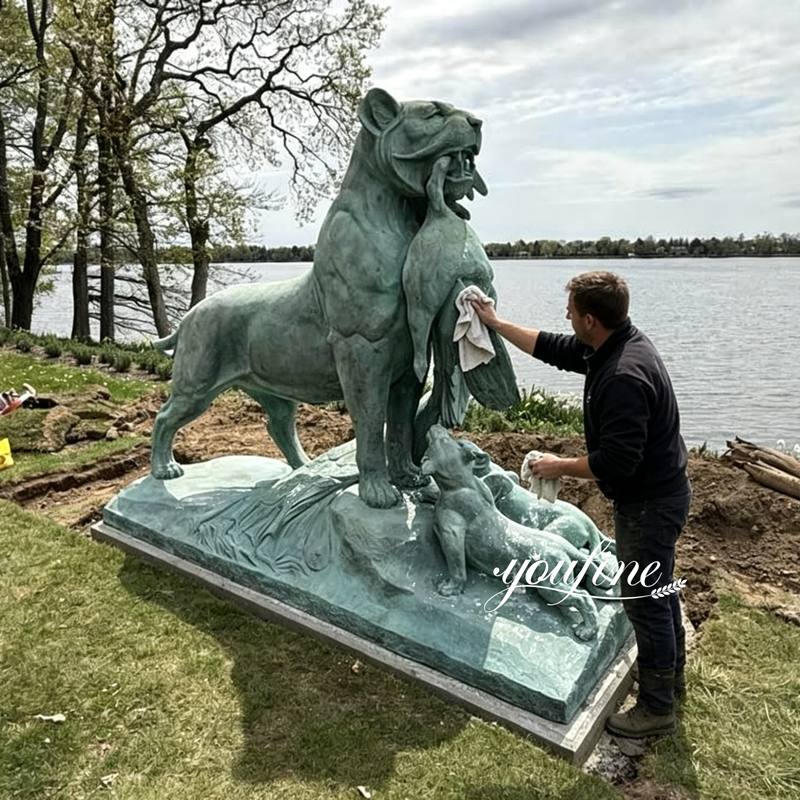
Step-by-Step: How to Clean an Indoor Bronze Sculpture
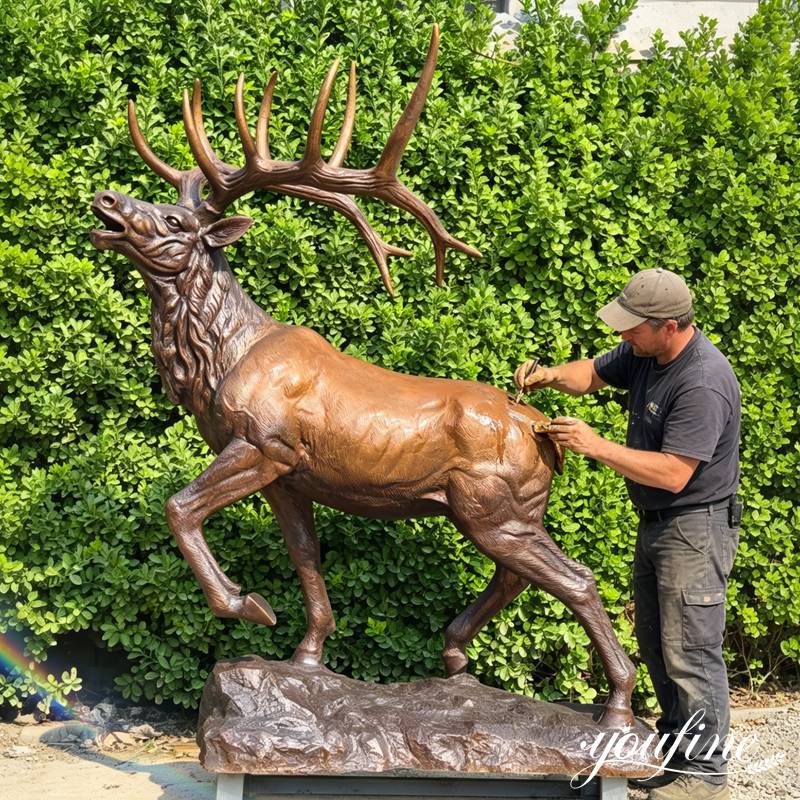
Indoor bronze statues are generally low maintenance. In many cases, only dusting is required.
Step 1: Wear Cotton Gloves
Human hands contain oils, salts, and mild acids.
Repeated touching can create shiny worn areas or fingerprint corrosion over time, especially on raised details like noses, hands, shoulders, and edges.
Always handle valuable bronze with gloves if possible.
Step 2: Remove Loose Dust Gently
Use a dry microfiber cloth to wipe broad surfaces.
For carvings, folds, hair texture, or detailed ornament, use a soft brush to lift dust from recesses.
Use gentle strokes only.
Do not scrub.
Step 3: Spot Clean Light Dirt
If there are sticky marks or light grime:
- mix a few drops of neutral soap into lukewarm distilled water,
- dampen (not soak) a soft cloth,
- gently wipe only the affected area.
Do not pour water directly onto the sculpture.
Do not let moisture sit in seams or under details.
Step 4: Dry Immediately
Use a clean dry towel to remove all moisture.
Bronze should never remain wet after cleaning.
Moisture trapped in pores can accelerate unwanted oxidation.
Step 5: Apply a Thin Protective Wax Layer
After the sculpture is fully dry, apply a very light coat of paste wax using a soft cloth or brush.
Allow it to haze for several minutes.
Then buff gently.
This restores:
- warmth
- soft glow
- a fresh protective barrier
Experts widely recommend wax rather than polish as the long-term maintenance solution because wax protects without cutting into the patina.
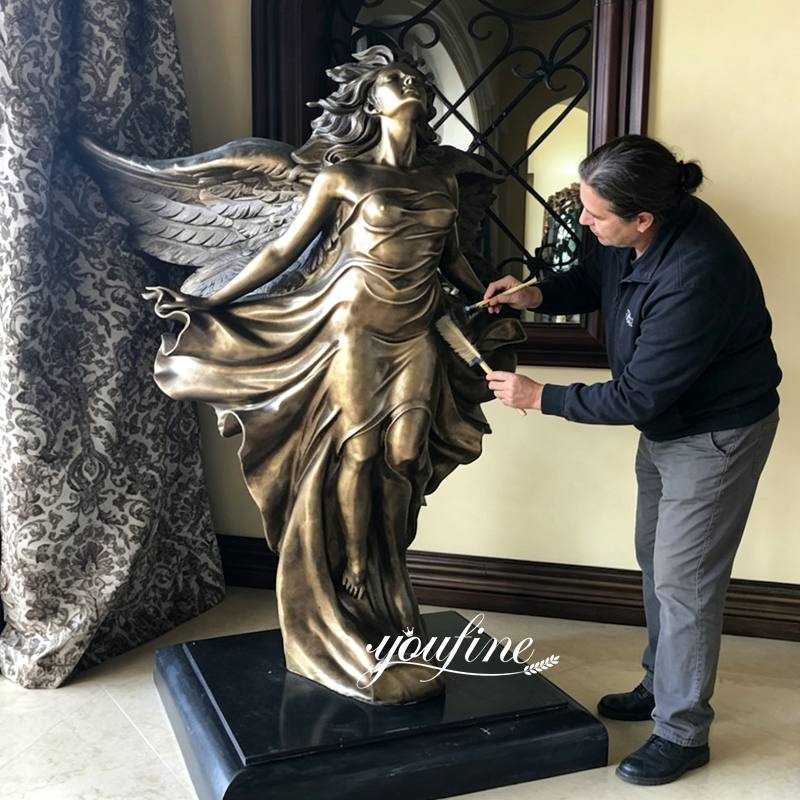
Step-by-Step: How to Clean Outdoor Bronze Sculpture
Outdoor bronze statues face much harsher conditions:
- rainwater minerals
- UV sunlight
- bird droppings
- tree sap
- dust storms
- air pollution
- lawn chemicals
Because of this, outdoor sculptures need a slightly deeper seasonal cleaning.
Step 1: Rinse With Clean Water Lightly
Use low-pressure clean water to soften dirt.
Do not use pressure washers.
High-pressure spray can force water into joints and remove wax unevenly.
Step 2: Wash With Mild Soap and Soft Brush
Use the same neutral soap solution.
Brush gently across the full surface, paying attention to:
- lower edges,
- horizontal surfaces,
- decorative recesses,
- bird resting points.
Bird droppings should be removed promptly because their acidity can stain the patina if left too long.
Step 3: Rinse Thoroughly
Remove all soap residue.
Soap left on the surface can create dull streaks.
Step 4: Dry Completely
Let the sculpture air dry, then wipe with a dry cloth.
Choose a sunny or breezy day if possible.
Bronze professionals often recommend waxing only after the bronze is fully dry and slightly warm, which helps the wax settle more evenly into the surface.
Step 5: Re-Wax the Entire Sculpture
This is the most important step.
Outdoor bronze without wax protection will weather much faster.
Apply a thin coat of:
- museum wax,
- microcrystalline wax,
- or solvent-free clear paste wax.
Buff softly until the sculpture develops a uniform satin sheen.
Do not attempt mirror polishing.
Bronze sculpture should look rich and deep—not chrome bright.

How Often Should Bronze Sculpture Be Cleaned?
This depends on where it is displayed.
Indoor Bronze Sculpture
- Dust every 4–8 weeks
- Light wax refresh every 12 months
Outdoor Bronze Sculpture
- Wash every 3–6 months
- Re-wax every 6–12 months
- In humid or coastal areas: inspect more frequently
Foundries and conservation guides generally agree that regular thin waxing once or twice yearly dramatically slows oxidation and keeps patina stable.
Remember: frequent aggressive cleaning is worse than light periodic maintenance.
Common Mistakes That Damage Bronze Sculpture
1. Using Metal Polish to Make Bronze Shiny
This removes the artistic patina and creates unnatural bright patches.
2. Scrubbing Raised Details
Protruding points wear first and become permanently shiny.
3. Leaving Water on the Surface
Moisture encourages uneven oxidation.
4. Ignoring Wax Protection
Cleaning without rewaxing leaves bronze exposed.
5. Using Garden Chemicals Nearby
Fertilizer spray, chlorine, insecticide, and window cleaner can stain the finish.
6. Cleaning Too Often
Bronze does not need weekly washing. It needs controlled maintenance.
Many bronze owners online discover too late that “trying to improve it” often makes the sculpture look less authentic than before.
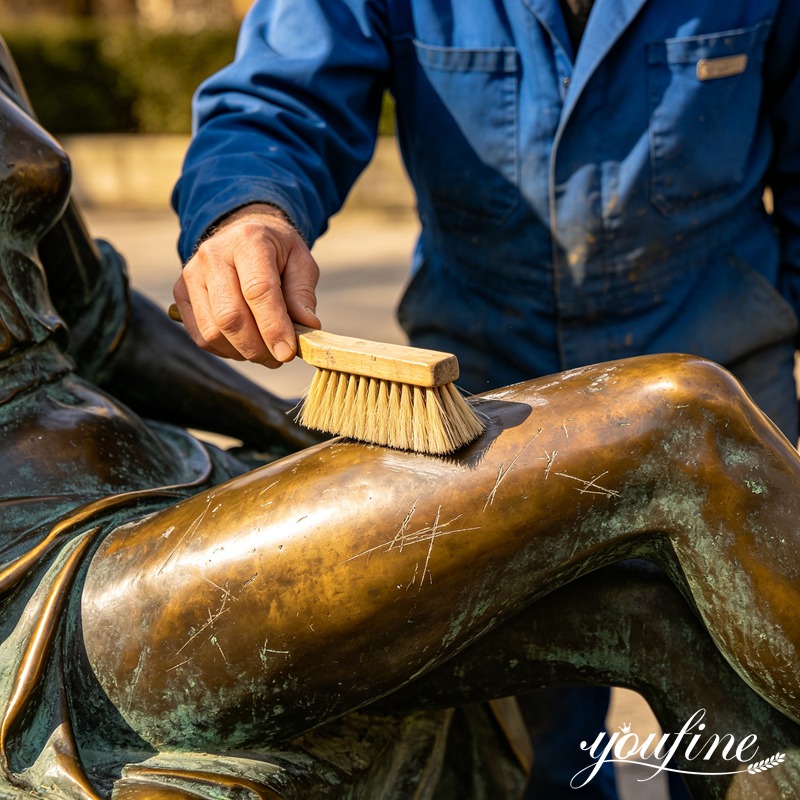
How to Preserve Bronze Patina for Decades
Patina is what gives bronze sculpture soul.
It creates: age, character, shadow, visual depth, and historical richness. Without patina, bronze looks raw and flat.
To preserve patina long term:
- avoid touching bronze with bare hands repeatedly,
- keep moisture from sitting on the surface,
- never use abrasive cleaners,
- apply protective wax regularly,
- and clean only when necessary.
Professional care philosophy is simple: protect the finish, not the brightness.
A well-maintained bronze sculpture should not look factory new. It should look naturally noble.
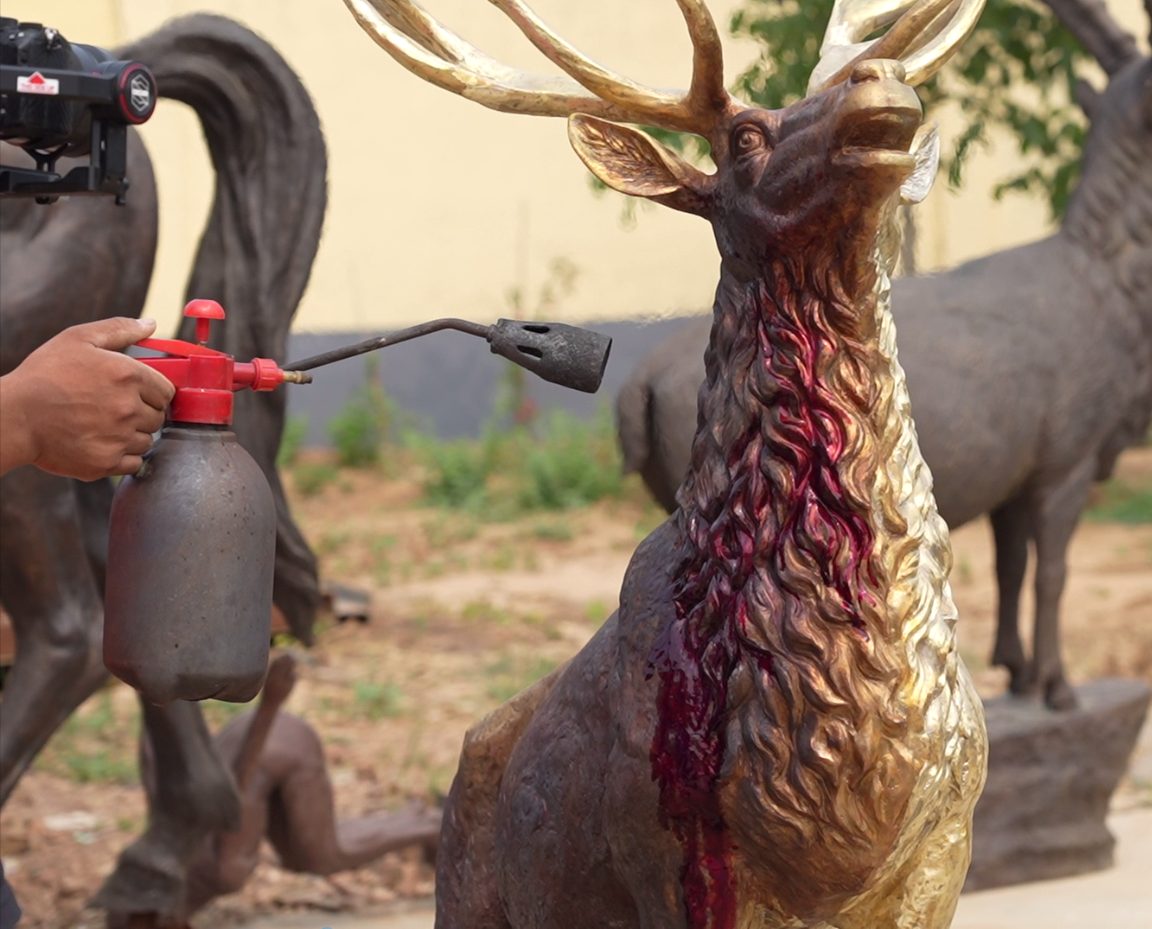
Why High-Quality Bronze Sculptures Are Easier to Maintain
Not all bronze statues age the same way.
A professionally cast bronze sculpture typically has:
- denser metal composition,
- deeper hand-applied patina penetration,
- smoother chasing and finishing,
- and multiple protective wax sealings.
This means:
- dirt does not cling as easily,
- the color ages more evenly,
- and routine cleaning becomes much simpler.
Low-quality bronze castings often have porous surfaces, shallow coloring, or poor sealing, which causes blotchy oxidation and difficult maintenance after only a short time outdoors.
So in many cases, easy maintenance starts not with the cleaning cloth – but with the foundry quality.
YouFine Bronze Sculptures: Designed to Age Beautifully
At YouFine, every bronze sculpture is produced through traditional lost-wax casting and finished by experienced patina artists.
Our bronzes feature:
- high-grade copper-rich bronze material
- hand-colored chemical patina
- detailed surface chasing
- repeated protective waxing before shipment
This means the sculpture arrives not only visually impressive, but also structurally prepared for decades of indoor or outdoor display with only simple periodic care.
Whether you need:
- garden bronze statues,
- church bronze figures,
- memorial monuments,
- animal sculptures,
- or custom public art,
YouFine provides foundry-direct bronze works that are built to retain their beauty year after year.
Contact YouFine today for durable custom bronze sculptures with professional long-life patina finishing.