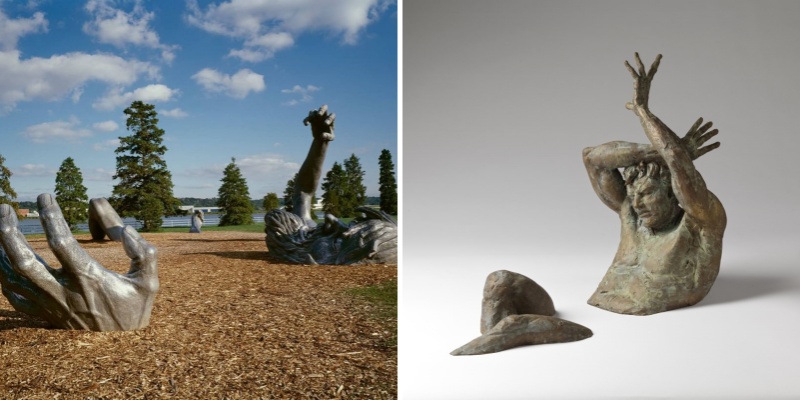
In the world of contemporary bronze sculpture, few styles are as visually striking as the human figure emerging from a surface. Many people first encounter this concept through the works of Italian artist Matteo Pugliese, whose wall-emerging figures have become highly recognizable in modern sculpture design.
In fact, this expressive style has inspired many collectors and designers around the world. I have also produced and supplied numerous reproduction pieces inspired by this aesthetic for international clients, which has given us a deeper understanding of its emotional and spatial impact in real environments.
However, when people explore larger outdoor installations, they often come across a very different but visually related masterpiece—the monumental The Awakening created by J. Seward Johnson Jr..
Although these two styles share a similar visual idea—figures emerging from a surface—their artistic intentions, scale, and applications are fundamentally different. One is intimate and psychological, while the other is monumental and public.
This article explores the meaning of the Awakening Sculpture and clarifies how it differs from Matteo Pugliese’s sculptural language, helping you understand which style best fits different architectural and commercial spaces.
The Origin of the Awakening Sculpture
The sculpture was created by American artist J. Seward Johnson Jr. in 1980.
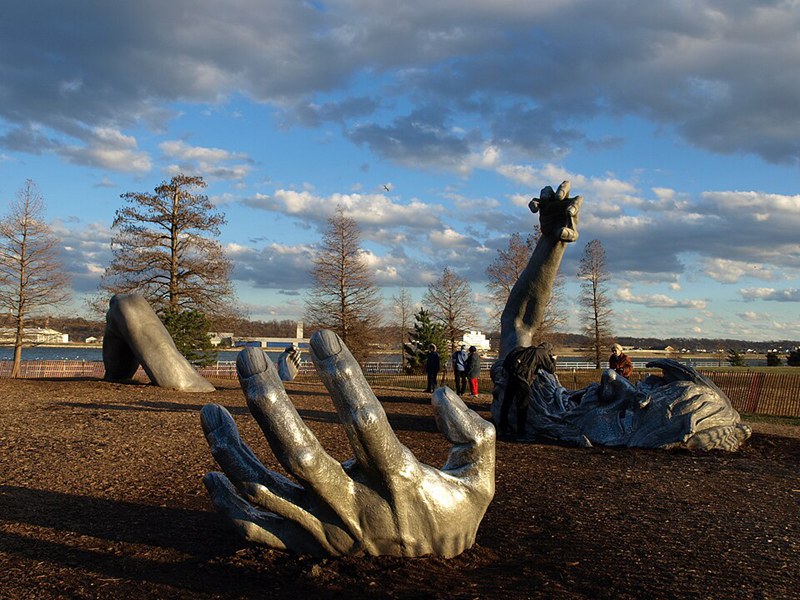
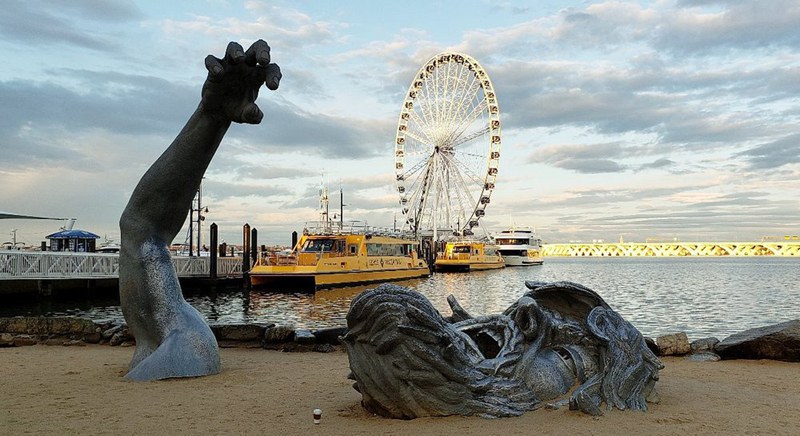
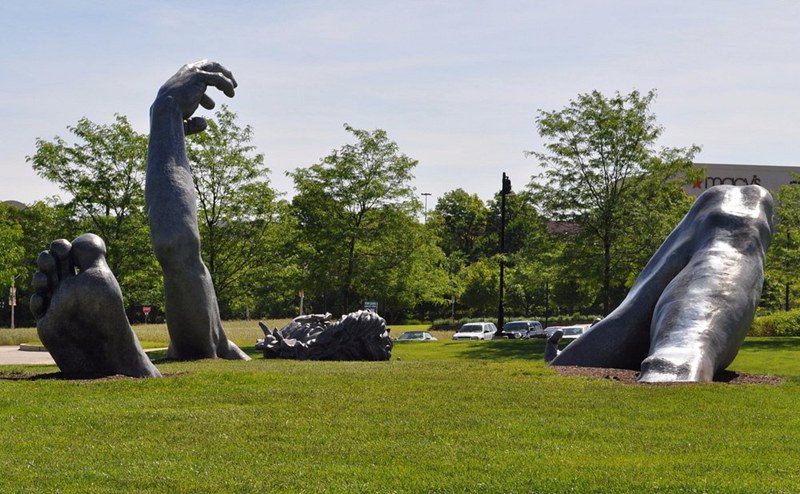
Originally installed in Washington, D.C., the sculpture was later relocated, and replicas have since appeared in various locations. One of the most famous installations today can be found at National Harbor.
The artwork consists of five separate elements: a head, two hands, a bent leg, and a foot. Together, they depict a giant figure struggling to rise from beneath the earth—an image that leaves a lasting impression on viewers.
What Does the Awakening Sculpture Mean?
1. Rebirth and Awakening
The figure emerging from the ground symbolizes a moment of awakening—whether spiritual, emotional, or intellectual. It represents the transition from unconsciousness to awareness.
2. Human Struggle and Freedom
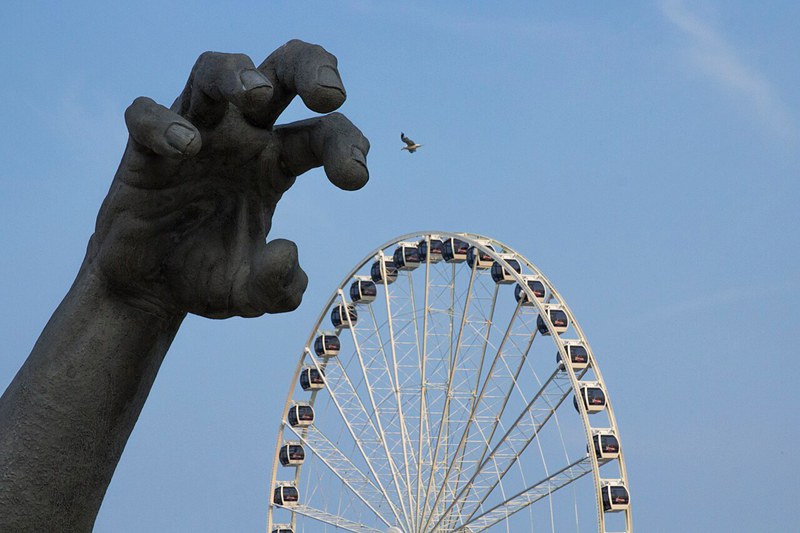
The tension in the hands and facial expression reflects effort and resistance, often interpreted as breaking free from limitations.
3. Inner Strength and Potential
Its monumental scale highlights the immense strength within individuals, suggesting that even when buried, human potential can rise.
4. Connection Between Humans and Nature
The figure appears to come directly from the earth, symbolizing the deep relationship between humanity and nature.
Why Is the Awakening Sculpture So Popular?
- Striking Visual Impact: Its massive scale makes it an unforgettable landmark.
- Interactive Experience: Visitors can walk among the sculpture elements, creating engagement.
- Emotional Connection: The theme of struggle and emergence resonates universally.
- Social Media Appeal: Its dramatic composition makes it highly shareable.
Awakening Sculpture vs Matteo Pugliese: Key Differences
Although many people associate the The Awakening with the works of Matteo Pugliese, they are not directly related. The similarity lies in a shared visual concept—human figures emerging from a surface—but their artistic direction is quite different.
1. Artist & Origin
- The Awakening was created by J. Seward Johnson Jr. as a public artwork in the United States.
- Matteo Pugliese’s sculptures are contemporary works developed in Italy, primarily for galleries and collectors.
2. Scale and Presentation
Awakening Sculpture
- Monumental outdoor installation
- Separate sculptural elements
- Designed as a landmark
Pugliese’s Sculptures (e.g., Extra Moenia)
- Wall-mounted or relief sculptures
- Figures embedded in walls
- Primarily indoor display
3. Artistic Meaning
Awakening Sculpture
- Rebirth, awakening, transformation
- Hope and strength
Pugliese’s Work
- Inner struggle and tension
- Psychological and philosophical themes
4. Application
Awakening-style sculptures
- Public spaces
- Commercial plazas
- Resorts
Pugliese-style sculptures
- Interior walls
- Art galleries
- Private collections
While both styles explore the idea of emergence, the Awakening Sculpture focuses on monumental public impact, whereas Matteo Pugliese’s work emphasizes intimate emotional expression.
Where Is the Awakening Sculpture Used?
- Public Parks and City Squares: Creates iconic landmarks and attracts visitors.
- Commercial Developments: Enhances brand visibility and increases foot traffic.
- Resorts and Waterfront Projects: Adds dramatic visual appeal to open environments.
- Private Estates: Reflects artistic taste and individuality.
Can You Customize an Awakening Sculpture?
Yes. Awakening-style sculptures can be fully customized:
- Size: life-size to monumental
- Material: bronze or stainless steel
- Pose adjustments
- Surface finishes (patina, polished, antique)
Customization allows the sculpture to perfectly match your project’s design and environment.
Conclusion
The Awakening Sculpture is more than a visual centerpiece—it is a symbol of strength, transformation, and human potential.
Its powerful message and striking form make it an ideal choice for projects that aim to inspire, engage, and stand out.
At YouFine, we specialize in large and life size bronze sculptures with over 40 years of experience.
- Hundreds of ready-made clay models available
- Full customization support
- Factory-direct pricing
Contact us today to create your own Awakening Sculpture.