Natural stone has always been one of the most valued materials in sculpture and architecture. From classical marble statues to outdoor granite monuments and rustic sandstone garden carvings, different stones create completely different artistic effects.
However, many buyers make the same mistake when choosing stone: they assume all natural stones are similar and only compare price or color.
In reality, the internal structure of each stone determines everything—how fine the carving can be, how long the sculpture will last outdoors, how luxurious the final finish looks, and how much maintenance the piece will need in the future.
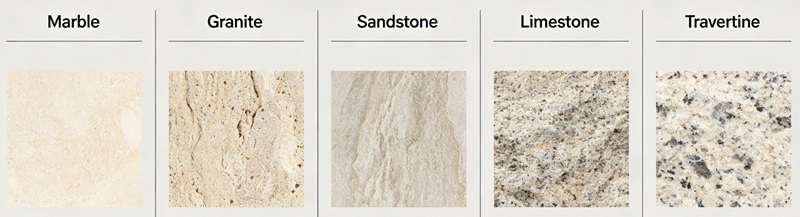
Among the most commonly used carving stones today, Marble, Granite, Sandstone, Limestone, and Travertine are the five names buyers hear most often. Although all belong to the natural stone family, they vary greatly in hardness, texture, decorative style, weather resistance, and cost.
So which material is best for your sculpture or architectural project?
Let’s compare them from the perspectives that really matter.
Understanding the 5 Most Popular Natural Stones
Before comparing specific combinations, it helps to understand the basic personality of each material.
Stone Type | Texture | Hardness | Decorative Style | Best Known For |
Marble | Fine crystalline, smooth | Medium | Luxury and elegant | Fine statues, fountains |
Granite | Dense granular | Very hard | Strong and formal | Monuments, memorials |
Sandstone | Grainy and warm | Soft-Medium | Natural and rustic | Garden carving, wall relief |
Limestone | Smooth matte | Soft | Classical and balanced | Columns, gazebos |
Travertine | Porous layered | Medium | Roman antique style | Fountains, villa decor |
Travertine, technically a type of limestone, is valued for its natural holes and aged Roman character.
Understanding these differences makes the following comparisons much easier.
Marble vs Stone: Why Marble Is the Premium Choice
Many customers simply ask for a “stone sculpture,” but professional sculptors know that marble is in a category of its own.
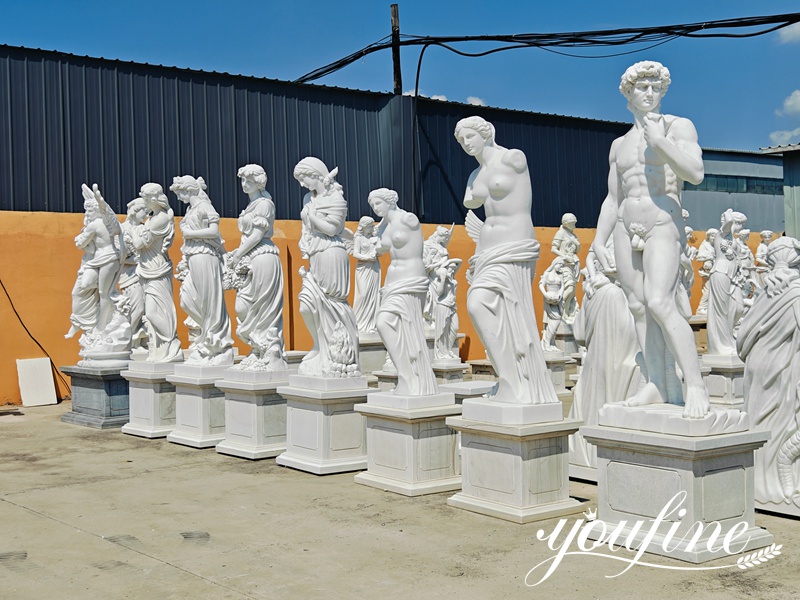
Marble is formed when limestone is subjected to heat and pressure, creating a dense crystalline structure. This gives it two major advantages: it can hold very refined carving details, and it can be polished into a smooth luminous surface.
That is why marble is traditionally used for:
- human figure statues
- angel sculptures
- church saints
- luxury fountains
- villa decorative carving
Compared with ordinary natural stone, marble feels softer to the eye, cleaner in detail, and far more expensive in appearance.
If your project needs elegance, museum-quality craftsmanship, or fine facial expression, marble is almost always the first recommendation.
The only disadvantages are that it costs more than softer sedimentary stones and requires more care than granite in harsh outdoor environments.
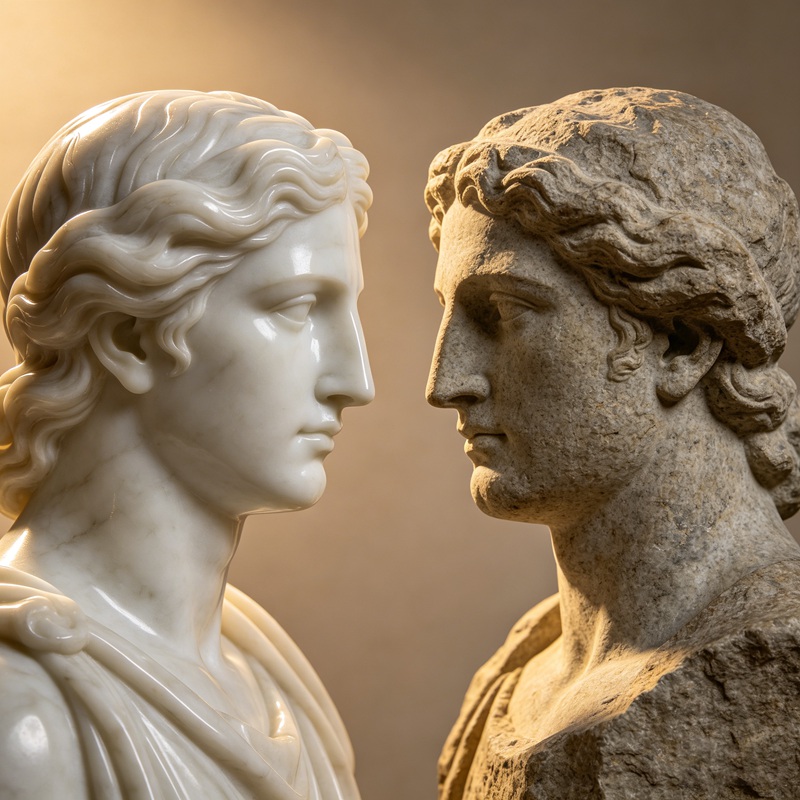
Marble and Sandstone: Luxury Precision or Warm Natural Charm?
Marble and sandstone are both widely used in carving, but they create two completely different impressions.
Marble is associated with refinement. Its smooth texture and subtle translucency make it ideal for detailed statues and sophisticated European decoration. Sandstone, by contrast, has a visible grain and a warm earthy tone that feels more natural, rustic, and architectural.
From a carving perspective, sandstone is softer and easier to shape in large ornamental patterns, wall panels, or garden pieces. Marble is harder and requires more careful workmanship, but it produces much sharper folds, cleaner lines, and more delicate human anatomy.
Cost is another major difference. Sandstone is generally the more economical option, especially for large decorative structures where ultra-fine detail is not necessary.
In simple terms:
Choose marble if you want luxury and artistic precision.
Choose sandstone if you want warm texture and better affordability.
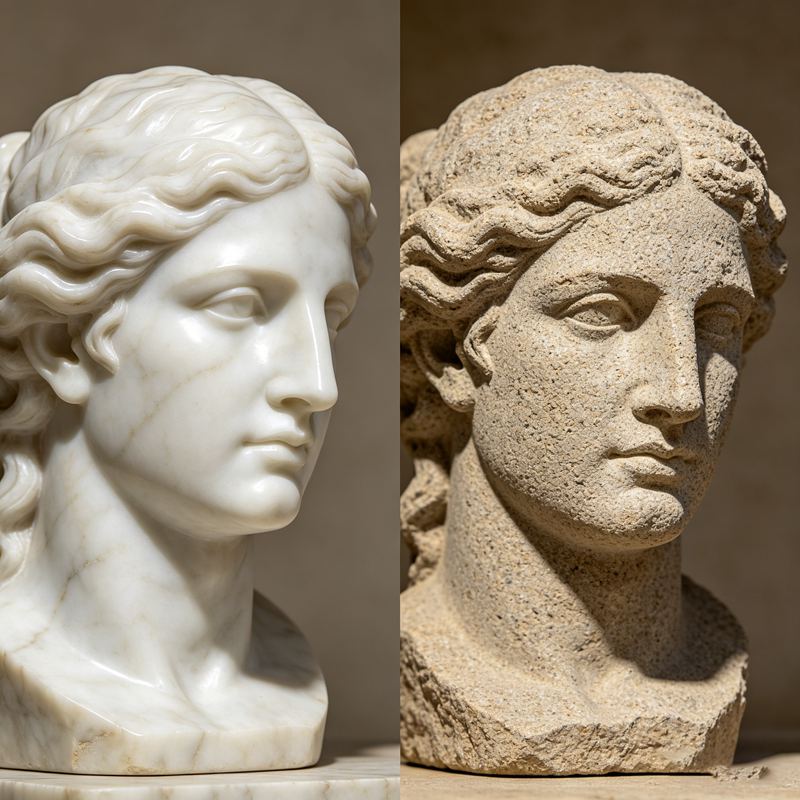
Granite and Sandstone: Durability or Design Flexibility?
Granite and sandstone are often compared for outdoor projects because both are common exterior materials, but they solve different problems.
Granite is one of the hardest natural stones available. It is dense, heavy, and highly resistant to rain, wind, freezing temperatures, and long-term weathering. This makes it perfect for memorial monuments, public sculptures, and civic installations expected to last for generations.
Sandstone, while still durable, is much easier to carve. Its softer composition allows sculptors to create decorative reliefs, floral motifs, and architectural trim more efficiently.
The trade-off is clear:
Granite gives maximum lifespan but less carving freedom.
Sandstone gives more artistic flexibility but requires better sealing and maintenance outdoors.
So if your priority is structural permanence, granite wins.
If your priority is decorative carving richness, sandstone is often the better choice.
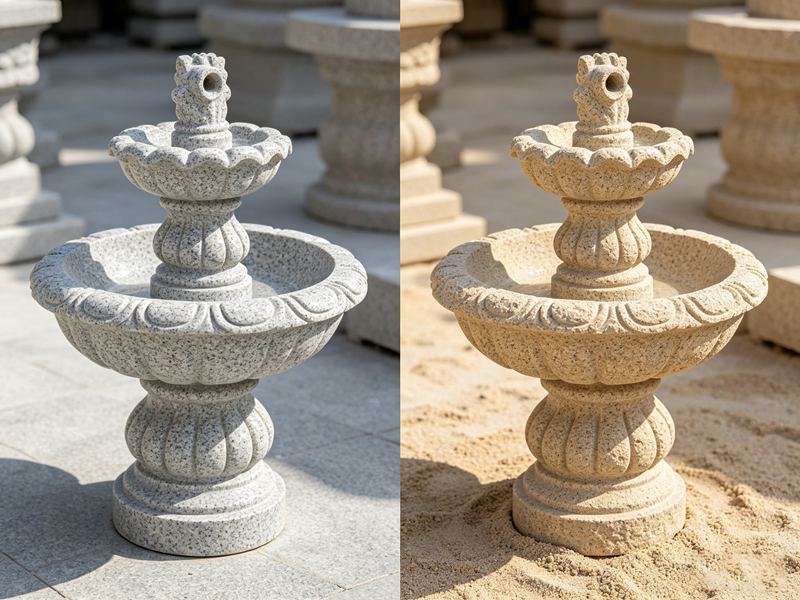
Sandstone vs Limestone: Which Sedimentary Stone Is Better?
Sandstone and limestone are both sedimentary stones, which means they are generally easier to carve and more affordable than marble or granite. This is why many buyers compare these two when planning garden structures or architectural ornament.
Sandstone has a coarser grain and a visibly layered texture. It creates a warmer, more natural, slightly rustic feeling. Limestone is smoother and more uniform, which gives it a cleaner classical European appearance.
In practical carving:
Sandstone works beautifully for wall reliefs, garden benches, and landscape sculptures.
Limestone is often preferred for columns, fireplace mantels, balustrades, and gazebos. Limestone can usually produce finer edge transitions than sandstone, while sandstone provides stronger natural texture.
If you want a romantic countryside or earthy garden effect, sandstone is ideal.
If you want a neater classical villa style, limestone is usually superior.
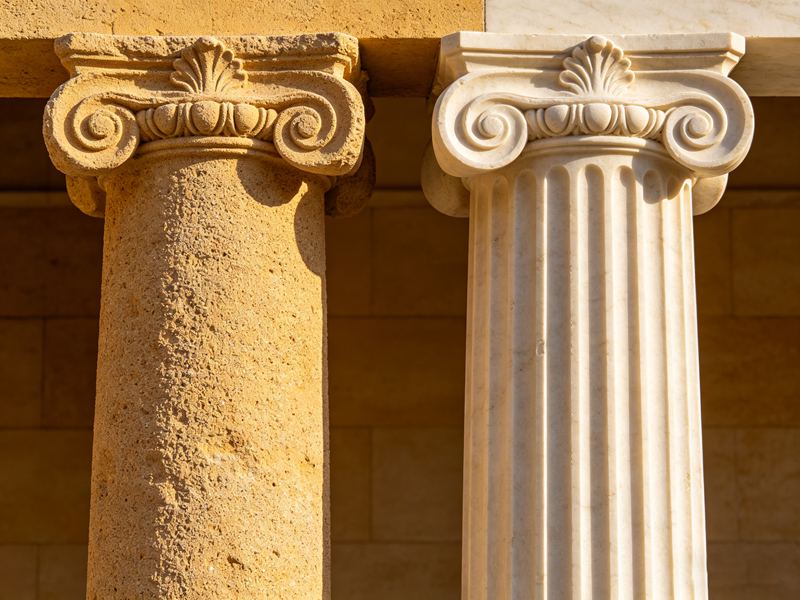
Limestone vs Marble: Can Limestone Replace Marble?
This is one of the most common buyer questions, especially when budget is limited.
At first glance, limestone and marble may seem somewhat similar because both are light-colored calcium-based stones. In fact, marble is formed from limestone over geological time.
But once carving begins, the difference becomes obvious.
Marble has a much denser crystal structure, which allows:
- sharper details
- smoother polish
- deeper visual luxury
- stronger light reflection
Limestone is softer and easier to work with, but it cannot achieve the same luminous premium finish. It usually looks more matte and architectural rather than truly sculptural.
That means limestone can imitate some of marble’s elegance at a lower cost, especially in large decorative building components.
However, for:
- refined figure statues
- premium church carving
- high-end memorial busts
- marble still remains unmatched
So limestone is a good alternative when budget matters, but not a full replacement when artistic prestige is the goal.
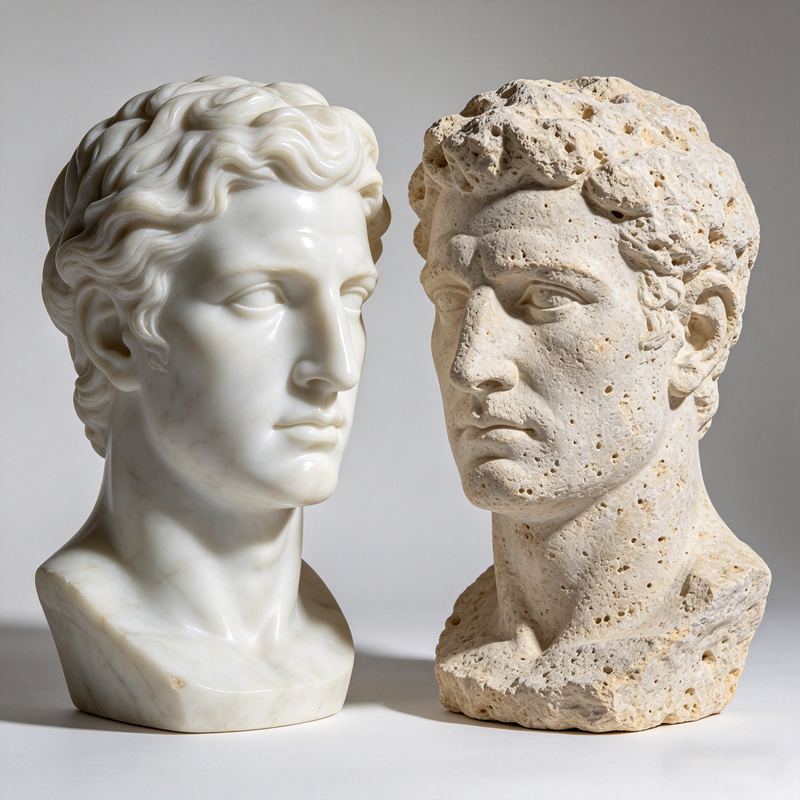
Where Does Travertine Fit In?
Travertine occupies an interesting middle ground in this comparison.
Technically, it belongs to the limestone family, but visually it looks very different because of its porous surface, layered mineral lines, and naturally aged texture.
Travertine does not have the mirror elegance of marble, nor the smooth simplicity of regular limestone. Instead, it offers an antique Roman decorative character that feels rich, warm, and architectural.
This makes it especially suitable for:
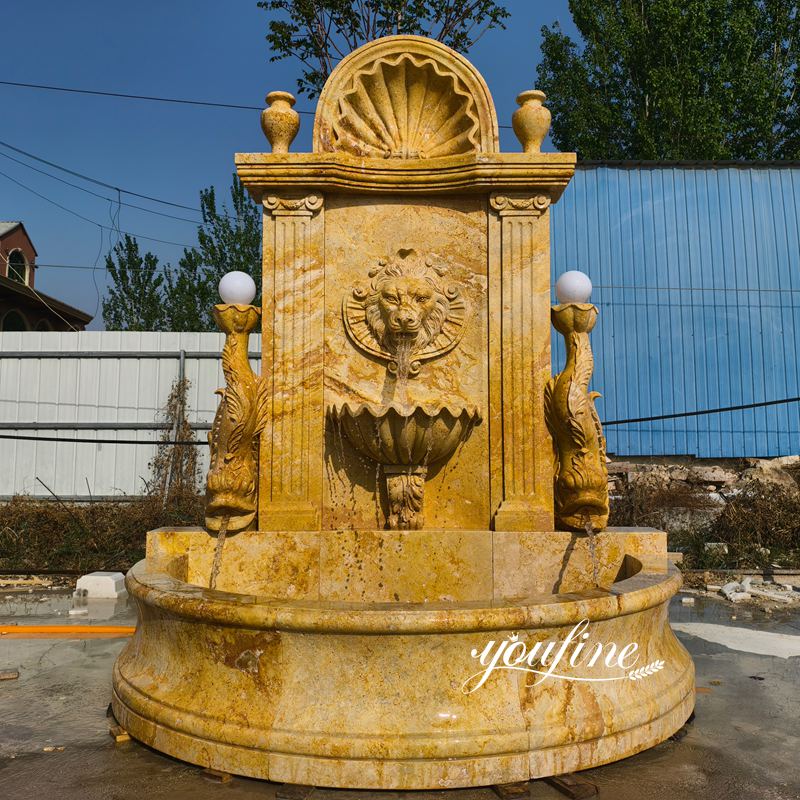
- Roman fountains
- villa balustrades
- Mediterranean columns
- wall cladding
- outdoor decorative paving
Compared with marble, travertine is less refined but more atmospheric.
Compared with limestone, it is more textured and visually dramatic.
Buyers who want an old-world European villa feeling often prefer travertine because it looks intentionally aged and luxurious without appearing overly polished.
Which Natural Stone Should You Choose?
After comparing all five materials, the best choice depends on what matters most in your project.
If You Need… | Best Stone Choice |
Finest artistic detail | Marble |
Strongest outdoor durability | Granite |
Warm rustic garden carving | Sandstone |
Classical architectural decoration | Limestone |
Roman antique decorative effect | Travertine |
Luxury polished human statue | Marble |
Long-life memorial monument | Granite |
There is no single stone that wins in every category.
- Marble wins in artistry.
- Granite wins in strength.
- Sandstone wins in natural warmth.
- Limestone wins in balanced affordability.
- Travertine wins in decorative atmosphere.
The right answer always depends on the project itself.
How YouFine Helps Clients Choose the Right Stone
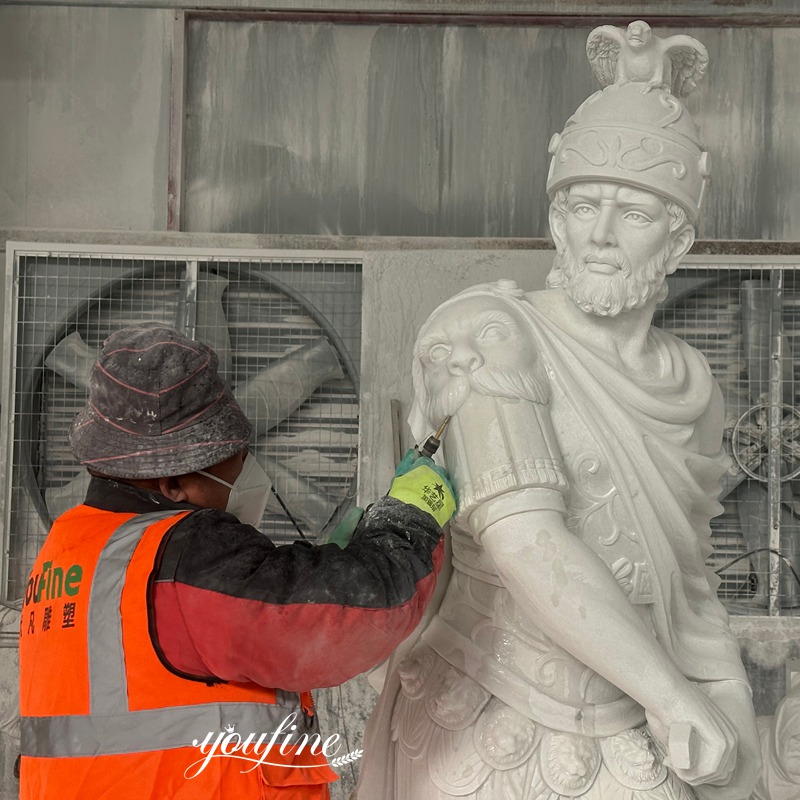
At YouFine, choosing stone is never based on appearance alone.
Before carving begins, our team studies each project from multiple practical angles, including the sculpture detail required, the local climate, long-term maintenance expectations, transportation cost, and the overall architectural style the client wants to achieve.
This means the material we recommend for one customer may be completely different from what we suggest for another—even if the designs look similar.
For example, one of our clients from Russia wanted to customize a large outdoor tiered fountain for a private estate. At first, the client preferred marble because of its elegant white appearance and luxurious classical feeling.
However, after understanding that the fountain would be installed in a region with extremely cold winters, repeated freeze-thaw cycles, and long-term snow exposure, our engineers advised against using ordinary marble as the first option.
Although marble is beautiful, continuous water absorption combined with freezing temperatures can gradually increase the risk of surface cracking over many years if the wrong grade is selected.
Instead, we recommended a denser and more weather-stable stone with stronger outdoor endurance for this climate, while still preserving the same European fountain design effect.
As a result, the client received not only the aesthetic style they wanted, but also a fountain material far better suited for long-term outdoor performance in Russia’s severe weather conditions.
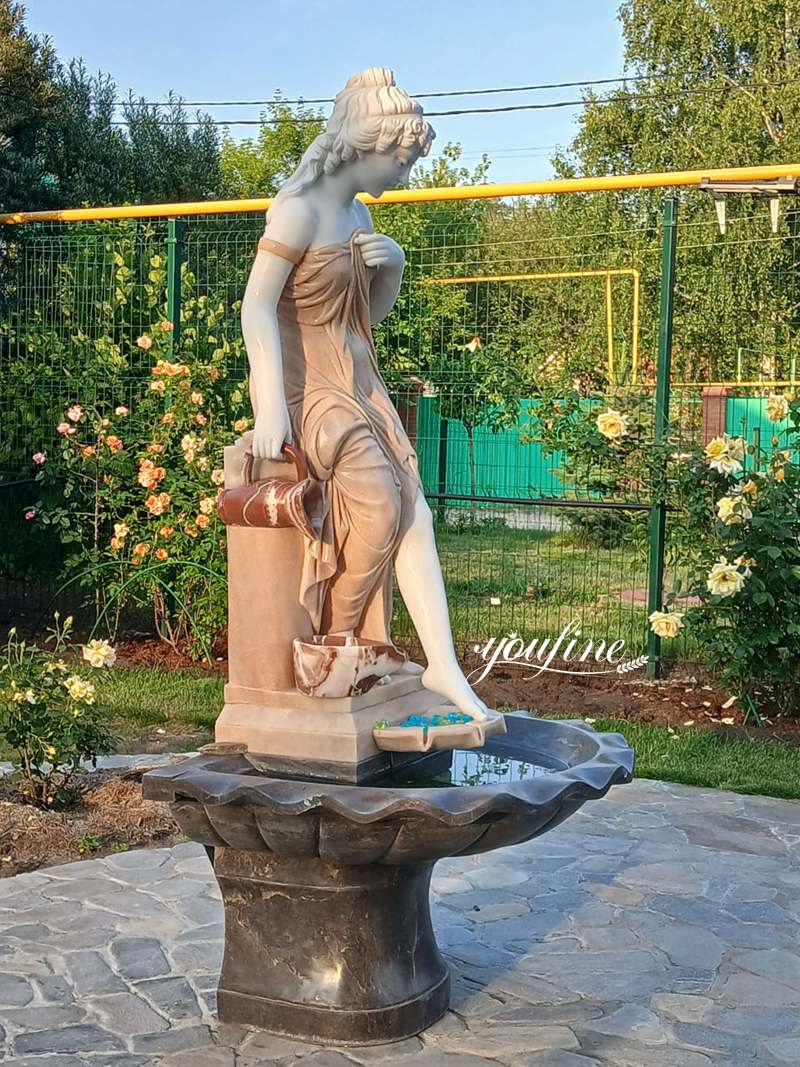
In warmer climates, however, the recommendation may be entirely different.
For clients in Mediterranean or temperate villa regions, marble or travertine often becomes the ideal choice because the risk of extreme freeze damage is lower and the decorative elegance becomes the primary concern.
This is exactly why professional stone selection matters.
The same sculpture design should not automatically use the same material in every country.
At YouFine, we help clients avoid expensive material mistakes by matching each custom carving project with the stone that performs best in its real installation environment—not simply the stone that looks best in a catalog photo.
If you are unsure whether marble, granite, sandstone, limestone, or travertine is right for your project, our team can provide free one-on-one material recommendations before production begins.