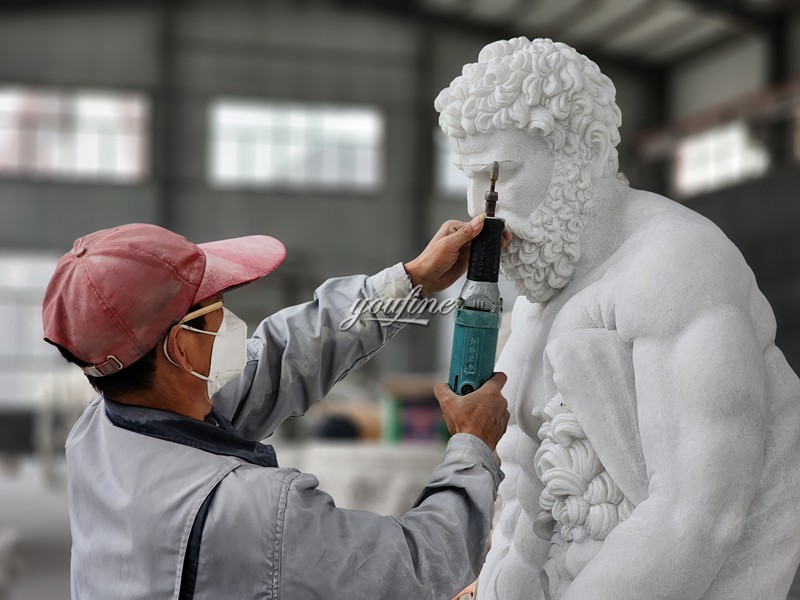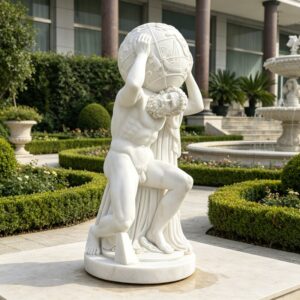
In our four decades of marble sculpture carving, our artists have hand-carved countless statues of various designs, with marble Greek muscular sculptures making up a large portion of them. So why are Greek statues so muscular?
Through years of studying classical techniques and creating contemporary works inspired by Greek traditions, I have come to understand that the answer lies at a fascinating intersection of culture, craftsmanship, and divine inspiration. Let me share what I have learned about this extraordinary artistic legacy.
The Cultural Basis of Muscularity in Greek Sculpture
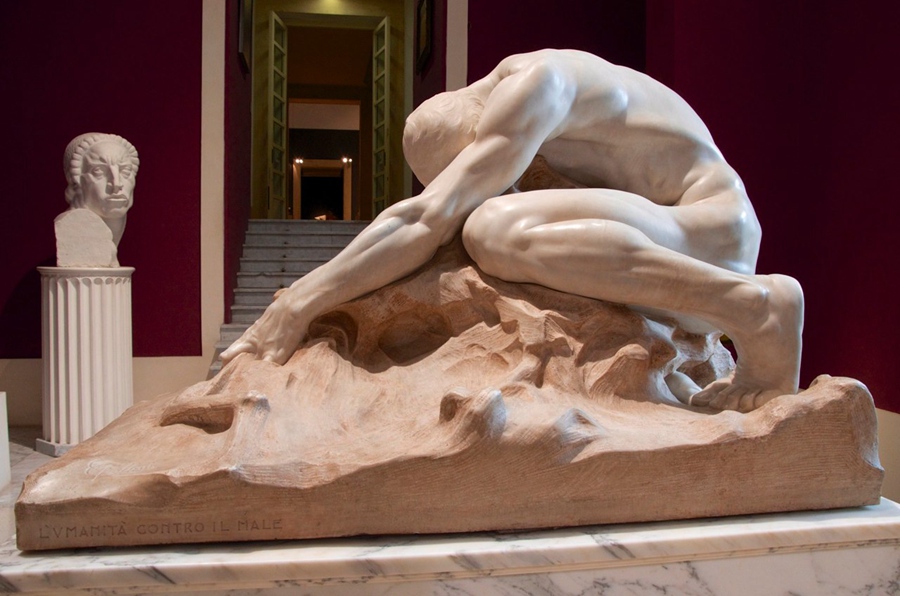
Ancient Greek society placed great emphasis on physical fitness, viewing it as more than just a pursuit of health, but as the cornerstone of human excellence. The Greeks believed in “kalos kagathos”—the concept of physical beauty and moral excellence being intertwined. This cultural ideal permeated every aspect of society, from education to religious practices.
The creation of the Olympic Games in 776 BC marked a pivotal moment in the institutionalization of athleticism. These games were more than just sporting events; they were religious festivals celebrating the perfect human form. Athletes competed nude, allowing artists to study and admire the human body in motion, directly influencing how sculptors depicted the human form in marble.
This emphasis on physical perfection was not superficial—it reflected a deep-seated belief in human potential and divine aspirations. Greek gymnasiums were not only training grounds, but also centers of intellectual and physical development, where philosophers taught and young men exercised their bodies, creating an environment in which the ideal of muscularity was intrinsically linked to intellectual achievement.
Divine Perfection and Mythology
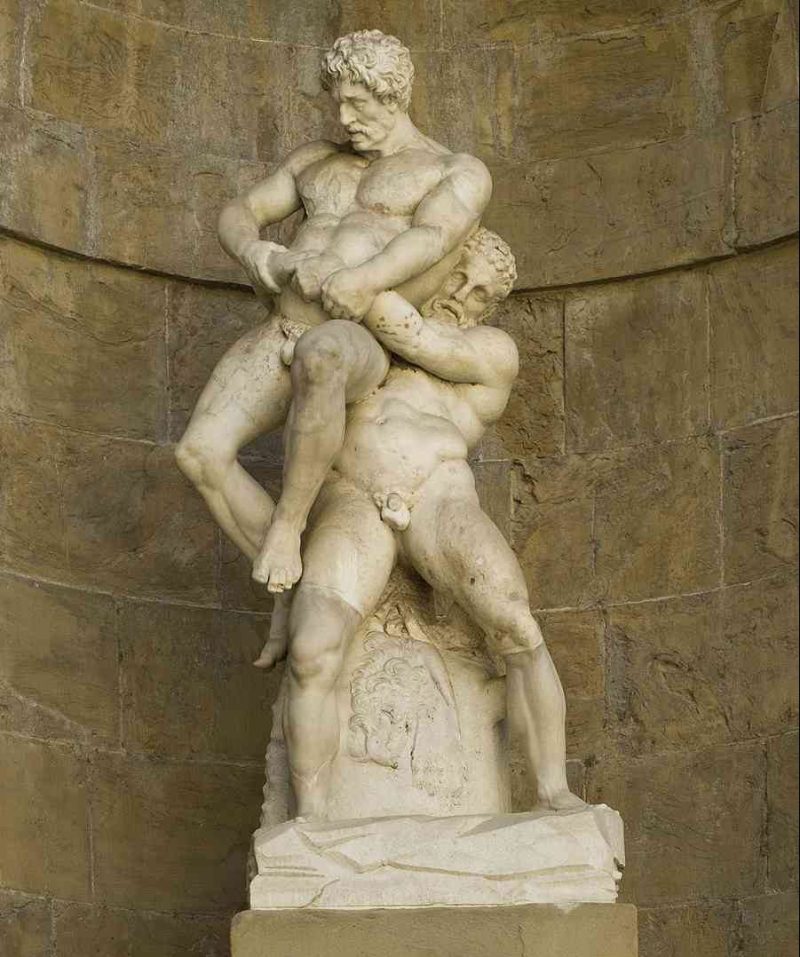
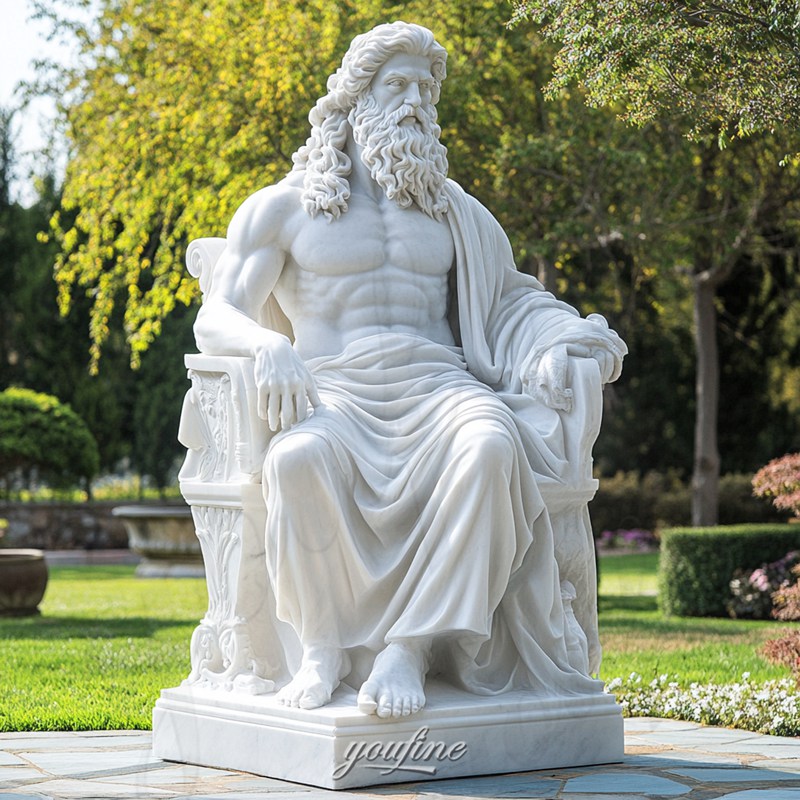
Greek sculptors used muscular representation as a visual language to communicate divine and heroic status. Gods and mythological heroes were not simply depicted as more powerful versions of humans; their muscles were visual metaphors for their superhuman abilities and divine nature.
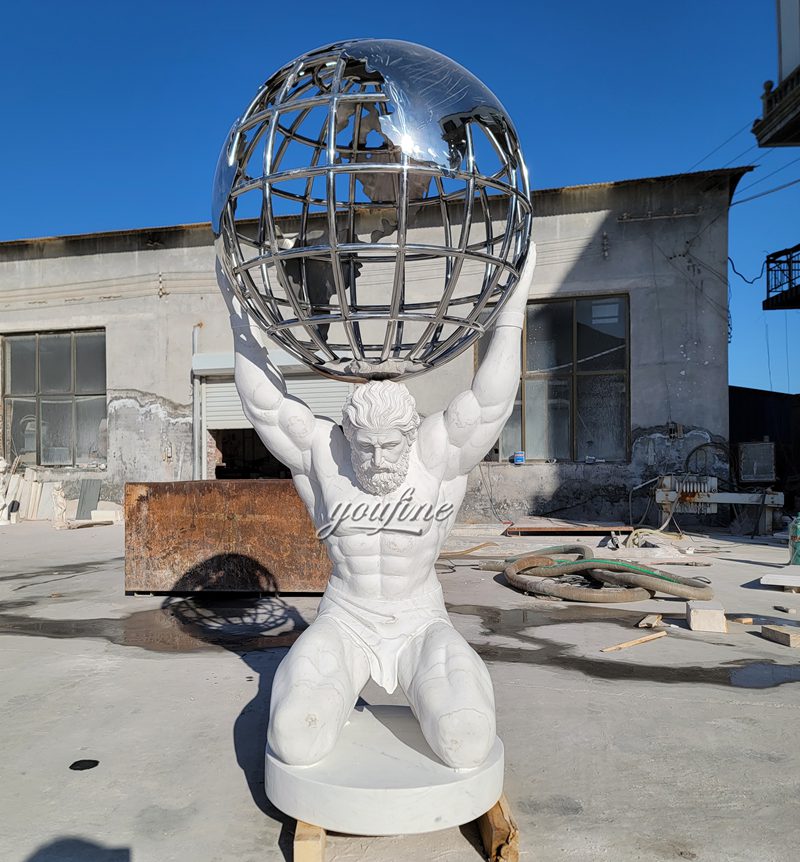
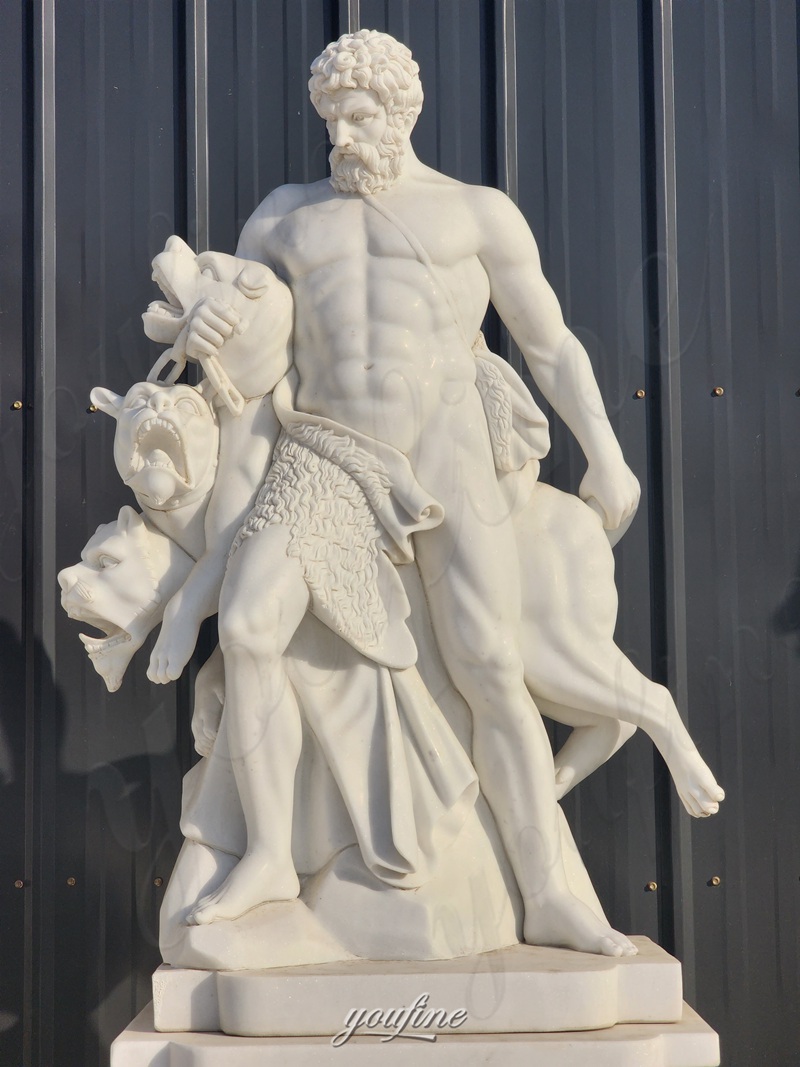
Hercules, for example, was consistently depicted with exaggerated muscles to symbolize his legendary power and divine lineage. Atlas, bearing the weight of the celestial bodies, displayed strong shoulder and back muscles that told of his eternal burden. These were not just artistic choices—they were narrative devices that conveyed complex mythological stories through visual means.
Muscular ideals in divine representations also served a theological purpose. By depicting gods with perfect physiques, sculptors created tangible representations of divine perfection that worshippers could aspire to emulate. This created a fascinating cycle of influences where divine representations shaped human ideals, and human athletic achievements informed divine depictions.
Artistic Techniques and Crafts
Greek sculptors developed complex techniques to represent muscle in marble, relying primarily on the golden ratio (approximately 1:1.618) to create aesthetically pleasing proportions. This mathematical relationship is present throughout Greek sculpture, from the proportions of the torso to the legs to the proportions of facial features.
The choice of marble was crucial to achieving these effects. Paros marble from the island of Paros was prized for its translucency and fine grain, allowing sculptors to create subtle gradients that mimicked the effects of light on human skin and muscle. Later, Carrara marble became popular for its similar qualities and greater availability.
Sculptors studied human anatomy with scientific precision, understanding not only the surface appearance of muscle but also its underlying structure and function. They developed techniques such as the “wet curtain” to suggest the body beneath clothing and used subtle changes in surface texture to distinguish between tense and relaxed muscles.
Famous Examples and Their Significance
Myron’s Discus Thrower
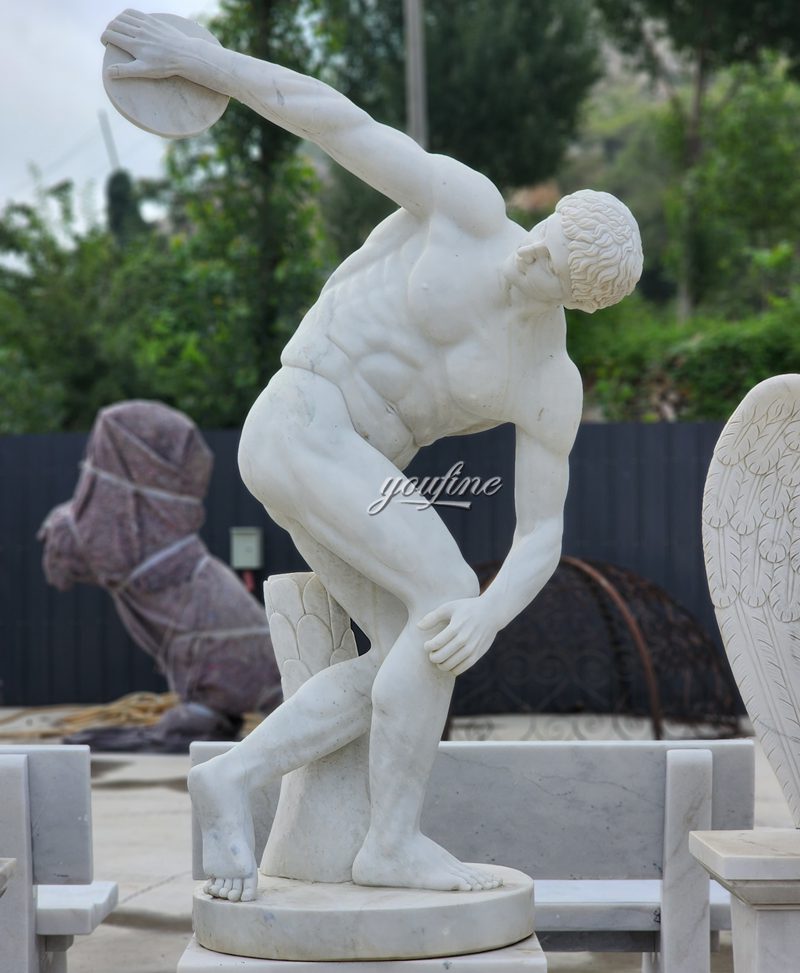
One of the finest examples of Greek muscular representation is Myron’s Discus Thrower. Created around 450 BC, the sculpture captures the precise moment before the athlete throws the discus. The sculpture not only demonstrates anatomical accuracy, but also the Greek understanding of dynamic movement, with each muscle logically participating in the action depicted.
Laocoön and His Sons
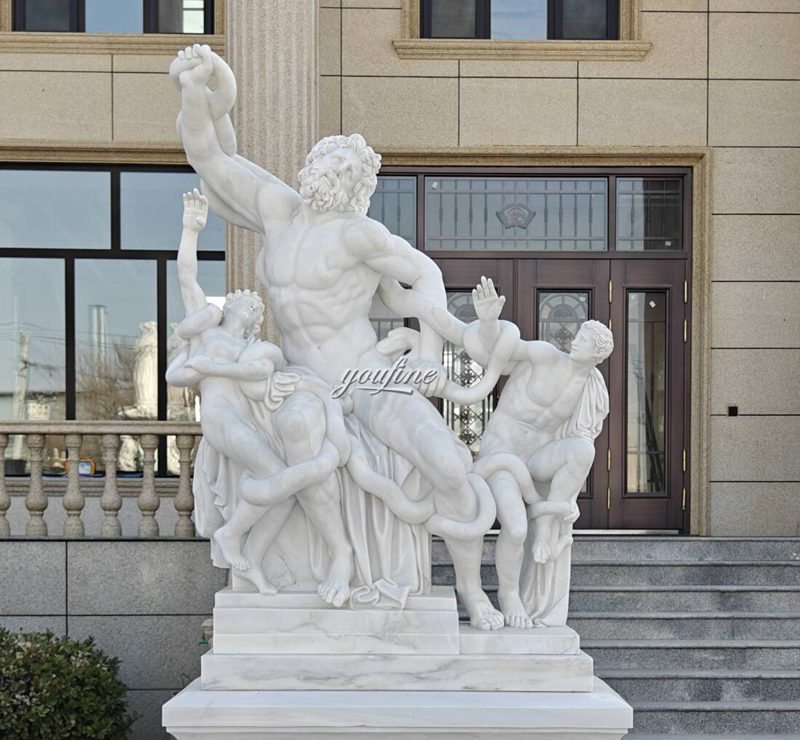
Although created during the Hellenistic period, Laocoön and His Sons represents the pinnacle of muscular representation in Greek sculpture. The writhing figures demonstrate extreme muscle tone, with every sinew and vein depicted in great detail. The sculpture tells the tragic story of the Trojan priests through anatomical vocabulary, with each bulging muscle contributing to the narrative of the struggle.
Farnese Hercules Statue
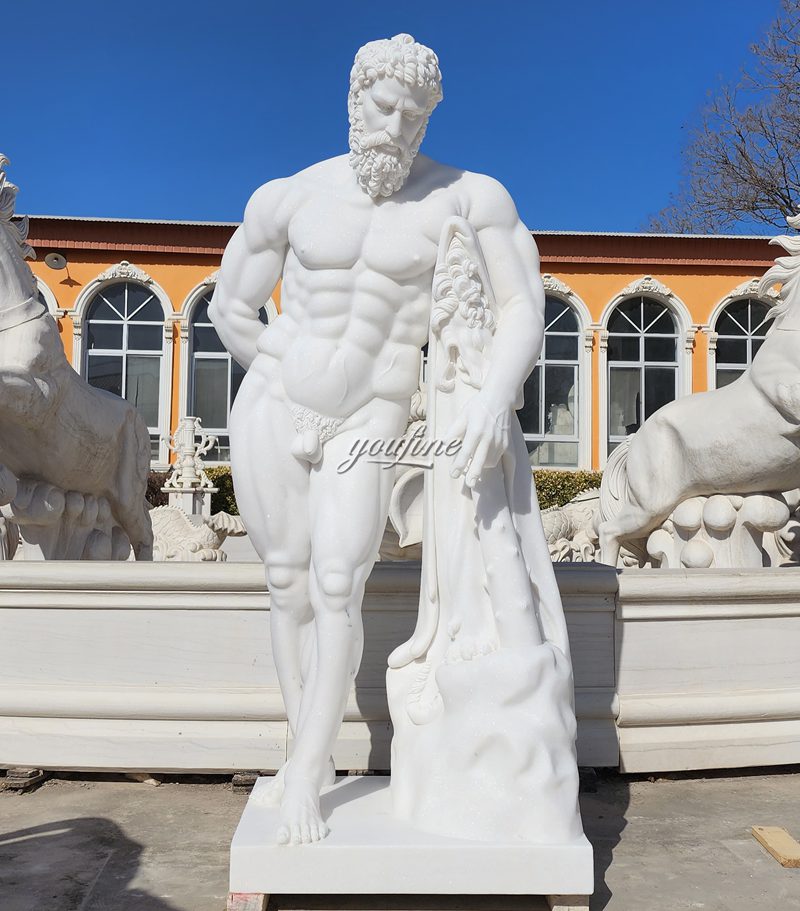
Farnese Hercules is one of the classic statues of the famous ancient Greek hero Hercules, created under the influence of the style of the ancient Greek sculptor Lysippos. The statue is carved from marble and is about 3.15 meters tall. It depicts Hercules’ tired state after completing the twelve heroic tasks. He leans on the lion skin and cane behind his back with his hands, and his muscles are full and his outlines are clear, showing the hero’s power and human fatigue.
The whole statue, through the fine carving of muscles, not only reflects Hercules’ infinite power, but also reveals his human fatigue after completing the twelve tasks, forming a clever balance between movement and stillness, strength and emotion, which is the ultimate interpretation of human aesthetics and heroic spirit.
Evolution and Cultural Influence
While Greek sculptors laid the foundation for muscular representation in Western art, Roman artists incorporated these techniques into their own cultural ideals. Roman sculptures often featured more pronounced muscles, reflecting their society’s emphasis on military prowess and imperial power.
This Greek aesthetic tradition deeply influenced Renaissance artists, who studied and copied ancient sculptures to learn about human anatomy. Although our understanding of these works has changed, the muscular ideal established by Greek sculptors still influences modern perceptions of classical beauty. Many of the sculptures we know today appear pure white, even though they were originally painted in bright colors—a detail that changes our perception of how these works originally conveyed messages about strength and divine perfection.
The Greeks’ approach to representing the human form stands in stark contrast to other ancient civilizations. While Egyptian art favored stylized, symbolic representations, and Eastern traditions often emphasized spiritual rather than physical ideals, Greek sculpture’s naturalistic treatment of muscles created a lasting template for representing human physical perfection in Western art.
The enduring influence of Greek muscular representation in sculpture demonstrates not only technical achievement, but also the power of art to embody and transmit cultural values over thousands of years. The muscular marble statues of ancient Greece continue to shape our understanding of beauty, strength, and the relationship between physical and spiritual perfection.
In Conclusion
Standing in the factory today, surrounded by the fine marble powder that has accompanied me for four decades, I can’t help but feel a deep connection to those ancient Greek sculptors. Their pursuit of perfection through muscular performance was more than an artistic choice – it was a reflection of their entire worldview.
At YouFine, we have the privilege of creating custom marble sculptures for clients around the world, from intimate home pieces to grand public installations. Our team combines time-honored classical techniques with modern precision tools to bring your vision to life. Whether you are looking for a traditional Greek-style piece or a modern interpretation of a classical theme, our experienced artists can help you select the perfect marble and create a sculpture that will stand the test of time, just like the ancient Greek masterpieces.
We invite you to visit YouFine’s factory and experience firsthand how we preserve these ancient techniques while creating tomorrow’s masterpieces. Please contact us to arrange a consultation and join the legacy of marble sculpture that spans thousands of years.