The heads of Perseus and Medusa are among the most powerful and enduring symbols in Western art and mythology. While Medusa’s severed head represents protection, fear, and transformative power, Perseus holding her head symbolizes victory, intelligence, and divine justice. Together, they form a compelling visual narrative that has inspired artists, architects, and collectors for centuries.
From ancient temples to modern luxury gardens, these iconic figures continue to carry deep symbolic meaning—making them a popular choice in sculpture and architectural decoration today.
The Myth Behind Perseus and Medusa
To understand the meaning behind their heads, we must first explore the myth that made them legendary.
Medusa was once a beautiful woman, but according to Greek mythology, she was cursed by the goddess Athena and transformed into a Gorgon—a terrifying creature with snakes for hair. Anyone who looked directly at her face would instantly turn to stone.
Perseus, a demigod hero, was tasked with slaying Medusa. However, defeating her required more than brute strength. With the help of divine gifts—including a reflective shield from Athena—Perseus avoided direct eye contact and used the shield as a mirror to guide his attack. He successfully beheaded Medusa and carried her head with him, later using its petrifying power as a weapon.
This moment—Perseus holding Medusa’s head—became one of the most depicted scenes in art history, symbolizing both conquest and complexity.
What Does the Head of Medusa Symbolize?
Protection and Warding Off Evil
One of the oldest meanings of Medusa’s head is its role as an apotropaic symbol—something used to ward off evil. In ancient Greece and Rome, Medusa’s face was often carved onto shields, armor, doorways, and temples to protect against negative forces.
Her terrifying gaze, capable of turning enemies to stone, made her an ideal guardian figure. Even in modern design, Medusa head sculptures are used at entrances and gateways as a symbolic protector.
Feminine Power and Resistance
In recent decades, Medusa has been reinterpreted as a symbol of female strength and resilience. Rather than simply a monster, she is seen as a victim who was transformed and then feared for her power.
This shift in perspective has made Medusa a powerful icon in feminist art and cultural discussions. Her head represents not just fear—but the reclaiming of identity and strength in the face of injustice.
Fear, Transformation, and Control
Medusa’s ability to turn people into stone also represents deeper psychological and symbolic meanings. She embodies the concept of transformation—where fear can immobilize, but also protect.
Artists have long used her image to explore themes of control, danger, and the consequences of power.
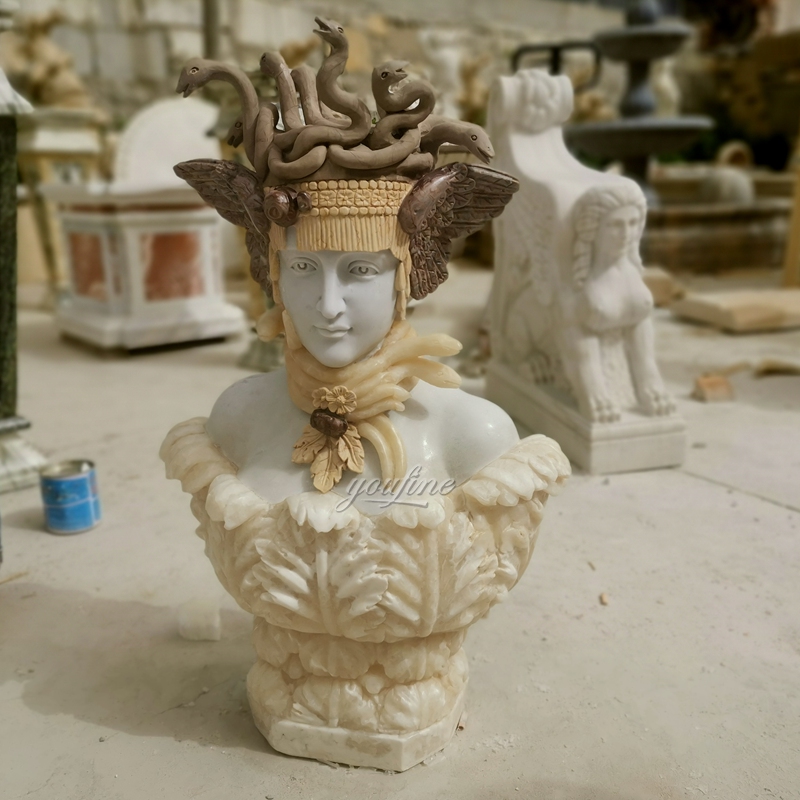
A famous example is Medusa, where her expression captures both terror and tragedy, reinforcing her dual nature as both victim and weapon.
What Does the Perseus Represent?
Triumph Over Evil
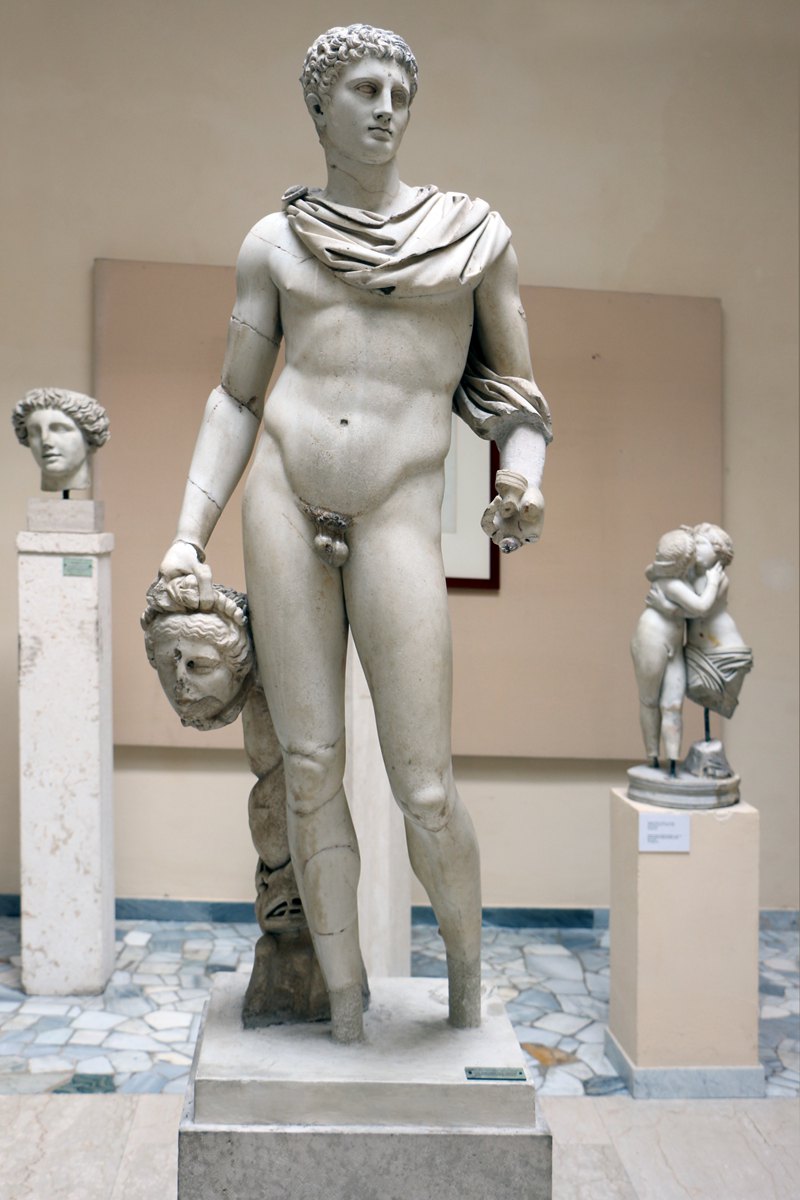
Perseus holding Medusa’s head is a clear symbol of good overcoming evil. It represents the victory of courage and intelligence over chaos and danger.
Unlike many heroes, Perseus does not rely solely on strength—he uses strategy, tools, and guidance from the gods. This makes his triumph even more meaningful.
Intelligence and Strategy
The reflective shield Perseus used is a powerful metaphor for wisdom and indirect thinking. Instead of confronting danger head-on, he adapts and finds a smarter solution.
This symbolism resonates strongly in leadership, warfare, and even modern business thinking.
Justice and Divine Authority
Perseus’s mission was not random—it was part of a larger divine plan. His success represents justice being carried out through divine will, reinforcing his role as a righteous hero.
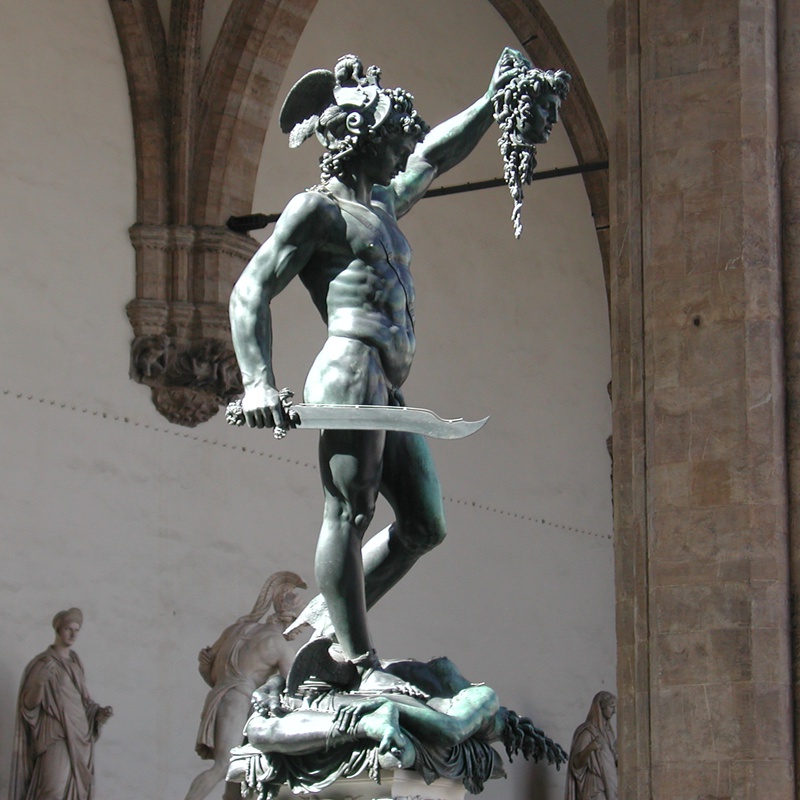
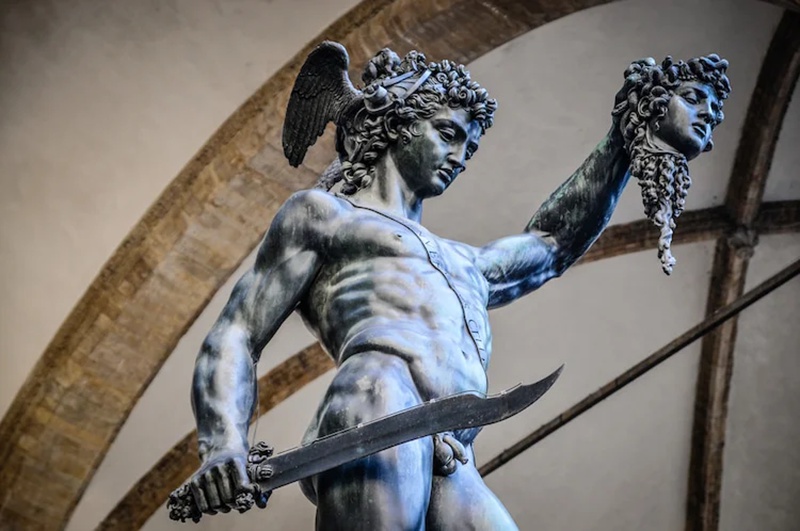
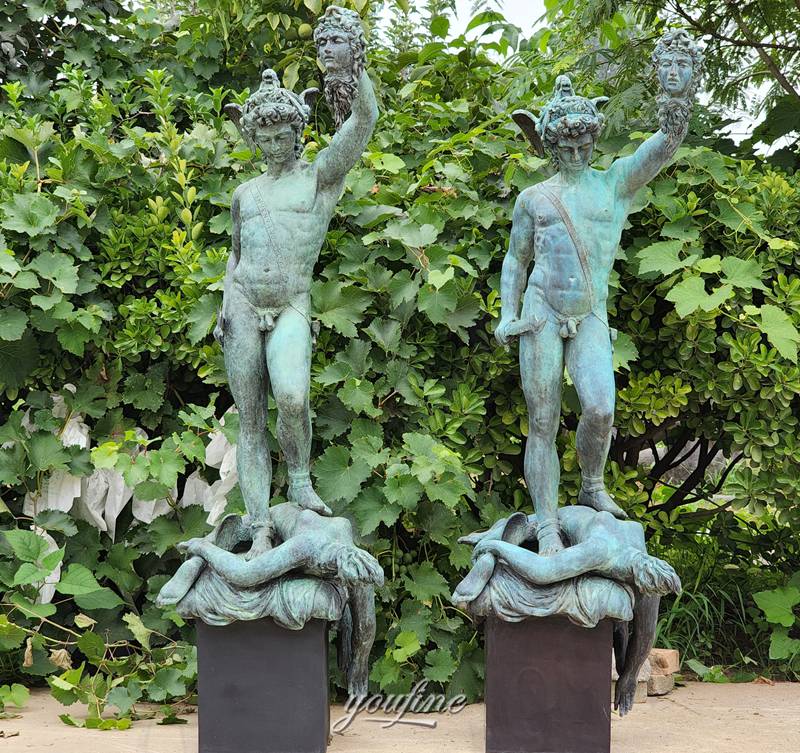
This idea made Perseus a popular subject in Renaissance and classical sculpture, especially in works like Perseus with the Head of Medusa, which celebrates heroic dominance and elegance.
Why Are the Heads of Medusa and Perseus Often Displayed Together?
The combination of Perseus and Medusa creates a powerful visual and symbolic contrast:
Medusa = chaos, danger, power
Perseus = order, control, victory
Together, they represent the eternal balance between opposing forces.
In art and sculpture, this pairing often captures a dramatic narrative moment—the aftermath of transformation and triumph. It tells a story, not just through form, but through symbolism.
This duality is one reason why collectors and designers are drawn to these figures—they add depth, meaning, and storytelling to any space.
The Use of Medusa and Perseus Heads in Sculpture and Architecture
Ancient Greek and Roman Applications
In classical architecture, Medusa’s head was widely used as a decorative and protective element. It appeared on:
- Temple pediments
- Shields and armor
- Floor mosaics
- Doorway carvings
These placements were intentional—designed to guard sacred or important spaces.
Renaissance and Baroque Sculpture
During the Renaissance, artists revisited classical mythology with renewed interest. Sculptures of Perseus and Medusa became symbols of power, intellect, and artistic mastery.
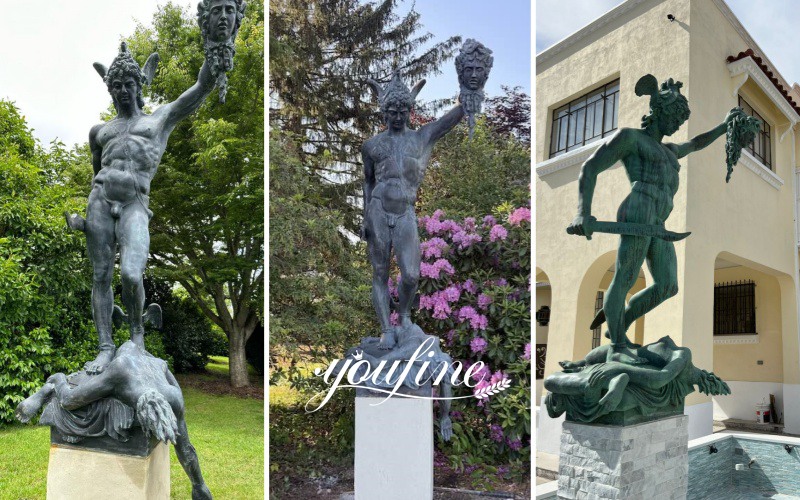
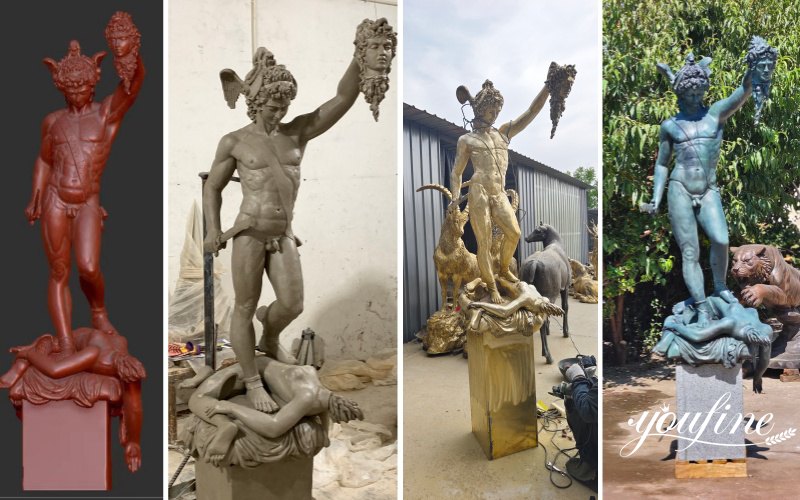
The famous bronze statue by Benvenuto Cellini is a perfect example. It combines technical excellence with dramatic storytelling, making it one of the most admired sculptures in history.
Modern Garden and Decorative Sculptures
Today, Medusa and Perseus sculptures are widely used in:
- Luxury garden landscapes
- Villa entrances
- Hotel and resort decoration
- Public art installations
At YouFine, we have created numerous bronze Medusa head sculptures and Perseus statues for clients worldwide. These pieces are often chosen not only for their visual impact, but also for their symbolic meaning—protection, strength, and timeless elegance.
Why Do People Still Use Medusa and Perseus Sculptures Today?
Symbol of Protection
Many homeowners and designers still value Medusa as a protective symbol. Placing a Medusa head sculpture near an entrance or gate is believed to guard the space from negative energy.
Bold Artistic Expression
Medusa’s striking appearance makes her a powerful focal point. She adds drama, mystery, and artistic depth to any environment.
Classical Luxury Aesthetic
For those who appreciate classical art and European design, Medusa and Perseus sculptures represent sophistication and cultural richness. They connect modern spaces to ancient traditions.
Conclusion
The heads of Perseus and Medusa are far more than mythological relics—they are enduring symbols of power, protection, and transformation.
Medusa’s head represents fear, strength, and protection, while Perseus embodies victory, intelligence, and justice. Together, they tell a timeless story that continues to inspire art, architecture, and design.
Whether used in historical masterpieces or modern garden sculptures, their meaning remains deeply relevant—making them a meaningful and striking addition to any space.