Life size horse statues are almost always created using the traditional lost wax casting method, a professional bronze casting technique that has been passed down for centuries. At YouFine Bronze Foundry, we also use this ancient process, but with important modern improvements. On the basis of traditional bronze casting, we have introduced advanced silica sol casting technique, and every bronze horse sculpture goes through at least 33 production steps before completion.
Although many foundries claim to use lost wax casting, creating a truly realistic life-size bronze horse statue is far more difficult than most people imagine. A successful horse sculpture must combine artistic beauty, accurate anatomy, structural safety, and long-term outdoor durability at the same time.
In this article, we will show you step by step how a monumental bronze horse statue is made—from the first design sketch to the final wax protection process.
Why Is It Difficult to Make a Realistic Bronze Horse Statue?
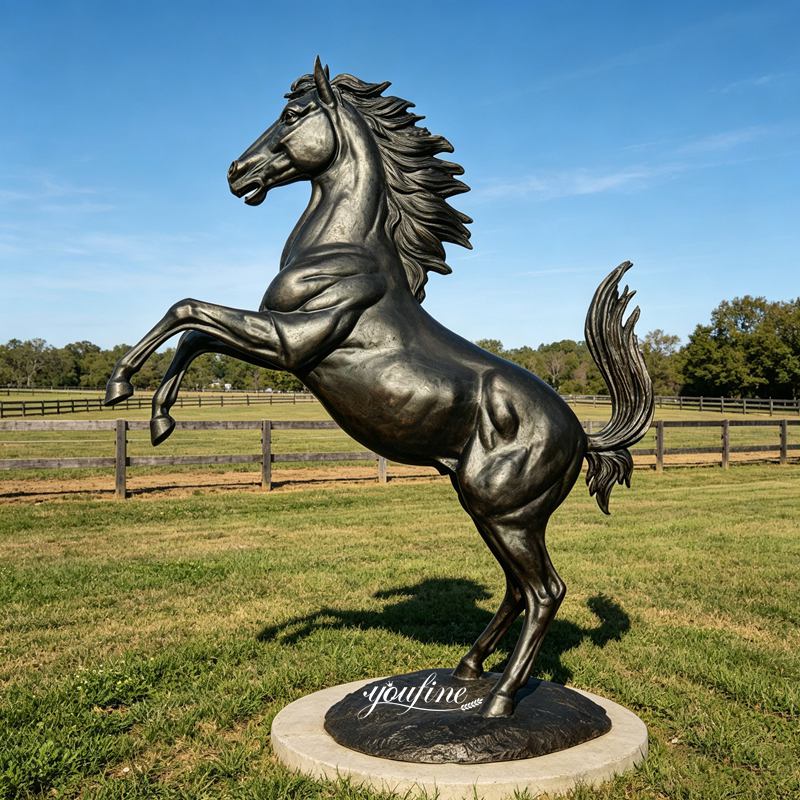
Among all animal sculptures, horses are considered one of the most difficult subjects to sculpt successfully. Their muscle structure is extremely complex, and even a small mistake in proportion or posture can make the sculpture appear stiff or unnatural.
This challenge becomes even greater when creating large-scale sculptures such as:
- Rearing horse statues
- Jumping horse statues
- Running horse sculptures
- Grazing horse statues
- Horse and rider statues
Dynamic poses require careful engineering calculations because the sculpture’s center of gravity must remain balanced. Large horse statues also need strong internal steel structures to support the weight of the clay model and the final bronze casting.
At the same time, sculptors must capture the horse’s energy and spirit through subtle details such as muscle tension, facial expression, and body movement. This is what separates an ordinary bronze horse statue from one that truly feels alive.
Step 1 – Choosing the Horse Sculpture Design
Every bronze horse sculpture begins with artistic planning.
Hand Sketches and Concept References
The design process may start from:
- Photos provided by clients
- Historical references
- Real horse observations
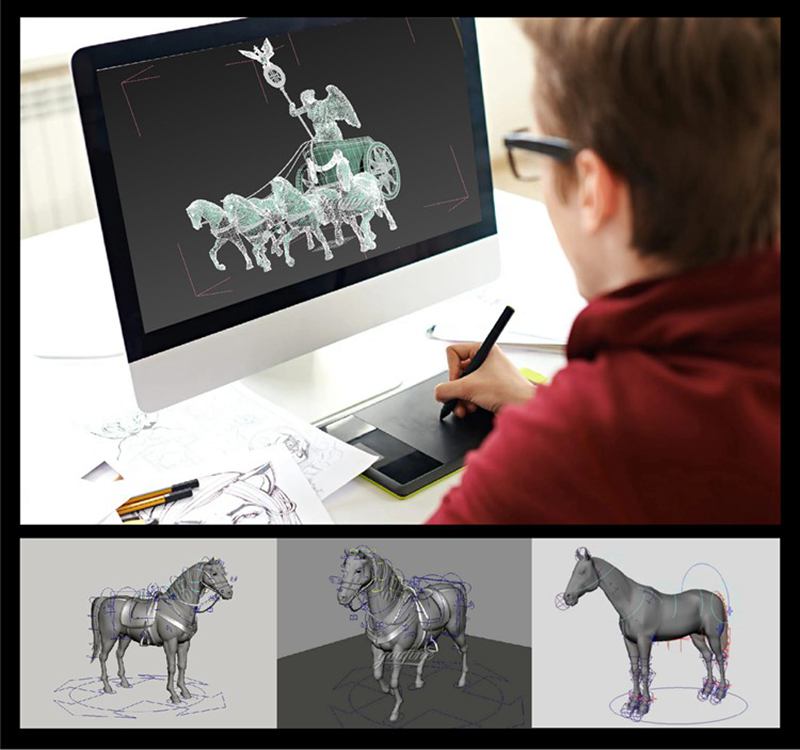
- AI or concept drawings
- Famous equestrian sculptures
Some clients want to recreate a beloved horse, while others are inspired by historical equestrian monuments or classical European horse sculptures.
Choosing the Horse Pose
Different horse poses create completely different artistic effects and casting difficulties.
Common horse sculpture poses include:
- Standing Horse
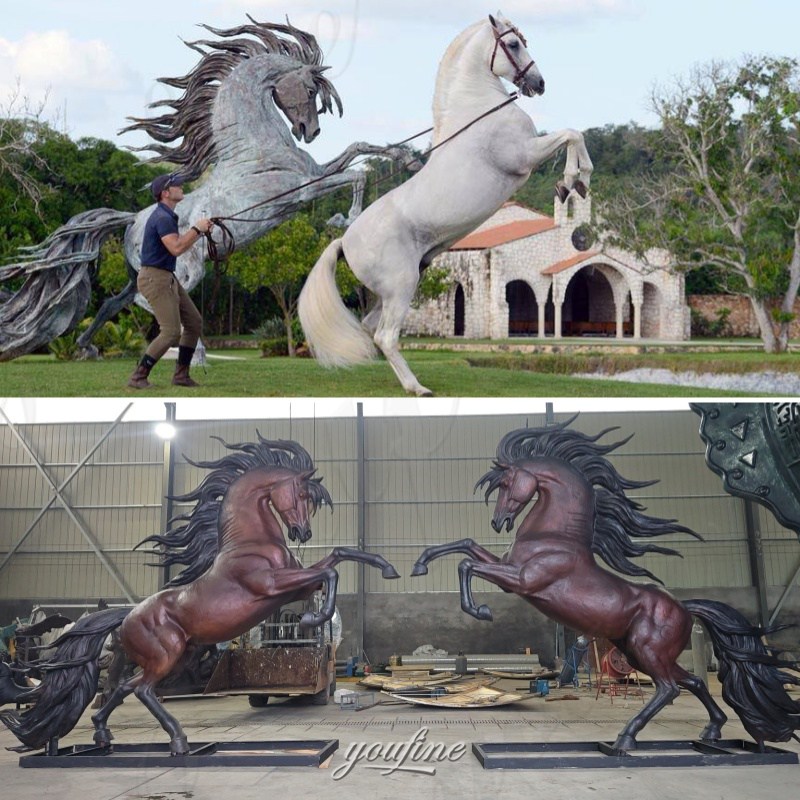
- Rearing Horse
- Running Horse
- Grazing Horse
- Horse and Rider Statue
A standing horse statue is relatively stable structurally, while a rearing or jumping horse requires much more complicated internal support because much of the sculpture’s weight is concentrated on the hind legs.
The more dynamic the pose, the more challenging the production process becomes.
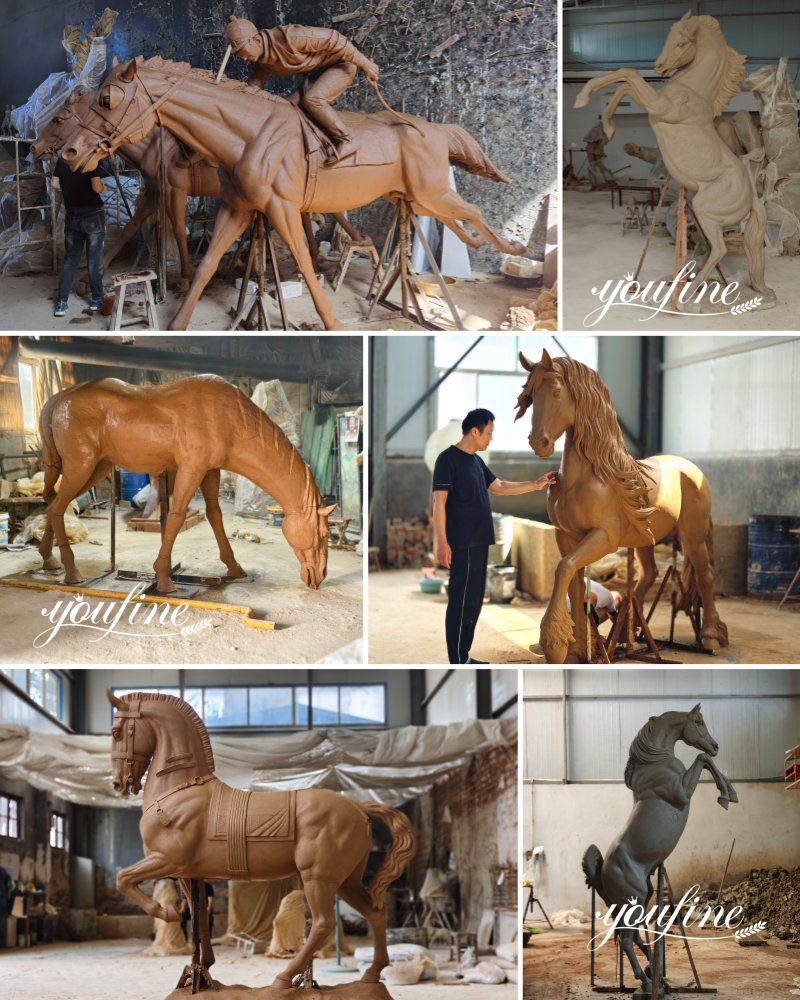
Step 2 – Building the Full-Scale Clay Model
After the design is confirmed, sculptors begin creating the full-size clay model by hand.
Building the Internal Steel Structure
Large sculptures cannot rely on clay alone. A welded steel framework must first be built inside the sculpture to support the overall structure.
This internal steel armature helps:
- Prevent the clay model from collapsing
- Support large suspended areas
- Maintain correct proportions
- Balance the sculpture’s center of gravity
For rearing horse sculptures or horse rider statues, structural calculations become especially important.
Sculpting the Horse Anatomy by Hand
Once the steel framework is complete, artists begin applying clay and sculpting the horse anatomy by hand.
This stage focuses on details such as:
- Muscles
- Bone structure
- Veins
- Horse mane
- Dynamic body tension
At YouFine, we have professional animal sculptors who specialize in horse sculptures. Some of our artists even raise horses themselves so they can closely observe horse behavior, movement, and muscle structure in real life.
Because of this deep understanding of equine anatomy, our horse clay models are highly realistic and often approved by clients without major revisions.
Refining Facial Expressions and Movement
The final refinement stage is extremely important because it determines whether the sculpture truly feels alive.
Artists carefully adjust:
- Eye expression
- Nostril tension
- Mouth shape
- Ear direction
- Leg pressure and weight distribution
Even subtle changes in these details can dramatically affect the realism and emotional impact of the sculpture.
Step 3 – Making the Silicone Mold
After the clay model is completed, a silicone mold is made from the sculpture surface.
Why Large Horse Sculptures Require Sectional Molds
Life-size horse statues are too large to be molded in one single piece. Instead, the sculpture must be divided into multiple sections during mold making.
Sectional molds help:
- Simplify the casting process
- Preserve fine details
- Improve transportation and handling
- Reduce casting risks
Each section is carefully labeled to ensure accurate reassembly later in the bronze production process.
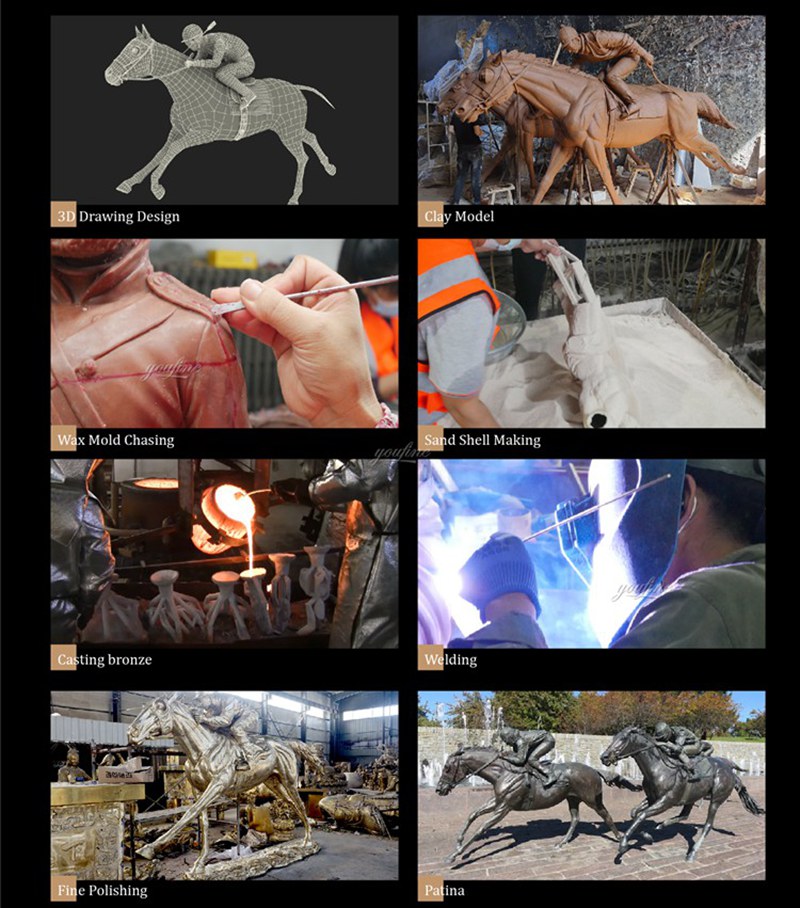
Step 4 – Lost Wax Bronze Casting Process
The lost wax process is the core technique behind traditional bronze sculpture production.
Wax Model Production
Molten wax is poured into the silicone molds to create hollow wax replicas of each sculpture section.
These wax models preserve every detail from the original clay sculpture.
Wax Chasing and Detail Repair
Artists then repair and refine the wax surface by hand, correcting any imperfections before casting.
This process is called wax chasing.
Sand Shell Making
At this stage, YouFine uses advanced silica sol casting technique.
Compared with lower-cost traditional shell materials, silica sol casting provides:
- Better detail retention
- Stronger shell stability
- Smoother bronze surfaces
- Better resistance to oxidation problems
Reduced risk of white spots or green corrosion in humid environments
Although silica sol casting is more expensive, it significantly improves the final quality of large outdoor bronze sculptures.
Pouring Molten Bronze
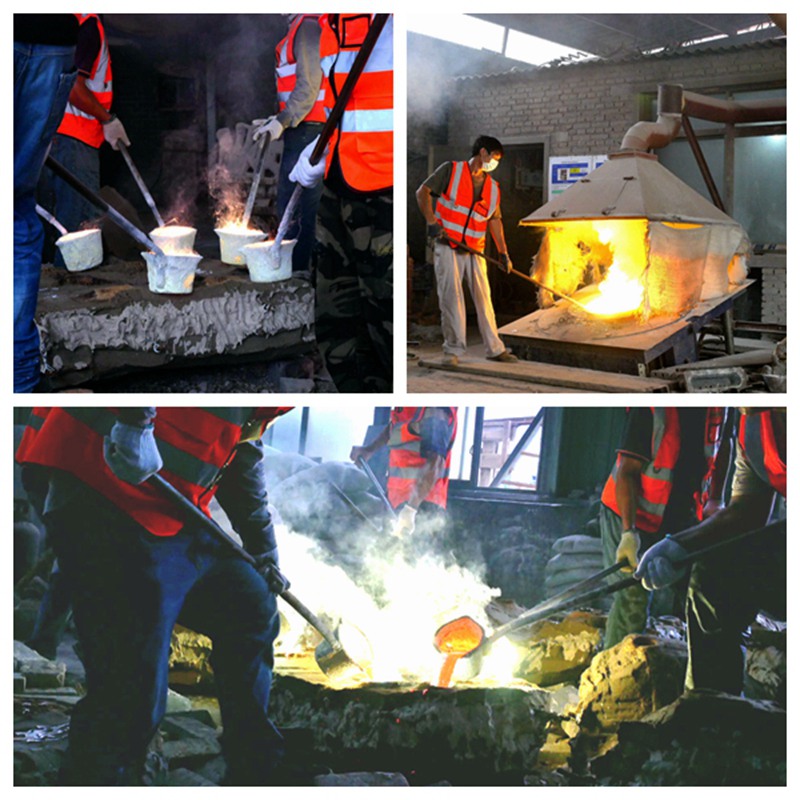
After the shell molds are completed, molten bronze is poured into the molds at extremely high temperatures.
This stage requires precise temperature control and experienced foundry workers to ensure successful casting.
Cooling and Demolding
Once the bronze cools and solidifies, the outer shell is broken away to reveal the raw bronze sculpture sections.
At this point, the horse sculpture begins to take its final form.
Step 5 – Welding and Polishing
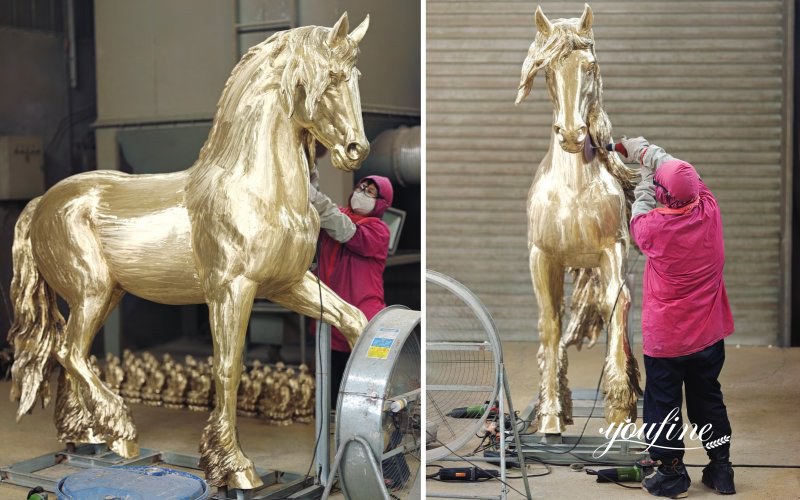
Bronze horse statues are rarely cast as one single piece. Multiple bronze sections must be welded together carefully.
After welding, artists perform metal chasing to repair seams and restore surface details.
This includes:
- Weld seam repair
- Surface texture restoration
- Detail refinement
- Smoothing transitions between sections
The quality of this stage greatly affects the final appearance of the sculpture.
Step 6 – Patina Coloring and Surface Finishing
Patina coloring gives bronze sculptures their final artistic character.
Common bronze horse statue finishes include:
- Classic Brown
- Dark Brown
- Black Bronze
- Green Patina
- Antique Finish
The patina coloring process is both fascinating and mysterious because the surface color can change within seconds during chemical reactions.
At YouFine, professional patina artists carefully monitor every color transition. Their sensitivity to tone and texture allows them to achieve highly customized finishes based on each client’s preferences.
Different patina colors can create very different visual effects, including:
- Luxury appearance
- Classical atmosphere
- Historical character
- Better outdoor compatibility
Step 7 – Wax Protection and Surface Sealing
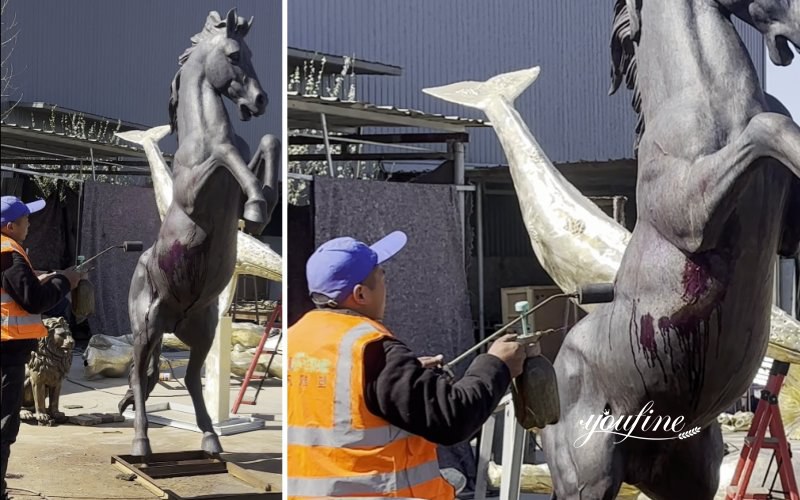
After the patina process is complete, the sculpture receives a protective wax coating.
Why Bronze Sculptures Need Wax Protection
Outdoor bronze sculptures are constantly exposed to:
- Rain
- Sunlight
- Humidity
- Pollution
- Temperature changes
Without proper protection, the patina may fade unevenly over time.
Hand-Applied Wax Protection
The sculpture surface is heated, and protective wax is carefully applied by hand.
This wax layer helps:
- Protect the patina surface
- Improve water resistance
- Enhance color depth
- Slow oxidation
Compared with ordinary spray coatings, professional wax protection provides a more natural finish and better long-term maintenance results.
Why High-End Bronze Sculptures Require Regular Maintenance
Even high-quality bronze sculptures benefit from periodic maintenance.
- Regular waxing helps preserve:
- Surface color stability
- Gloss and texture
- Outdoor durability
Especially in coastal or humid environments, proper maintenance can significantly extend the sculpture’s lifespan.
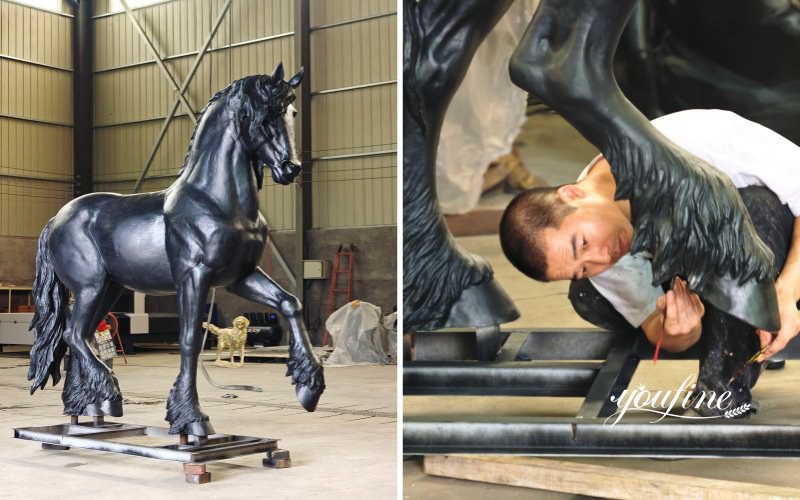
How Long Does It Take to Make a Life-Size Horse Statue?
Making a life-size horse statue typically takes 3 to 9 months. Custom horse rider statues or highly dynamic poses may require additional production time.
Production Stage | Estimated Time |
Design Confirmation | 3–7 Days |
Full-Scale Clay Modeling and Client Confirmation | 15–30 Days |
Mold Making | 7–15 Days |
Bronze Casting | 15–30 Days |
Welding & Patina | 5–10 Days |
Shipping | Depends on Destination |
How Much Does a Life-Size Bronze Horse Statue Cost?
A life-size bronze horse statue typically costs between $7,500 and $20,000, with most high-quality, pre-cast outdoor sculptures falling in the $10,000 to $30,000 range.
The price of a bronze horse sculpture depends on several factors, including:
- Sculpture size
- Bronze thickness
- Pose complexity
- Custom clay modeling
- Patina finish
- Rider figures
- Shipping destination
A simple standing horse statue is generally more affordable than a large rearing horse sculpture with complex engineering requirements.
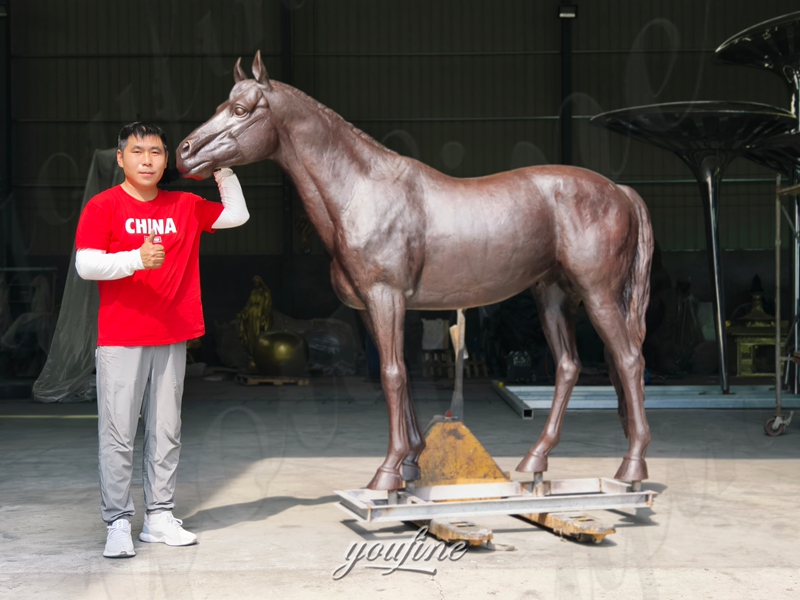
Custom Life-Size Bronze Horse Statues at YouFine
Many clients want more than a standard horse sculpture. At YouFine, we offer fully customized bronze horse statues based on client ideas and project requirements.
What Customers Can Customize
- Clients can customize:
- Horse pose
- Rider figure
- Sculpture size
- Base design
- Inscriptions
- Patina color
What Makes YouFine Different
- 40 years of bronze casting experience
- Existing horse clay models
- Professional horse sculptors
- Full-size clay modeling
- Advanced silica sol casting
- Hand-finished patina coloring
- Global shipping services
- Installation guidance
Every sculpture is handmade with careful attention to both artistic quality and long-term durability.
FAQs
- How heavy is a life-size bronze horse statue?
The weight depends on the sculpture size and bronze thickness, but most life-size bronze horse statues weigh several hundred kilograms or more.
- Can bronze horse statues stay outdoors permanently?
Yes. High-quality bronze sculptures are designed for long-term outdoor display and can last for decades with proper maintenance.
- Can YouFine create a horse sculpture from photos?
Yes. Clients can provide horse photos, sketches, or concept ideas for custom sculpture production.
- Does bronze turn green over time?
Bronze may naturally develop a green patina over many years, especially in humid or coastal environments. Proper waxing and maintenance help slow this process.
- How are large bronze horse statues shipped internationally?
Large sculptures are usually shipped in strong wooden crates and transported by sea freight or air freight depending on the project requirements.
- Why is silica sol casting better for bronze sculptures?
Silica sol casting provides smoother surfaces, sharper details, and better structural stability compared with lower-cost traditional shell materials. It also helps reduce casting defects and improves resistance to oxidation problems such as white spots or green corrosion in humid climates.
- Do bronze horse statues require maintenance?
Yes, but maintenance is relatively simple. Outdoor bronze sculptures benefit from periodic cleaning and wax protection. In mild climates, waxing every 1–2 years is usually sufficient. Coastal or humid areas may require more frequent maintenance.
- What Do Bronze Horse Statues Symbolize?
Bronze horse statues often symbolize strength, freedom, success, courage, and nobility. Different poses can also carry different meanings. For example, running horses represent energy and progress, while rearing horses symbolize power and ambition. Learn more here: What is the Meaning of Horse Statues?