For centuries, horse statues have been among the most admired forms of sculpture in the world. From ancient Roman emperors and medieval kings to modern public art and legendary racehorses, horse sculptures reflect humanity’s admiration for strength, movement, courage, and freedom.
Some equestrian statues commemorate military victories and royal power, while others celebrate mythology, frontier culture, or the emotional bond between humans and horses. Today, famous horse sculptures can be found in city squares, museums, racetracks, parks, and monumental public spaces around the globe.
In this guide, we explore 15 famous horse statues around the world, grouped by historical themes and artistic styles.
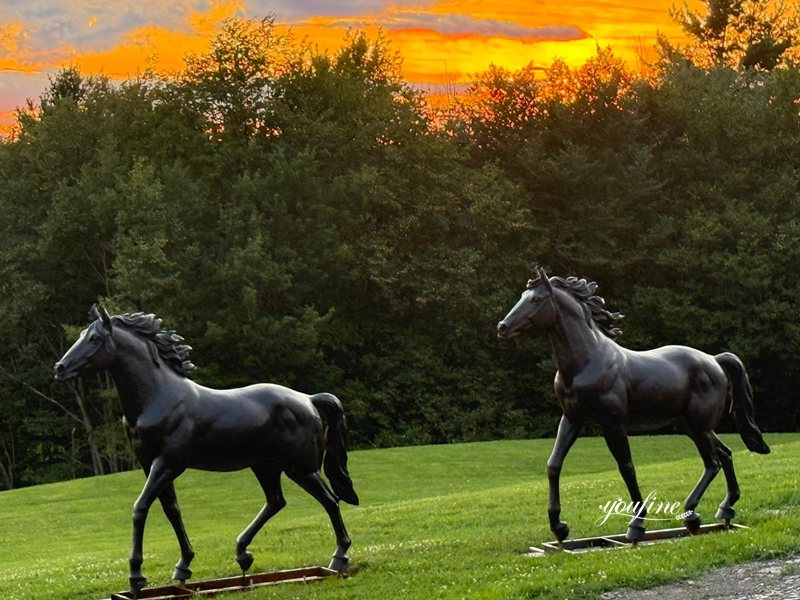
1. Ancient & Classical Horse Statues
Ancient civilizations viewed horses as symbols of authority, military power, and divine status. Many of the earliest horse sculptures influenced Western art for centuries.
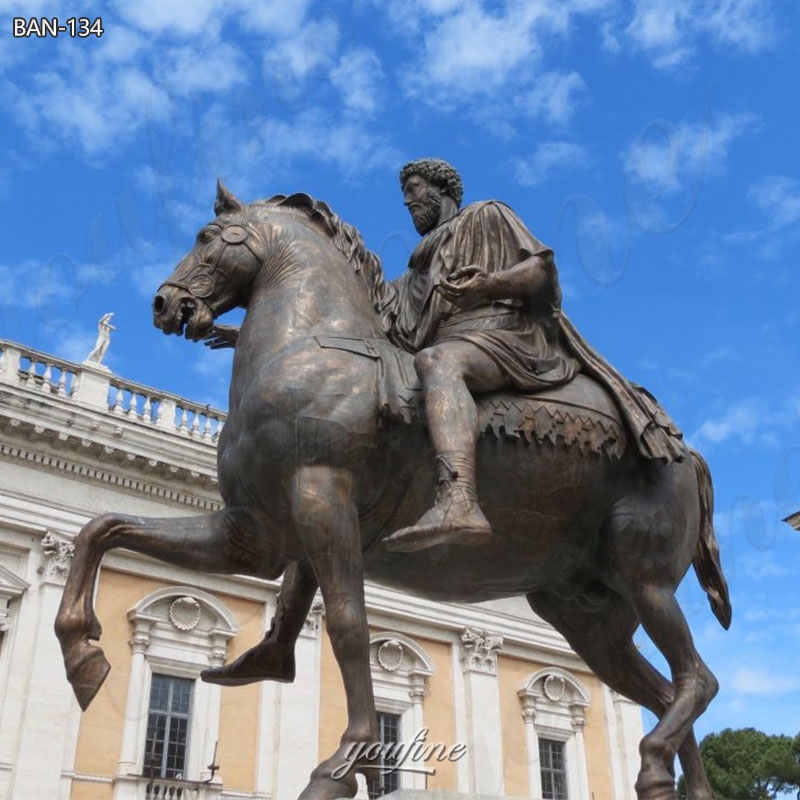
1.1 Equestrian Statue of Marcus Aurelius
The Equestrian Statue of Marcus Aurelius in Rome is one of the most important surviving bronze sculptures from ancient Rome. Created around 175 AD, the statue depicts Emperor Marcus Aurelius calmly riding his horse with one arm extended in a gesture of leadership and mercy.
The sculpture survived while many other Roman bronzes were melted down because medieval people mistakenly believed it represented the Christian emperor Constantine. Its survival greatly influenced Renaissance artists and later equestrian monuments throughout Europe.
The horse itself is portrayed with remarkable realism, demonstrating the advanced bronze-casting techniques of ancient Rome.
1.2 Horses of Saint Mark
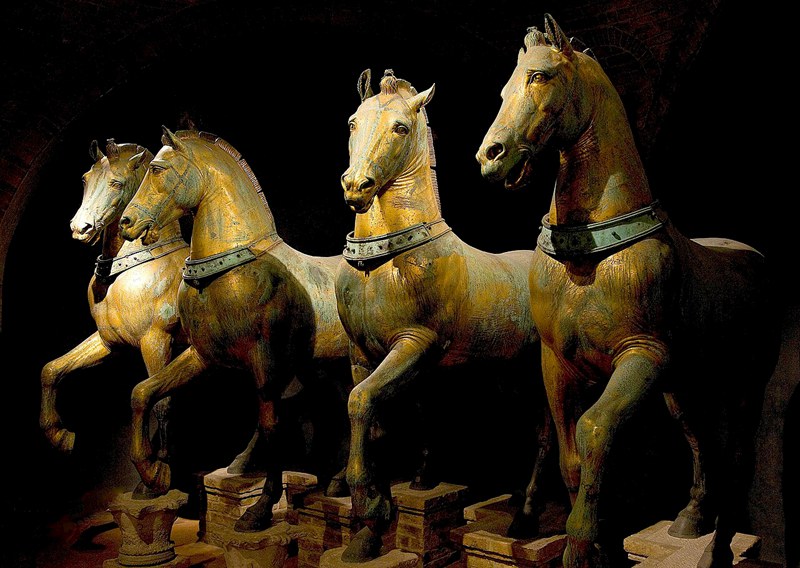
The Horses of Saint Mark are among the most famous ancient horse sculptures in the world. Displayed at St. Mark’s Basilica in Venice, these bronze horses are believed to date back to classical antiquity.
The sculptures traveled across empires over the centuries and eventually became symbols of Venetian wealth and power. Napoleon later transported them to Paris before they were finally returned to Venice.
Their elegant anatomy and energetic poses inspired generations of European sculptors and remain iconic examples of classical horse sculpture.
2. Royal & Military Equestrian Statues
Royal and military horse statues often commemorate powerful leaders, national heroes, and legendary commanders. These sculptures symbolize authority, victory, bravery, and political strength.
2.1 Gattamelata
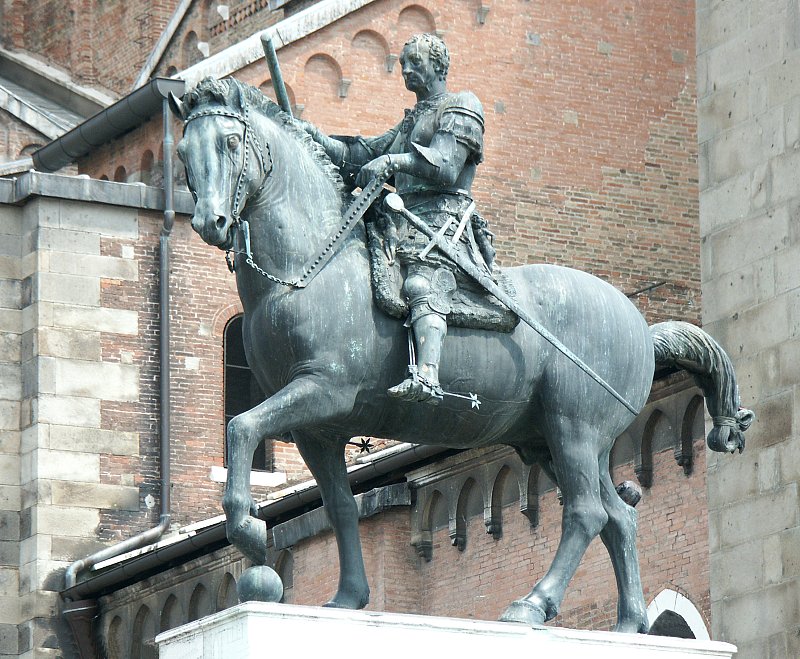
Created by Donatello during the Renaissance, Gattamelata is considered one of the greatest equestrian statues in art history.
Located in Padua, Italy, the sculpture honors the military commander Erasmo da Narni, known as Gattamelata. Donatello revived the ancient Roman tradition of monumental equestrian sculpture and introduced remarkable realism and psychological depth.
The calm but powerful horse perfectly reflects the authority and discipline of the rider.
2.2 The Bronze Horseman
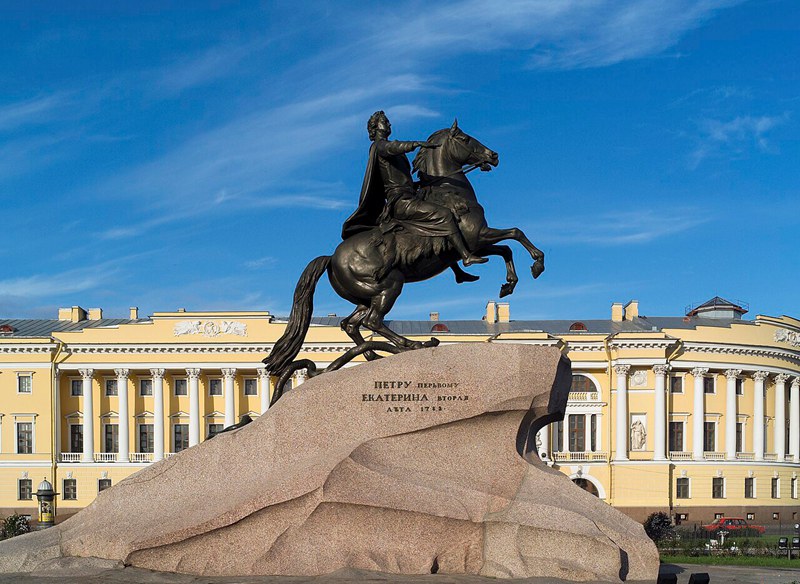
The Bronze Horseman in Saint Petersburg is one of Russia’s most iconic monuments. Commissioned by Catherine the Great, the statue honors Peter the Great, founder of modern Russia.
The dramatic composition shows Peter riding a rearing horse atop a massive stone pedestal. The sculpture symbolizes Russia’s rise as a powerful empire and Peter’s determination to modernize the nation.
Its dynamic movement and monumental scale made it one of the most influential equestrian statues in Europe.
2.3 Joan of Arc Equestrian Statue
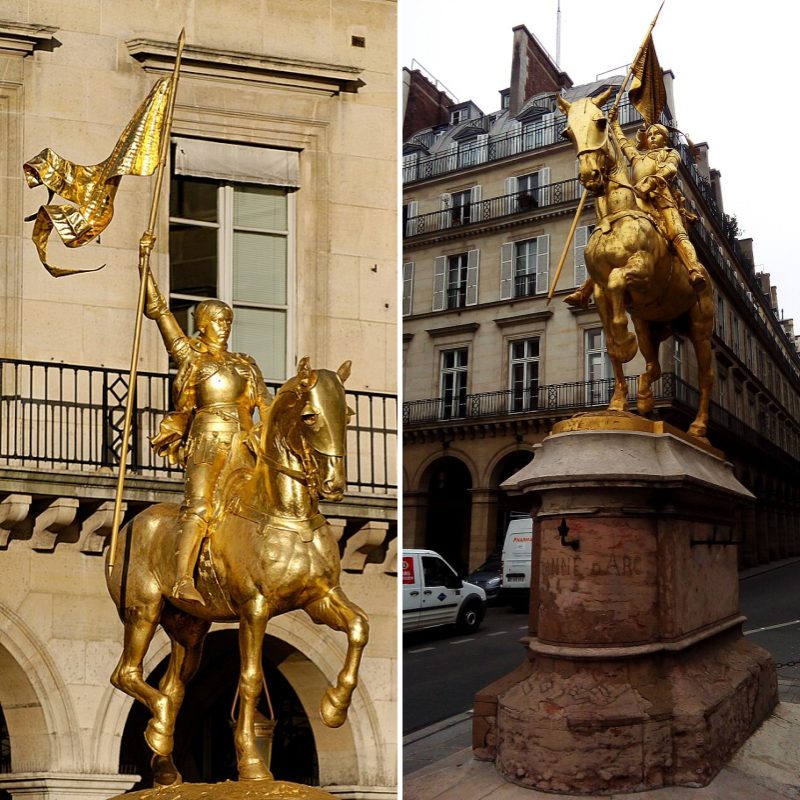
Joan of Arc has inspired many equestrian statues throughout France, but the gilded bronze statue in Paris is among the most famous.
The sculpture portrays Joan riding courageously into battle while carrying her banner. The statue symbolizes patriotism, faith, sacrifice, and national unity.
As one of France’s greatest historical heroes, Joan of Arc continues to inspire artists and visitors from around the world.
2.4 Richard Coeur de Lion
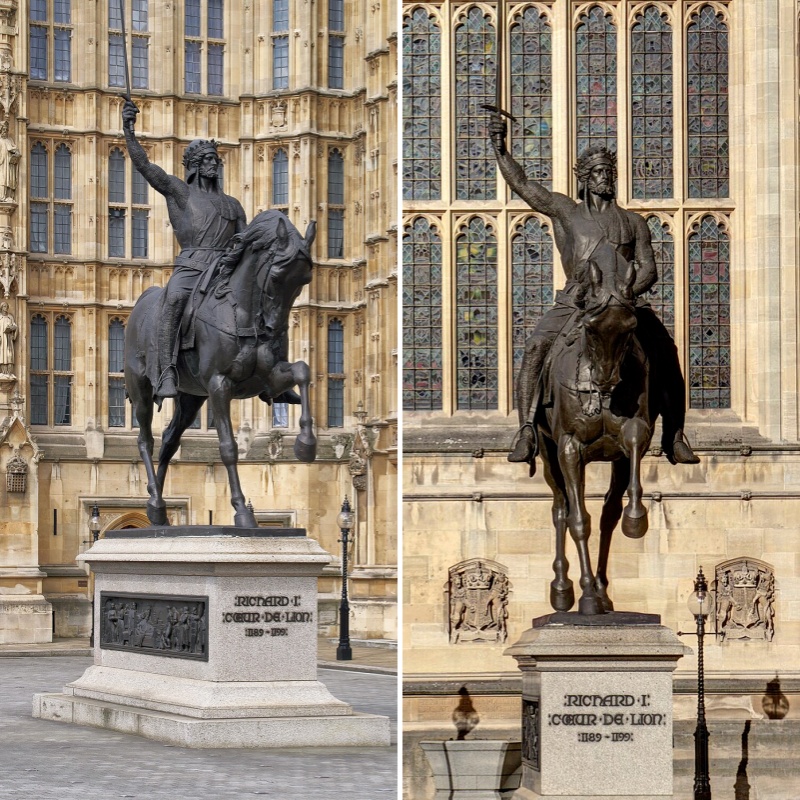
Standing outside the Palace of Westminster in London, the Richard Coeur de Lion statue depicts King Richard I, also known as Richard the Lionheart.
The bronze monument presents the king as a heroic crusader mounted on a powerful warhorse with sword raised high. It reflects ideals of bravery, leadership, and medieval chivalry.
The sculpture remains one of the most recognizable royal equestrian statues in the United Kingdom.
2.5 Andrew Jackson Equestrian Statue
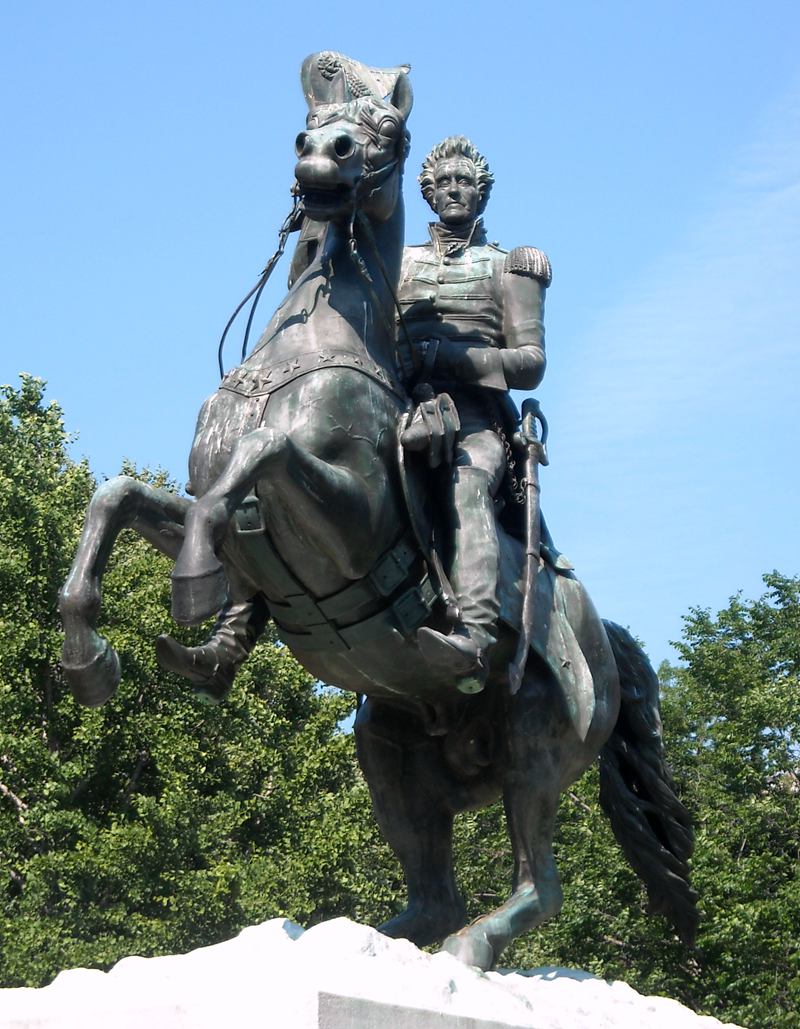
Located near the White House in Washington, D.C., the Andrew Jackson Equestrian Statue became the first large bronze equestrian monument cast in the United States.
Completed in 1853, the sculpture was technically groundbreaking because the horse appears balanced only on its rear legs. The dramatic pose demonstrated the growing skill of American bronze sculpture during the 19th century.
Today, it remains an important symbol of early American public art.
2.6 Genghis Khan Equestrian Statue
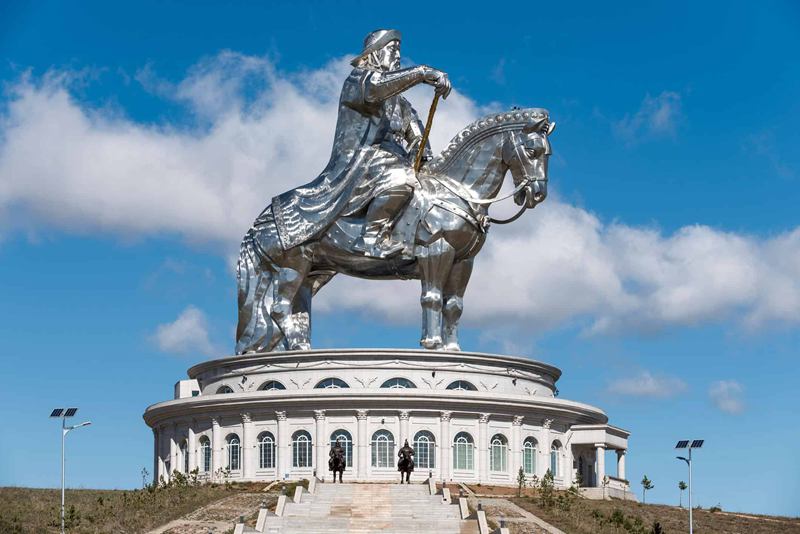
The Genghis Khan Equestrian Statue in Mongolia is the tallest equestrian statue in the world. Standing approximately 40 meters tall, the stainless steel monument dominates the Mongolian landscape.
The sculpture depicts Genghis Khan triumphantly riding on horseback while looking toward the horizon. Visitors can even enter the structure and climb into observation areas inside the horse.
The monument symbolizes Mongolian identity, strength, and national pride while also serving as a major tourist attraction.
3. Monumental Modern Horse Sculptures
Modern horse sculptures often combine contemporary design, engineering innovation, and monumental scale.
3.1 The Kelpies
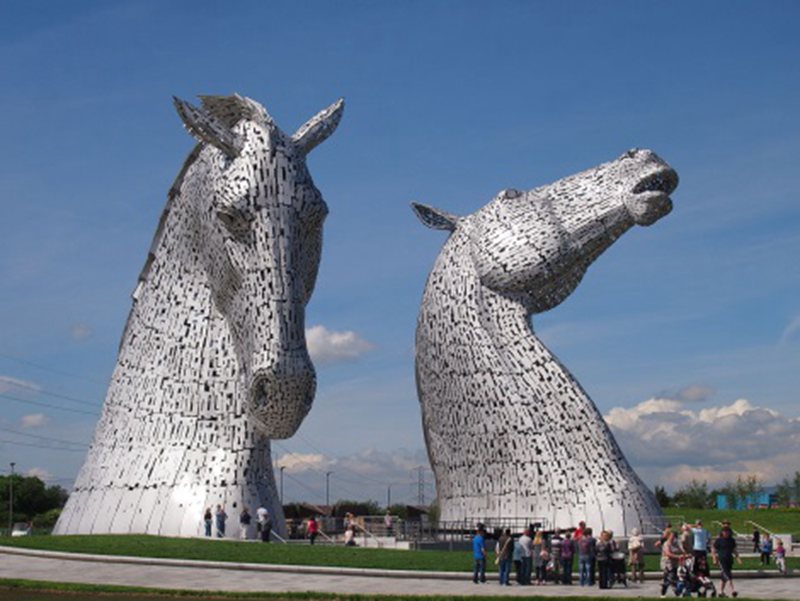
Located in Scotland, The Kelpies are two gigantic horse-head sculptures inspired by Scottish mythology.
Designed by artist Andy Scott, the 30-meter-tall stainless steel sculptures represent mythical water spirits known as kelpies while also honoring Scotland’s industrial and working-horse heritage.
Their modern appearance, enormous scale, and nighttime lighting effects have made them one of the most famous contemporary horse sculptures in the world.
3.2 Leonardo’s Horse
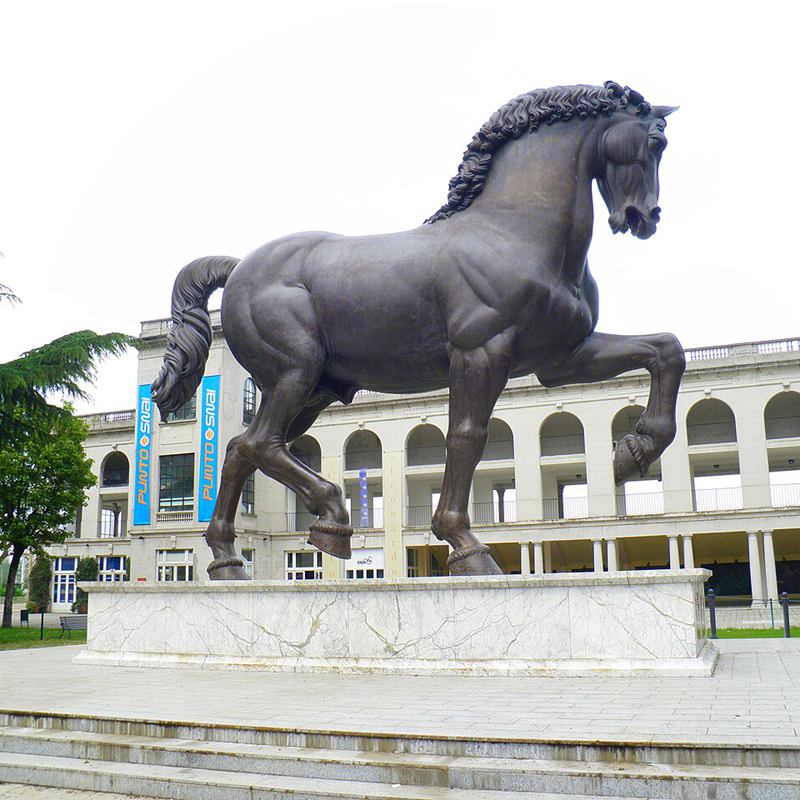
Leonardo da Vinci originally planned to create the world’s largest bronze horse statue during the Renaissance, but the project was never completed because the bronze was redirected for military use.
Centuries later, modern artists and engineers used Leonardo’s surviving sketches to finally produce the sculpture now known as Leonardo’s Horse.
The completed work represents both Leonardo’s artistic genius and humanity’s continued admiration for Renaissance innovation.
4. Wild West & American Frontier Horse Sculptures
In American art, horse sculptures often represent frontier culture, freedom, and the untamed spirit of the West.
4.1 Mustangs of Las Colinas
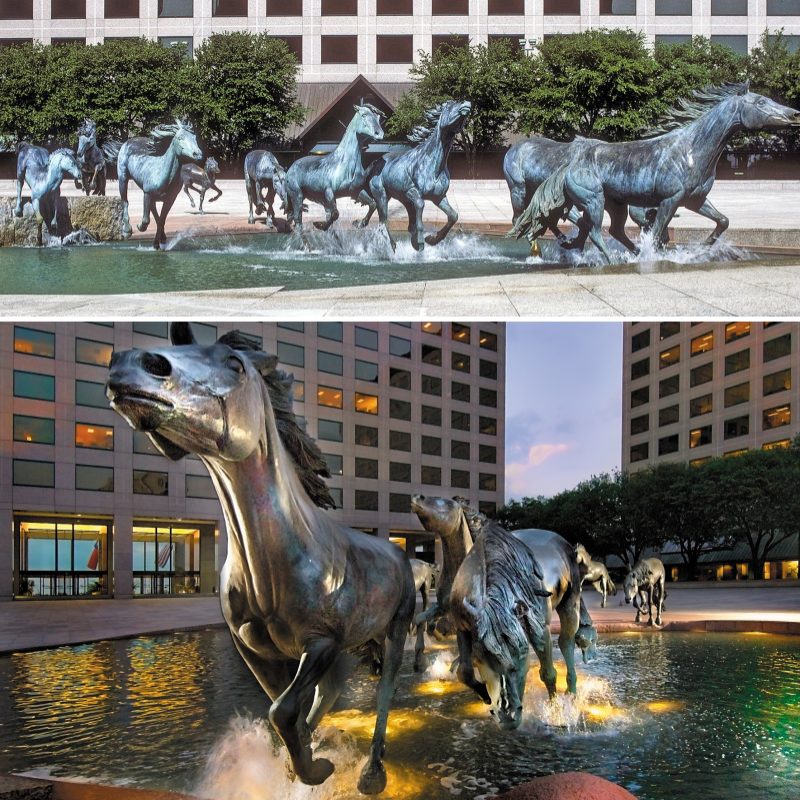
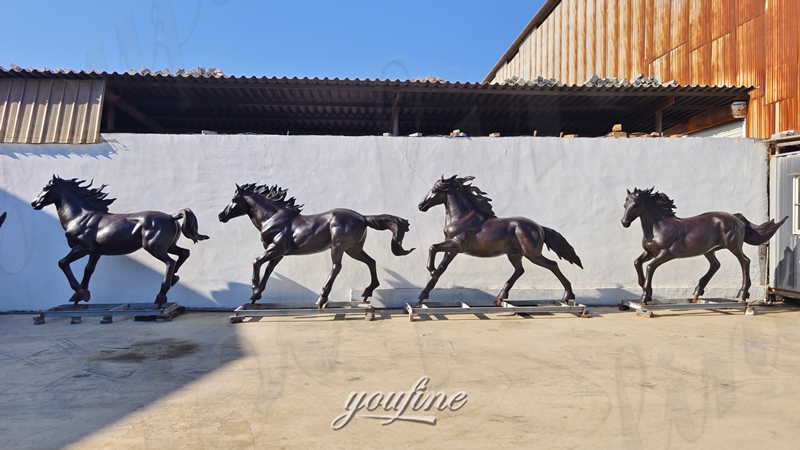
The Mustangs of Las Colinas in Texas is one of the world’s largest equestrian sculpture installations.
The artwork features nine bronze mustangs galloping through flowing water. The sculptures symbolize freedom, movement, and the wild spirit of the American frontier.
The realistic anatomy and energetic motion make the installation one of the most dynamic horse sculptures ever created.
4.2 The Bronco Buster
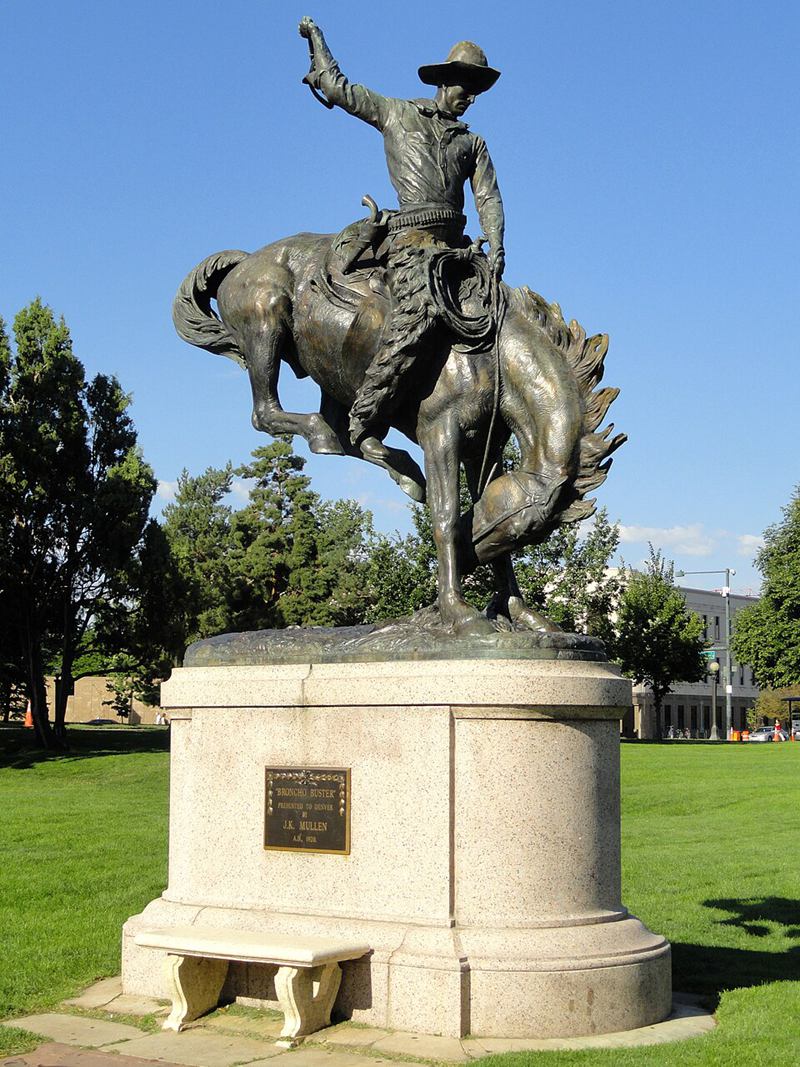
Created by Frederic Remington, The Bronco Buster is an iconic sculpture of the American West.
The artwork depicts a cowboy struggling to control a bucking horse, capturing the danger and excitement of frontier life. Unlike royal equestrian monuments, this sculpture celebrates ordinary cowboys and working horses.
Its dramatic movement and emotional intensity helped establish Remington as one of America’s most important Western artists.
5. Sports & Racing Horse Statues
Horse racing has inspired many memorial sculptures honoring legendary racehorses and their achievements.
5.1 Barbaro Memorial Statue
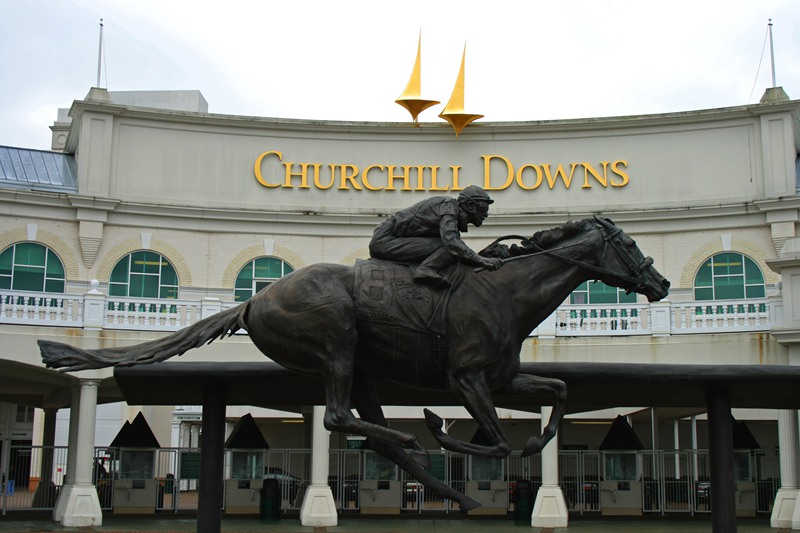
Barbaro was one of America’s most beloved racehorses. After winning the Kentucky Derby, he suffered a tragic injury during the 2006 Preakness Stakes.
The memorial statue honors Barbaro’s courage, athletic greatness, and emotional connection with racing fans. Visitors continue to admire the sculpture as a tribute to determination and resilience.
The statue demonstrates how horse sculptures can also serve as emotional memorials rather than political monuments.
5.2 Zenyatta Statue
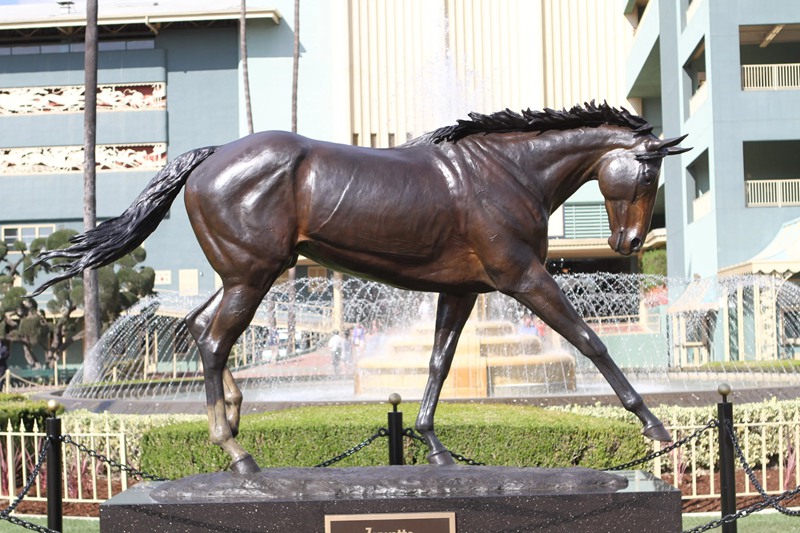
The Zenyatta Statue celebrates one of the most famous racehorses in American history.
Known for her remarkable racing career and dramatic finishes, Zenyatta became beloved by horse racing fans around the world. The sculpture captures her elegance, strength, and intelligence.
The statue represents excellence in sports as well as the admiration people feel toward extraordinary animals.
6. Religious & Mythological Horse Sculptures
Many horse sculptures are inspired by religious stories, legends, and mythology.
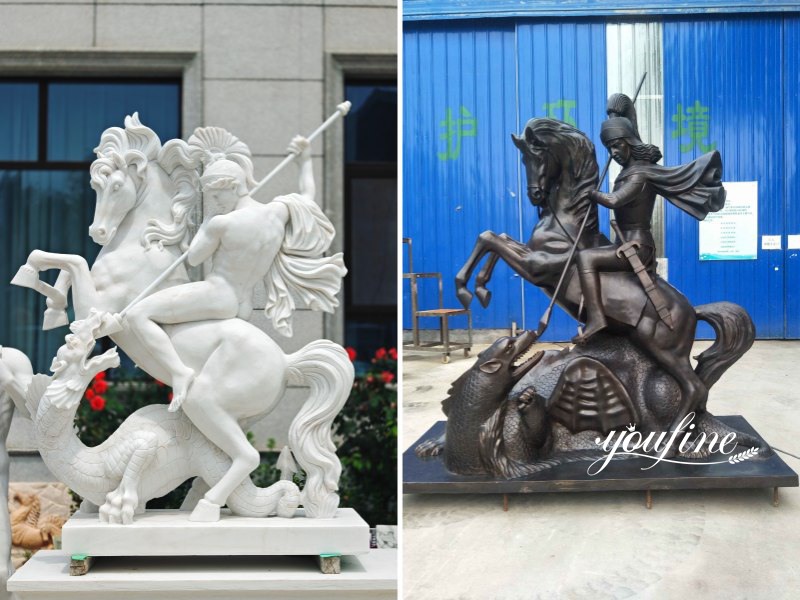
6.1 Saint George and the Dragon
The story of Saint George slaying the dragon has inspired countless sculptures across Europe and beyond.
These sculptures usually depict Saint George mounted on horseback while defeating the dragon beneath him. The imagery symbolizes courage, faith, and the triumph of good over evil.
Because of its dramatic composition and symbolic meaning, Saint George and the Dragon remains one of the most recognizable themes in equestrian sculpture.
7. Why Horse Statues Continue to Fascinate People
Horse statues remain popular because horses themselves carry universal symbolic meaning. Across cultures, horses represent:
- Power
- Freedom
- Loyalty
- Courage
- Victory
- Nobility
You could learn more about the horse statue meaning in my another blog: What is the Meaning of Horse Statues?
In addition, horse sculptures combine movement, anatomy, emotion, and storytelling in ways few other artistic subjects can achieve.
Today, horse statues continue to appear in:
- Public squares
- Luxury estates
- Museums
- Parks
- Racetracks
- Hotels
- Memorial gardens
- Corporate landscapes
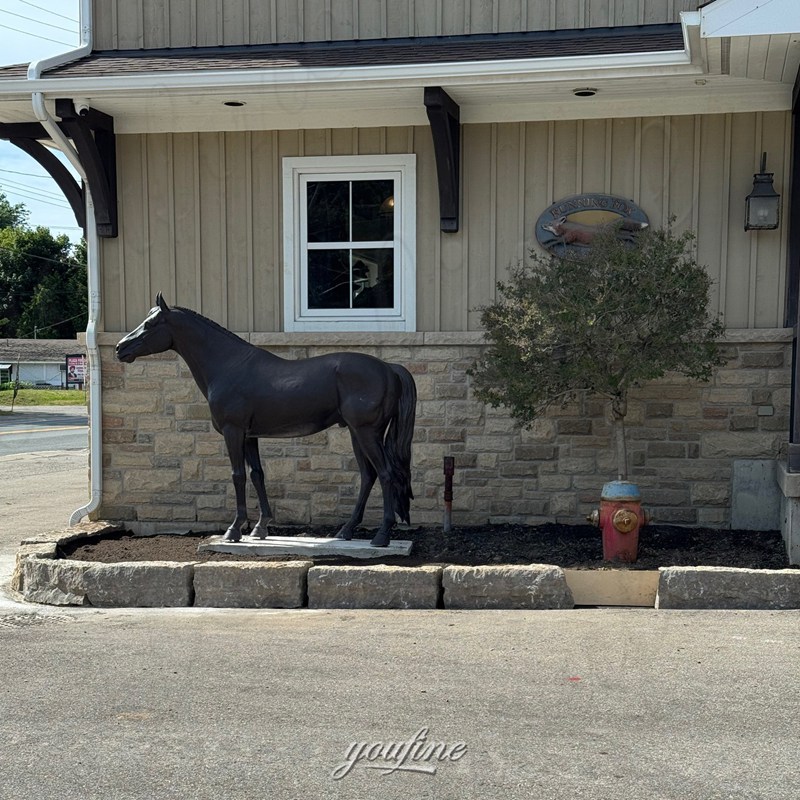
8. Materials Used in Horse Sculptures
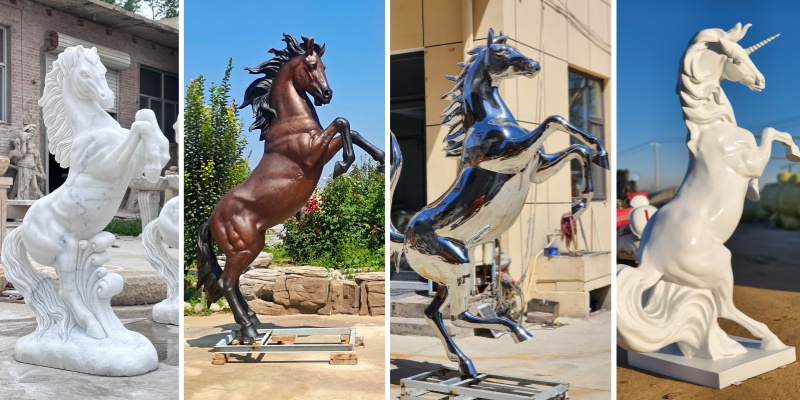
Horse sculptures can be created in a wide range of materials, each offering different artistic effects, durability, and historical significance. The choice of material often depends on whether the statue is intended for public monuments, private collections, or contemporary art installations.
- Bronze: Bronze is the most traditional and widely used material for horse statues. It has been favored since ancient times because of its strength, durability, and ability to capture fine anatomical details such as muscles, movement, and expression. Most famous equestrian statues in the world—from Marcus Aurelius to modern memorials—are made of bronze.
- Stainless Steel: Stainless steel is commonly used in modern design sculptures. It offers a sleek, reflective surface and strong resistance to weather conditions. Large-scale works such as The Kelpies and the Genghis Khan Statue use steel to achieve dramatic visual impact and structural stability.
- Marble and Stone: Marble and natural stone were widely used in classical and Renaissance sculpture. These materials are associated with elegance, permanence, and architectural grandeur.
- Resin and Fiberglass: Modern decorative horse statues, especially for interiors or garden use, often use resin or fiberglass. These materials are lightweight, cost-effective, and easier to transport.
9. How Bronze Horse Statues Are Made
Bronze horse statues are created through a detailed process that combines artistic modeling and advanced casting techniques. It usually begins with a full-scale clay sculpture where the artist shapes the horse’s anatomy and movement in detail. A mold is then made from this model, and the lost-wax casting method is used to produce a precise bronze version. After the bronze is poured and cooled, the individual parts are welded together, carefully polished, and finished with surface treatments to create the final texture and patina. Finally, the completed statue is mounted on a base and installed on site.
Conclusion
Horse statues have played a powerful role in human history, art, and culture for thousands of years. From ancient Roman emperors to modern public installations, they continue to represent strength, freedom, leadership, and heroic spirit.
Whether created in bronze, steel, or stone, each sculpture tells a unique story—of a ruler, a battle, a legend, or even a beloved racehorse.
Today, horse sculptures remain timeless landmarks that connect past and present, tradition and innovation, and art and emotion. Their global presence proves that the horse will always be one of the most inspiring subjects in sculpture.

FAQ
- What is the tallest horse statue in the world?
The Genghis Khan Equestrian Statue in Mongolia is currently the tallest equestrian statue in the world at around 40 meters (131 feet).
- Why are most horse statues made of bronze?
Bronze is durable, weather-resistant, and excellent for capturing fine details such as muscle structure and movement, making it ideal for outdoor monumental sculptures.
- How long does it take to make a bronze horse statue?
Depending on size and complexity, a large bronze horse statue can take one month to three months to complete.
- What is the oldest horse statue in the world?
One of the oldest surviving horse statues is the Equestrian Statue of Marcus Aurelius in Rome, created in ancient Roman times. It is one of the very few bronze equestrian sculptures that survived from antiquity.
- Why are horse statues often used for kings and generals?
Horses historically represented power, military strength, and leadership. Placing a ruler on horseback visually reinforces authority, control, and heroic status, which is why equestrian statues are commonly used for kings and military leaders.