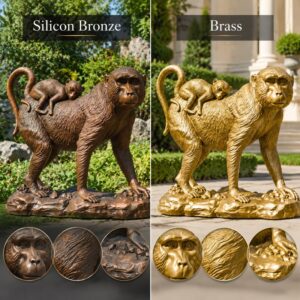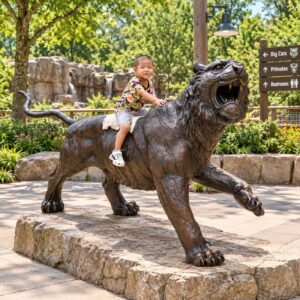
A school mascot is more than a recognizable character or an element of a school’s visual identity. It represents the values, traditions, and collective spirit of an educational institution. Whether it is a powerful eagle, a proud bulldog, a determined tiger, or a historical figure, a mascot often carries the stories and aspirations that connect students, faculty, alumni, and generations of graduates.
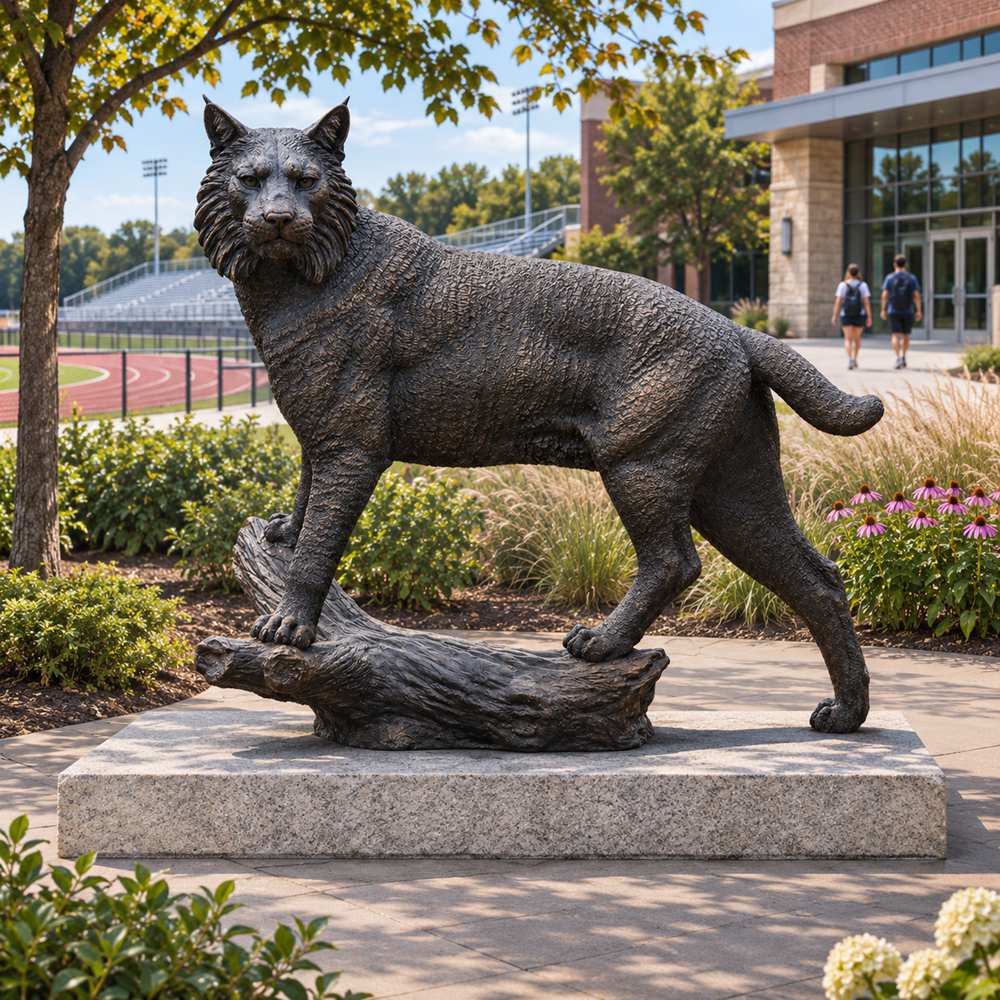
A custom bronze mascot statue gives this identity a permanent physical presence on campus. Installed at a university entrance, athletic facility, central plaza, or alumni garden, it can become a recognizable landmark and a meaningful gathering place.
However, commissioning a bronze mascot sculpture involves more than choosing an animal statue and deciding its height. Schools and universities need to consider the design concept, proportions, bronze material, surface finish, structural stability, budget, and installation requirements.
This guide explains the key steps involved in commissioning a bronze mascot statue, helping educational institutions plan a project from the initial concept to final installation.
Why Commission a Bronze Mascot Statue for Your School or University?
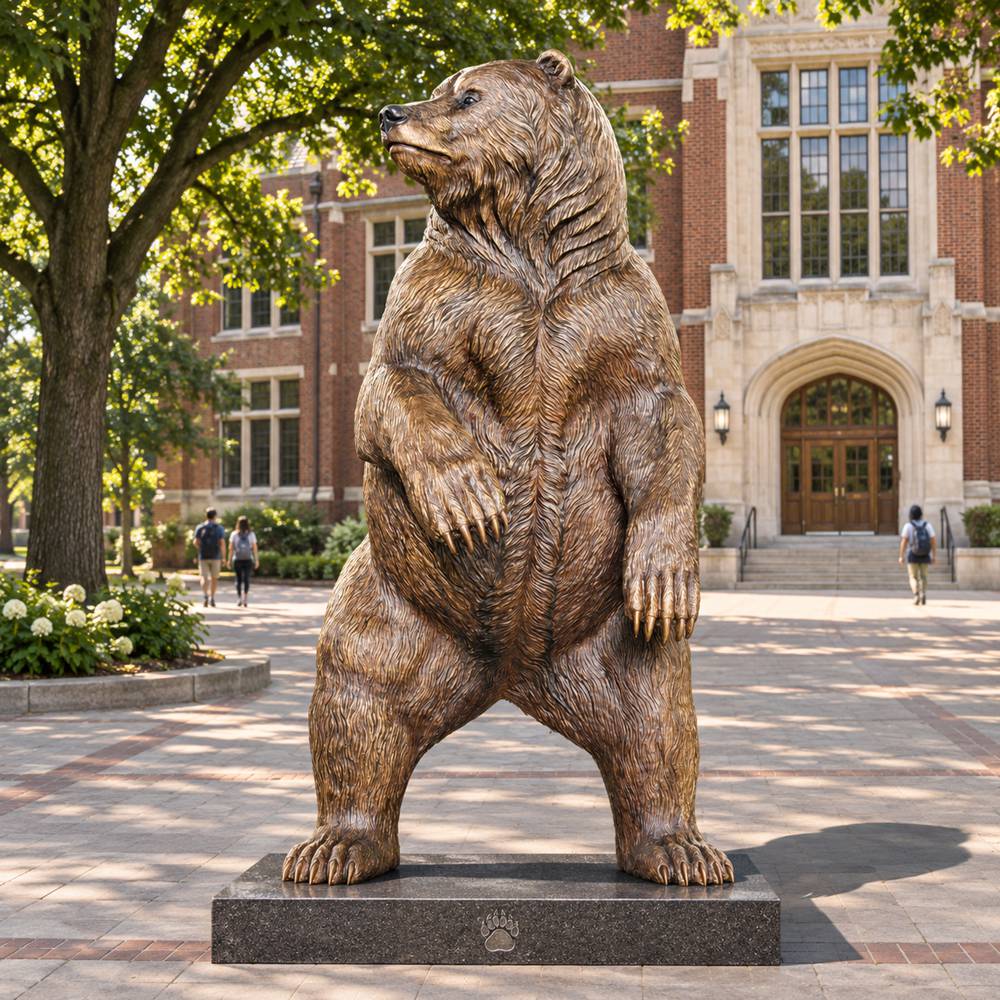
A mascot gives a school’s values a recognizable form. A bronze lion statue may suggest courage, a bronze bull statue symbolizes an indomitable upward spirit, a bronze horse statue may represent ambition, and a bronze bear statue may communicate strength. The exact meaning should come from the school’s own history and traditions—not from a generic interpretation supplied by a manufacturer.
A bronze sculpture can turn that identity into a physical meeting point. It may become a backdrop for graduation photographs, a landmark outside an athletic venue, or a gathering place during campus events.
I recommend deciding what the statue should mean before discussing its dimensions or finish. Is the main purpose to celebrate school pride, recognize a milestone, honor a donor, or strengthen the entrance to campus? That answer will influence the design.
For visual inspiration, I suggest reviewing these 20 famous bronze mascot statues at U.S. universities. Use them to study how pose, placement, and scale affect a statue’s presence—not as designs to copy.
Step 1: Define Your School Mascot and Sculpture Concept
Choose the Right Mascot Character
I would begin with the school’s approved mascot artwork and identity guidelines. A mascot may exist as a flat logo, a costumed character, or several illustrations. These versions do not always translate into the same three-dimensional figure.
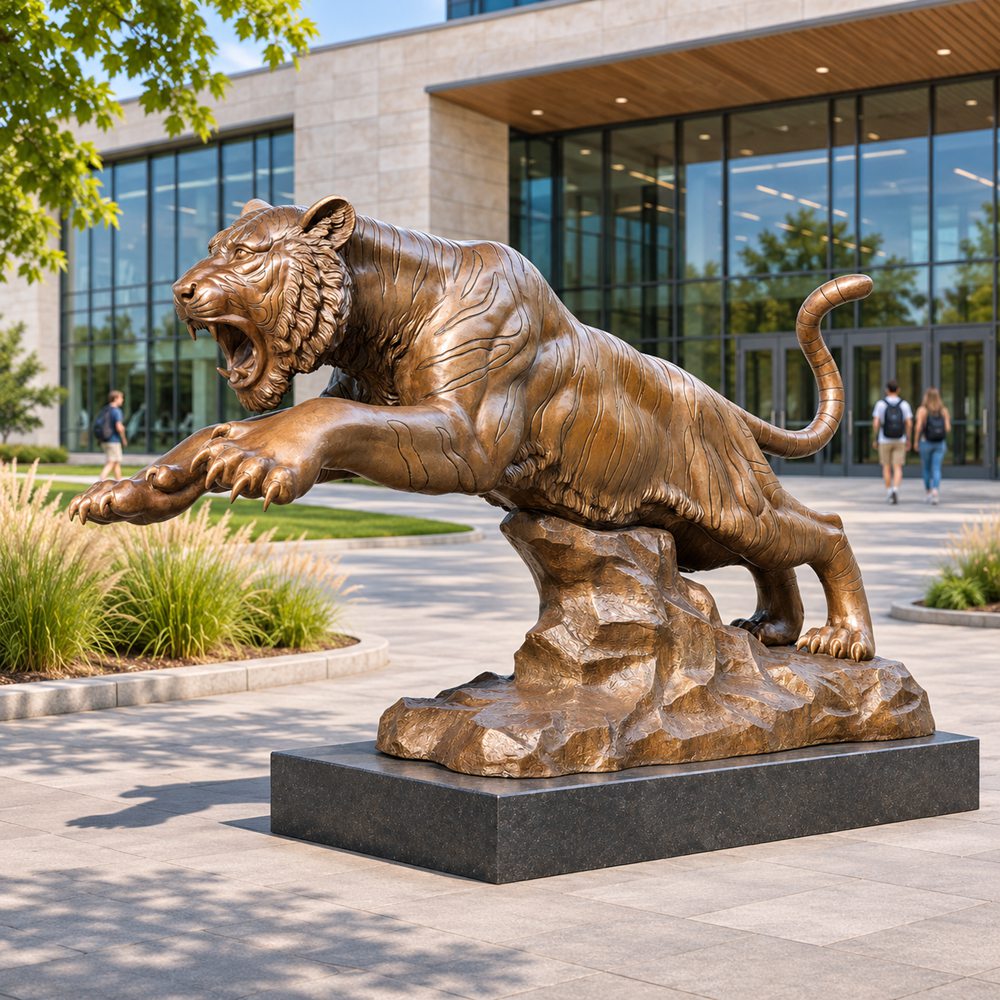
Decide whether the statue should follow a realistic animal form, a stylized athletic character, or a combination of both. A realistic treatment may feel more formal, while a stylized design may be more immediately recognizable.
Before commissioning original modeling, confirm that the school has permission to reproduce the mascot. If an outside illustrator or licensing organization controls the design, obtain the necessary authorization.
Decide the Pose and Expression
The pose determines how people read the sculpture from a distance. I recommend choosing it according to the statue’s purpose and location.
These common directions create different effects:
| Design Direction | Visual Effect | Practical Consideration |
|---|---|---|
| Standing, balanced pose | Stable and dignified | Often easier to integrate into a formal entrance |
| Walking or advancing pose | Active and purposeful | Needs enough space for the full silhouette |
| Roaring or raised-head pose | Powerful and competitive | Expression should suit the school’s audience |
| Welcoming, approachable pose | Friendly and accessible | Useful near visitor or student gathering areas |
I would also review projecting claws, horns, wings, tails, and limbs. Their position affects casting, structural support, pedestrian clearance, and safe public interaction.
Prepare Reference Materials
A clear design brief reduces avoidable revisions. I suggest preparing:
- Approved mascot artwork and brand guidelines.
- Front, side, and rear references where available.
- Photographs of the proposed installation site.
- Desired mood, pose, and recognizable features.
- Approximate dimensions and budget range.
- Any plaque, lettering, or donor-recognition requirements.
Appoint one person to consolidate feedback from school leadership, athletics, facilities, and other stakeholders. Conflicting instructions from several reviewers can delay the sculpture without improving it.
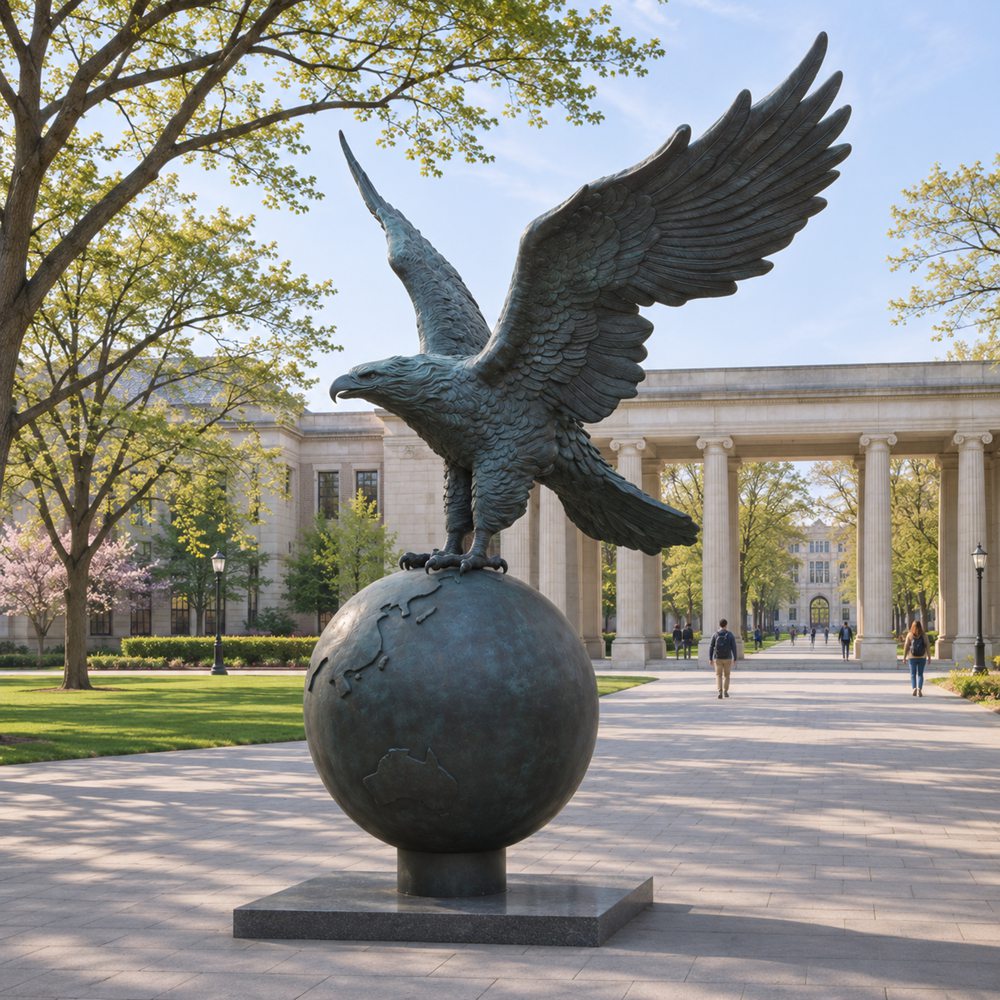
Step 2: Choose the Right Size and Placement for Your Campus
Common Locations for Bronze Mascot Statues
I recommend choosing the site before finalizing the sculpture size. A statue designed for a stadium entrance may not work beside a narrow pedestrian path.
The location changes both the visual requirements and the installation plan:
| Location | Main Opportunity | What I Would Check |
|---|---|---|
| Main campus entrance | Establishes school identity | Visibility, vehicle sightlines, landscaping |
| Stadium or athletic complex | Connects with team pride | Crowd movement, event access, impact risks |
| Central plaza | Creates a gathering landmark | Accessible circulation, seating, photography space |
| Alumni or donor area | Supports commemoration | Plaque placement and relationship to nearby features |
| Building courtyard | Offers a more intimate setting | Delivery access, drainage, surrounding architecture |
A visually attractive site is not necessarily an easy installation site. I would ask facilities staff to review underground services and equipment access early.
How to Determine the Right Sculpture Size
Size should respond to viewing distance, surrounding buildings, and the intended interaction. A mascot that looks impressive in a workshop photograph may appear small in a broad plaza.
I suggest using a site photo with a scaled outline or a digital visualization before approving dimensions. Include people, doors, and nearby structures as references.
Specify dimensions clearly. “Overall height” should state whether it includes the bronze figure, its base, and the pedestal. For a long-tailed or winged mascot, width and depth can be as important as height.
Consider the Foundation and Installation Space
The sculpture, pedestal, foundation, and anchors must work as one system. I would request preliminary mounting information before the school completes the foundation.
A qualified local engineer should determine foundation and anchoring requirements using the statue’s weight, geometry, site conditions, and applicable regulations. Wind, seismic conditions, soil capacity, and foreseeable public contact may affect the design.
Also confirm whether the school expects people to touch the statue. A sculpture suitable for photographs is not automatically designed for climbing. If climbing is foreseeable, address that risk explicitly with the project team.
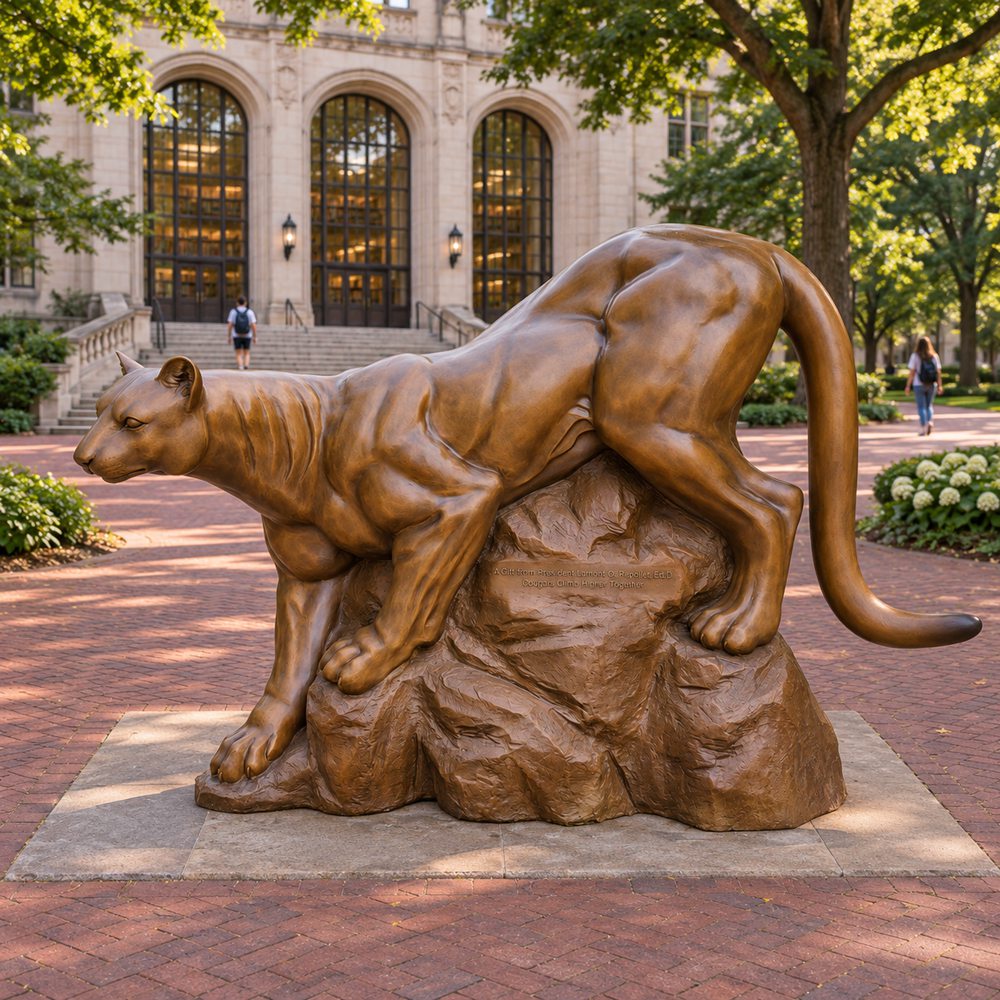
Step 3: Select the Right Bronze Material and Finishing
Why Bronze Is Suitable for School Mascot Statues
Bronze is a copper-based alloy commonly used for cast sculpture.1 It can reproduce detailed fur, feathers, clothing, facial features, and other elements that help a mascot remain recognizable.
It is also suitable for outdoor display when the alloy, construction, finish, and maintenance plan match the environment. However, I would not describe bronze as maintenance-free. Rain, pollution, salt exposure, irrigation, and frequent touching can change its appearance.
Ask the manufacturer to identify the proposed casting alloy and explain why it is suitable for the project. The word “bronze” alone is not a complete material specification.
Common Bronze Finishes
A patina is a colored surface treatment produced through controlled chemical reactions.2 A protective wax or coating may then be applied as part of the finishing system.
I recommend approving a physical finish sample whenever possible, because photographs can distort color and sheen.
| Finish | Typical Appearance | Buyer Consideration |
|---|---|---|
| Brown patina | Warm, traditional bronze tones | Review how it reveals facial and surface detail |
| Dark brown or near-black patina | Strong contrast and a formal appearance | Check visibility in shaded locations |
| Green-toned patina | An aged bronze appearance | Approve the intended variation and pattern |
| Highlighted patina | Lighter raised details over darker areas | Frequent touching may alter the highlights |
| Polished bronze areas | Bright metallic accents | Appearance can change without appropriate care |
I would choose the finish for the mascot and its surroundings rather than simply selecting the darkest or brightest option. Ask for the proposed protective treatment and maintenance instructions at the same time.
Bronze Thickness and Internal Structure
Many large bronze sculptures are hollow castings, not solid metal.3 Separate cast sections may be joined, and an internal support frame may be used where the design requires it.
I would not accept wall thickness as the only measure of quality. Appropriate thickness depends on the casting method, shape, scale, and structural design. More metal does not automatically mean a better statue.
Request an explanation of:
- The proposed casting method and wall-thickness approach.
- Support for projecting or heavily loaded features.
- Internal frame materials and compatibility with bronze.
- Weld finishing and inspection.
- Drainage provisions where water could collect.
- The connection between the sculpture and its foundation.
For a large public installation, critical structural details should receive suitable professional review.
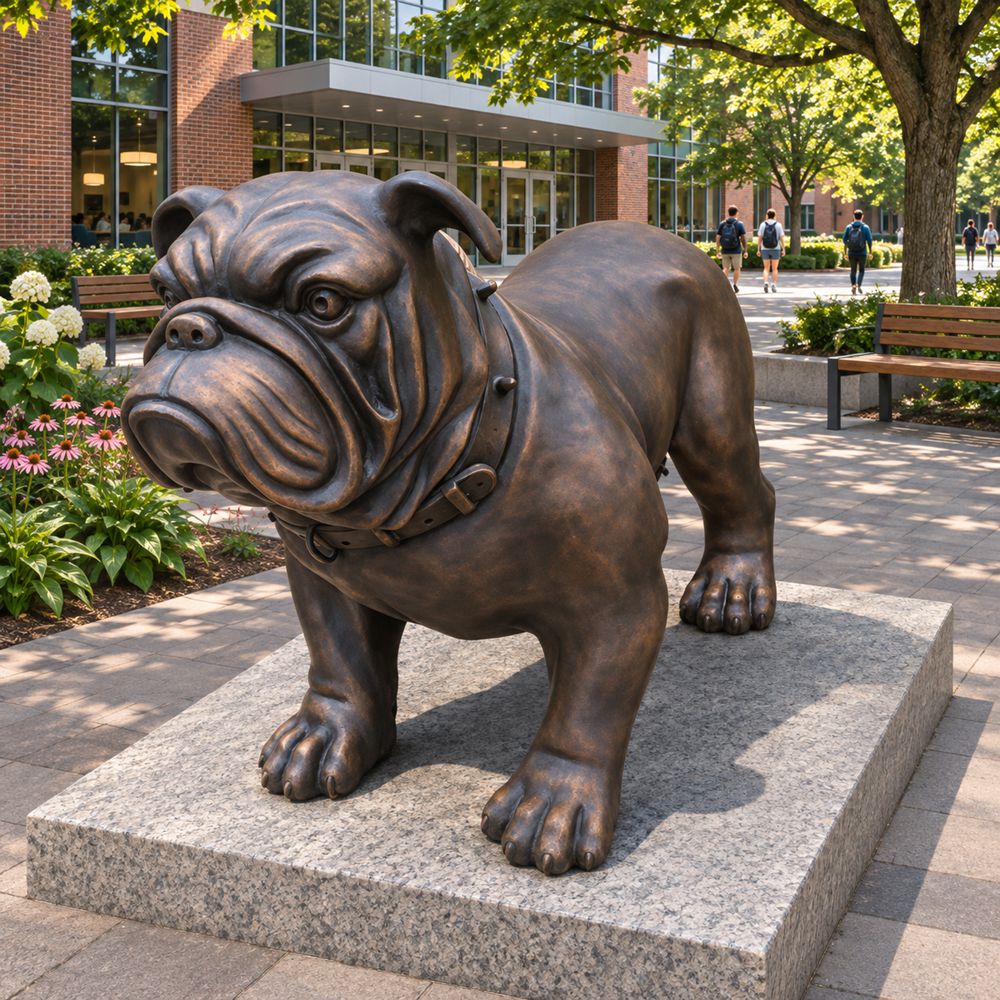
Step 4: Understand the Custom Bronze Mascot Statue Production Process
I recommend agreeing on approval stages before production begins. A clear process helps the school review the right information at the right time.
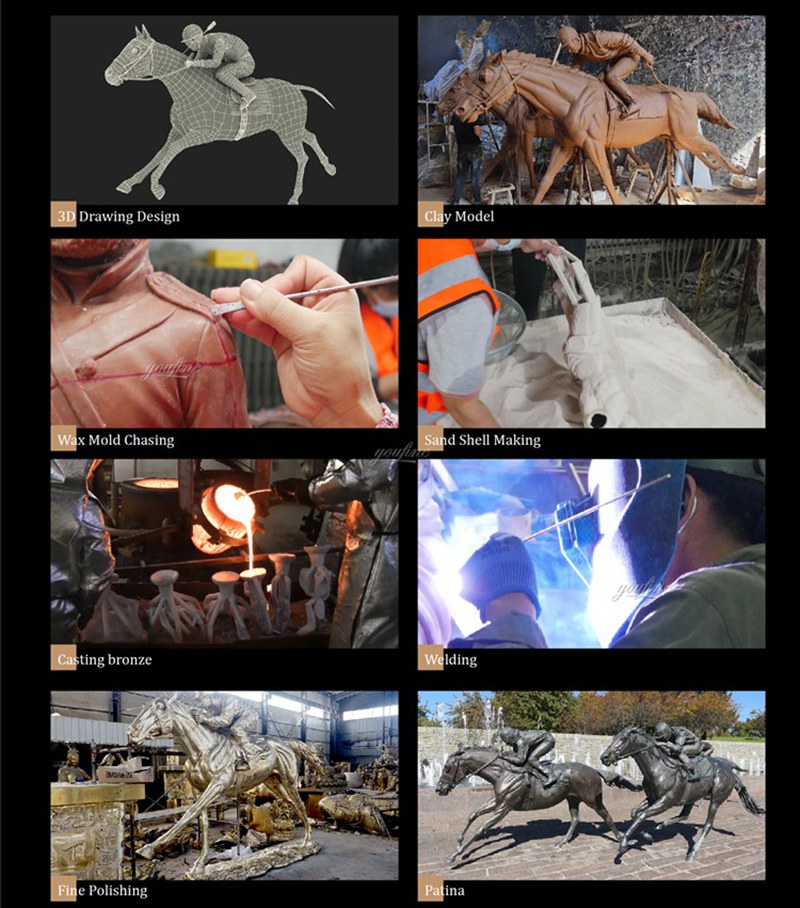
A typical custom casting sequence looks like this:
| Stage | What Happens | School Approval or Check |
|---|---|---|
| Concept design | Sketches or digital views establish the design | Character, pose, proportions, dimensions |
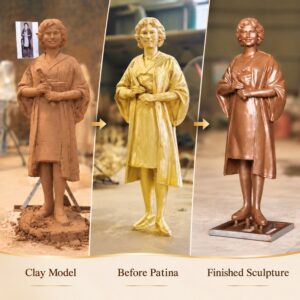
| Sculpture model | A clay model or another suitable master is created | Likeness, anatomy, expression, surface detail |
| Mold and wax preparation | A mold reproduces the model; wax patterns are prepared | Confirmation that modeling approval is complete |
| Casting | Bronze is cast using the agreed process | Production updates and material records |
| Assembly and chasing | Sections are joined; seams and surface details are refined | Shape, joints, and overall workmanship |
| Patination and protection | Color and protective treatment are applied | Finish against the approved reference |
| Final inspection and packing | The completed sculpture is checked and secured | Dimensions, mounting details, condition records |
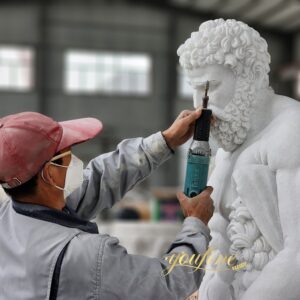
Chasing means refining the metal surface after casting, including removing unwanted marks and blending joined areas.4 Lost-wax casting, a common sculpture process, uses a wax pattern to form a mold cavity that receives molten bronze.
My most important recommendation is to approve the model carefully before casting. Changes to the pose or expression are generally easier at the modeling stage than after the bronze has been produced.
Ask for photographs from multiple angles and close-ups of important features. If the project warrants it, arrange an in-person review or an independent inspection.
The production schedule should identify school review periods as well as manufacturing stages. Committee decisions, finish revisions, engineering coordination, and shipping arrangements can all affect the completion date.
Step 5: Shipping and Installing a Large Bronze Mascot Statue
I would plan transportation while the sculpture is still being designed. A wide wing, raised arm, or extended tail can change crate size and handling requirements significantly.
Before shipment, request the packed dimensions, gross weight, lifting instructions, and mounting drawings. Confirm who is responsible for export documentation, customs clearance, freight insurance, delivery unloading, and installation.
The delivery and installation plan should address these practical points:
| Item | What to Confirm | Why It Matters |
|---|---|---|
| Crate and internal supports | Stable restraint without pressure on delicate features | Reduces movement and contact damage |
| Protective wrapping | Materials suitable for the approved finish | Helps avoid abrasion or surface marking |
| Delivery access | Gate widths, turning space, route restrictions | Prevents arrival-day access problems |
| Lifting arrangements | Suitable equipment and approved lifting points | Protects people and the sculpture |
| Foundation readiness | Anchor layout, concrete readiness, engineer approval | Avoids mounting conflicts |
| Handover inspection | Condition photos and maintenance documents | Establishes a clear completion record |
I recommend arranging a pre-shipment inspection and photographing the statue before packing. After delivery, inspect the crate and sculpture promptly and document any damage according to the carrier’s and insurer’s procedures.
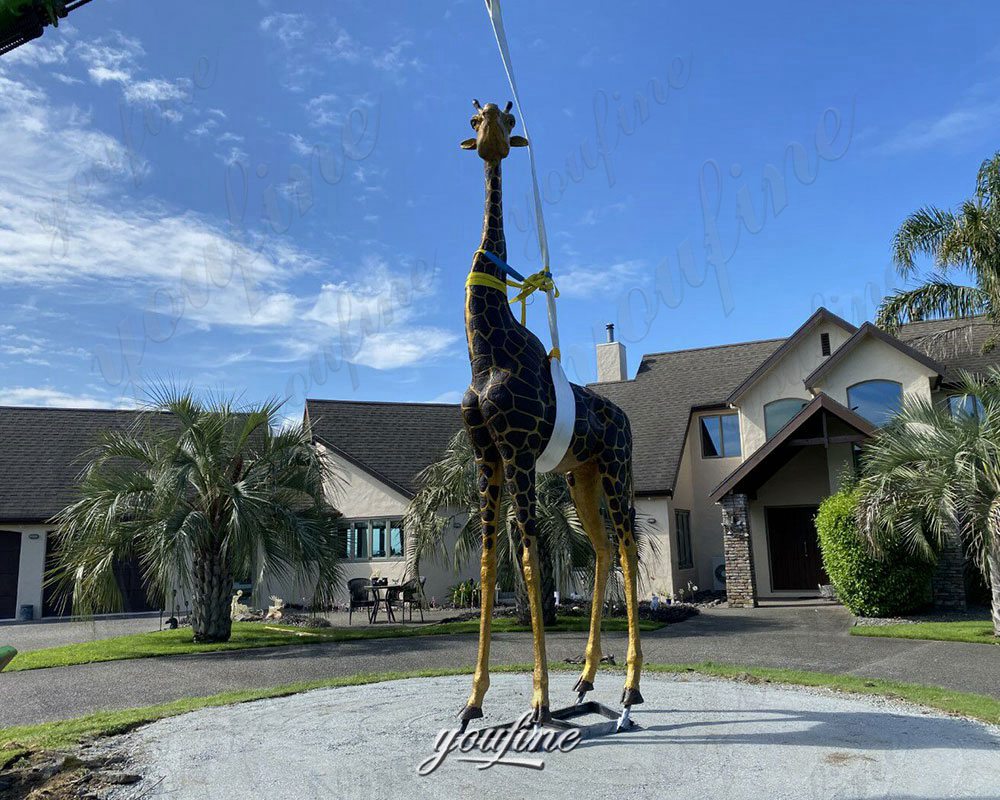
Installation should follow the approved mounting design. A qualified installer should check positioning, anchoring, and stability before the area opens to the public.
How Much Does a Custom Bronze Mascot Statue Cost?
I would avoid giving a meaningful price without a design brief. Two mascot statues of similar height can have very different costs because their poses, surface detail, engineering, and delivery requirements differ.
These are the main factors I would compare when reviewing quotations:
| Cost Driver | What Can Change the Cost |
|---|---|
| Size and geometry | Overall dimensions, projecting features, casting complexity |
| Modeling detail | Fine textures, facial accuracy, clothing, accessories |
| Design revisions | Scope and timing of changes after approval |
| Structural requirements | Internal supports, mounting design, engineering work |
| Finish | Patina complexity, samples, protective treatment |
| Pedestal and site works | Base fabrication, excavation, foundation, landscaping |
| Transportation | Crate dimensions, freight route, destination handling |
| Installation | Equipment access, lifting needs, local contractor scope |
Ask for an itemized quotation that distinguishes the sculpture price from freight, taxes, foundation work, and installation. Clarify whether modeling, packing, inspection, and finish samples are included.
I also suggest establishing a contingency allowance with the school’s purchasing team. Its amount should reflect project uncertainty rather than an arbitrary standard percentage.
When comparing prices, make sure suppliers are quoting the same dimensions, design, finish, and delivery scope. A lower headline price may exclude work needed to complete the campus installation.
How to Choose a Reliable Bronze Sculpture Manufacturer
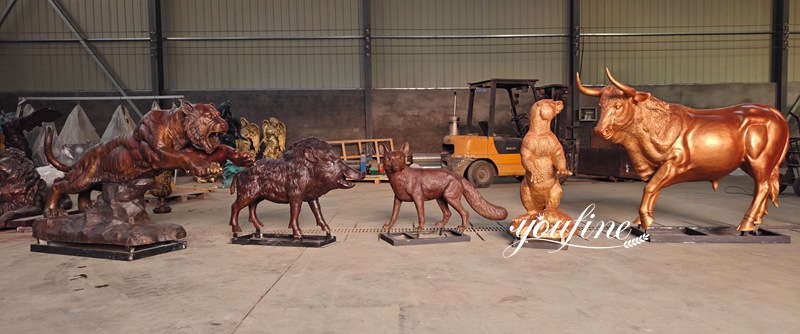
For a school mascot, I would evaluate more than attractive portfolio photographs. The supplier should explain how the approved design becomes a finished bronze sculpture and how quality will be checked.
I use the following criteria to structure that evaluation:
| Evaluation Area | Evidence to Request |
|---|---|
| Relevant capability | Examples of comparable bronze figures and large cast work |
| Design accuracy | Proposed approach to translating approved mascot artwork |
| Production clarity | Casting, assembly, finishing, and inspection procedures |
| Approval control | Written stages and rules for revisions |
| Structural coordination | Mounting information and engineering responsibilities |
| Commercial transparency | Clear inclusions, exclusions, payment terms, delivery terms |
| After-delivery support | Maintenance instructions and a defined issue-reporting process |
Ask whether the supplier manufactures the sculpture directly or coordinates production through another workshop. Either arrangement needs clear accountability.
I would also request a written agreement covering the approved design, dimensions, finish reference, delivery scope, and acceptance process. Quality expectations are easier to manage when they are documented rather than left to informal messages.
Conclusion: Commission a Mascot That Represents Your School Well
A bronze mascot statue should express the school’s identity while meeting the practical demands of a public campus. My priorities are a recognizable design, careful model approval, appropriate construction, a coordinated foundation, and clearly assigned delivery responsibilities. These decisions matter more than choosing a statue by price or height alone.
Before requesting quotations, prepare the approved mascot artwork, site photographs, approximate dimensions, budget range, and desired installation date. That information gives suppliers a useful basis for a proposal. If you are considering You Fine Art Sculpture for your project, include those materials in your inquiry and request a proposal covering design approvals, bronze construction, finishing, shipping, and installation coordination. My advice is to use that first discussion to establish a clear scope—so the finished mascot can represent your school with the quality it deserves.
Frequently Asked Questions
1. Can a school logo be turned into a bronze mascot statue?
Yes, but a flat image leaves some three-dimensional details undefined. I recommend approving front, side, and rear views before modeling is finalized. The school should also confirm reproduction rights.
2. How long does a custom bronze mascot statue take to produce?
The schedule depends on design complexity, model approval, casting arrangements, finishing, and transportation. I would request a project-specific schedule with separate milestones for school approvals, production, shipment, and installation.
3. Can the mascot statue remain outdoors throughout the year?
Bronze can be suitable for year-round outdoor display, but the construction and finish must suit the site. I recommend discussing salt exposure, irrigation, drainage, and local weather before approving the material and maintenance plan.
4. Should the school build the pedestal before the statue is finished?
Foundation planning can begin early, but I would not finalize anchor positions without coordinated mounting information. The pedestal and foundation should match the approved sculpture design and local engineering requirements.
5. What maintenance does a bronze mascot statue need?
The answer depends on its patina, protective treatment, exposure, and level of public contact. I recommend obtaining written instructions for cleaning, inspections, and protective-treatment renewal. Avoid abrasive cleaning or unapproved chemicals.