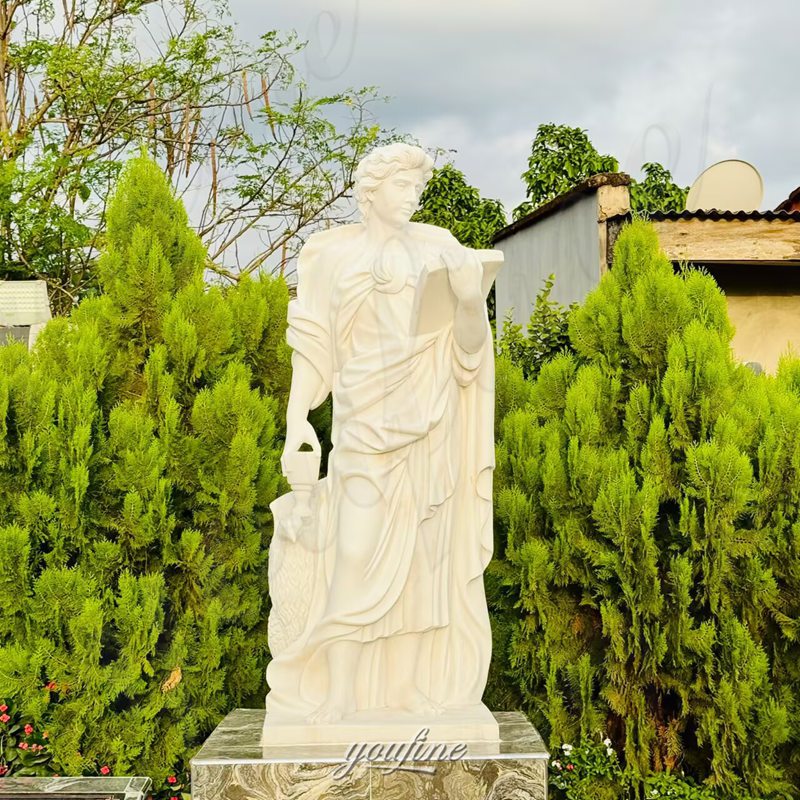
The Twelve Apostles were the closest followers and disciples of Jesus Christ, chosen to spread His teachings and establish the foundation of the Christian Church. Their stories are recorded throughout the New Testament, where they appear not only as witnesses to Christ’s miracles and resurrection, but also as key figures in the early growth of Christianity.
Over the centuries, the apostles have become some of the most recognizable subjects in Christian art. From monumental cathedral facades to delicate marble church sculpture carvings and large bronze garden sculptures, apostle statues have been created in countless artistic styles across different cultures and historical periods.
Today, Twelve Apostles statues continue to symbolize faith, sacrifice, devotion, and spiritual leadership. Whether displayed in churches, religious institutions, cemeteries, or public spaces, these sculptures carry both deep religious meaning and extraordinary artistic value.
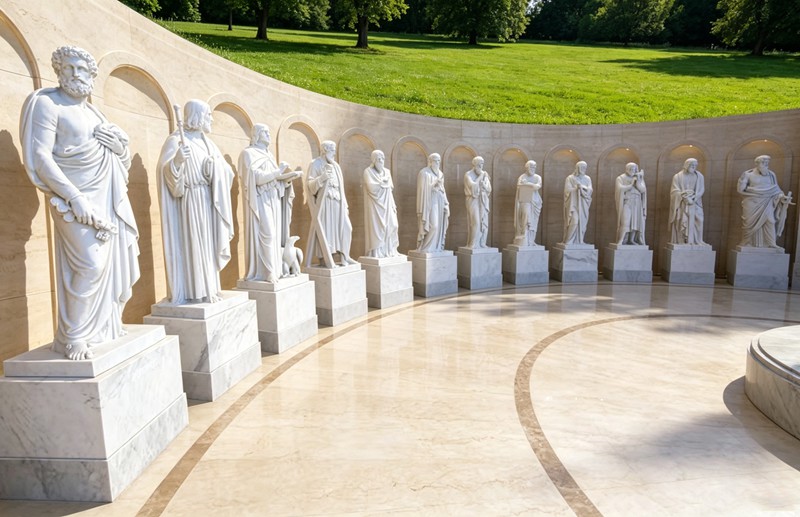
Biblical Background of the Twelve Apostles
According to the Bible, Jesus personally selected twelve men to become His apostles. Many of them were ordinary fishermen, tax collectors, or laborers before answering Christ’s call to follow Him. Their mission was to preach the Gospel, heal the sick, and guide believers after Jesus’ resurrection.
Apostle | Symbol | Meaning / Attribute |
Peter | Keys | Leader of the apostles, “keys of heaven” |
Andrew | X-shaped cross | Martyrdom and missionary zeal |
James the Greater | Pilgrim staff | Pilgrimage and devotion |
John | Eagle / chalice | Love, theology, spiritual vision |
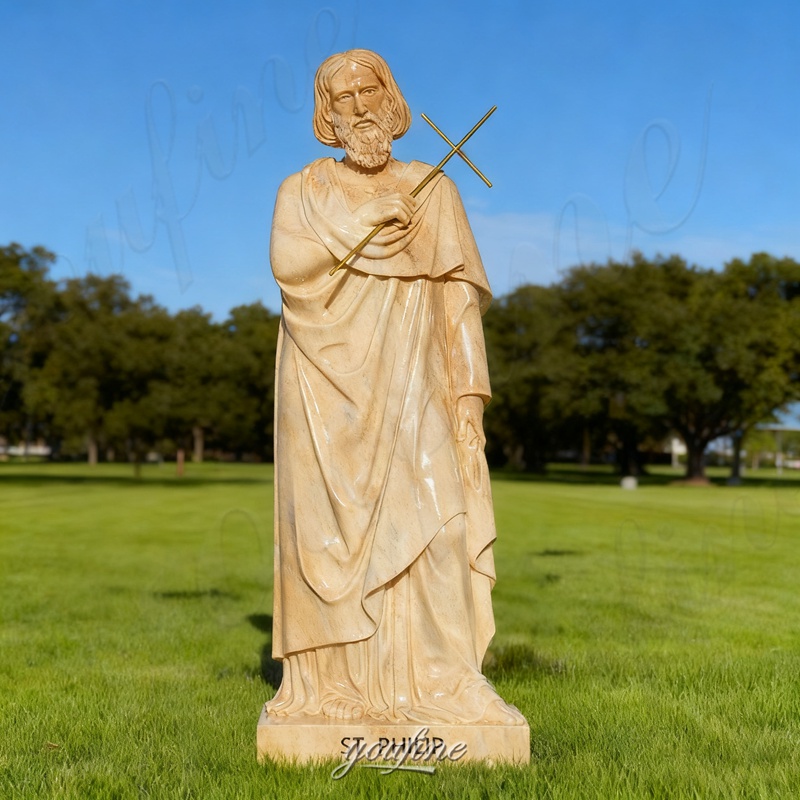
Philip | Cross / basket | Evangelism and faith |
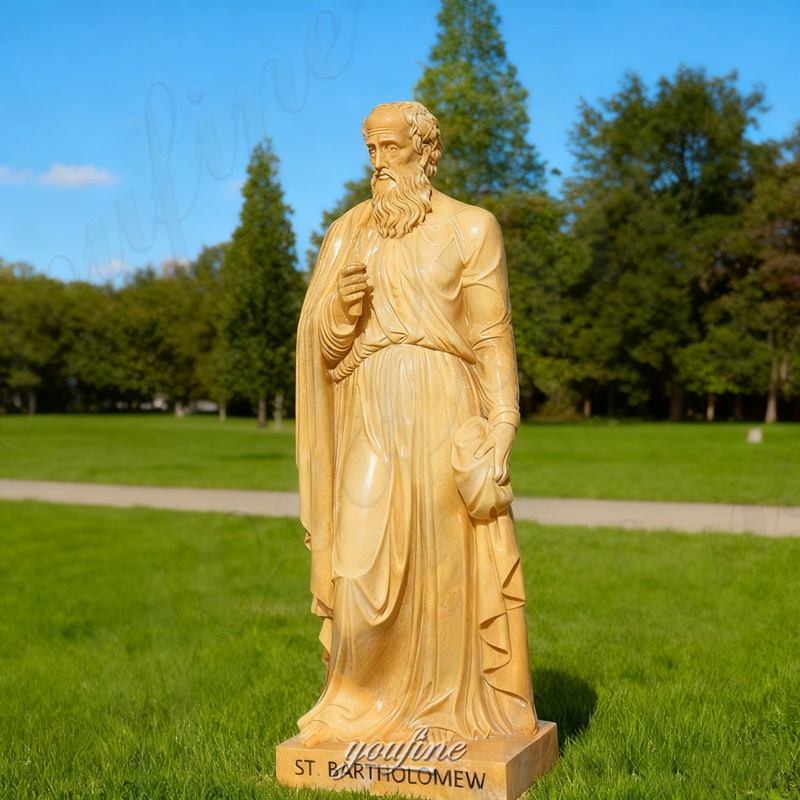
Bartholomew | Knife | Martyrdom (traditionally flayed) |
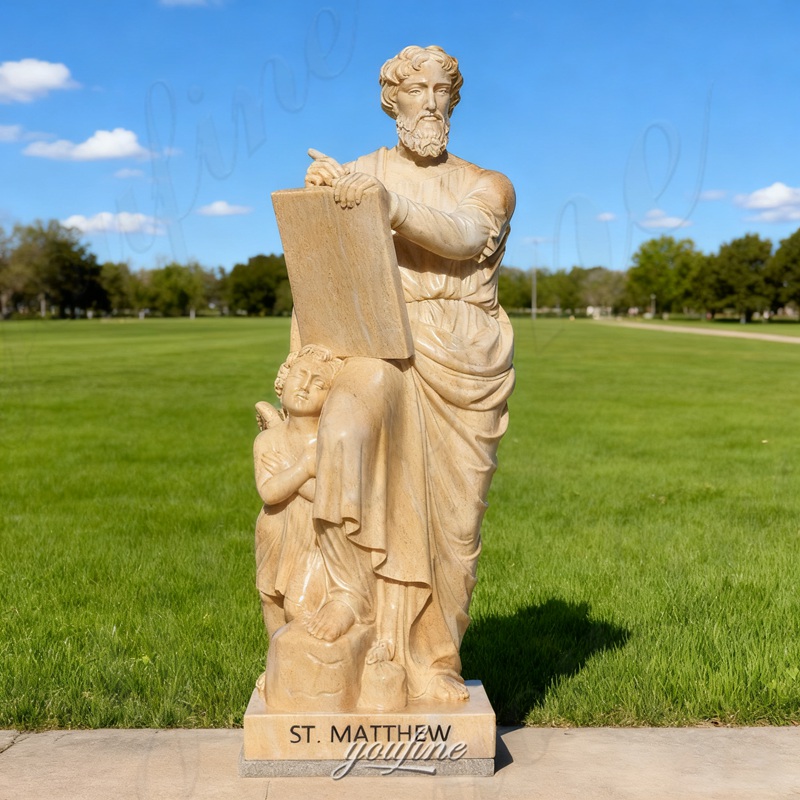
Matthew | Book / scroll | Gospel writing and teaching |
Thomas | Spear / builder’s square | Doubt turned into faith |
James the Less | Club | Early martyrdom and humility |
Jude Thaddeus | Club / image of Christ | Hope and impossible causes |
Simon the Zealot | Saw | Zeal and missionary work |
Judas Iscariot | Money bag | Betrayal of Jesus |
Each apostle eventually became associated with specific symbols, attributes, and martyrdom stories. According to Christian tradition, most of them suffered persecution and martyrdom because of their faith. These stories became an important source of inspiration for Christian sculpture and religious art throughout history.
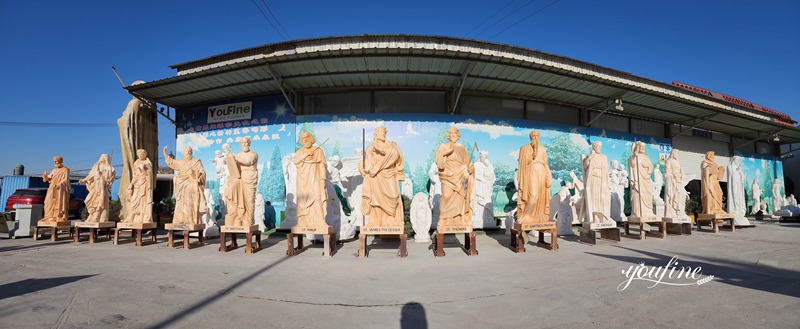
2. The Symbolism Behind Apostle Statues
2.1 Faith and Evangelism
One of the primary meanings behind apostle statues is the spread of faith and the Gospel. The apostles were entrusted with carrying Christ’s message to the world, making them symbols of missionary work, spiritual guidance, and religious devotion.
In sculpture, apostles are often portrayed preaching, holding scrolls or books, pointing toward heaven, or blessing believers. These gestures visually communicate their role as teachers and messengers of Christianity.
Churches frequently place apostle statues near entrances, altars, or pathways to symbolize the continuation of Christ’s teachings through generations.
2.2 Martyrdom and Sacrifice
Most apostles are remembered not only for their faith but also for their sacrifice. According to Christian tradition, many were executed because they refused to deny Christianity.
As a result, apostle statues often include symbolic objects connected to their martyrdom:
- Saint Peter — upside-down cross
- Saint Bartholomew — knife
- Saint Thomas — spear
- Saint Andrew — diagonal cross
- Saint James — pilgrim staff
These symbols help believers immediately identify each apostle while also emphasizing themes of courage, perseverance, and spiritual loyalty.
2.3 Moral Virtues Represented in Sculpture
Beyond their historical roles, the apostles also represent different moral virtues and spiritual ideals.
- Peter symbolizes leadership and steadfast faith.
- John represents love, wisdom, and spiritual insight.
- Thomas symbolizes doubt transformed into belief.
- Matthew reflects wisdom and teaching.
- James often symbolizes pilgrimage and devotion.
Because of these associations, apostle sculptures are not merely decorative artworks. They serve as visual reminders of Christian values and personal spiritual growth.
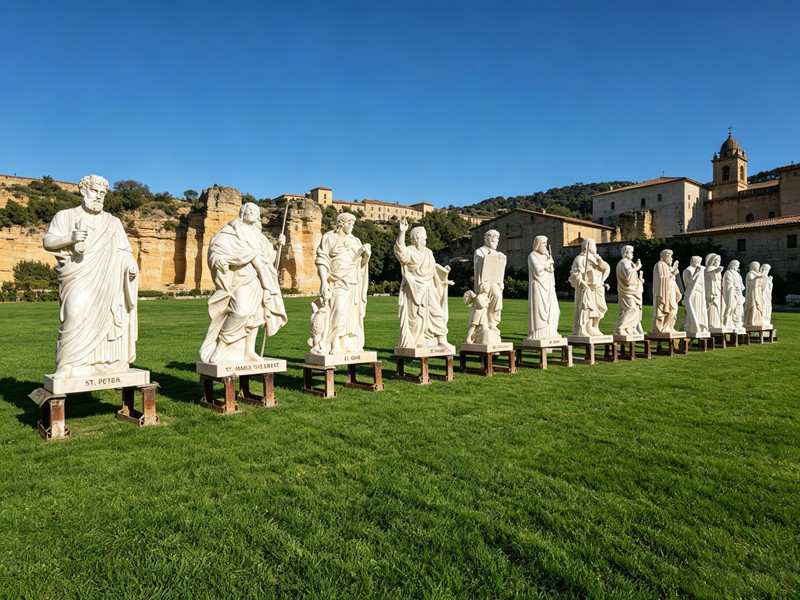
3. Artistic Evolution of the Twelve Apostles in Sculpture
3.1 Early Christian Art
In early Christian art, depictions of the apostles were relatively simple and symbolic. During periods of persecution, Christians often relied on minimal visual forms instead of realistic sculpture.
Early apostle images appearing in catacombs and ancient churches focused more on spiritual symbolism than anatomical accuracy. Figures were often stylized, frontal, and expressionless, emphasizing holiness over realism.
3.2 Gothic & Medieval Cathedrals
During the Gothic and medieval periods, apostle sculptures became central elements of cathedral architecture.
Large stone statues of the apostles were commonly placed on church facades, doorways, and columns. These sculptures served both decorative and educational purposes, helping communicate Biblical stories to people who could not read.
Famous Gothic cathedrals such as Notre-Dame de Paris and Chartres Cathedral feature elaborate apostle sculptures filled with religious symbolism and architectural grandeur.
The Gothic style emphasized elongated figures, flowing robes, and solemn facial expressions that enhanced the spiritual atmosphere of the cathedral.
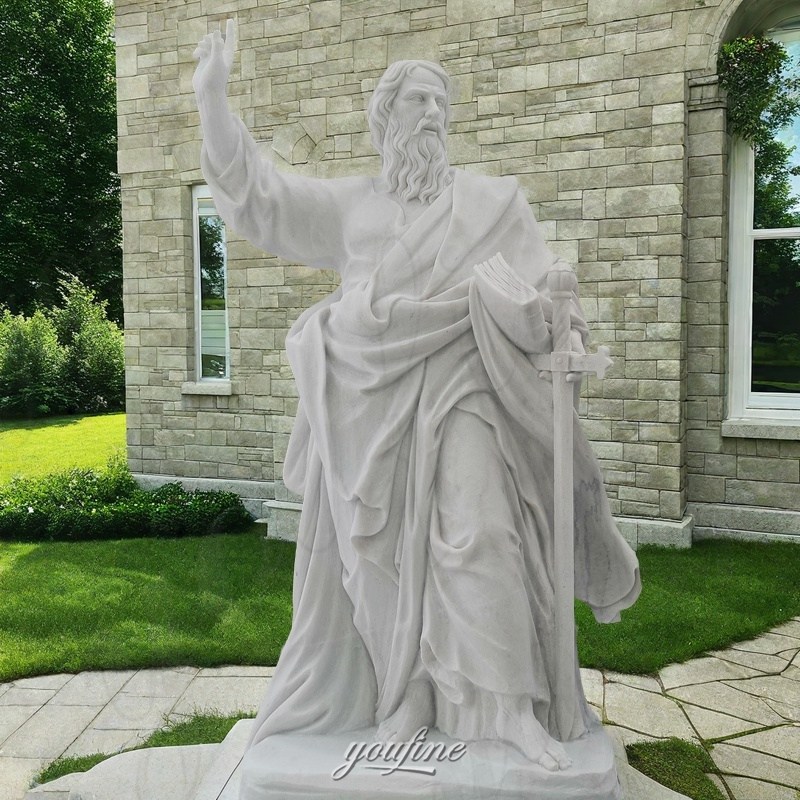
3.3 Renaissance Masterpieces
The Renaissance transformed religious sculpture through the rediscovery of classical art and human anatomy.
Artists began creating apostles with more realistic proportions, emotional expressions, and individualized personalities. Sculptures became more lifelike and dynamic, reflecting the Renaissance interest in humanism and natural beauty.
Masters such as Michelangelo and Donatello greatly influenced the artistic representation of saints and apostles during this period.
Marble became especially popular because it allowed artists to carve intricate details in clothing, hair, and facial expressions.
3.4 Baroque Period Drama & Emotion
The Baroque period introduced dramatic movement and emotional intensity into religious sculpture.
Apostles from this era often appear in energetic poses with flowing garments, expressive gestures, and powerful emotional expressions. Artists sought to create sculptures that inspired awe and deep spiritual feeling.
The influence of Gian Lorenzo Bernini can be seen in many Baroque religious works, where light, motion, and theatrical composition became essential artistic elements.
This period emphasized emotional connection between the artwork and the viewer.
3.5 Modern & Garden Sculptures
In modern times, apostle sculptures have expanded beyond traditional churches into gardens, memorial parks, cemeteries, universities, and public spaces.
Contemporary artists now create apostle statues in a wide variety of styles, ranging from realistic bronze monuments to minimalist modern interpretations.
Custom religious sculptures have also become increasingly popular for private chapels, Christian schools, and landscaped spiritual gardens. Bronze, marble, fiberglass, and resin are frequently used to suit different environments and budgets.
4. Famous Twelve Apostles Statues Around the World
Some of the world’s most impressive religious sculptures are dedicated to the apostles.
One of the most famous examples can be found at St. Peter’s Basilica, where monumental apostle statues reflect the grandeur of Catholic art and architecture.
Another important collection appears at Archbasilica of Saint John Lateran, featuring massive sculptures of the apostles created during the Baroque period.
Throughout Europe, apostle statues are also commonly integrated into Gothic cathedral facades, cloisters, and church interiors. Countries such as Italy, France, Spain, and Germany contain countless historic examples dating back hundreds of years.
In modern times, large apostle sculptures have also appeared in public religious parks, pilgrimage sites, and memorial gardens around the world.
5. Materials Used in Apostle Statues
5.1 Marble Apostle Statues
Marble is one of the most traditional materials for apostle sculptures. Its elegant appearance and fine carving details make it ideal for churches, cathedrals, and memorial spaces. White marble especially symbolizes purity and holiness in Christian art.
5.2 Bronze Apostle Statues
Bronze is widely used for outdoor apostle statues because of its durability and weather resistance. It allows artists to create detailed sculptures with strong visual impact, making it popular for church courtyards, gardens, and public monuments.
5.3 Fiberglass Apostle Statues
Fiberglass is a modern material known for being lightweight, affordable, and easy to customize. It can imitate the appearance of bronze or marble while offering easier transportation and installation, making it suitable for modern churches and decorative projects.
Conclusion
The Twelve Apostles statues are not only important symbols of Christian faith, but also timeless works of religious art. From early church carvings to grand cathedral sculptures and modern garden statues, these artworks continue to inspire people through their spiritual meaning and artistic beauty.
Today, custom apostle sculptures remain popular for churches, memorial spaces, religious gardens, and public projects. As a professional sculpture manufacturer, YouFine Art Sculpture specializes in handcrafted marble and bronze religious statues, helping clients around the world create meaningful and lasting works of sacred art.
Choosing a reliable supplier is the first step toward success. You are welcome to contact us at any time!