For Christians around the world, the Stations of the Cross are one of the most meaningful devotional traditions in the church. They represent the final journey of Jesus Christ—from His condemnation to His burial—and invite believers to reflect on sacrifice, suffering, compassion, and redemption.
Today, the Stations of the Cross are not only part of prayer and worship during Lent and Good Friday, but also an important form of religious art. Many churches, monasteries, cemeteries, and prayer gardens display the 14 stations through bronze sculptures, marble reliefs, or outdoor devotional pathways.
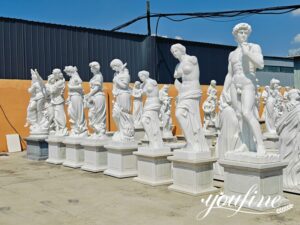
At YouFine, we have worked with churches to create both life-size Stations of the Cross sculptures and smaller station sets mounted on elevated pedestals for outdoor prayer walks. These church sculpture projects show how sacred art continues to help believers experience the Passion of Christ in a powerful visual way.

What Are the Stations of the Cross?
The Stations of the Cross are a series of 14 devotional scenes that depict the final hours of Jesus Christ before His crucifixion and burial. This tradition is also known as the “Way of the Cross,” “Via Crucis,” or “Via Dolorosa.”
Each station represents a specific moment during Christ’s journey to Calvary. Christians move from station to station in prayer and meditation, reflecting on Jesus’ suffering and His sacrifice for humanity.
The tradition originated from early Christian pilgrims who traveled through Jerusalem and followed the path believed to have been taken by Jesus on the day of His crucifixion. During the Middle Ages, the Franciscan order helped spread the devotion throughout Europe, and churches began installing permanent stations so believers could experience the pilgrimage spiritually without traveling to the Holy Land.
Today, almost every Catholic church contains some form of Stations of the Cross, whether through paintings, relief carvings, or full sculptural installations.
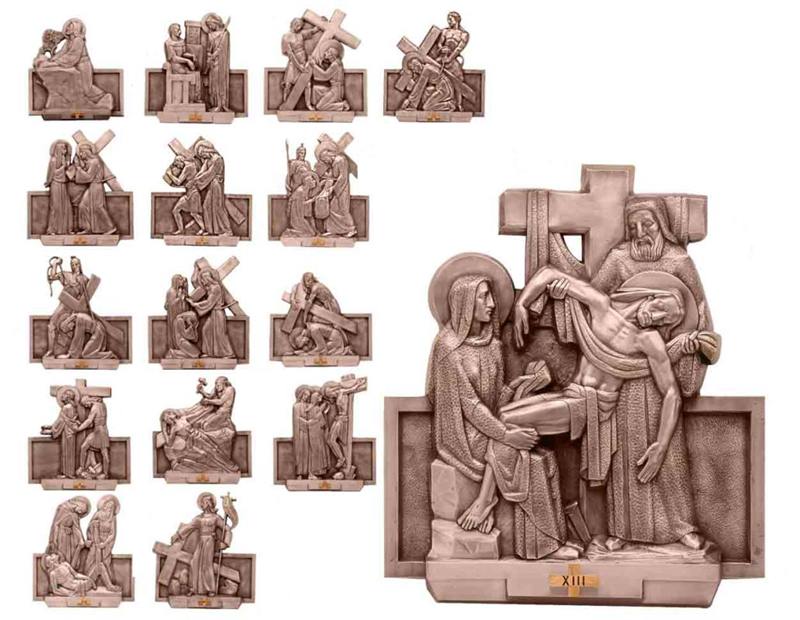
What Are the 14 Stations of the Cross in Order?
The traditional 14 Stations of the Cross follow the events of Christ’s Passion in chronological order.
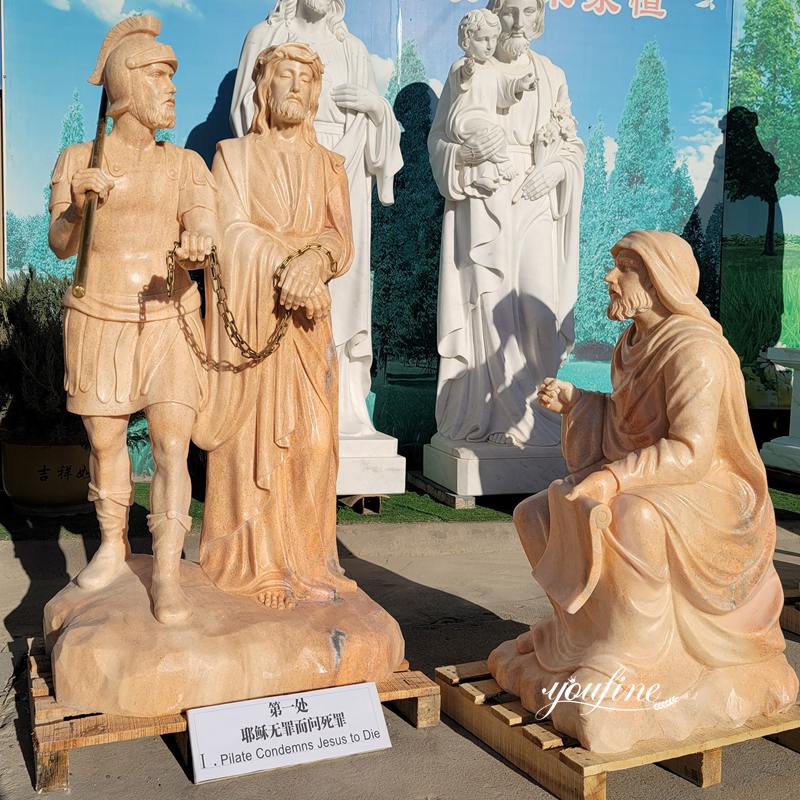
Station 1 — Jesus Is Condemned to Death
Pontius Pilate sentences Jesus to crucifixion despite finding no fault in Him. This station represents injustice, sacrifice, and obedience to God’s will.
Station 2 — Jesus Takes Up His Cross
Jesus accepts the heavy wooden cross upon His shoulders. This symbolizes acceptance of suffering and spiritual responsibility.
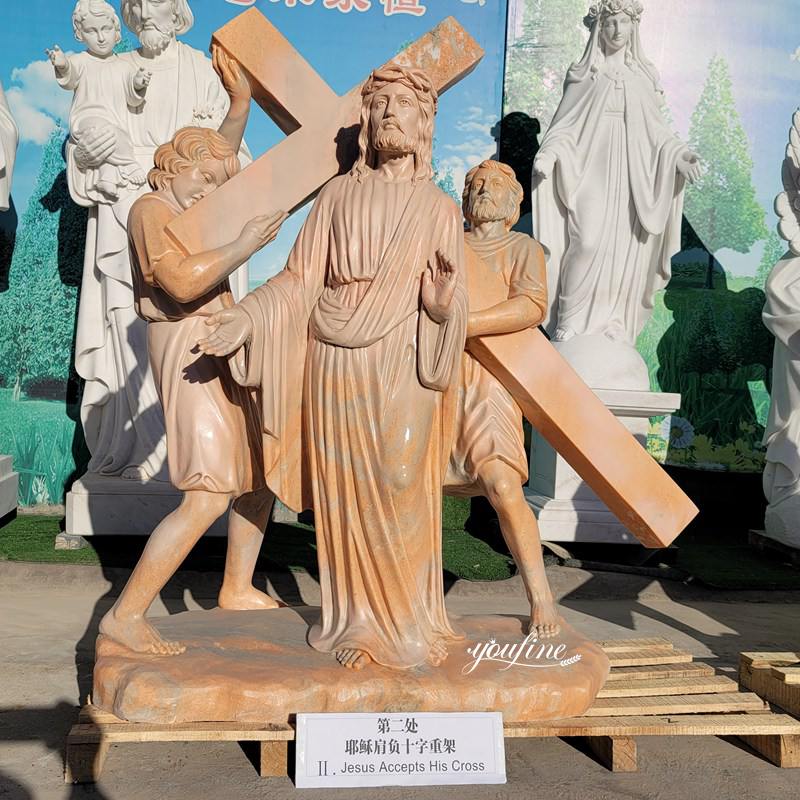
Station 3 — Jesus Falls the First Time
Weakened by pain and exhaustion, Jesus falls while carrying the cross. The station reminds believers of human weakness and perseverance.
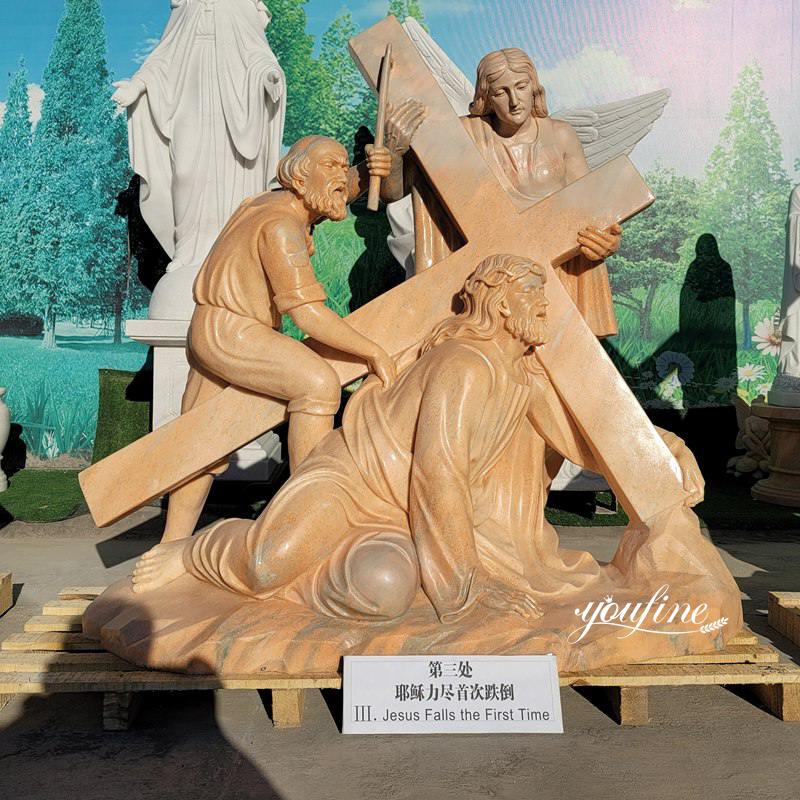
Station 4 — Jesus Meets His Mother
Jesus encounters His mother Mary during the painful journey. This scene expresses sorrow, compassion, and unconditional love.
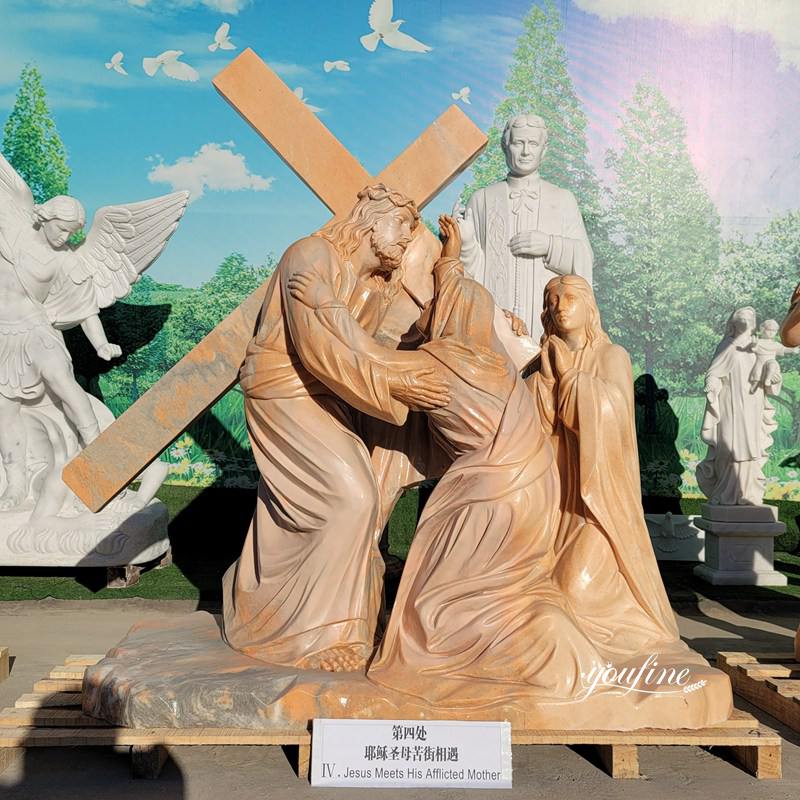
Station 5 — Simon of Cyrene Helps Carry the Cross
Simon is ordered to help Jesus carry the cross. The station represents shared burdens and helping others in times of suffering.
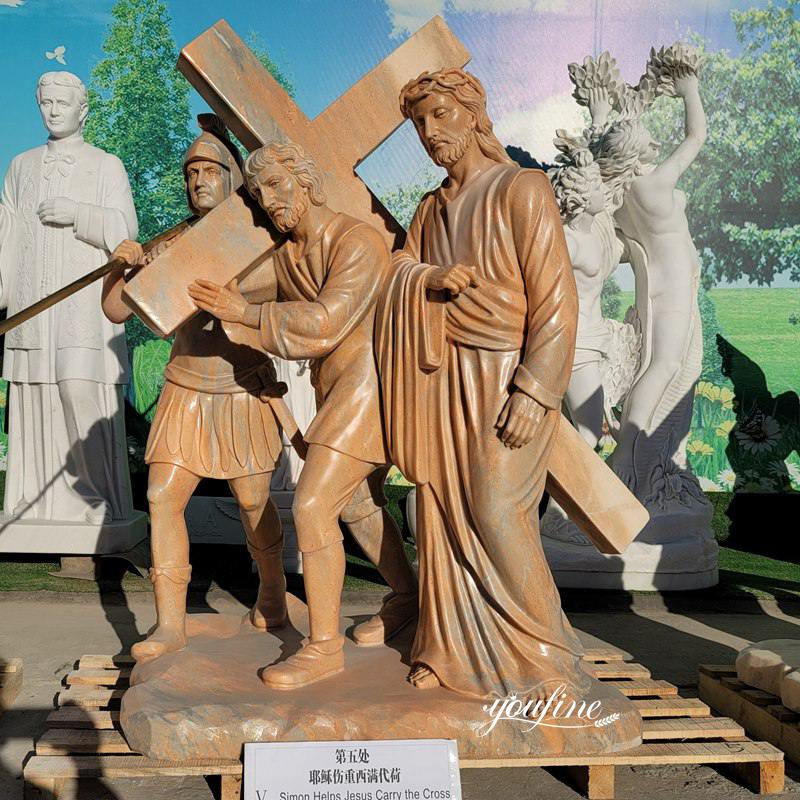
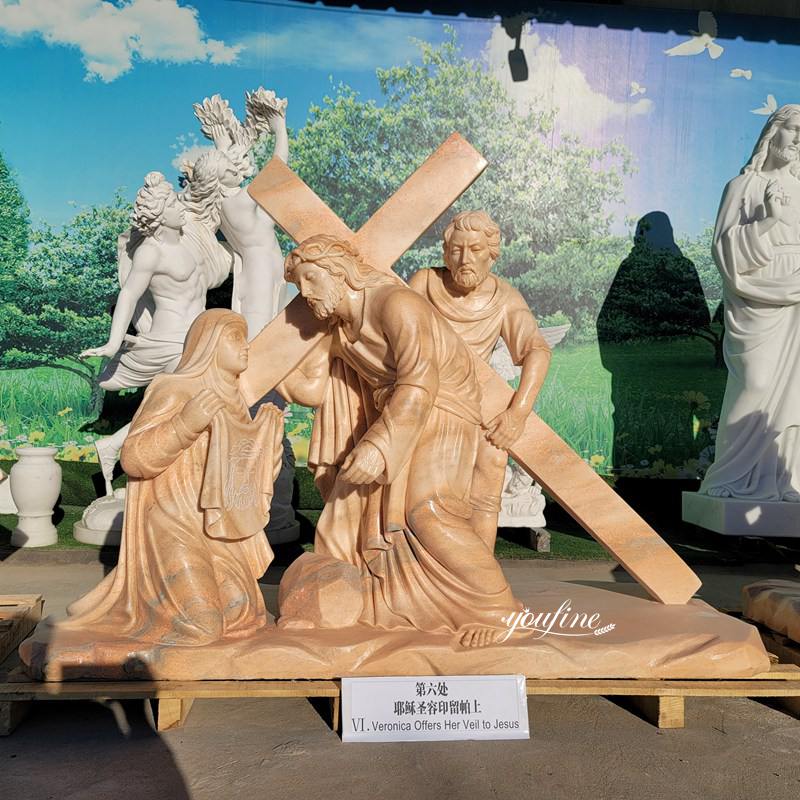
Station 6 — Veronica Wipes the Face of Jesus
According to Christian tradition, Veronica compassionately wipes Jesus’ face with a cloth. This station symbolizes kindness and mercy.
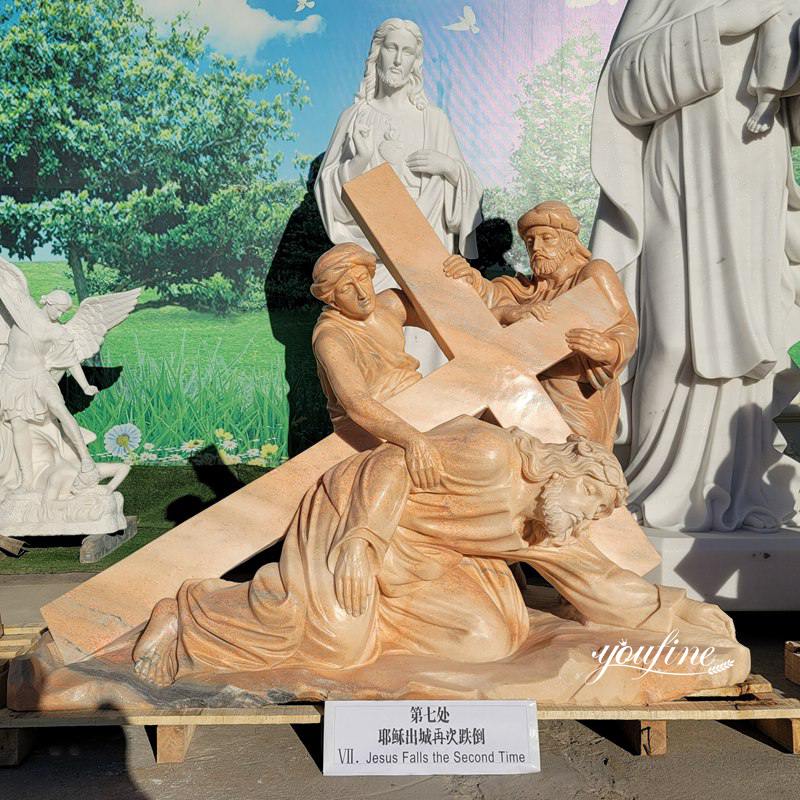
Station 7 — Jesus Falls the Second Time
Jesus falls again under the weight of the cross. The scene reflects endurance through repeated hardship.
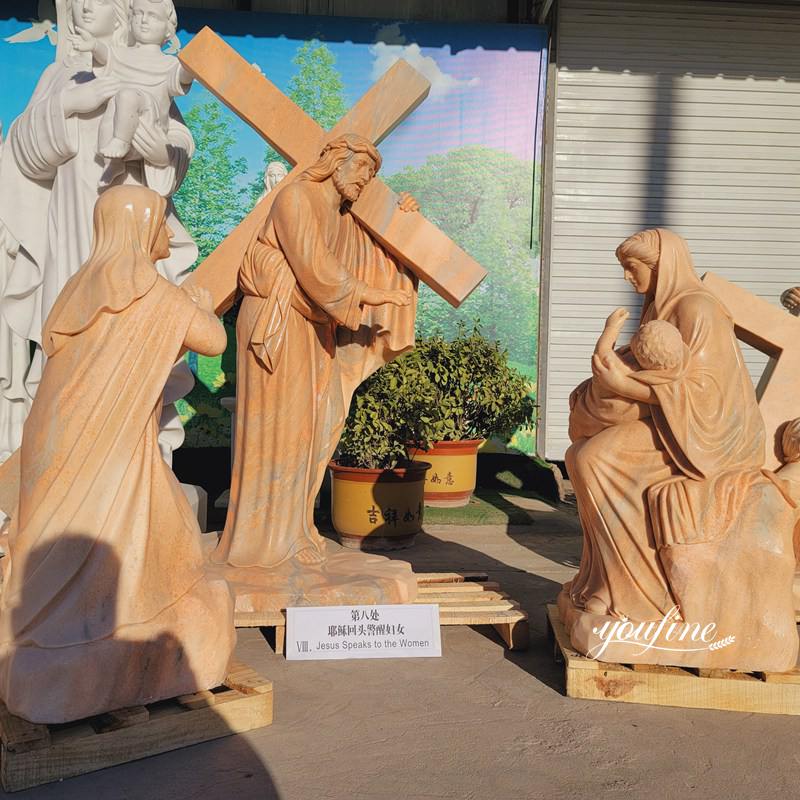
Station 8 — Jesus Meets the Women of Jerusalem
Jesus speaks to mourning women along the road. This station emphasizes compassion and spiritual reflection.
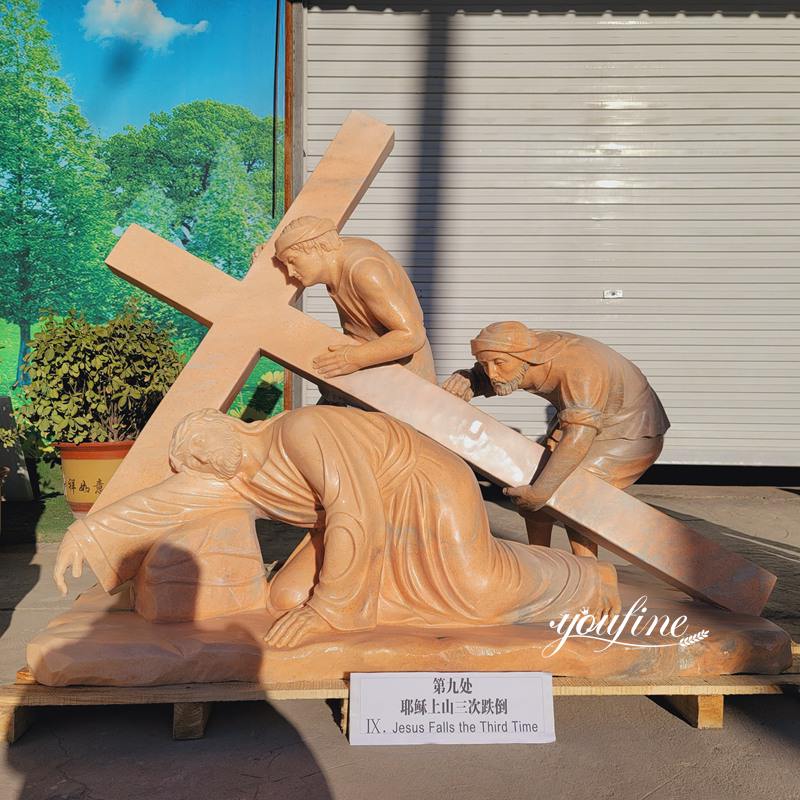
Station 9 — Jesus Falls the Third Time
Near Calvary, Jesus collapses once more. This powerful image symbolizes ultimate suffering and determination.
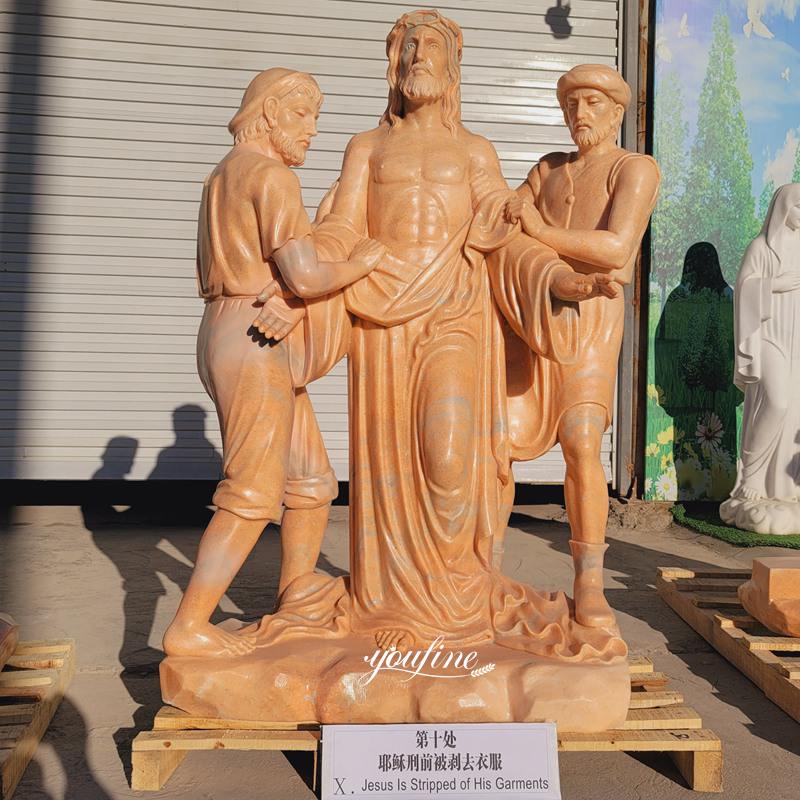
Station 10 — Jesus Is Stripped of His Garments
Roman soldiers remove Jesus’clothing before the crucifixion. The station represents humiliation and human cruelty.
Station 11 — Jesus Is Nailed to the Cross
Jesus is nailed to the cross at Golgotha. This station symbolizes sacrifice and redemption.

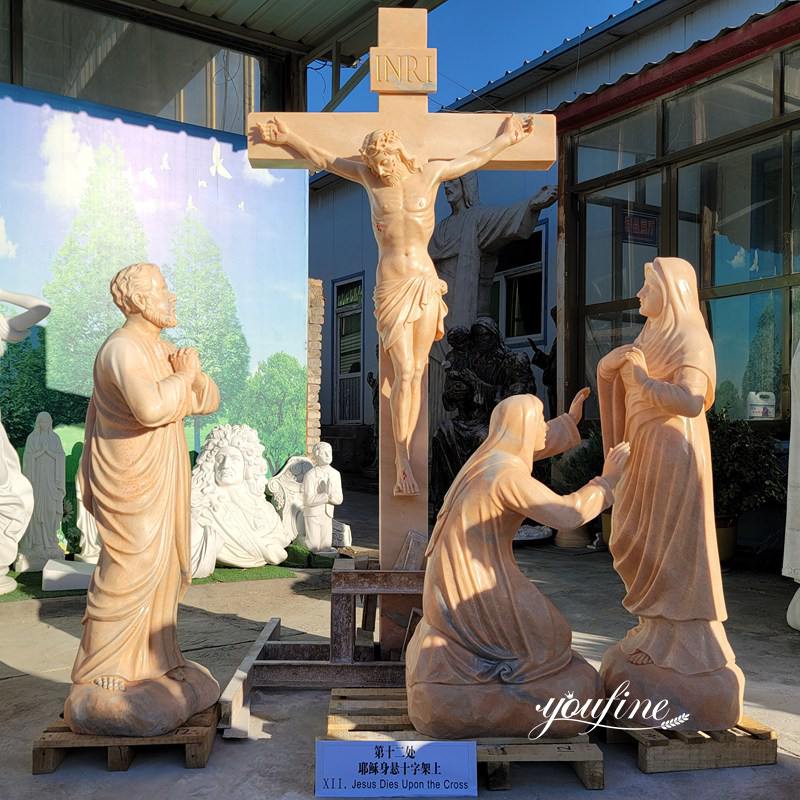
Station 12 — Jesus Dies on the Cross
Jesus dies after enduring immense suffering. For Christians, this is the central moment of salvation history.
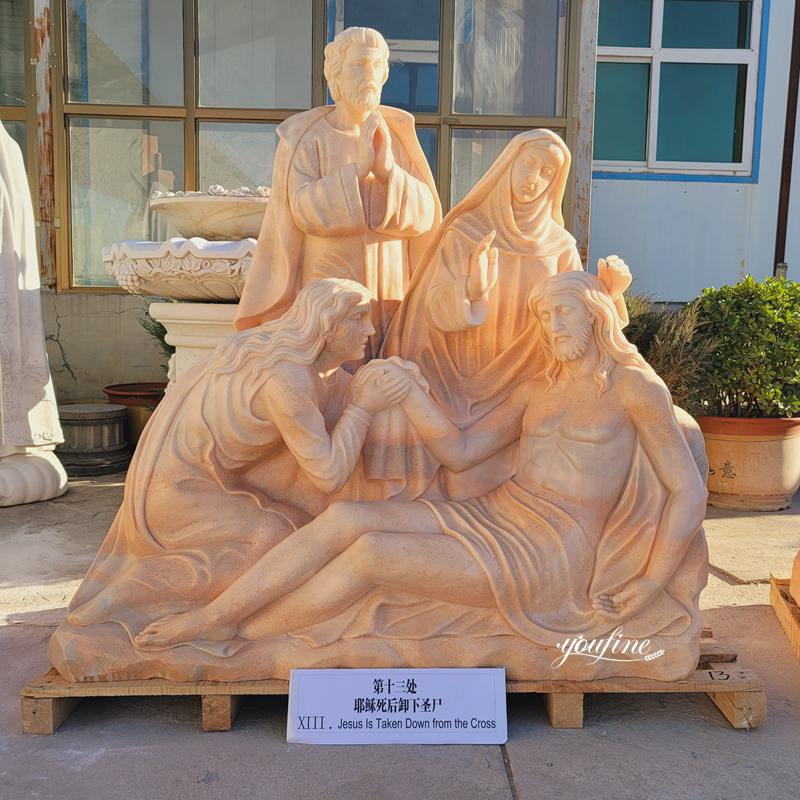
Station 13 — Jesus Is Taken Down from the Cross
Jesus’ body is removed from the cross and placed in the arms of His mother. The scene expresses grief, mourning, and devotion.
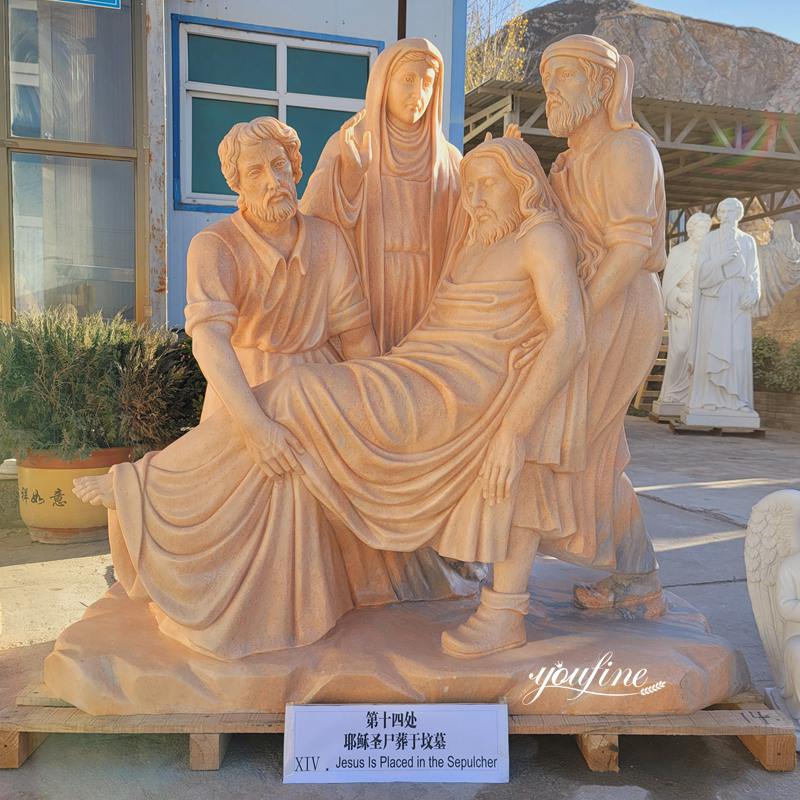
Station 14 — Jesus Is Laid in the Tomb
Jesus is placed in the tomb before His resurrection. This final station symbolizes hope and preparation for new life.
What Do the 14 Stations of the Cross Represent?
The Stations of the Cross represent much more than historical events. They are spiritual reflections on the suffering of Christ and the human experience of pain, sacrifice, faith, and hope.
For believers, the stations symbolize:
- Sacrifice and redemption
- Compassion for others
- Forgiveness and mercy
- Perseverance through suffering
- Faith during hardship
- Hope beyond death
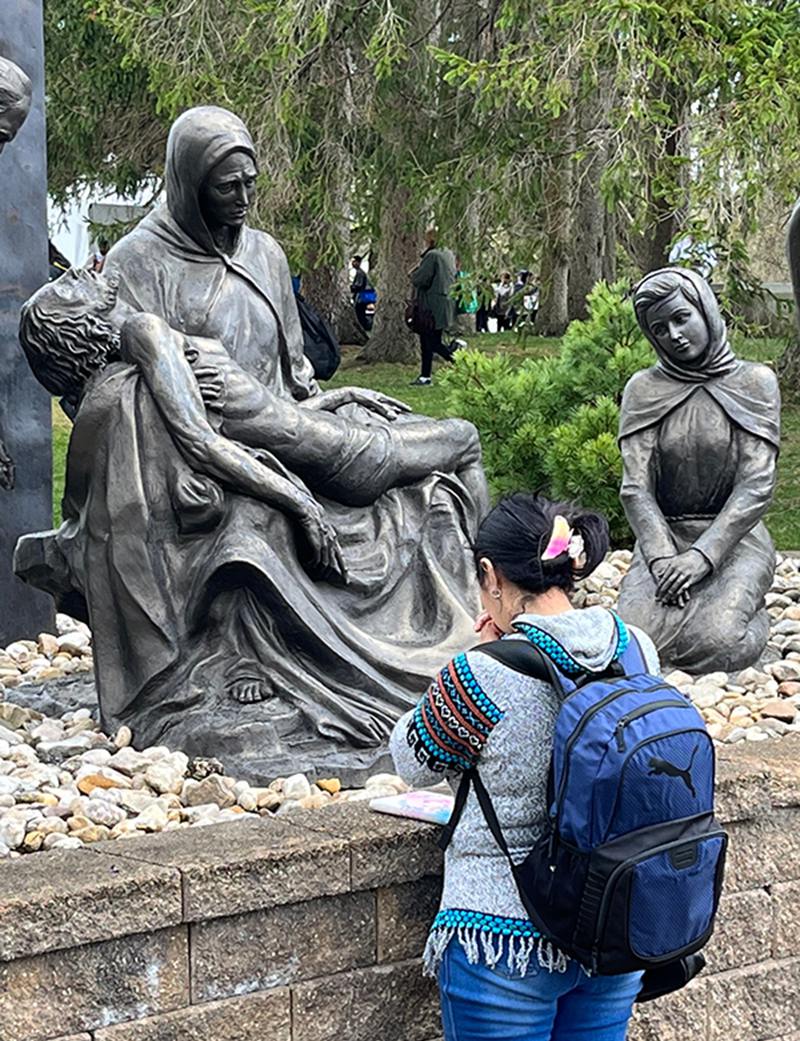
The emotional power of the Stations becomes even stronger through sculpture and religious art. Three-dimensional statues allow viewers to experience the expressions, movement, and suffering of each moment in a more personal way.
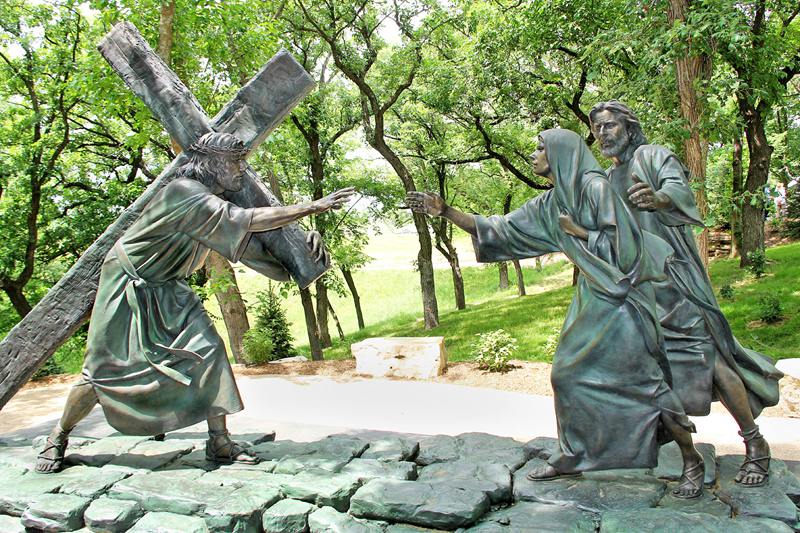
Biblical vs Traditional Stations of the Cross
Not all 14 stations come directly from the Bible. Several are based on Christian tradition and centuries of devotional practice.
The stations that clearly appear in Scripture include:
- Jesus being condemned
- Jesus carrying the cross
- Simon helping carry the cross
- Jesus speaking to the women of Jerusalem
- The crucifixion and burial
However, some beloved stations are traditional rather than biblical, including:
- Jesus falling three times
- Veronica wiping Jesus’ face
In 1991, Pope John Paul II introduced the “Scriptural Way of the Cross,” which uses only events found in the Bible. Nevertheless, the traditional 14 stations remain the most widely recognized form around the world.
How the Stations of the Cross Are Displayed in Churches and Gardens
Churches display the Stations of the Cross in many artistic forms depending on space, budget, and architectural style.
Outdoor Stations of the Cross are especially popular in:
- Prayer gardens
- Pilgrimage sites
- Monasteries
- Cemeteries
- Church courtyards
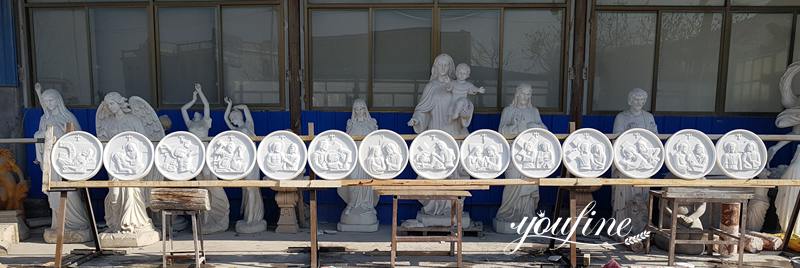
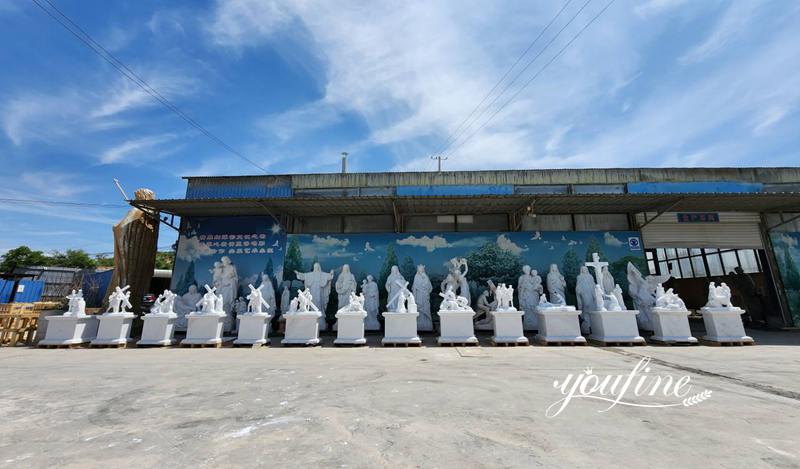
Not every church has enough space for full life-size sculptures. For this reason, YouFine has also created smaller-scale Stations of the Cross mounted on tall marble pedestals. This design allows visitors to view the scenes comfortably during prayer walks while reducing space requirements and installation costs. Elevated bases also help protect the sculptures from flooding, landscaping damage, and vandalism.
Conclusion
The Stations of the Cross remain one of the most meaningful traditions in Christian worship and sacred art. Through these 14 sacred moments, believers reflect on the suffering, sacrifice, compassion, and redemption of Jesus Christ, finding spiritual strength, hope, and faith in daily life.
With years of experience in religious sculpture production, YouFine has provided customized Stations of the Cross projects for churches worldwide. Our work is not limited to bronze casting—we also produce marble Stations of the Cross, offering a more classical and solemn aesthetic, as well as other materials and finishes tailored to different architectural and devotional needs.
By combining traditional sculpture techniques with customized design services, YouFine helps churches create lasting sacred artworks that support worship, inspire reflection, and preserve the timeless story of the Stations of the Cross.
References
- Britannica – Stations of the Cross
- USCCB – Stations of the Cross
- Catholic Encyclopedia – Way of the Cross
- Britannica – Devotional Practice
- Franciscan Custody of the Holy Land