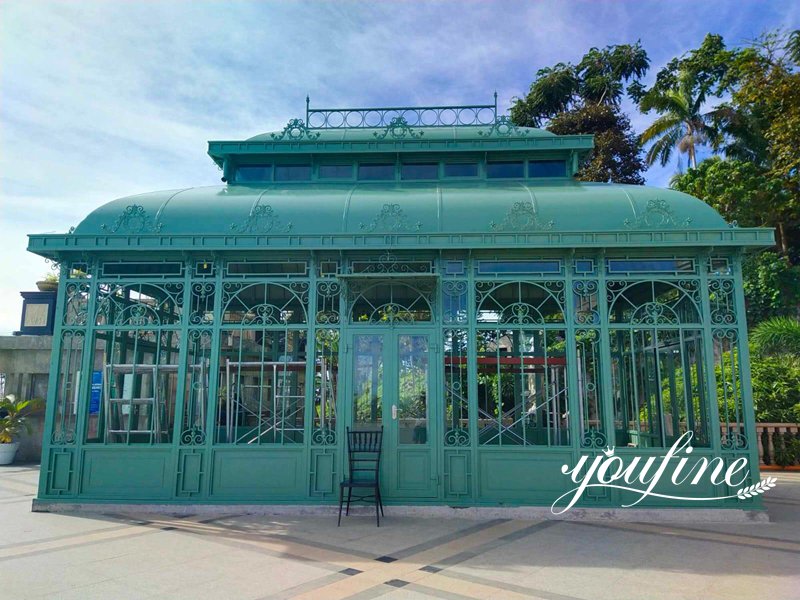
When it comes to building a long-lasting wrought iron greenhouse, the beauty of the design is only half the story. The real secret behind a greenhouse that stays strong and rust-free for decades lies in one quiet detail: how the metal is galvanized.
Most greenhouse buyers focus on style, size, and color. But whether your structure is built with hot-dip galvanized pipe or finished with full hot-dip galvanizing can completely change its lifespan, maintenance needs, and overall durability—especially for outdoor environments with rain, snow, humidity, or coastal air.
In this guide, we’ll break down the two most common galvanizing methods used in wrought iron greenhouses, explain how each process works, and help you understand which option offers the best long-term performance for your garden, farm, ranch, or estate.
What Is Hot-Dip Galvanized Pipe?
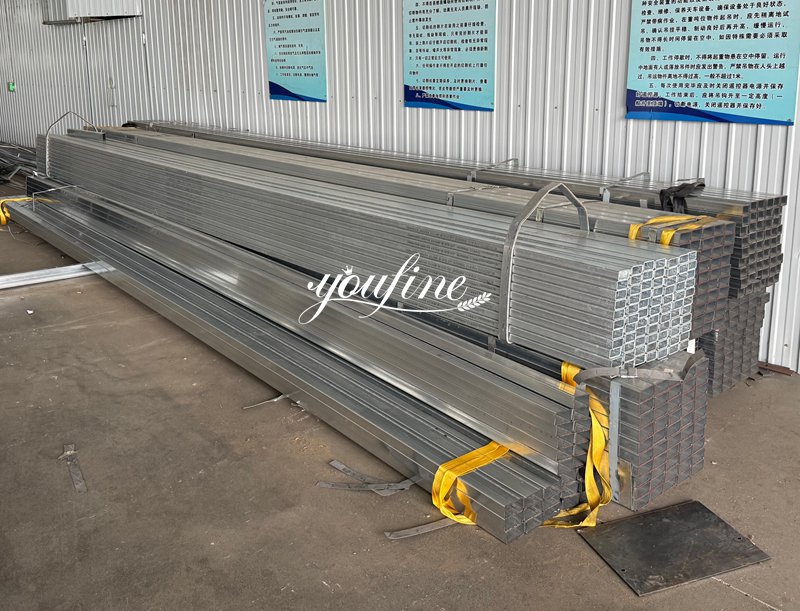
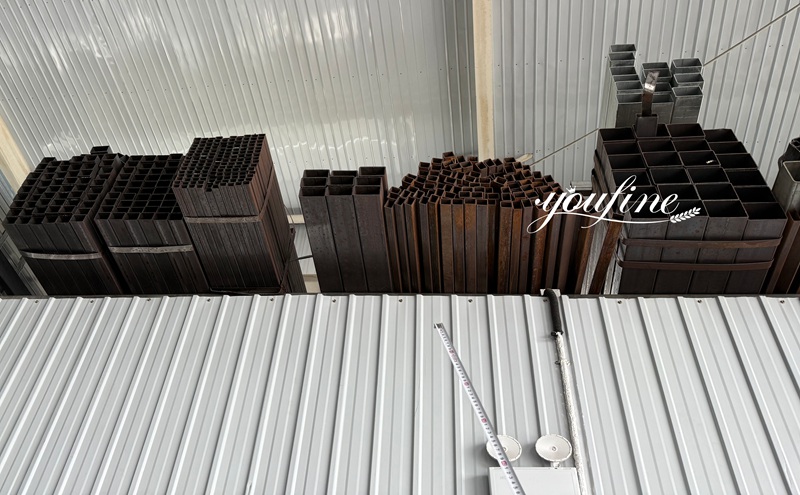
Galvanized pipe refers to steel pipe that has been coated with a protective zinc layer before being used in greenhouse construction. In other words, galvanizing is done at the material stage, not after the structure is completed.
The most commonly used galvanized pipe size for greenhouses is 5cm×3cm, with a thickness of 3 mm. For simple greenhouse structures, hot-dip galvanized pipes are a practical and economical choice.
What Is Full Hot-Dip Galvanizing?
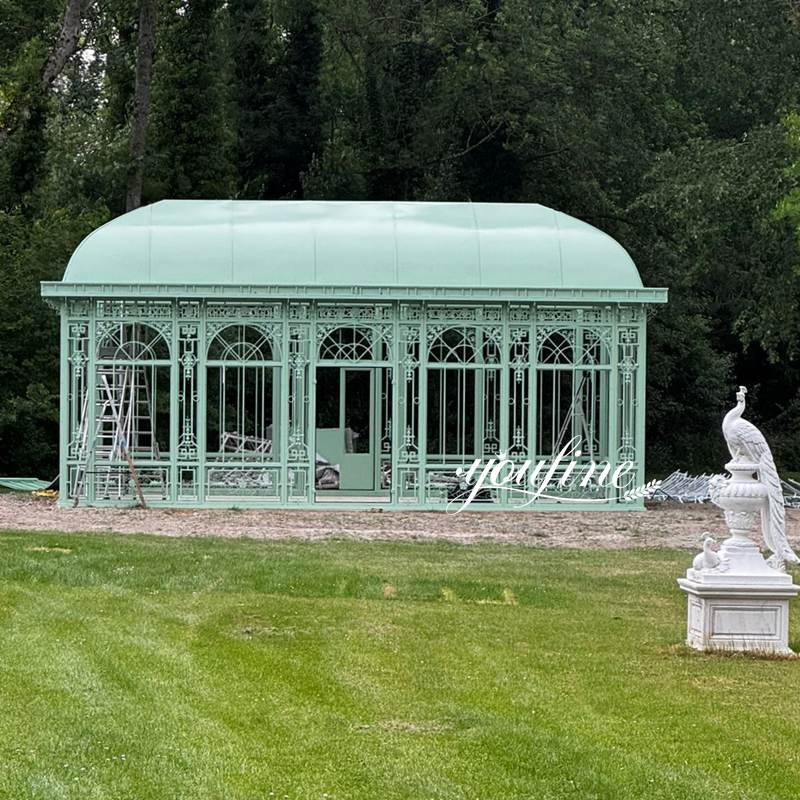
Full hot-dip galvanizing is a process in which the entire wrought iron structure is fully fabricated first using black steel, then disassembled into sections, and finally each section is immersed completely in a molten zinc bath. This allows the zinc to flow into every corner, seam, weld, and decorative detail—something material-level galvanized pipe simply cannot achieve.
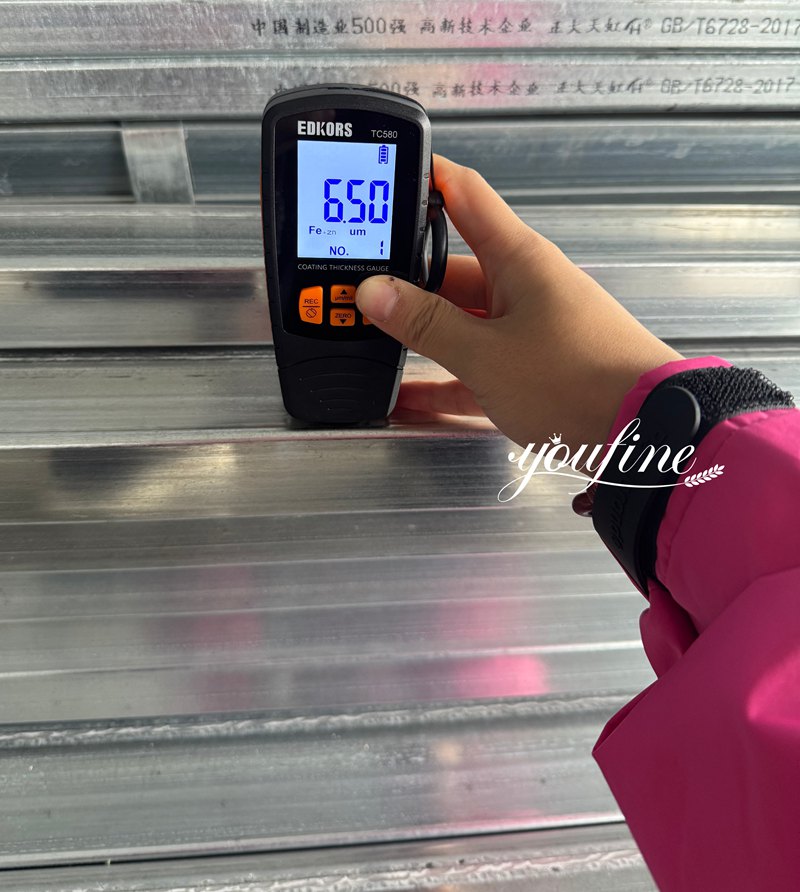
Because the galvanizing happens after all welding and shaping are finished, every weld joint and every intricate pattern receives a uniform, all-around zinc coating. The zinc layer formed through full immersion is significantly thicker, more durable, and far more complete than touch-up zinc spray or the original coating on pre-galvanized pipe.
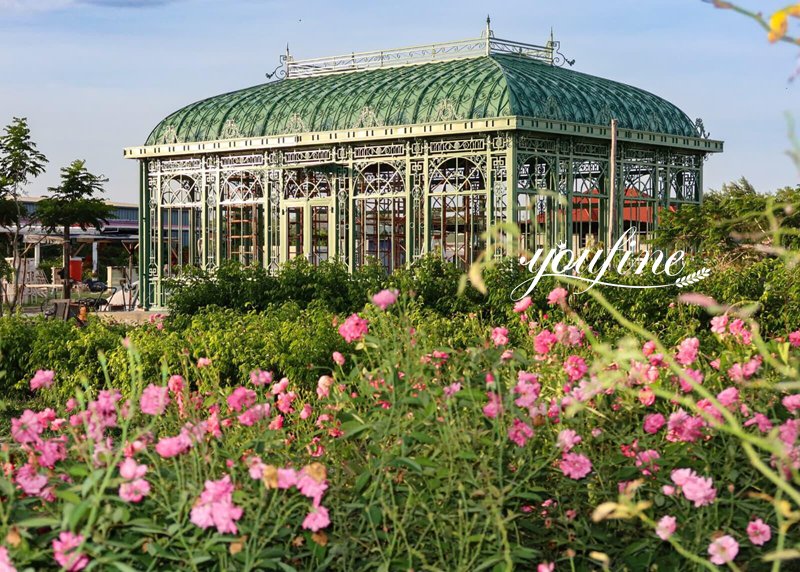
In high-humidity climates, coastal areas, or regions with heavy rain or snow, a fully hot-dip galvanized structure can extend the greenhouse’s lifespan to several decades with minimal maintenance, making it the premium option for farms, estates, botanical gardens, and architectural-grade garden structures.

Key Differences
| Galvanized Pipe | Full Hot-Dip Galvanizing |
Coating Integrity | The galvanized layer may be damaged during welding of galvanized pipes. | 100% coverage of all details |
Rust Prevention Lifespan | 30-50years | 60 to 100 years or even longer |
Cost | Budget Friendly | High cost, but more cost-effective in the long run |
Applicable Environment | Mild climate | High humidity, salt spray environment, snowfall area |
Which One Should You Choose for a Wrought Iron Greenhouse?
When deciding between Galvanized Pipe and Full Hot-Dip Galvanizing for your wrought iron greenhouse, consider the following factors:
Durability and Corrosion Resistance
- Full hot-dip galvanizing generally offers thicker and more uniform zinc coating, making it more resistant to rust and ideal for long-term outdoor exposure.
- Galvanized pipes provide good protection, but the coating may be thinner and less uniform, especially at welds or bends.
Complexity of Design
- For simple greenhouse structures, pre-galvanized pipes can be sufficient and more cost-effective.
- For intricate or large structures where joints and connections are numerous, full hot-dip galvanizing ensures every nook and cranny is protected.
Budget Considerations
- Galvanized pipes are usually cheaper upfront.
- Full hot-dip galvanizing is more expensive, but it can reduce future maintenance costs by minimizing rust over time.
Aesthetic and Finish
- Both options can be powder-coated after galvanizing for a sleek finish.
- If your greenhouse is a premium installation where longevity and appearance are crucial, full hot-dip galvanizing may be the better choice.
Bottom line
- If you prioritize maximum durability and low maintenance, go with full hot-dip galvanizing.
- If you want a cost-effective solution for a smaller or simpler structure, galvanized pipes may suffice.
Conclusion
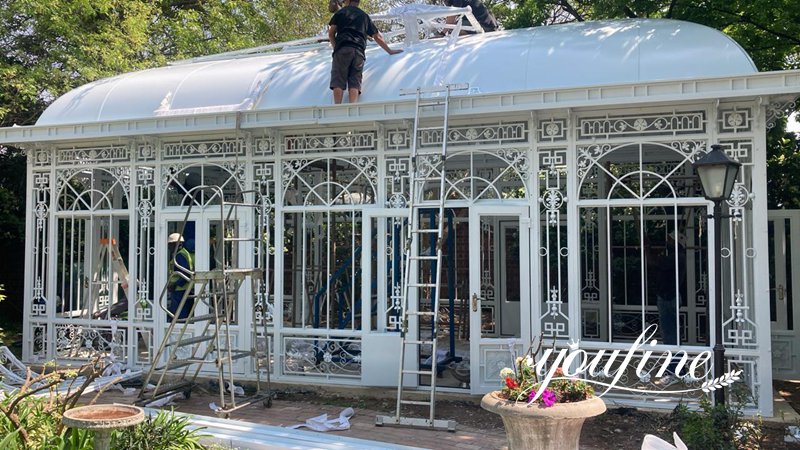
Choosing the right galvanizing method for your wrought iron greenhouse depends on your priorities—durability, design complexity, budget, and finish. Hot-dip galvanized pipes offer a cost-effective solution for smaller or simpler structures, while full hot-dip galvanizing provides thicker, more uniform protection, ideal for long-lasting outdoor installations.
At YouFine, we combine decades of expertise in wrought iron craftsmanship with advanced galvanizing techniques. Whether you choose galvanized pipes or full hot-dip galvanizing, our team ensures high-quality materials, precise fabrication, and meticulous finishing, delivering greenhouses that are not only durable and corrosion-resistant, but also elegant and customized to your space.
With YouFine, you get more than a greenhouse—you get a long-lasting outdoor centerpiece designed to withstand the elements and look stunning for years to come.