“See No Evil, Speak No Evil, Hear No Evil” teaches people to avoid engaging with negativity—by not seeing, hearing, or speaking evil. It is widely used in casual conversations and is represented by the Three Wise Monkeys from Japan, adding a playful and symbolic touch to everyday life. So, what exactly do the Three Wise Monkeys mean?
See No Evil, Speak No Evil, Hear No Evil Meaning
As a proverb, “See No Evil, Speak No Evil, Hear No Evil” originally suggested that one should avoid focusing on, listening to, or discussing negative matters, serving as a call for people to uphold virtuous conduct.
Later, through its evolution in Japan, the concept of “See No Evil, Speak No Evil, Hear No Evil” came to be personified by three monkeys.
The Japanese three wise monkeys meaning is
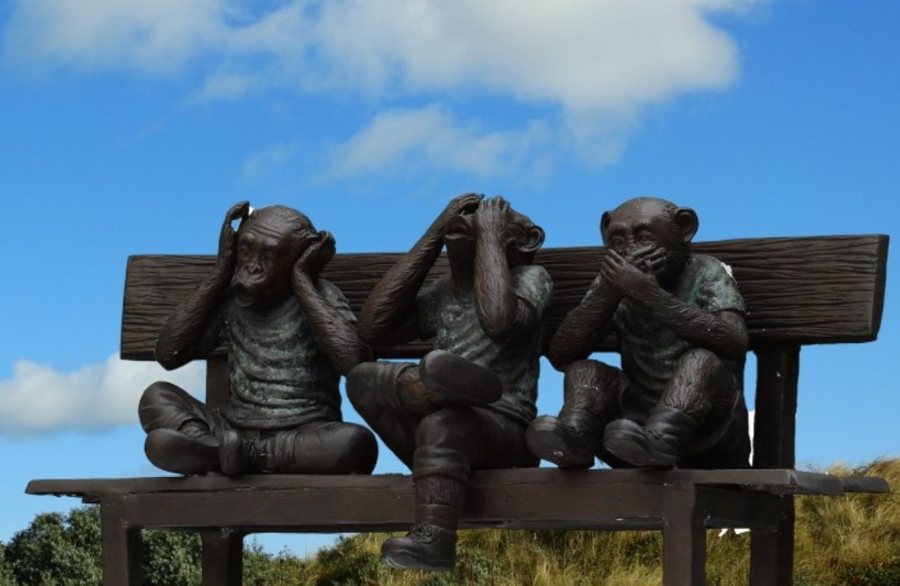
See No Evil (Mizaru): Covering the eyes—signifying a refusal to look at something, or used to express shyness or embarrassment.
Speak No Evil (Kikazaru): Covering the ears—signifying a refusal to heed negative news, or pretending not to have heard something.
Hear No Evil (Iwazaru): Covering the mouth—signifying a refusal to speak harsh words, or a promise to keep a secret.
Historical Origins of the Three Wise Monkeys
This concept is also widely studied in philosophy and religious symbolism, especially in Confucian and Buddhist traditions.
The concept can be traced back to the *Analects* of Confucius in China: “Look not at what is contrary to propriety; listen not to what is contrary to propriety; speak not what is contrary to propriety.”
In the 8th century AD, Indian Buddhist monks brought this expression from China to Japan. Within Buddhism, monkeys are regarded as symbols of self-discipline; thus, the association of monkeys with this proverb came to be seen as a guardian of moral conduct.
By the 17th century, a wooden carving of these monkeys—created by the renowned sculptor Hidari Jingoro—was housed at the Toshogu Shrine in Japan. The imagery gained widespread acceptance, partly due to a phonetic similarity in the Japanese language. The words “zaru” (negation) and “saru” (monkey) are similar and have a pun, which helped reinforce the connection between the proverb and the Three Wise Monkeys.
Around the 19th century, a wave of Japanese-style art swept across Europe, introducing the imagery of the “Three Wise Monkeys” to the Western world, where it subsequently became widely disseminated. In Japan, the “Three Wise Monkeys” concept was once extended to serve as a code of conduct for geishas, requiring them to uphold the professional ethos of “See No Evil, Speak No Evil, Hear No Evil.”
Today, See No Evil, Speak No Evil, Hear No Evil has become a popular cultural symbol—manifesting in various forms such as “Three Wise Monkeys” sculptures and tea products. In Western countries, the “Three Wise Monkeys” are widely featured in settings such as churches.
Three Wise Monkeys Symbolism Explained
“See no evil, speak no evil, hear no evil” with the imagery of the monkeys serves as a humorous yet profound reminder for people to maintain wisdom and avoid becoming entangled in negative matters.
– In Politics
The “See No Evil, Speak No Evil, Hear No Evil” motif is often used to allude to a deliberate attitude of willful blindness toward political graft and corruption. This usage is particularly common in protest art and political cartoons.
– In Art
Both in China and in Western nations, depictions of the “Three Wise Monkeys” frequently appear in architectural ornamentation—such as bronze statue—and are widely cherished by the public as decorative home accessories.
As a design motif, the imagery can also be incorporated into commercial design contexts—for instance, in the branding of tea products or in the creation of cartoon mascots for advertising campaigns.
– In Religious Culture
The three wise monkeys symbolism is deeply rooted in moral philosophy and cultural traditions. Whether within Buddhist traditions or in the ecclesiastical culture of Christianity and other faiths, the “Three Wise Monkeys” serve as a proverb or moral lesson intended to admonish and guide future generations.
– In Daily Life
People often mimic the poses of the “Three Wise Monkeys” when taking photographs—such as covering their ears or mouths—a trend that has gained widespread popularity. Furthermore, in everyday colloquial speech, the see no evil monkeys meaning is frequently invoked to describe negative attitudes characterized by “turning a blind eye.”
– Cultivating Personal Character
The philosophy embodied by the “Three Wise Monkeys” is instrumental in shaping an individual’s moral character and fostering spiritual growth. For instance, within the *Analects* of Confucius, the maxim “See no evil, speak no evil, hear no evil” aims to cultivate personal virtue by actively shielding the mind from malicious thoughts, thereby purifying the inner self. In India, the three monkeys are regarded as embodiments of virtues such as loyalty, guardianship, and honesty—qualities epitomized by the Monkey God, Hanuman. In Japan, they are revered as guardian deities, protecting people from moral corruption and spiritual decay.
– A Philosophy of Life and Moral Code
As a moral standard, this concept enjoys widespread popularity. In China, “See no evil, speak no evil, hear no evil” serves as a moral lesson rooted in Confucian philosophy—a teaching that has endured for millennia. In Japan, the “Three Wise Monkeys” represent a philosophy of life centered on the principles of “seeing nothing, hearing nothing, and speaking nothing.” Within the Buddhist tradition, this concept is further upheld as a moral ethos, serving as a guiding principle for the populace.
Why Are Three Wise Monkeys Statues So Popular in Home Decor?
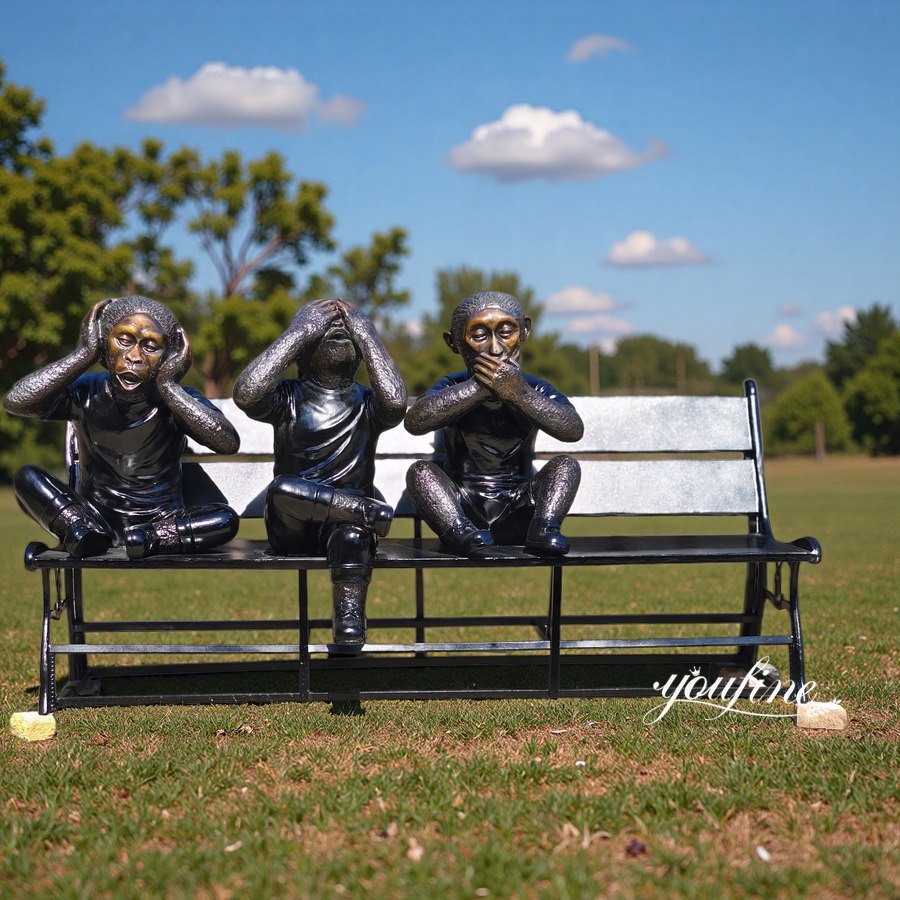
The meaning of the three wise monkeys statue makes it a popular choice for both decoration and symbolic protection.
– A Daily Reminder
As a sculpture rich in symbolism, the “Three Wise Monkeys” serve as a powerful reminder for people to cultivate their own virtues and moral character. The three wise monkeys statue meaning is often associated with good luck, wisdom, and protection.
– An Aesthetic Focal Point for the Home
Possessing a distinct artistic flair, the Three Wise Monkeys add a touch of lively charm and intrigue when arranged in a corner of your home. One of our clients in Europe commissioned a bronze set of the Three Wise Monkeys to place at their front entrance; now, passing neighbors and pedestrians often pause to touch the three monkeys as they go by.
A statue of three monkeys is suitable for placement in locations such as gardens or doorways.
– A Sense of Shared Connection
When displayed as sculptures in outdoor public spaces, the Three Wise Monkeys easily resonate with the community. Whether situated at a street corner or right at your doorstep, people can readily grasp the meaning of “See No Evil, Speak No Evil, Hear No Evil” simply by observing the gestures of these three monkeys. Especially with a material like bronze, a “Three Monkeys” statue can truly capture the lifelike vividness of the three monkeys.
FAQ About Three Wise Monkeys Meaning
Are the Three Wise Monkeys a good symbol?
Yes, the Three Wise Monkeys are widely considered a positive symbol. They represent wisdom, self-discipline, and moral integrity, and are often associated with good luck and protection.
Where should you place a Three Wise Monkeys statue?
A Three Wise Monkeys statue can be placed in entrances, gardens, living rooms, or public spaces. It is often positioned near doorways to symbolize protection and positive energy.
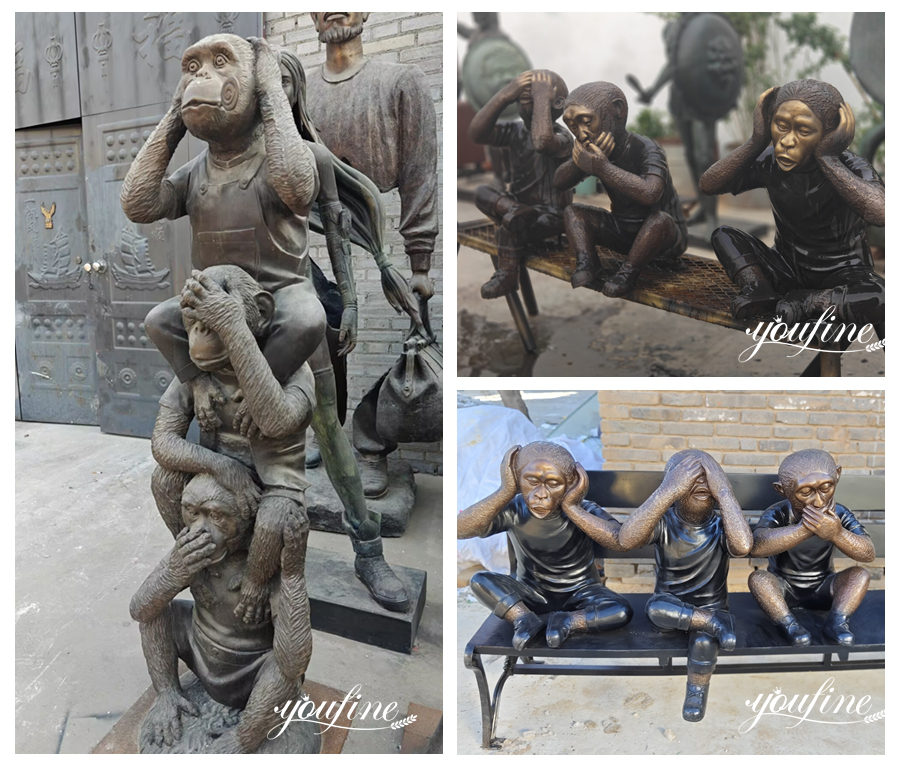
If you are looking for high-quality Three Wise Monkeys sculptures, choosing a professional manufacturer ensures both artistic detail and long-lasting durability.
For those interested in owning a Three Wise Monkeys sculpture, working with an experienced manufacturer like YouFine ensures high-quality craftsmanship and customization options.
At YouFine, we offer:
– High-fidelity three wise monkeys
– Authentic antique-style finishes
– Fully customized Three Wise Monkey sculptures
Whether you desire a statue of the Three Wise Monkeys seated side-by-side or standing upright, we can craft them for you.
Conclusion
A Three Wise Monkeys statue is more than just a decoration—it carries deep cultural meaning and timeless wisdom. Whether crafted in bronze, marble, or stone, it can enhance both indoor and outdoor spaces while conveying a powerful message. If you are looking for a unique and meaningful sculpture, customized Three Wise Monkeys statues can be an excellent addition to your collection or project.