Bronze animal sculptures can turn a children’s park, zoo, or interactive sculpture garden into a more engaging place for play and exploration. Unlike decorative sculptures placed in hotel lobbies or landscaped gardens, interactive animal sculptures may be touched, sat on, and climbed on by children every day. This difference changes how buyers should evaluate materials, structural design, surface finishing, and installation requirements.
For public projects, choosing a bronze animal sculpture involves more than selecting an attractive animal design. Buyers need to consider how children will interact with the sculpture, how loads will be transferred through its internal structure, whether exposed surfaces are safe to touch, and how securely the sculpture will be anchored to its foundation.
If you are planning a children’s sculpture park, an interactive zoo exhibit, or a public art installation, this guide explains the key factors to review before requesting a quotation from a bronze sculpture manufacturer.
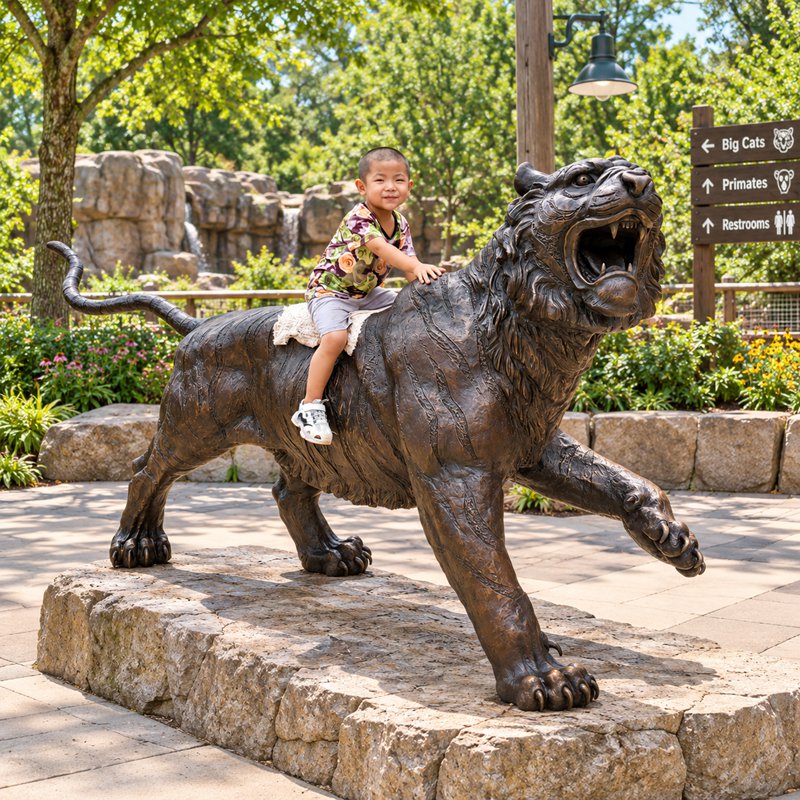
1. Start with How Children Will Interact with the Sculpture
Before choosing materials or discussing prices, define how children are expected to use each sculpture. A bronze bear designed for visual appreciation may require a different structural approach from one intended for children to sit on or climb over.
Providing the manufacturer with reference images and overall dimensions is a useful starting point, but it is not enough for an interactive public art project. Buyers should also explain the intended age group, expected number of users, installation environment, and permitted activities.
1.1 Touch-Friendly Sculptures
Touch-friendly animal sculptures encourage children to explore animal shapes, textures, and details through direct interaction. Examples include bronze turtles, rabbits, elephants, and other animals placed along walking paths or in educational exhibits.
When selecting these sculptures, pay attention to:
Smooth contact surfaces: Areas frequently touched by children should be free from burrs, rough projections, and unfinished edges.
Rounded details: Claws, teeth, ears, beaks, and tail tips should be carefully assessed to reduce the risk of cuts and scratches.
Durable surface finishing: The patina and protective finish should be suitable for the intended outdoor environment and frequent handling.
Securely attached components: Small decorative elements should not become loose or create potential choking or injury hazards.
Even when a sculpture is not designed for climbing, children may naturally lean against it, pull on projecting parts, or use it as a support. The design should account for foreseeable interactions rather than assuming that visitors will only look at the artwork.
1.2 Sit-On Animal Sculptures
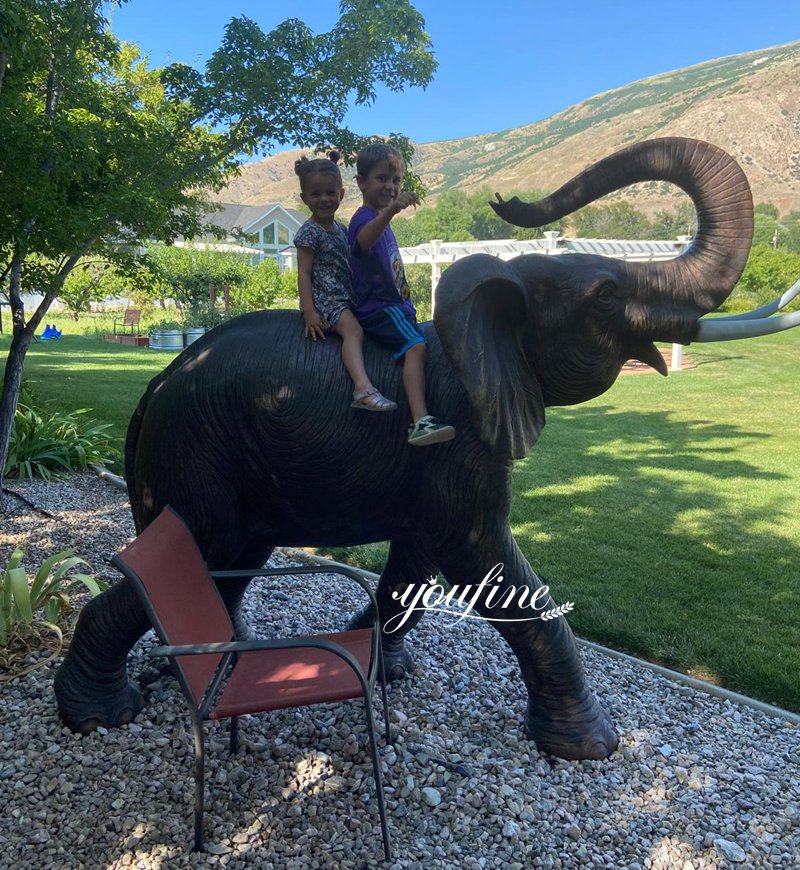
Sit-on animal sculptures allow children to interact with a sculpture as though it were a bench or a life-size animal companion. Bronze horses, bears, hippos, and elephants are possible subjects for this type of installation.
These designs require particular attention to the areas that support body weight, including the back, torso, seat, legs, and connections between major body sections.
Before ordering, buyers should confirm:
Whether the sculpture is specifically designed and evaluated for sitting.
Which parts are intended to support a child’s weight.
Whether the internal structure reinforces the main load-bearing areas.
Whether the seating surface provides sufficient stability and avoids hazardous projections.
Whether the sculpture’s dimensions and geometry are appropriate for its intended users.
A sculpture that looks solid from the outside may have a hollow interior. Its ability to support weight depends on the complete design, including the shell, internal reinforcement, joints, and base.
For this reason, a conventional decorative animal sculpture should not automatically be treated as suitable for sitting.
1.3 Climbable Animal Sculptures
Climbable bronze animal sculptures require more comprehensive engineering than sculptures intended only for touching or sitting. Children may stand on the sculpture, pull themselves up, jump down, or climb across its back. Several children may also interact with it simultaneously.
These activities create dynamic loads that can place stress on the body shell, legs, joints, and mounting system.
When discussing a climbable sculpture with a manufacturer, clarify:
The maximum anticipated load and number of simultaneous users.
Which areas children are permitted to stand, sit, or climb on.
Whether internal ribs or a supporting armature are needed.
How the structure transfers loads to the mounting plates and foundation.
Whether the design requires a structural engineer’s assessment and independent inspection.
It is also important to assess fall height, potential impact surfaces, foothold stability, and entrapment hazards. A strong sculpture is not necessarily a safe play structure unless its geometry and installation have also been evaluated.
The key principle is to define the intended interaction before finalizing the sculpture design. This allows the manufacturer to assess the necessary structural provisions and helps the buyer avoid costly modifications later.
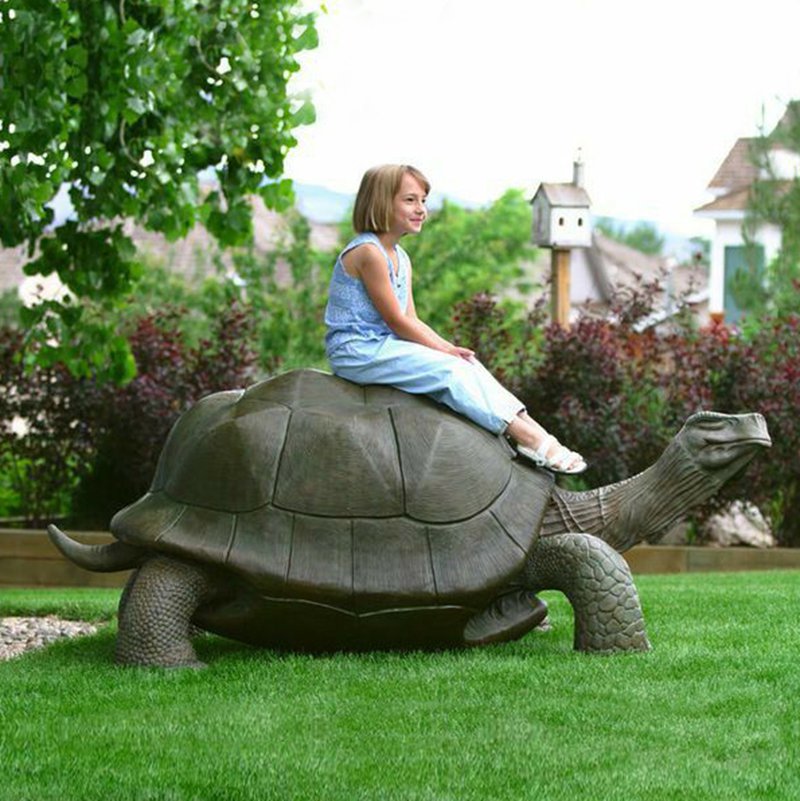
2. Choose the Right Bronze Alloy for Outdoor Public Use
Material selection is an important part of purchasing outdoor bronze animal sculptures. For a public park, buyers should specify the required alloy rather than relying on a general product description such as “bronze sculpture.”
The alloy affects casting performance, mechanical properties, corrosion behavior, fabrication requirements, and cost. However, material selection alone cannot establish whether a sculpture is safe for climbing or other physical activities.
2.1 Understand the Difference Between Silicon Bronze and Other Copper Alloys
Silicon bronze is a family of copper alloys containing silicon and other elements within specified compositional limits. Depending on the particular grade, these alloys can offer useful casting characteristics, strength, and corrosion resistance for outdoor artwork.
Yellow brass, by contrast, generally contains a higher proportion of zinc. Brass and bronze are not interchangeable terms for procurement purposes, and their mechanical properties and corrosion behavior vary according to their actual compositions.
The term commercial bronze can also refer to different copper alloys depending on the supplier and industry context. Buyers should therefore avoid relying on color, marketing descriptions, or alloy names alone.
For a project requiring a specific silicon bronze grade, the purchase specification should identify the accepted alloy designation, applicable material standard, and chemical composition requirements.
For example, a client may request ASTM B584 C87300 silicon bronze or an approved equivalent. Any proposed alternative should be reviewed against the project’s requirements rather than accepted solely because the manufacturer describes it as a similar bronze.
This distinction is especially important when the sculpture will be exposed to weather and subjected to repeated physical interaction. The selected alloy must be appropriate for the casting process and intended service conditions.
2.2 Ask for Material Certification
Material documentation helps buyers verify that the delivered sculpture was manufactured using the agreed alloy.
Before production begins, ask the manufacturer whether it can provide:
An alloy composition certificate or suitable mill test documentation.
The specified alloy designation and applicable material standard.
Traceability between the documentation and the material batch used.
Supporting records for other specified structural components, where applicable.
A Mill Test Report (MTR) or equivalent material certificate should be agreed upon during procurement. Buyers should also confirm what the document actually certifies, since a chemical composition report does not necessarily prove the mechanical performance of the finished sculpture.
If stainless steel reinforcement or anchoring components are specified, their grades should also be documented as required by the project.
For public art installations, it is better to establish documentation requirements before casting begins than to request certificates after the sculpture has already been completed.
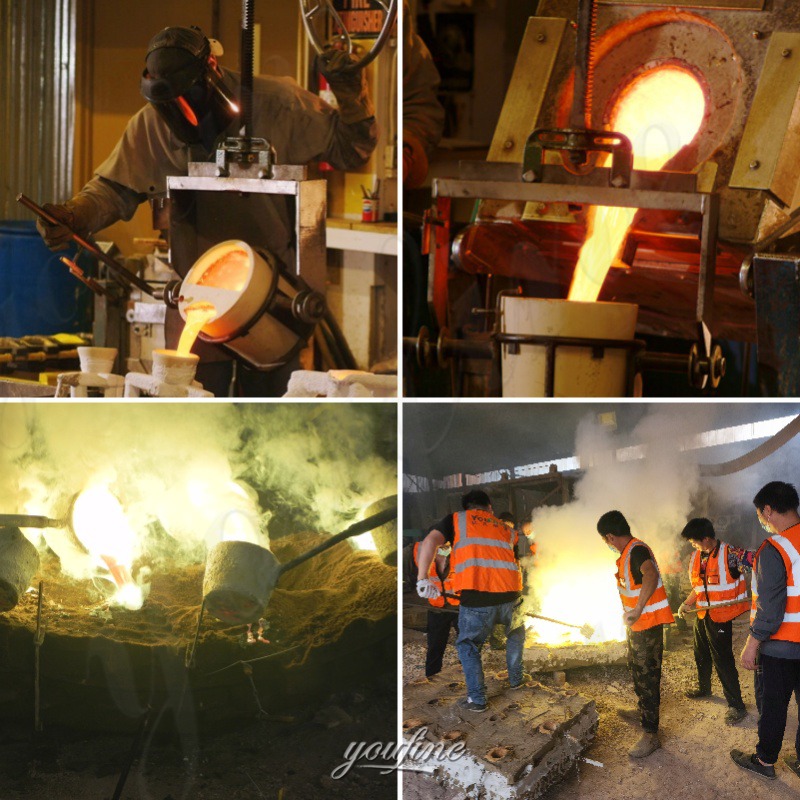
3. Evaluate Wall Thickness and Internal Structural Strength
Bronze animal sculptures are frequently manufactured as hollow castings to manage weight, material consumption, and fabrication requirements. This construction method can work well for decorative artwork, but sculptures intended for sitting or climbing require additional structural consideration.
The most important question is not simply whether the bronze shell is thick. It is whether the complete structure can safely resist the loads expected during use.
3.1 Why Casting Wall Thickness Matters
Wall thickness influences the sculpture’s strength, weight, casting quality, material consumption, and production cost.
A shell that is too thin for its geometry and intended loads may be more susceptible to local deformation, cracking, or damage. However, increasing the thickness everywhere does not automatically produce the best design. It can increase weight and cost, affect casting behavior, and still leave weak points at joints or unsupported spans.
For example, a client may specify a continuous wall thickness of 4–6 mm and reject sections thinner than 3 mm. These values can serve as project-specific acceptance requirements, but they should not be treated as universal standards for every bronze animal sculpture.
The appropriate thickness depends on factors such as:
Overall dimensions and wall geometry.
The length of unsupported spans.
The alloy and casting process.
The position and magnitude of anticipated loads.
The location of openings, welds, and structural connections.
Buyers should agree on minimum thicknesses, acceptable tolerances, measurement locations, and verification methods before manufacturing begins.

3.2 Internal Reinforcement for Sitting and Climbing Loads
For larger animal sculptures, the internal structure can be just as important as the bronze exterior.
Consider a life-size bronze hippo, bear, or horse designed for children to sit on. Its back may form a relatively long horizontal span. Without suitable support, concentrated loads can cause excessive local stress or deformation.
Depending on the design, internal reinforcement may include ribs, support frames, or an armature. Stainless steel components may be considered where suitable, but their dimensions, connections, and compatibility with the bronze structure must be assessed by the design and fabrication team.
Important areas to review include:
The back and torso, where sitting or climbing loads may be concentrated.
The legs and lower body, which transfer loads toward the base.
Connections between the head, torso, limbs, and other cast sections.
Internal supports and their attachment to the outer shell.
The interfaces between the main structure, mounting plates, and anchors.
For stainless steel reinforcement, buyers should also ask how the design addresses corrosion, trapped moisture, inspection access, and connections between dissimilar metals.
The goal is to establish a clear load path from the points where children interact with the sculpture to the foundation below it.
3.3 Design for Dynamic Loads, Not Just Static Weight
A static load represents a weight applied under relatively stationary conditions. Children’s play is less predictable.
A child may land heavily on a sculpture, shift weight suddenly, pull on a raised feature, or jump from one part to another. Multiple users can also create combined loads in different locations.
Consequently, a specification based only on a single person’s body weight may not adequately describe the actual conditions.
Before approving the design, buyers should confirm:
The design load and assumptions about simultaneous users.
The locations where loads will be applied.
The structural assessment method and acceptance criteria.
The capacity of critical joints, supports, and anchors.
Whether an appropriately qualified structural engineer must review the design.
If a project specifies a load of 250 lb (approximately 113 kg), the manufacturer should clarify whether this represents a static load, a design load with an appropriate dynamic allowance, or another defined test condition. The number alone is not proof of safety.
Where children are expected to climb, the sculpture should also be assessed for fall and impact risks, not just structural failure.
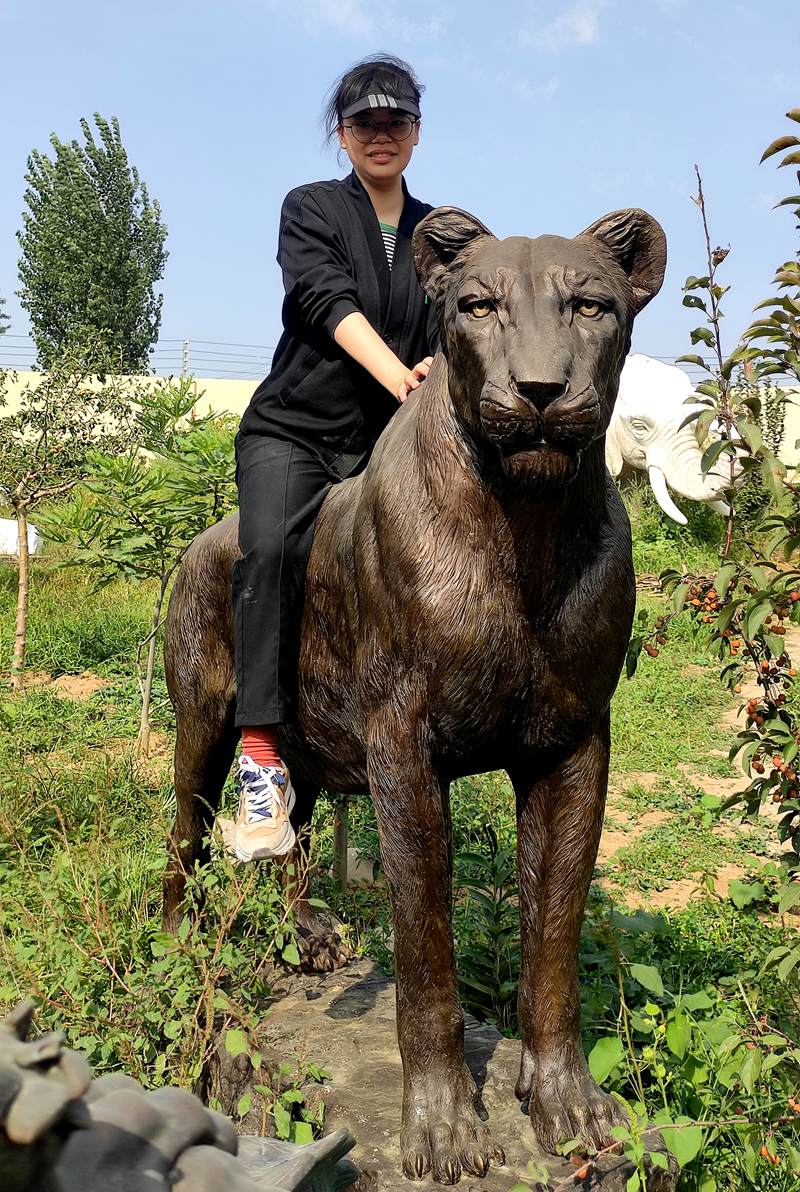
4. Inspect Surface Finishing and Child Safety Details
Surface finishing is often associated with appearance and color, but for interactive sculptures, it also affects contact safety, maintenance, and the long-term condition of the artwork.
A detailed inspection should cover the entire sculpture, including the areas underneath the body, between the limbs, around assembly joints, and near the mounting points.
4.1 Rounded Edges and Smooth Contact Surfaces
Animal features that appear harmless in a decorative sculpture may present hazards when children touch or climb on them.
Pay particular attention to:
Claws, teeth, horns, and other pointed features.
Ears, beaks, and thin tail tips.
Decorative protrusions and exposed metal edges.
Welded joints and ground surfaces.
Areas where children may grip, step, or place their hands.
These areas should be designed and finished to reduce sharp edges, burrs, and protrusions. The design should also consider whether any feature could snag clothing or cause injury during a fall.
However, simply rounding every edge is not a complete safety solution. The sculpture’s overall shape, contact points, climbing geometry, and foreseeable patterns of use must also be reviewed.

4.2 Seam Quality and Water Ingress Prevention
Large bronze sculptures may consist of multiple cast sections joined during fabrication. The quality of these connections can influence structural integrity and long-term durability.
Ask the manufacturer how it will inspect assembly seams and welded areas for incomplete joints, cracks, pinholes, and other unacceptable defects.
Where continuous welds are required by the project, the welding procedure should be appropriate for the alloy and joint design. Welds may need to be ground and finished flush in areas where children can touch or climb.
Not every project requires the same welding method. TIG welding, for example, may be specified for certain joints, but the correct procedure depends on the bronze alloy, section thickness, and fabrication requirements.
Water ingress is another consideration. Open seams or poorly sealed cavities may allow moisture to accumulate inside the sculpture. In climates with freezing temperatures, trapped water can contribute to damage during freeze-thaw cycles.
A suitable inspection plan should therefore address both the integrity of the joints and the management of moisture within the sculpture.
4.3 Check for Pinch Points and Fall Hazards
A sculpture can have a smooth surface and still create risks through its shape.
Potential hazards include gaps where fingers or limbs could become trapped, spaces that can catch clothing, unstable footholds, slippery contact surfaces, and configurations that encourage children to climb beyond a safe height.
Before approving the final design, assess:
Whether openings and gaps create entrapment risks.
Whether children can climb onto areas not intended for access.
Whether contact surfaces provide suitable stability under expected conditions.
Whether the sculpture’s placement creates fall hazards or conflicts with nearby equipment.
Whether the surrounding ground surface is appropriate for the anticipated use and fall height.
For a municipal park or children’s sculpture zoo, these assessments should be coordinated with the project owner and relevant safety professionals. Applicable playground and public-space requirements depend on the jurisdiction, installation type, and intended use.

5. Select an Outdoor Patina and Protective Finish
Bronze develops distinctive colors through chemical patination and natural weathering. For outdoor animal sculptures, the finish should balance appearance, durability, maintenance needs, and suitability for frequent contact.
Buyers should discuss the intended finish early because patina selection and protective treatment can affect the manufacturing schedule and final acceptance process.
5.1 Hot-Applied Chemical Patina
A chemical patina can create a range of bronze finishes, including warm brown, dark brown, and green tones. The result depends on the alloy, surface preparation, chemicals, application method, and environmental conditions.
For a children’s park, buyers should confirm:
The intended color and surface appearance.
Whether the finish will be applied consistently across assembled sections.
How the manufacturer controls the process.
Whether the treatment is suitable for the specified alloy and outdoor environment.
Some clients specifically request traditional hot-applied chemical patination rather than cold-applied colorants or paint-based finishes. If this is important to the project, it should be included in the written specification.
The patina itself should not be confused with the structural properties of the bronze. A particular color or patination method does not establish that the sculpture is safe for physical interaction.
5.2 Protective Wax and Long-Term Maintenance
A protective wax may be applied over a patinated bronze surface to help preserve its appearance and provide a degree of environmental protection.
Microcrystalline waxes are used in some conservation and metal-finishing applications. However, their outdoor performance depends on the product, exposure conditions, surface preparation, and maintenance schedule.
For a sculpture that children touch daily, the protective layer may wear more quickly on backs, heads, and other frequently handled areas.
Buyers should therefore ask:
What protective treatment will be used?
Is the treatment appropriate for the intended outdoor conditions?
How should the surface be cleaned?
How frequently should the protective layer be inspected and renewed?
How will worn or damaged areas be repaired?
A wax coating should not automatically be described as providing permanent UV protection. If UV resistance is a specified performance requirement, the manufacturer should provide appropriate supporting technical information for the proposed treatment.
5.3 Prioritize Safe, Maintainable Finishes
The finish should be selected according to the actual use environment rather than appearance alone.
For interactive public artwork, consider whether the treatment is appropriate for frequent contact, whether it can be maintained without specialist intervention, and whether the finished surface remains acceptable after normal wear.
Ask the manufacturer to document the proposed finishing system and provide maintenance recommendations. Where the project has specific requirements concerning chemical exposure, coatings, or repeated skin contact, confirm their suitability with the relevant technical documentation.
It is also important to establish realistic expectations: outdoor bronze changes over time, and frequent contact can create visible differences between handled and untouched areas. A maintenance plan is part of responsible long-term ownership.

6. Confirm the Mounting System and Concrete Foundation Requirements
The sculpture itself is only one part of the installation. Its mounting system and foundation must transfer the expected loads safely into the ground.
This is particularly important for interactive animal sculptures because children may push against the sculpture, climb on one side, or apply forces far from its center of gravity.
6.1 Internal Mounting Plates and Anchor Rods
Many hollow bronze sculptures use internal mounting plates or reinforced base connections to attach the sculpture to a foundation.
Depending on the design, these may connect to threaded anchor rods embedded in or chemically anchored into concrete.
Before ordering, confirm:
The material grade and dimensions of the mounting plates.
How the plates connect to the internal structure.
The number, diameter, length, and layout of the anchor rods.
The specified anchoring method and compatible installation materials.
How the system will resist the anticipated vertical, lateral, and overturning loads.
For example, a project specification may require 316 stainless steel threaded rods approximately 19 mm in diameter, extending 250–300 mm below the sculpture’s feet. Such dimensions should be treated as project-specific requirements, not a universal anchoring solution.
The appropriate anchor size and embedment depend on the applied loads, concrete properties, edge distances, installation method, and other engineering factors. The complete connection must be evaluated rather than selected from rod diameter alone.
6.2 Design the Foundation for the Site
A suitable anchor system cannot compensate for an inadequate foundation.
Foundation design should account for the sculpture’s weight, center of gravity, anticipated interaction loads, soil conditions, concrete strength, drainage, and local environmental requirements.
For outdoor installations, buyers should also consider frost depth where relevant, exposure to moisture, and the potential effects of seasonal ground movement.
Before installation, the project team should confirm:
The required foundation dimensions and concrete specifications.
The reinforcement and anchor layout.
The required concrete curing period before loading.
The installation tolerances and leveling procedure.
Whether the site needs a structural or geotechnical assessment.
The foundation should be designed and approved by an appropriately qualified professional for the specific sculpture and site. A generic concrete pad detail should not be assumed suitable for every installation.
6.3 Coordinate Fabrication and Installation Drawings
Custom bronze sculptures are easier to install when the manufacturer and site contractor coordinate their drawings before production is completed.
The manufacturer should provide the agreed information needed to prepare the foundation and install the sculpture, which may include:
Overall dimensions and finished weight estimates.
Base dimensions and mounting plate details.
Anchor rod positions and connection requirements.
Concrete foundation requirements.
Installation tolerances, lifting provisions, and handling instructions.
The buyer should confirm that the drawings reflect the final manufactured design and that any changes to the sculpture or mounting system are reviewed before installation.
Clear coordination reduces the risk of misaligned anchors, unexpected site modifications, and delays during installation.

7. Understand the Cost and Lead Time of Custom Public-Grade Bronze Sculptures
Custom bronze animal sculptures for children’s parks may cost more and require longer production schedules than comparable decorative pieces. The difference comes from the engineering, fabrication, inspection, and documentation needed for the intended use.
When comparing quotations, buyers should evaluate the full project scope rather than choosing a manufacturer based only on the initial unit price.
7.1 What Affects the Cost?
Several factors can influence the price of a custom interactive bronze sculpture:
- Sculpture size and complexity: Larger sculptures generally require more material and may involve more complex molds, casting, assembly, and finishing.
- Specified bronze alloy: A particular alloy grade, documented material traceability, and additional material verification can affect procurement and production costs.
- Wall thickness and reinforcement: Increased shell thickness, internal structural ribs, support frames, and specialized connections may require additional material and fabrication work.
- Mounting system: Custom base plates, threaded rods, and other anchoring components add material and engineering requirements.
- Surface finishing: Detailed patination, careful edge finishing, weld grinding, and additional surface inspection can increase labor time.
- Engineering and quality documentation: Structural reviews, dimensional checks, wall thickness verification, inspection records, and third-party testing may require additional resources.
To obtain a meaningful quotation, provide the manufacturer with the animal design, dimensions, intended use, material requirements, structural specifications, installation details, and required inspection documents. You could learn more: How Much Does a Life Size Bronze Animal Statues Cost?
7.2 What Affects the Production Timeline?
The production schedule depends on both the sculpture itself and the additional project requirements.
Typical stages may include:
Design review and engineering coordination.
Model and mold preparation, where required.
Bronze casting and initial inspection.
Internal reinforcement and assembly.
Welding, grinding, and surface finishing.
Patination and protective treatment.
Final inspection and preparation of documentation.
Packing and shipment.
If the project requires material certificates, wall thickness verification, structural inspection, or client approval before packing, these steps should be included in the production schedule from the beginning.
Buyers should also clarify whether engineering approval, third-party inspection, or corrective work could affect the delivery date.
A realistic quotation should identify the agreed specifications, included services, inspection milestones, estimated lead time, and any assumptions that could affect the final price.
8. Work with a Bronze Sculpture Manufacturer That Understands Public Use
Choosing a manufacturer for an interactive public art project involves more than reviewing a product catalog. The supplier must understand the relationship between artistic design, casting, structural requirements, finishing, and installation.
A manufacturer may be experienced in producing decorative bronze statues but still need engineering support or additional quality-control arrangements for sculptures intended for climbing or other physical activities.
8.1 Discuss Your Project Before Finalizing the Design
Before requesting a final quotation, prepare a clear project brief that includes:
Reference images and preferred animal subjects.
Overall dimensions and intended placement.
Whether children will touch, sit on, or climb on each sculpture.
The anticipated age group and number of users.
The required bronze alloy and material documentation.
Structural, wall thickness, and mounting requirements.
Surface finishing and maintenance expectations.
Inspection records and approval requirements.
Site conditions and installation responsibilities.
The more clearly these details are defined, the easier it is for the manufacturer to identify technical questions, estimate the scope of work, and propose a suitable production plan.
For larger projects, consider asking the manufacturer to review the specifications with the project engineer before the final design and quotation are approved.
8.2 Confirm Manufacturing Capabilities and Inspection Scope with YouFine
YouFine provides custom sculpture manufacturing services for different subjects, sizes, and project requirements. For a children’s park or interactive sculpture garden, the first step is to review the proposed designs and establish what additional engineering and quality-control provisions are needed.
Before committing to a public-use specification, buyers should confirm with YouFine whether the project can accommodate the requested alloy, wall thickness, internal reinforcement, joining methods, mounting components, surface treatment, and inspection documentation.
Where a requirement falls outside the manufacturer’s standard production process, the parties should clarify whether it can be achieved through custom fabrication, specialist engineering, or third-party verification.
A project-specific manufacturing plan should distinguish between confirmed capabilities, proposed technical solutions, and items that still require engineering approval.
This approach helps ensure that the final quotation reflects the actual requirements rather than assumptions about what a conventional decorative bronze sculpture can provide.
For buyers planning multiple animal sculptures, discussing the full collection together may also help coordinate dimensions, finishing, mounting details, and inspection procedures across the project.

Conclusion: Choose for Safety, Durability, and Long-Term Public Use
Bronze animal sculptures can become memorable features of children’s parks, zoos, and interactive sculpture gardens. However, when children are expected to touch, sit on, or climb on the artwork, the selection process must extend beyond appearance, size, and price.
The most important considerations are the specified bronze alloy, appropriate shell thickness, internal structural reinforcement, safe surface details, reliable mounting connections, and a foundation designed for the actual installation conditions. Buyers should also establish clear material documentation, inspection requirements, and maintenance expectations before production begins.
Most importantly, a sculpture intended for public interaction should be evaluated as a complete installation system. Its exterior, internal structure, joints, anchors, foundation, and surrounding environment all contribute to its suitability for use.
If you are planning a children’s sculpture zoo, an interactive animal park, or another public art project, contact YouFine with your reference images, dimensions, intended activities, and technical specifications. These details provide a practical starting point for reviewing manufacturing feasibility, coordinating engineering requirements, and preparing a project-specific quotation.
FAQs
1. Are bronze animal sculptures safe for children to climb on?
Bronze animal sculptures can be designed for climbing, but ordinary decorative sculptures should not automatically be considered suitable for play. The design should account for dynamic loads, internal reinforcement, sharp edges, entrapment risks, fall hazards, and secure anchoring. A qualified professional should assess the sculpture and its installation for the intended public use.
2. What type of bronze is best for outdoor animal sculptures?
The appropriate bronze alloy depends on the casting process, required mechanical properties, outdoor environment, and project specifications. Silicon bronze is one option for outdoor sculptures, but buyers should confirm the exact alloy grade and request material documentation rather than relying on the general term “bronze.”
3. How thick should a bronze animal sculpture be for children to sit on or climb on?
There is no single wall thickness suitable for every interactive bronze sculpture. The required thickness depends on the sculpture’s dimensions, geometry, alloy, internal supports, and expected loads. Specifications such as a 4–6 mm shell may be appropriate for a particular project, but they should be evaluated alongside the complete structural design.
4. How are bronze animal sculptures secured in a children’s park?
Interactive bronze sculptures may use reinforced mounting plates and stainless steel anchor rods connected to an engineered concrete foundation. The anchor dimensions, embedment, and foundation design should be determined according to the sculpture’s weight, anticipated loads, site conditions, and applicable requirements.
5. How do you maintain bronze animal sculptures outdoors?
Outdoor bronze sculptures require periodic inspection and appropriate cleaning. Their patina may change naturally over time, while protective wax or other approved treatments may need renewal, particularly on frequently touched surfaces. The manufacturer should provide maintenance recommendations based on the selected alloy, finish, and exposure conditions.
6. Can YouFine customize bronze animal sculptures for children’s parks?
YouFine can review custom bronze animal sculpture projects based on the requested animal designs, dimensions, finish, and intended installation. For sculptures designed for children to touch, sit on, or climb on, buyers should confirm the availability of the specified alloy, structural reinforcement, mounting system, and inspection documentation with the manufacturing team before placing an order.