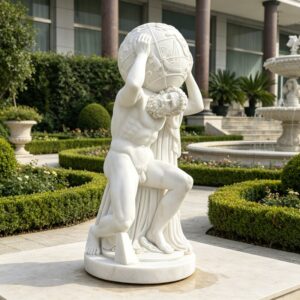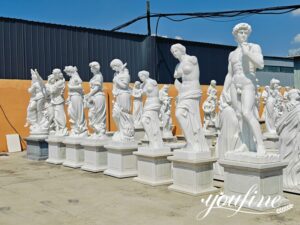
A library is more than a place to store books. It is a space where people discover new ideas, pursue knowledge, and connect with culture. The right library statues can reinforce this purpose while adding character to the building’s interior or outdoor landscape.
From classical marble readers to contemporary stainless steel sculptures, library sculptures come in many styles, materials, and sizes. Some celebrate the quiet concentration of reading, while others use books, globes, animals, or abstract forms to express creativity and the pursuit of knowledge.
However, choosing a statue for a library involves more than finding an attractive design. The sculpture should complement the architectural style, suit the available space, and reflect the needs of the people who use the library.
In this guide, we present 10 library statue ideas for public libraries, university libraries, school libraries, and private collections. We will also explain how to select the right material, size, and design for your project.
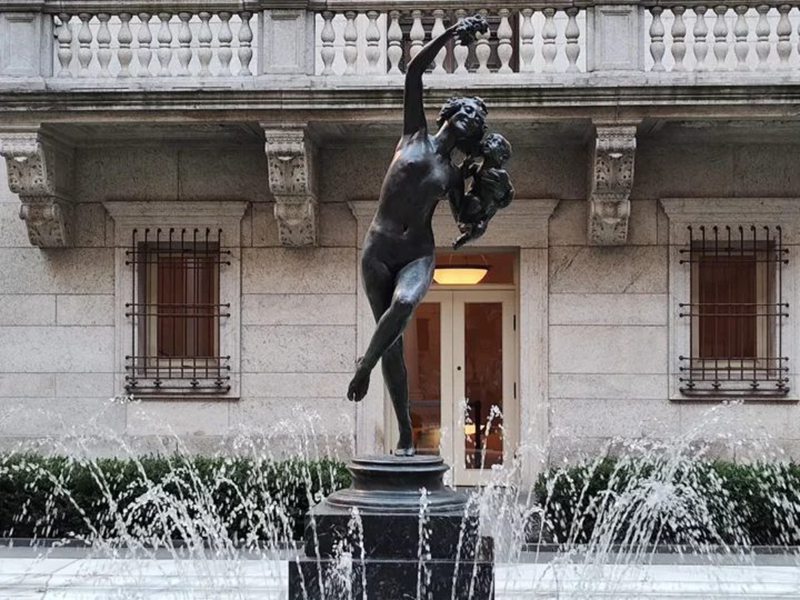
Why Are Statues a Great Addition to Libraries?
A well-chosen sculpture can become an important part of a library’s identity. Unlike ordinary decorative objects, statues often communicate ideas and values through recognizable figures, symbolic elements, and distinctive artistic forms.
Create a Memorable First Impression
The entrance hall is often the first space visitors experience when they enter a library. A large book-themed sculpture, a classical marble figure, or a contemporary metal artwork can create a focal point that makes the building more recognizable.
For university libraries and major public institutions, a carefully selected sculpture can also become a landmark that visitors associate with the institution.
Celebrate Knowledge and Learning
Books, reading figures, globes, and thoughtful human forms are natural subjects for library art. They represent education, curiosity, imagination, and the exchange of ideas.
A sculpture does not need to depict a person reading a book to communicate these themes. Abstract forms and contemporary installations can express intellectual freedom, innovation, and the continuous development of knowledge.
Enhance Different Library Spaces
Library statues can serve different purposes depending on their location.
- Entrance halls: Large figurative or book-themed sculptures can establish a strong visual identity.
- Reading areas: Smaller, quieter compositions can complement an environment designed for concentration.
- Children’s sections: Friendly animal figures and playful reading sculptures can make the space more inviting.
- University atriums: Contemporary stainless steel sculptures can complement modern architecture.
- Outdoor courtyards: Marble and bronze sculptures can connect the library with its surrounding landscape.
Encourage Engagement and Interaction
Sculptures can also make libraries more welcoming to different age groups. A whimsical animal reading a book may appeal to children, while a thoughtful human figure may interest visitors drawn to philosophy and classical art.
For public institutions, these visual elements can help create a stronger connection between the building, its visitors, and the ideas represented by the collection.
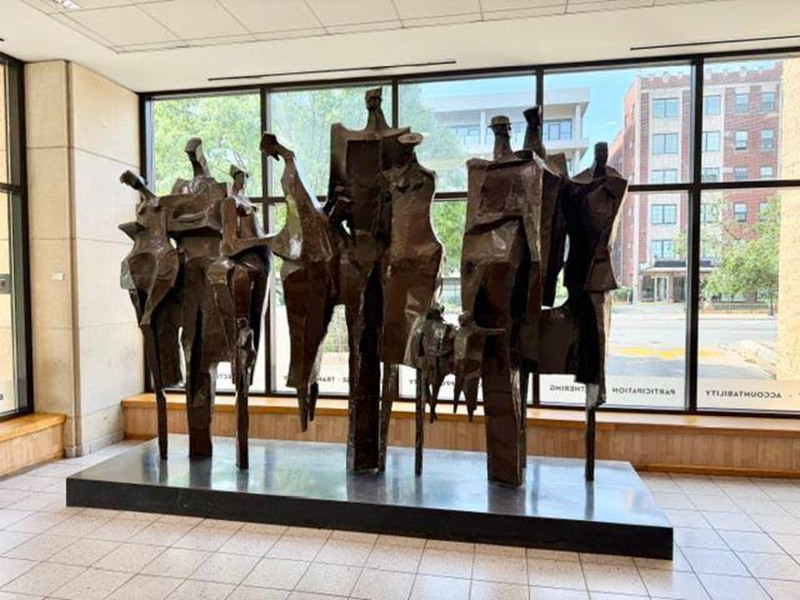
10 Best Library Statue Ideas for Different Spaces
The following 10 library sculpture ideas cover a range of artistic styles, materials, and applications. Each offers a different way to express the relationship between art, books, and learning.
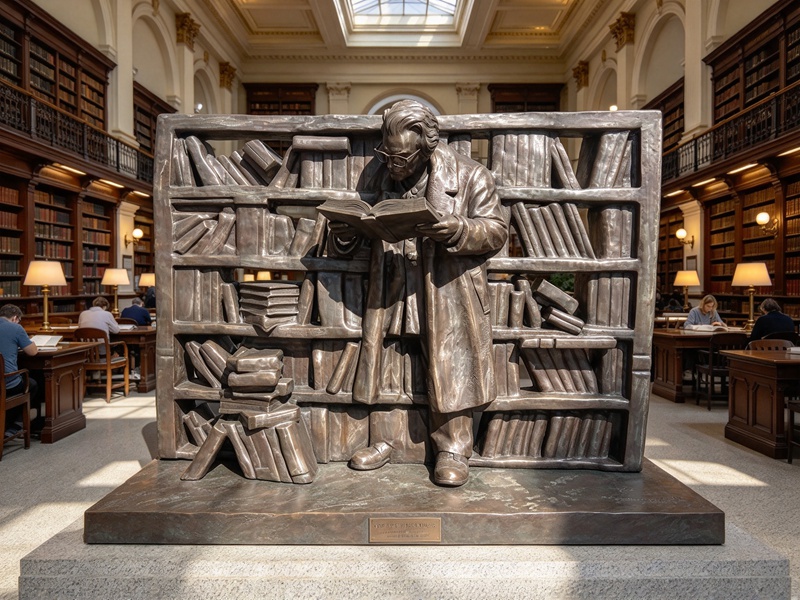
1. Scholar Reading Among Bookshelves Bronze Sculpture
This life-size bronze statue depicts a bespectacled scholar immersed in reading, standing in front of an integrated bookshelf frame filled with sculpted books. Piles of books lean and stack on both sides of the figure, creating an immersive scene where the reader and library books merge into one piece. The rich bronze texture delivers a classic, timeless vintage finish.
Why it works for libraries: It directly captures the core spirit of reading. This sculpture instantly draws visitors into the atmosphere of deep study. Perfect as a centerpiece for grand reading halls, main entrance lobbies or central exhibition zones. It becomes an iconic photo spot and visually tells the story of lifelong learning.
2. The Thinker Bronze Sculpture
The world-famous classic bronze artwork by Rodin. A muscular male figure sits hunched on a rugged stone plinth, chin resting on his hand, lost in deep contemplation. Raw bronze patina highlights the detailed anatomy and textured surface.
Why it works for libraries: A timeless symbol of thought, reasoning and intellectual inquiry. Ideal for quiet reading corners, library foyer or philosophy/academic section. It invites visitors to pause and reflect, matching the library’s mission of critical thinking and knowledge exploration.

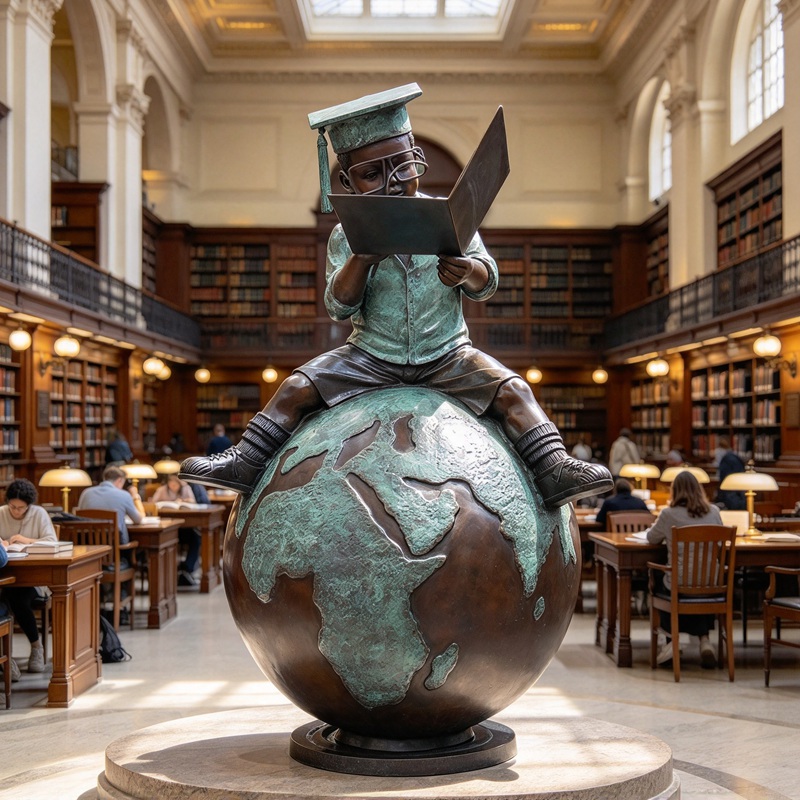
3. Boy Graduate Reading on Globe Bronze Statue
A charming bronze sculpture of a young boy wearing graduation cap and glasses, sitting astride a large globe while absorbed in reading a book. The statue features beautiful green verdigris patina on the globe with warm bronze tones for the figure, blending playful and scholarly details.
Why it works for libraries: Celebrates youth, education and global knowledge. Excellent for children’s reading areas, school libraries, university library entrances. It inspires young readers, symbolizing how books open up the whole world.
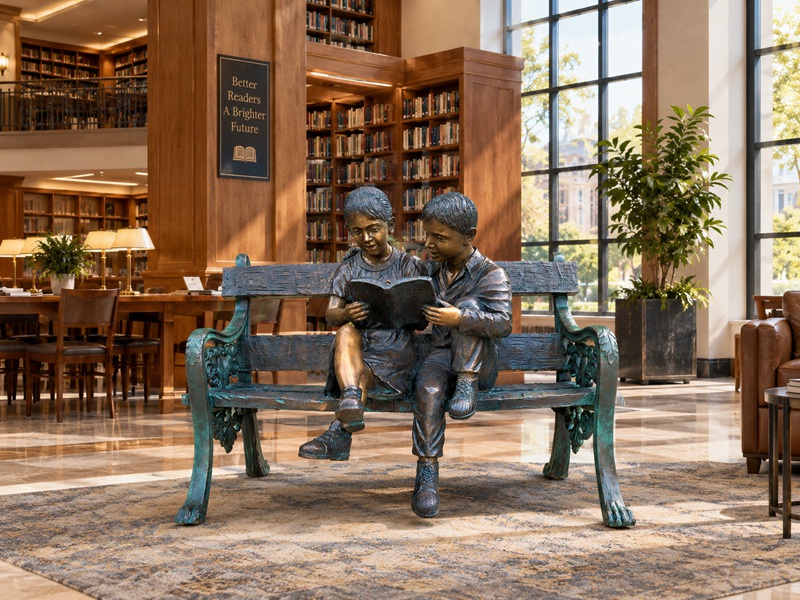
4. Two Children Reading on Bench Bronze Sculpture
This bronze bench sculpture shows a boy and girl sitting side-by-side on an ornate park bench, sharing and reading one book together. The bench frame is decorated with delicate leaf carvings, with natural bronze and green patina finishing.
Why it works for libraries: Great for lounge zones, children’s library entrances or outdoor library courtyard. It portrays the joy of shared reading and companionship. Visitors can sit on the bench beside the sculpture, creating an interactive, warm space.
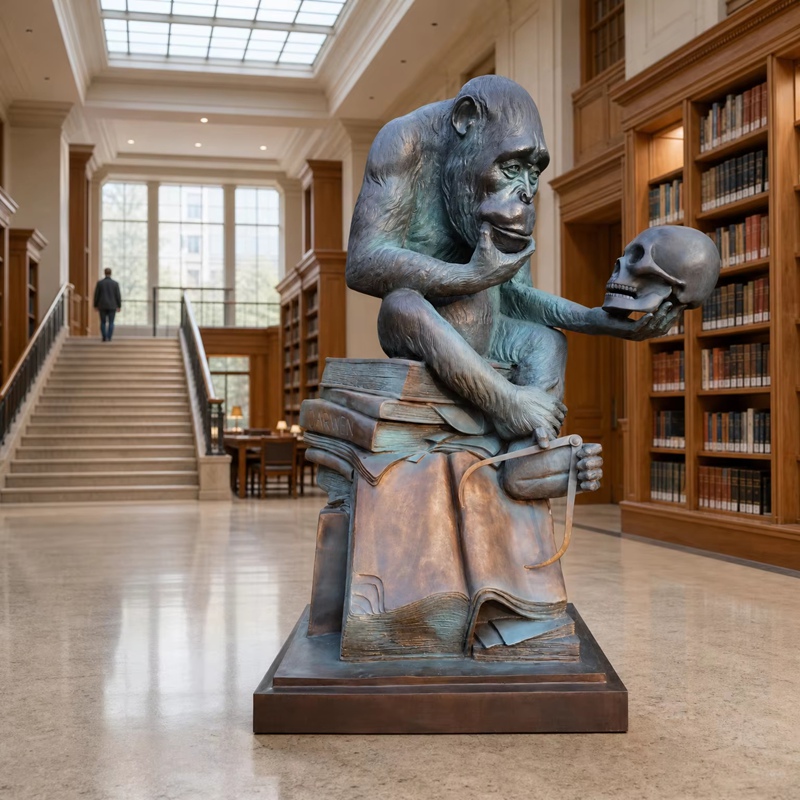
5. Darwin Ape with Skull & Books Bronze Sculpture
A thoughtful bronze ape seated on a tall stack of hardcover books, holding a human skull in one hand and a measuring compass in the other. The piece uses contrasting bronze and blue-green patina, full of philosophical storytelling.
Why it works for libraries: Inspired by the classic “monkey and skull” philosophical motif, representing evolution, wisdom and questioning human knowledge. Perfect for university libraries, science or anthropology sections. It sparks conversation and intellectual curiosity among scholars.
6. Bull & Scholar Reading Together Bronze Sculpture
A unique large bronze group statue: a scholar sits on a stone bench, while a bull casually sits opposite him, also holding and reading an open book. The whole piece is cast in antique bronze with fine texture details.
Why it works for libraries: A creative, eye-catching statement piece. It carries the meaning that knowledge belongs to all, and even the strongest learn through reading. Great for grand main halls of academic libraries, business school libraries, as a memorable landmark art installation.

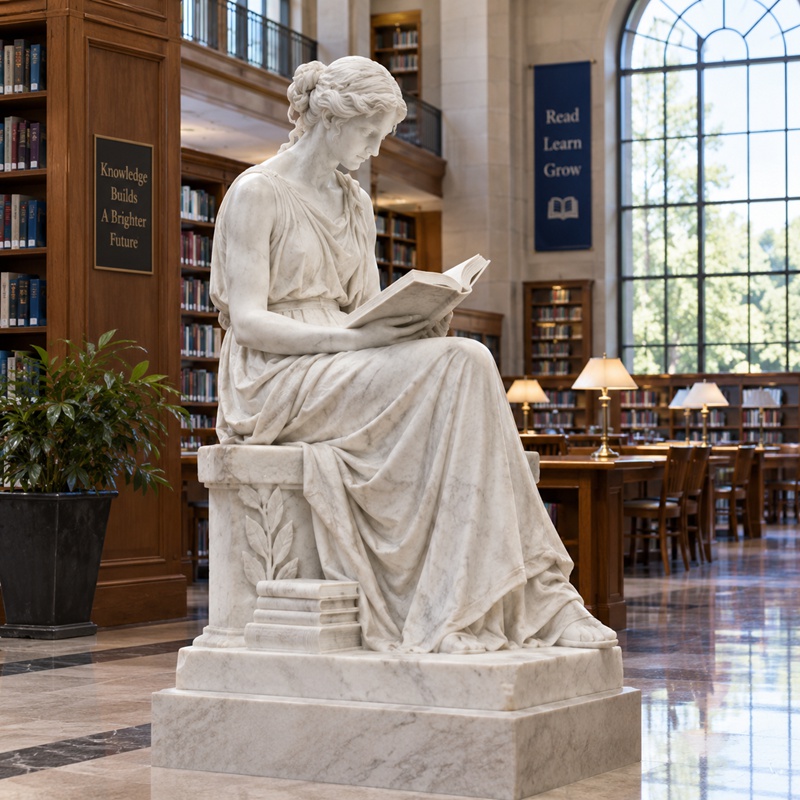
7. Marble Lady Reading Statue
Elegant white marble sculpture of a classical robed woman seated on a carved pedestal, quietly reading an open book. Flowing ancient-style dress folds, delicate facial carving, and stacked book details at the base, made of polished natural white marble.
Why it works for libraries: Classical marble art adds refined, serene elegance. Fits traditional library interiors, classical reading rooms, archive halls. It creates a calm, graceful atmosphere and symbolizes wisdom and literature.
8. Stainless Steel Globe & Open Book Sculpture
Modern polished stainless steel art sculpture. A large hollow wireframe globe sits on top of stacked books, with a giant open book forming the main base. Mirror polished metal reflects the library light and surrounding interior.
Why it works for libraries: Contemporary abstract art for modern library lobbies. Symbolizes global knowledge, books connecting the world. Shiny silver finish matches glass, stone and minimalist interior designs. Ideal for new university libraries and modern public library atriums.

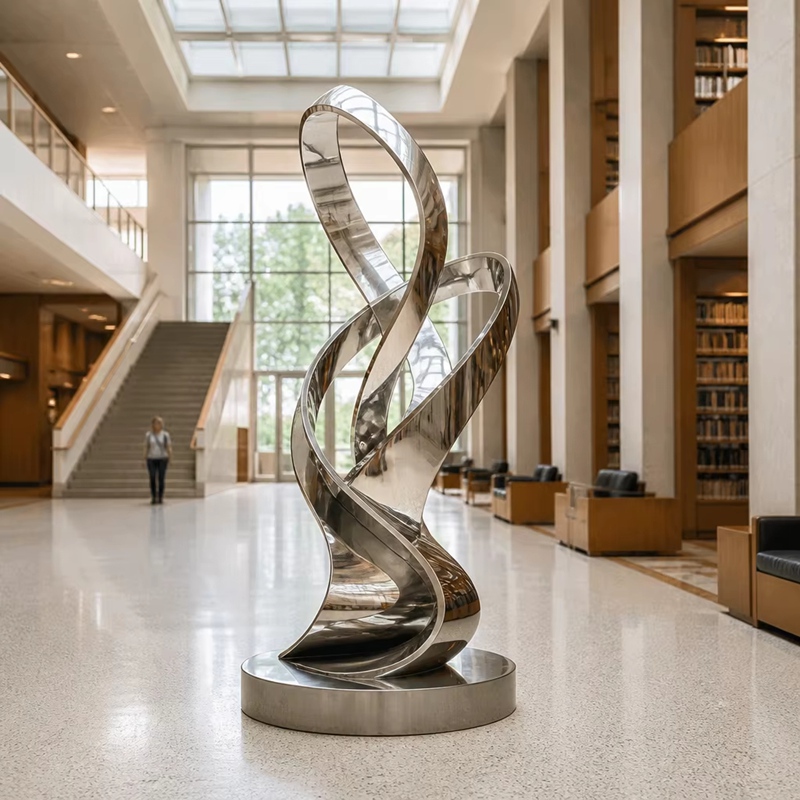
9. Abstract Twisted Ribbon Stainless Steel Sculpture
A sleek metal abstract sculpture with interweaving, flowing curved metal ribbons forming an infinite looping shape. Mirror polished surface catches light, standing on a simple round metal base.
Why it works for libraries: Abstract art represents endless knowledge, continuous learning and the infinite flow of ideas. Suitable for minimalist library entrance halls, wide corridors. It adds modern artistic flavor without distracting from reading areas.
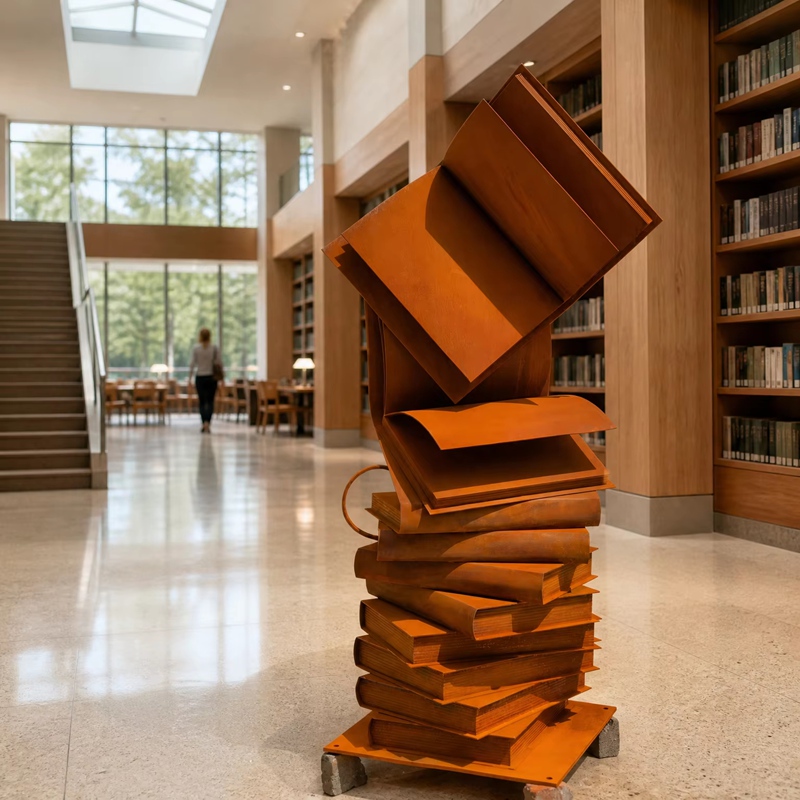
10. Corten Steel Stacked Books Sculpture
A rustic sculpture made of weathering Corten steel, shaped as a towering, dynamic pile of giant books. Some books are open and tilted, stacked in a gravity-defying arrangement, with signature rust orange textured surface.
Why it works for libraries: Industrial, artistic outdoor or semi-outdoor installation. Perfect for library courtyards, entrance plazas. Corten steel ages beautifully over time, symbolizing accumulated knowledge through years of reading.
How to Choose the Right Statue for Your Library
After identifying suitable designs, the next step is to evaluate how each sculpture will function within the actual space. A statue that looks impressive in a product photograph may not be the best choice if its proportions, material, or theme conflict with the building.
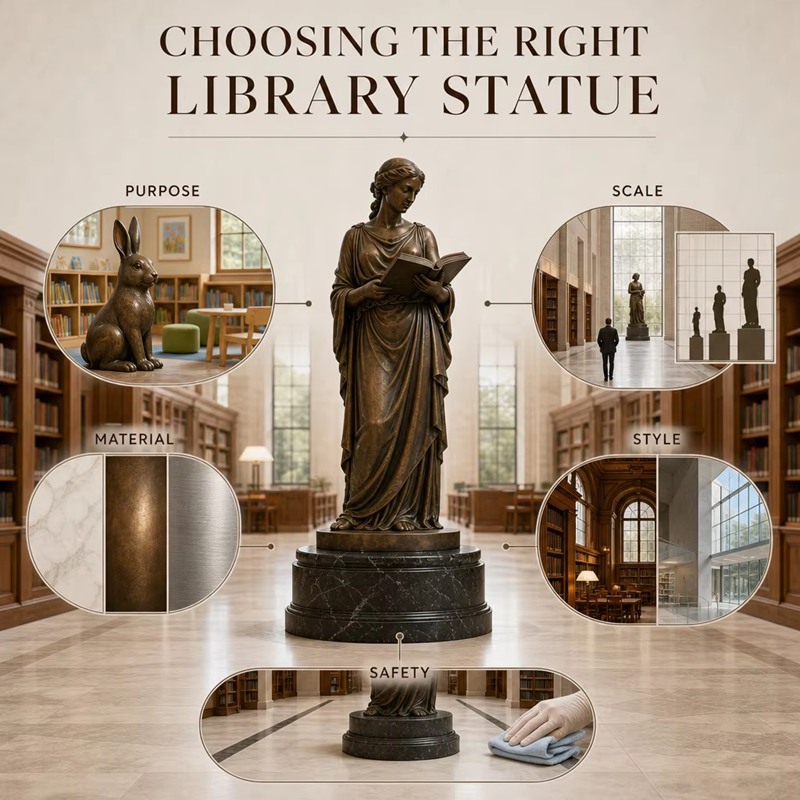
1. Match the Sculpture to the Library’s Purpose
Different libraries serve different audiences, and the artwork should reflect that purpose.
For a children’s library, animal reading sculptures and friendly figurative designs may create a welcoming atmosphere. A university research library may benefit from thinker statues, classical marble figures, or contemporary abstract sculptures.
Public libraries often need to balance accessibility with a distinctive visual identity. Private libraries, meanwhile, may prioritize personal taste, collection themes, and compatibility with the interior design.
Start by identifying the message you want the sculpture to communicate. This will help narrow the choices before you compare specific designs.
2. Consider the Available Space and Sculpture Size
Scale is one of the most important factors in selecting a library statue.
A small sculpture may become visually insignificant in a large atrium, while a monumental artwork can make a compact reading room feel crowded.
Before confirming dimensions, measure the installation area and consider:
- Ceiling height and the sculpture’s overall height.
- Available floor space and surrounding circulation routes.
- Viewing distance from entrances, seating, and upper-level balconies.
- Base dimensions and the floor’s load-bearing capacity.
- Access routes for delivery, lifting, and installation.
For large custom sculptures, it is helpful to review dimensioned drawings or a scale rendering before production begins.
3. Choose the Right Material for Indoor or Outdoor Use
Material affects the sculpture’s appearance, durability, maintenance, and overall cost.
Marble: Natural marble is well suited to classical figures, literary themes, and traditional architectural settings. It offers distinctive natural veining and can be carved into detailed forms. However, it is heavy and may require careful maintenance depending on the stone and environment.
Bronze: Bronze is suitable for figurative sculptures, animals, and detailed compositions. Its surface can develop different tones and patinas, giving the artwork a traditional or expressive appearance.
Stainless steel: Stainless steel is popular for modern and abstract sculptures. It can be fabricated into flowing forms and finished with a reflective or brushed surface. The appropriate alloy and finish should be selected according to the installation environment.
The best material is not necessarily the most expensive one. It is the material that meets the project’s artistic, structural, environmental, and maintenance requirements.
4. Balance Artistic Style with Architectural Design
The sculpture should complement the architecture without disappearing into it.
Classical marble figures often work well with columns, traditional woodwork, and historic interiors. Bronze sculptures can suit both traditional and contemporary settings, depending on their form and finish. Stainless steel is often a natural match for modern buildings with glass, concrete, and minimalist detailing.
Contrast can also be effective. A contemporary abstract sculpture may become a striking focal point in a traditional building, provided its size, color, and placement are carefully considered.
Requesting photographs of the installation area and reviewing the sculpture in a visual mock-up can help you assess the overall effect before committing to a design.
5. Plan for Safety, Installation, and Maintenance
Library sculptures are installed in public or frequently used spaces, so practical requirements matter as much as appearance.
Check whether the base is stable, whether the sculpture requires mechanical anchoring, and whether any projecting elements could create a hazard. In children’s areas, avoid accessible sharp edges and unstable components.
Large stone and metal sculptures may require specialized lifting equipment and professional installation. The delivery route, door openings, floor protection, and final positioning should be considered in advance.
Maintenance requirements also vary by material and finish. Marble may require suitable stone-cleaning products, bronze may need periodic care depending on its patina, and polished stainless steel may require regular cleaning to remove fingerprints and surface marks.
Planning these details early helps protect the sculpture and reduce avoidable installation problems.
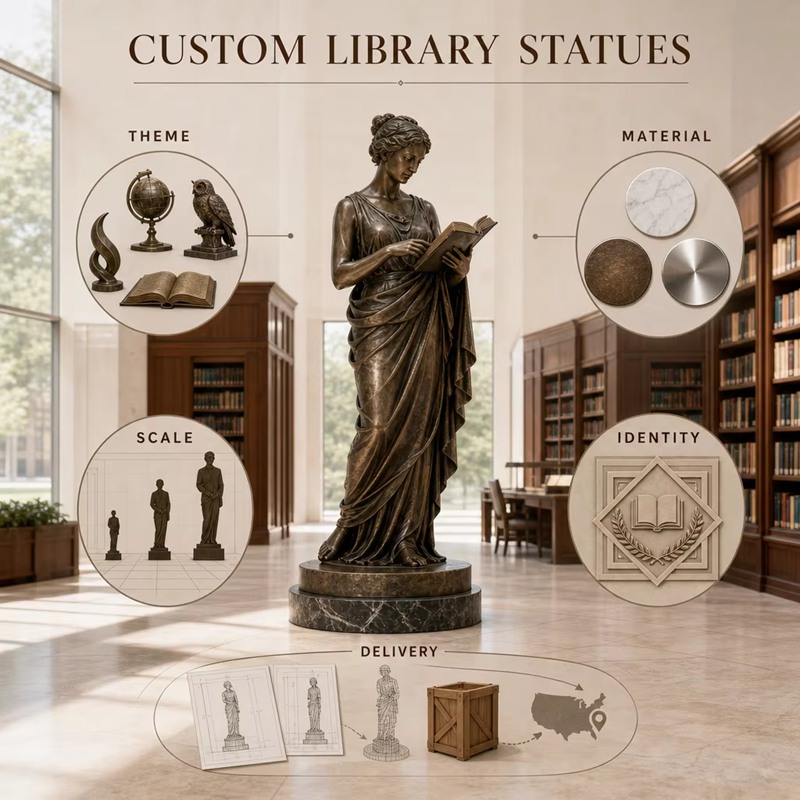
Custom Library Statues: What Can You Personalize?
Standard designs can be an effective starting point, but some projects require a sculpture that reflects a specific institution, architectural concept, or educational theme.
Custom library statues allow buyers to adapt the design to the intended space instead of choosing a product based only on its existing dimensions and appearance.
Custom Designs and Themes
A custom sculpture can incorporate books, reading figures, animals, globes, abstract forms, or combinations of these elements.
For example, a university may prefer a globe and book sculpture to represent international education, while a children’s library may request a friendly animal reading a story. A historic institution may prefer a classical marble figure that complements its existing architecture.
The design should begin with the purpose of the artwork, the target audience, and the location where it will be installed.
Materials, Colors, and Finishes
The same concept can look very different depending on the material.
A reader carved from white marble can create a classical impression, while a bronze version may emphasize texture and depth. A stainless steel interpretation can introduce a contemporary character through reflective surfaces and flowing forms.
The final selection should account for the visual effect, structural requirements, budget, and maintenance expectations.
Dimensions and Proportions
Custom sizing allows the sculpture to fit the actual installation space.
A large central hall may require a monumental focal point, whereas a reading lounge may benefit from a smaller, more intimate work. The relationship between the sculpture, its base, nearby furniture, and surrounding architecture should be evaluated together.
For complex projects, dimensioned drawings and three-dimensional visualizations can help the buyer and manufacturer confirm the design before production.
Institutional Identity and Special Details
Some institutions may wish to incorporate a school emblem, a historical reference, a literary theme, or other elements associated with their identity.
These details should be integrated into the overall composition rather than added as unrelated decorations. A well-planned design can communicate the institution’s values while remaining visually balanced and appropriate for a library environment.
Production and Delivery Planning
Large sculptures require more than artistic planning. Material selection, structural design, production methods, packaging, transportation, and installation all affect the final result.
Buyers should confirm the approved dimensions, material, surface finish, base structure, and delivery requirements before production begins. For international projects, packaging and shipping arrangements should also be discussed early.
Why Choose YouFine for Custom Library Statues?
Selecting a sculpture manufacturer is an important part of a successful library art project. Buyers need a supplier who can discuss the design, recommend suitable materials, and coordinate the practical requirements of producing and delivering the artwork.
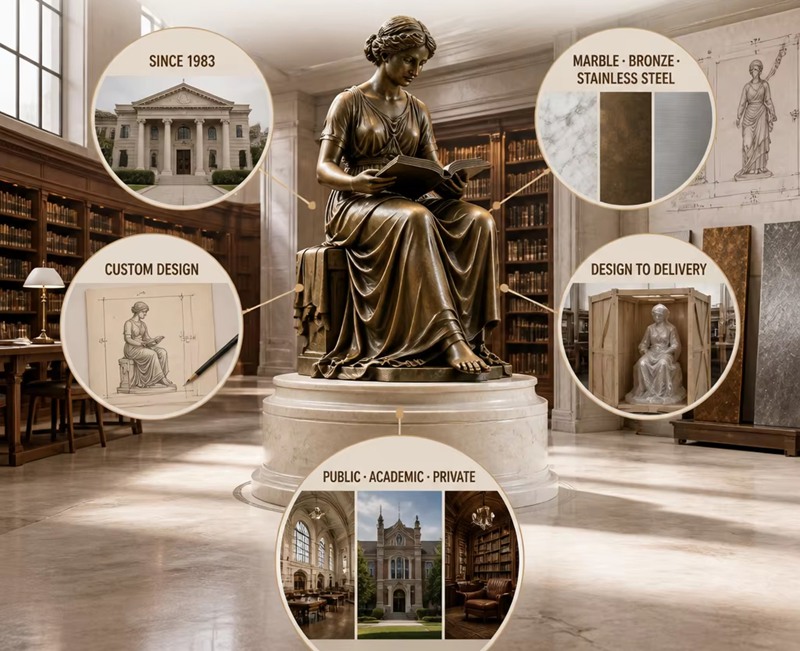
Founded in 1983, YouFine has more than four decades of experience in sculpture making. Our work covers a range of traditional and contemporary sculpture styles, including marble figures, bronze sculptures, and stainless steel artworks.
Experience Across Different Sculpture Materials
Different designs require different production approaches. Detailed marble figures, expressive bronze compositions, and flowing stainless steel forms each involve distinct material and fabrication considerations.
YouFine can discuss the appropriate material and production approach according to the sculpture concept, intended location, dimensions, and finish requirements.
Customization for Different Library Projects
Every library has its own architectural character and functional needs. A sculpture intended for a historic reading room may require a very different design from one planned for a contemporary university atrium.
Customers can share reference images, drawings, preferred dimensions, and installation photographs to begin a discussion about customization. These details help establish the project’s scope and identify practical considerations before production.
Support from Design Confirmation to Delivery
A successful sculpture project requires coordination throughout the process.
Depending on the project requirements, discussions may cover design confirmation, dimensions, material selection, production details, packaging, and international shipping arrangements.
For large or complex installations, buyers should also coordinate site preparation and final installation with the appropriate local professionals.
Solutions for Public, Academic, and Private Libraries
Whether you are planning a welcoming children’s reading area, a university entrance sculpture, a classical marble artwork, or a contemporary library landmark, the design should be selected according to the project’s purpose and space.
YouFine can work with customers to discuss suitable sculpture options and develop a proposal based on their specific requirements.
If you are planning a library sculpture project, contact YouFine with your preferred design, approximate dimensions, material requirements, and installation location. Our team can help you evaluate suitable options for your space.
Conclusion
The best library statues do more than decorate a building. They communicate the value of knowledge, support the architectural character of the space, and create memorable experiences for visitors.
A classical marble reader can bring elegance to a traditional library, while a bronze thinker can reinforce an atmosphere of reflection. Book-themed sculptures make the connection with reading immediately recognizable, and contemporary stainless steel artworks can give modern libraries a distinctive identity.
The right choice depends on the library’s purpose, available space, architectural style, material requirements, and long-term maintenance needs.
By evaluating these factors before purchasing, you can select a sculpture that complements the environment and remains meaningful to the people who use the library. For projects that require a particular theme, size, or finish, a custom sculpture can provide greater flexibility than a standard design.
Looking for a custom library statue? Contact YouFine to discuss your ideas and find a sculpture solution tailored to your project.