Mythical creatures have fascinated humanity for centuries, and among them, the Unicorn and the Pegasus are two of the most iconic. They often appear in art, literature, and sculpture, sometimes even being mistaken for one another. However, despite their similar horse-like appearance, these legendary beings differ greatly in origin, symbolism, and artistic expression.
If you are considering a unicorn statue or a pegasus statue for a garden, architectural project, or art collection, understanding these differences can help you make a more meaningful choice.
Why Unicorn and Pegasus Are Often Confused
Both Unicorns and Pegasi are mythical horse-like creatures associated with magic, purity, and fantasy worlds. Their elegant forms make them popular subjects in mythical animal sculptures, especially for outdoor landscapes and luxury spaces.
The confusion usually arises because they share similar proportions and graceful anatomy—but their defining features, cultural backgrounds, and symbolic meanings are entirely different.
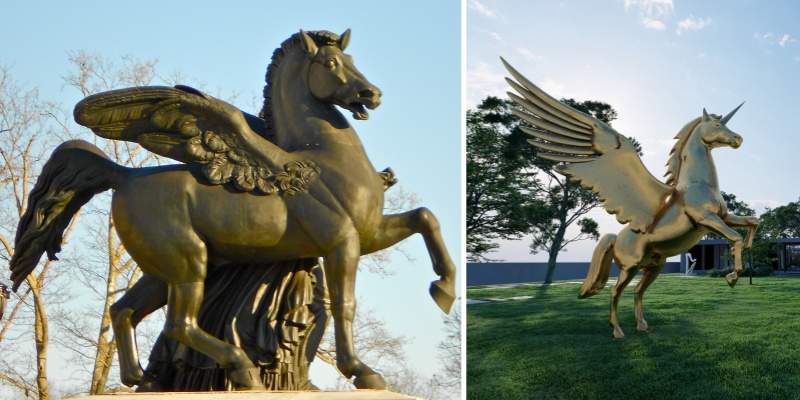
What Is a Unicorn?
The Unicorn has deep roots in European mythology, particularly in medieval legends. It was often described as a rare and magical creature that could only be approached by those with pure intentions. Over time, the Unicorn became a powerful symbol in heraldry, religion, and royal imagery.
Physical Characteristics of a Unicorn
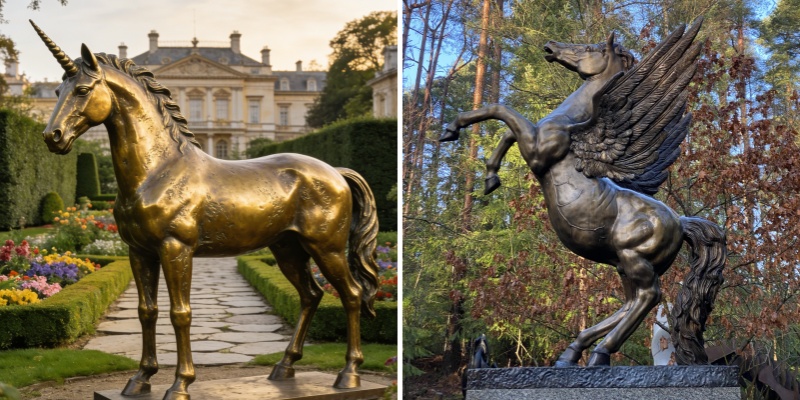
A Unicorn is typically depicted as:
- A horse-like body
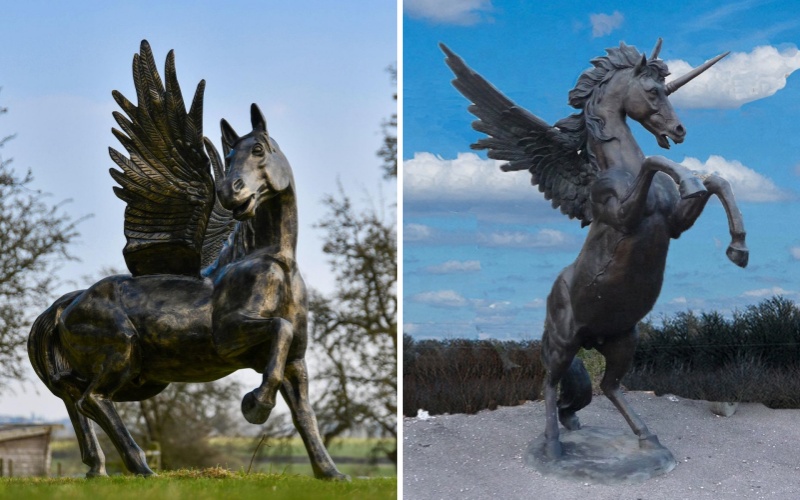
- A single spiral horn projecting from its forehead
- No wings
This horn is believed to possess magical properties, such as healing and purification.
Symbolism and Meaning of Unicorn Statues
In art and sculpture, unicorn statues commonly symbolize:
- Purity and innocence
- Protection and spiritual power
- Nobility and exclusivity
Because of this, Unicorn sculptures are often chosen for gardens, private estates, and symbolic architectural spaces.
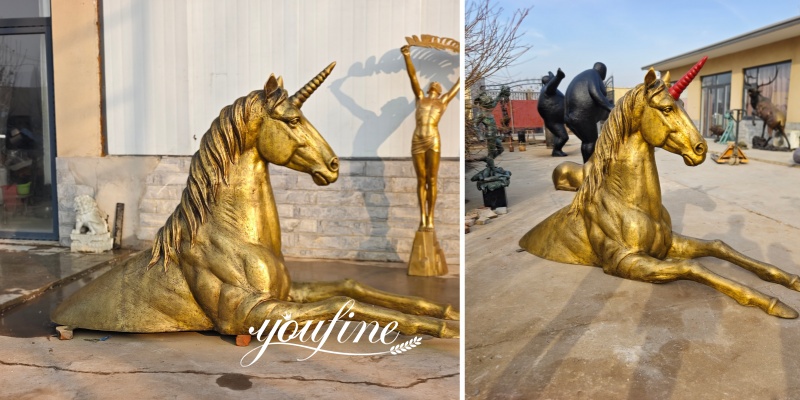
What Is a Pegasus?
Pegasus originates from ancient Greek mythology and is closely associated with the gods, especially Zeus. According to legend, Pegasus was born from the blood of Medusa and later became a symbol of divine inspiration and heroic achievement.
Physical Characteristics of a Pegasus
Pegasus is defined by:
- A strong horse-like body
- Large feathered wings
- No horn
The wings give Pegasus its most distinctive quality: the ability to fly.
Symbolism and Meaning of Pegasus Statues
A pegasus statue often represents:
- Freedom and speed
- Inspiration and creativity
- Triumph and ascension
Pegasus sculptures are commonly used in public art, cultural landmarks, and modern architectural designs to convey movement and ambition.
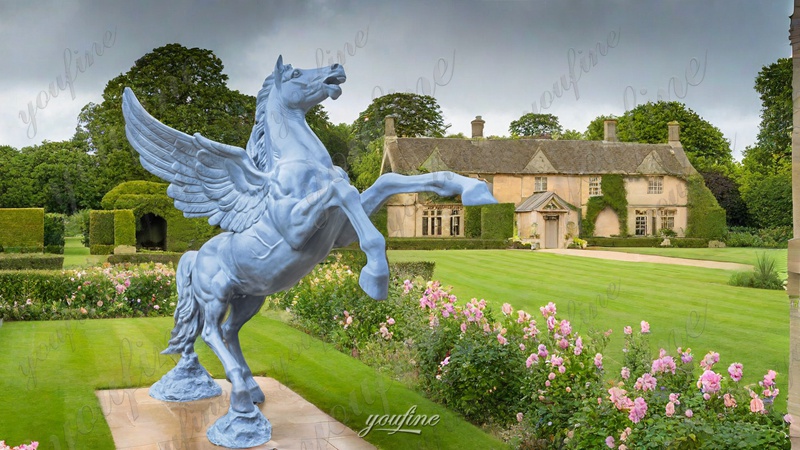
Unicorn vs Pegasus: Key Differences at a Glance
Horn vs Wings
Unicorn: Defined by its horn, representing inner power and mysticism
Pegasus: Defined by its wings, representing freedom and elevation
Earthly Magic vs Heavenly Power
Unicorns are often associated with earthly magic and spiritual purity
Pegasi are linked to the heavens, the gods, and heroic journeys
Mythological Roles and Cultural Meaning
Unicorns are solitary and elusive
Pegasi are dynamic and often connected to epic stories and achievements
These differences strongly influence how each creature is portrayed in sculpture.
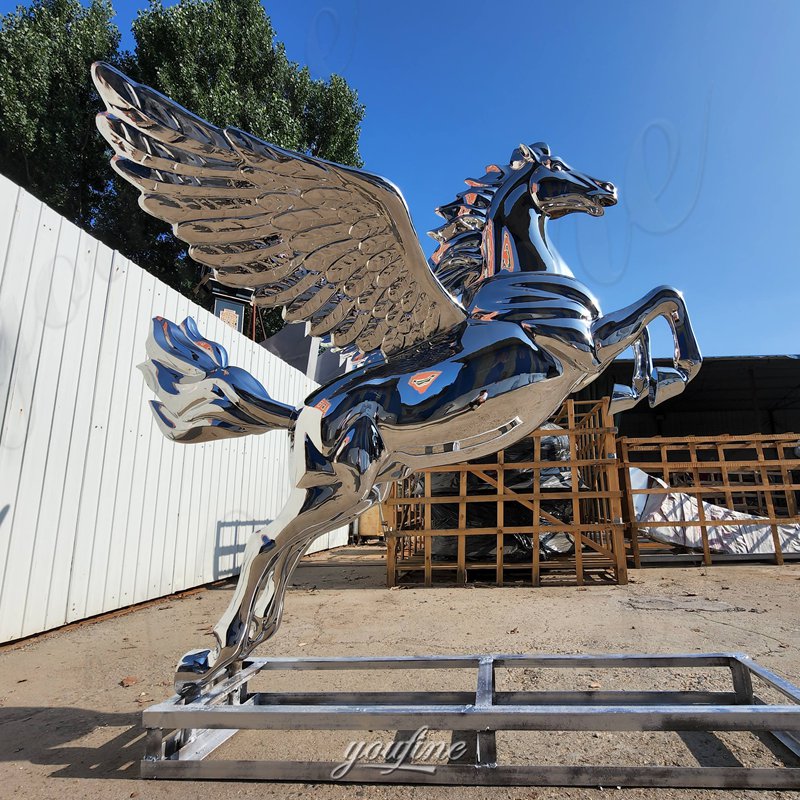
Differences in Artistic Representation and Sculpture Design
Pose and Movement in Unicorn Statues
Unicorn statues are typically designed with:
- Calm or noble postures
- Subtle movement
- A sense of grace and serenity
They are ideal for spaces that emphasize elegance and symbolism.
Pose and Movement in Pegasus Statues
Pegasus statues, by contrast, often feature:
- Raised or extended wings
- Dynamic, airborne poses
- Strong muscular definition
This makes Pegasus sculptures visually striking and well-suited for large-scale or outdoor installations.
Common Materials and Finishes Used in Mythical Statues
Both Unicorn and Pegasus statues can be crafted in materials such as: Bronze, Marble, Resin and Stainless steel
The choice of material affects not only durability but also how the sculpture interacts with light and space.

Choosing Between Unicorn and Pegasus Statue
Unicorn statues work well in private gardens, courtyards, and symbolic landscapes
Pegasus statues are ideal for public spaces, hotels, cultural centers, and commercial developments
When choosing between a Unicorn and a Pegasus, consider the message you want the sculpture to convey—tranquility and purity, or energy and aspiration.
Conclusion
While Unicorns and Pegasi may appear similar at first glance, the difference between Unicorn and Pegasus statues lies in far more than just a horn or a pair of wings. Each carries a unique mythological background, symbolic meaning, and artistic presence.
Choosing between them is not just a design decision—it is a way to express values, stories, and imagination through sculpture.