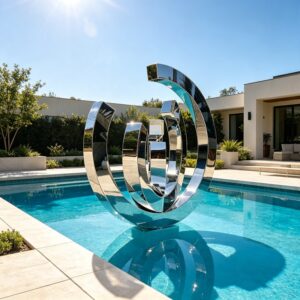
When I advise private garden customers on sculpture selection, I start with the setting rather than the statue. A reference image can establish an appealing idea, but the garden determines how that idea will look: intimate or imposing, playful or solemn, clearly visible or lost among planting.
That is especially important with God Pan statues. Their goat-like features, musical attributes, and varied poses can suggest very different moods. A seated musician beside a shaded path does not create the same effect as an upright figure with a strong, animated silhouette.
My practical advice is simple: assess the garden first, then determine the statue’s proportions. In this guide, I explain how I approach Pan’s symbolism, compare sculptural styles, and help turn a reference image into a focused customization inquiry.
Who Is God Pan in Greek Mythology?
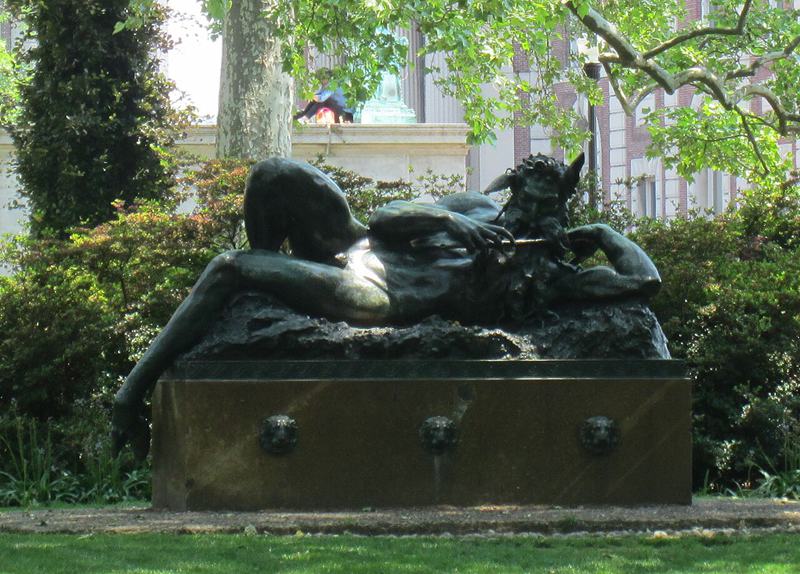
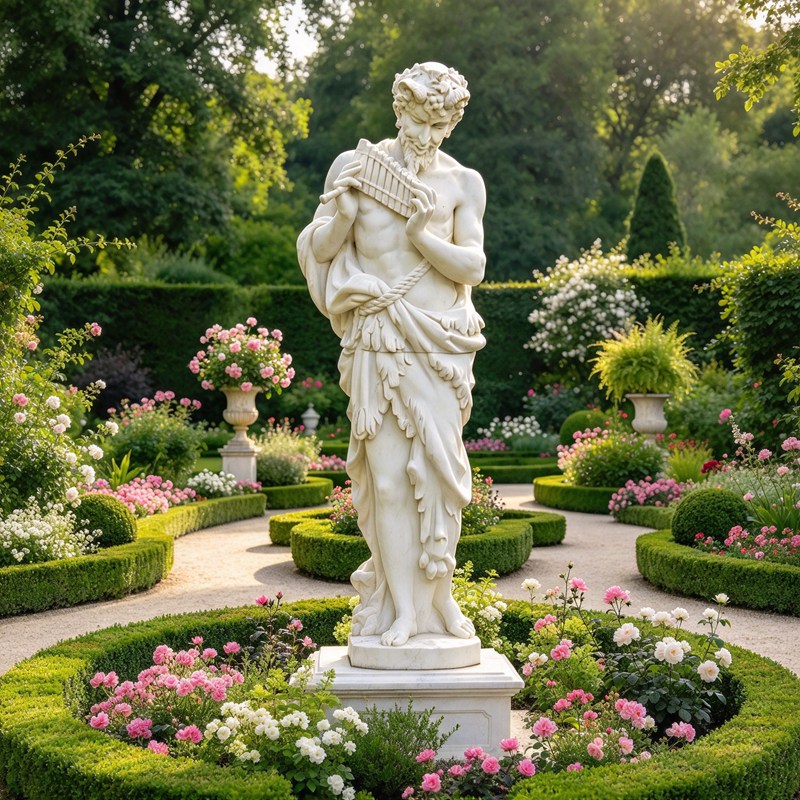
Pan is a Greek deity associated with pastoral life, flocks, shepherds, and music. He is commonly represented with goat-like legs, horns, and a human upper body. His pipes—often called panpipes or a syrinx—are among his most recognizable attributes.
For mythological background, I recommend the Encyclopaedia Britannica entry on Pan. It provides a useful foundation without treating every modern sculpture description as historically authoritative.
Pan’s character is not limited to a gentle love of nature. His mythology also includes wildness, sexuality, and sudden fear; the word “panic” is connected with his name. I mention these associations because a buyer may want a peaceful garden figure while choosing a reference with a much more forceful expression.
Is Every Goat-Legged Figure a Statue of Pan?
When I review a reference, I look at the attributes, pose, and any available identification. Pipes can support a Pan interpretation, but resemblance alone does not establish identity or provenance—the documented origin and history of an artwork.
For a new custom sculpture, I recommend clearly naming the intended subject and identifying the features to retain. For an antique or an existing artwork, I would not treat a photograph as proof of attribution.
What Do God Pan Statues Symbolize?
I encourage buyers to choose the atmosphere they want before deciding which Pan image best expresses it. Mythological associations provide a starting point, but posture and expression shape the visual message.
I use the following distinctions when discussing a garden concept.
| Association | Visible Choices to Examine | Garden Atmosphere It May Suggest |
|---|---|---|
| Nature and pastoral life | Relaxed posture, animal features, natural setting | Informal and connected to planting |
| Music | Pipes held, played, or resting nearby | Reflective, lyrical, or playful |
| Wildness and freedom | Active limbs, strong expression, open pose | Energetic and untamed |
| Classical mythology | Recognizable attributes and figurative treatment | A deliberate mythological theme |
| Sensuality or fertility | Nudity, bodily emphasis, suggestive gestures | An expressive atmosphere that needs careful consideration |
These are possible readings, not fixed meanings. I would assess the actual design rather than assume that every Pan statue conveys the same message.
For a family garden or a space visible to visitors, I also suggest reviewing nudity and expression early. This is a question of personal preference and intended setting, not a judgment about the subject.
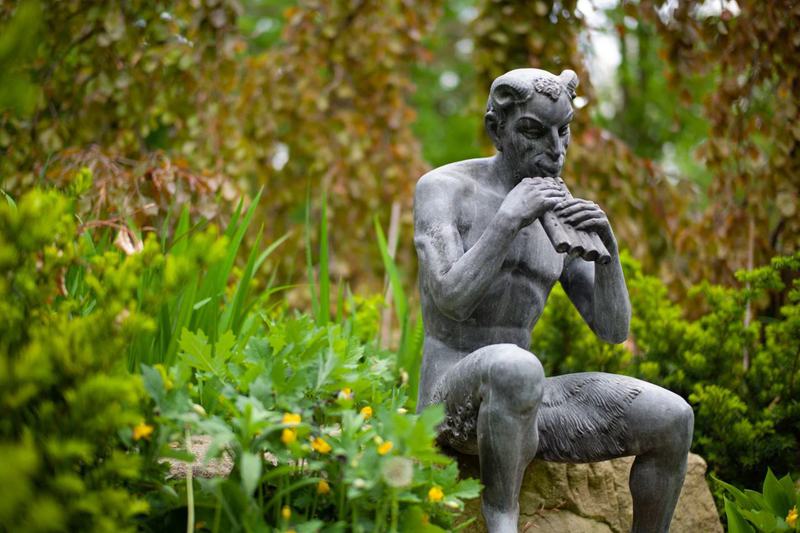
Popular Styles of God Pan Statues?
“Classical” is a useful starting word, but it is not a complete design specification. When a customer uses it, I ask what they like about the reference: the anatomy, the face, the pose, the drapery, or the aged appearance.
I compare common design directions through visible features.
| Style Direction | Features to Examine | What I Would Check in the Garden |
|---|---|---|
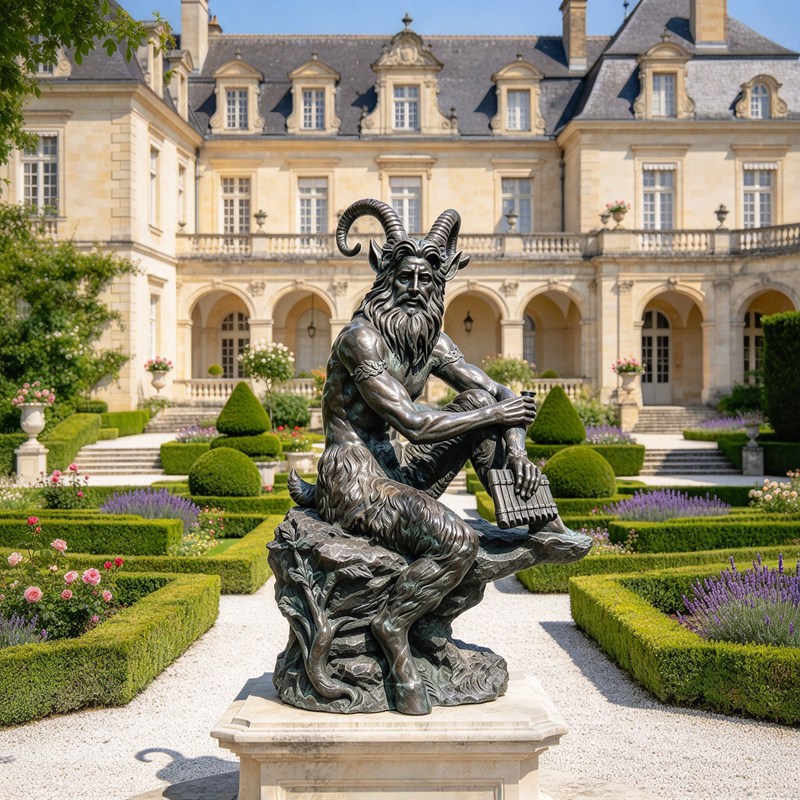
| Seated Pan with pipes | Compact pose, bent limbs, musical focus | Visibility above planting and from nearby seating |
| Standing Pan | Upright silhouette and clear bodily proportions | Relationship to walls, doorways, trees, and a base |
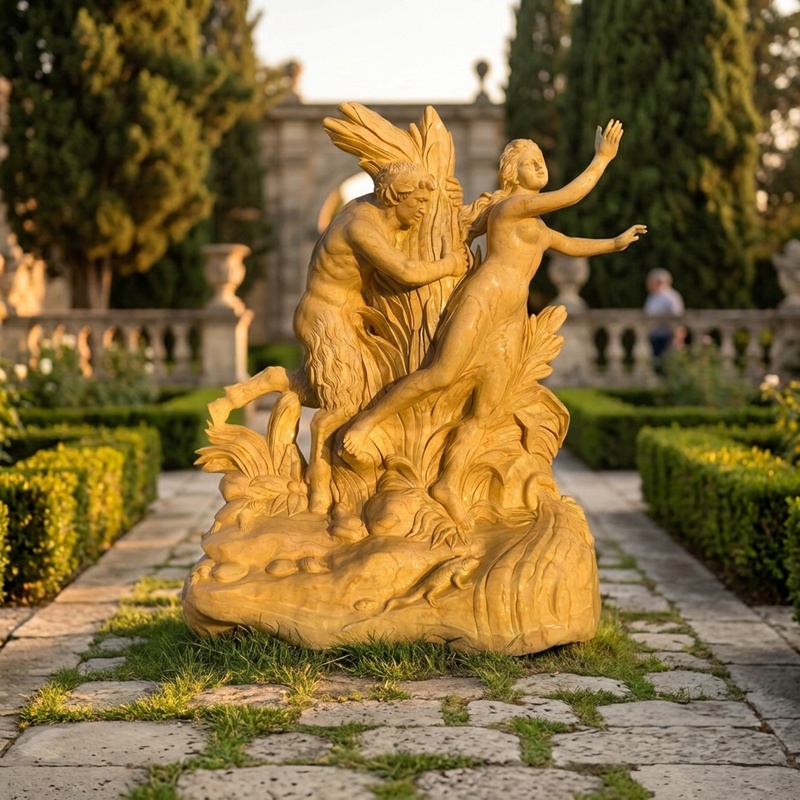
| Dancing or active Pan | Extended arms, lifted limbs, turning torso | Available space and clarity from different angles |
| Pan with animals or accessories | Additional figures, rocks, or objects | Overall width and whether the composition feels crowded |
| Simplified interpretation | Reduced detail and a strong outline | Compatibility with the surrounding architecture |
A classical label does not guarantee compatibility with a classical house. I would still examine the statue’s proportions, expression, and visual weight against the building.
Compare the Pose from More Than One Angle
A front photograph may hide an awkward arm position, an accessory that blocks the face, or a pose that becomes unclear from the side.
I recommend checking:
- The silhouette, or outer outline, from the main viewing directions.
- The position of hands, feet, horns, and pipes.
- The relationship between the torso and goat-like lower body.
- The facial expression from the expected viewing height.
- The space between the figure and any accessories.
Multi-angle form confirmation can clarify the agreed pose and proportions. It does not establish every aspect of the finished surface or guarantee how the statue will appear after installation.
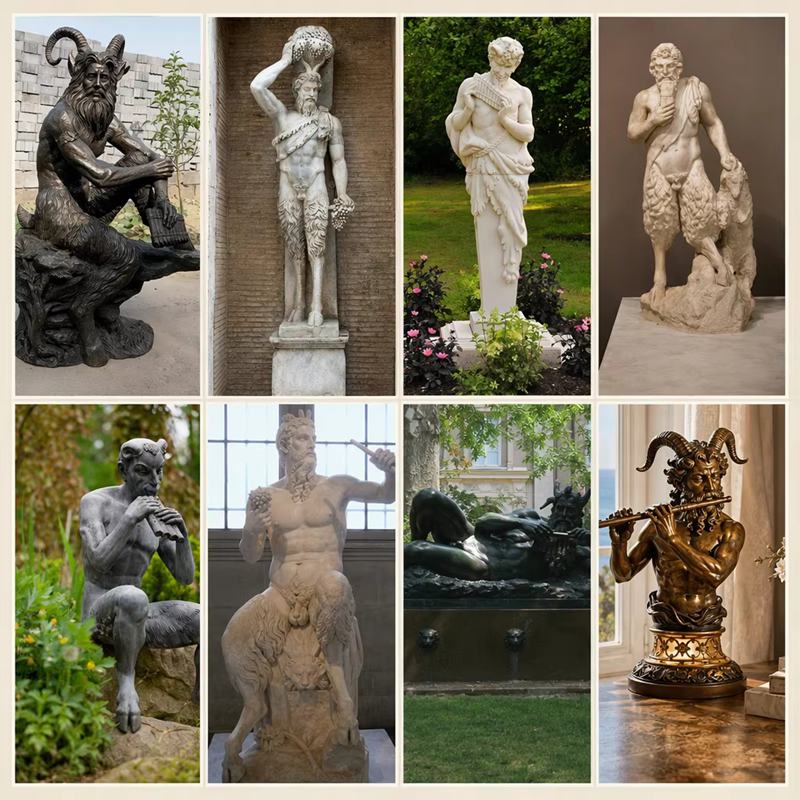
Best Materials for God Pan Statues?
I would not recommend one material as universally best. The right choice depends on the appearance you want, the sculpture’s form, outdoor exposure, and the maintenance you are prepared to arrange.
I also separate material from finish. Material is what the statue is made from. Finish is the treatment of its visible surface, such as polishing, texturing, or coloring.
The following is a general comparison, not a statement that every option is available for every custom design.
| Material | Appearance and Detail Considerations | Questions I Recommend Asking |
|---|---|---|
| Bronze | Suitable for modeled forms and detailed textures; appearance depends strongly on the patina | What alloy and patina are proposed, and what care is needed outdoors? |
| Marble | Natural stone variation becomes part of the appearance; delicate projections require careful review | What stone is proposed, and how will exposed fingers, pipes, and horns be handled? |
| Other carved stone | Color, grain, and carving characteristics vary by stone type | What exact stone is specified, and is it appropriate for the site’s exposure? |
| Cast stone | A molded mineral-based material; detail and surface character depend on the product | What is the composition, and what outdoor use and maintenance guidance applies? |
| Resin-based composite | A molded material whose properties depend on its formulation and construction | What outdoor suitability, coating, and care information can the supplier provide? |
My main recommendation is to request the exact proposed material rather than accept a broad label such as “stone” or “metal.” The material’s suitability also depends on fabrication quality and site conditions.
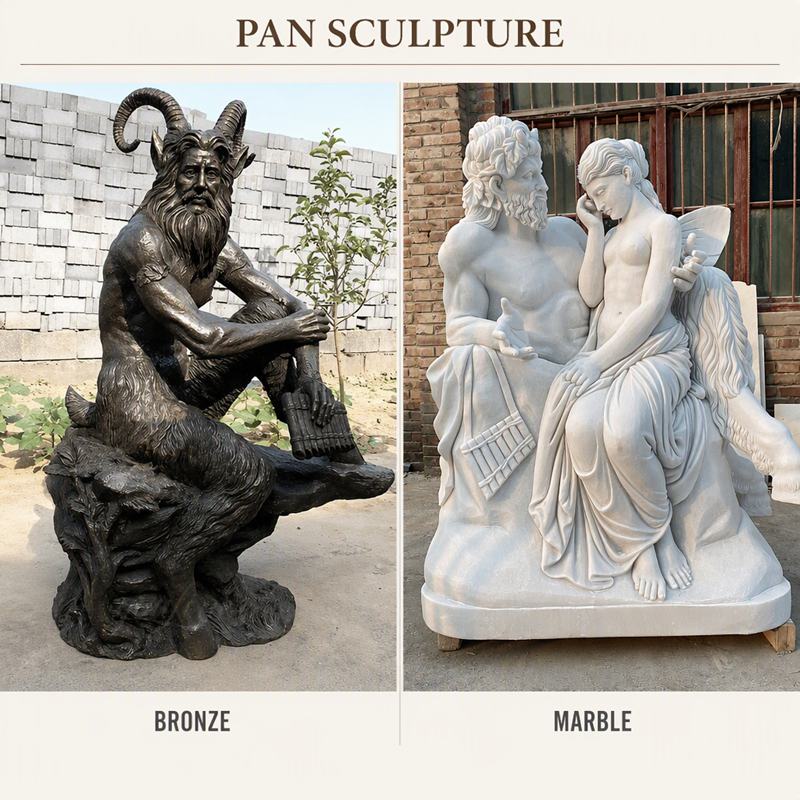
Why a Photograph Cannot Specify a Finish
Lighting can make a surface look smoother, darker, or glossier than it is. An aged bronze effect may be a patina on bronze or a coating on another material. A white statue may be natural stone, cast material, or a painted surface.
I use these finish descriptions as discussion points rather than complete specifications.
| Finish Description | What Needs Clarification |
|---|---|
| Dark or aged bronze | Color range, sheen, application method, and expected changes outdoors |
| Light stone appearance | Actual material, natural variation, texture, and any coating |
| Polished surface | Degree of shine and which areas receive polishing |
| Matte or textured surface | Texture depth, detail visibility, and cleaning guidance |
If the finish is important to your decision, I recommend requesting representative close-up images and asking whether a physical sample is available. Reference images help communicate a preference, but they should not be the only basis for agreement.
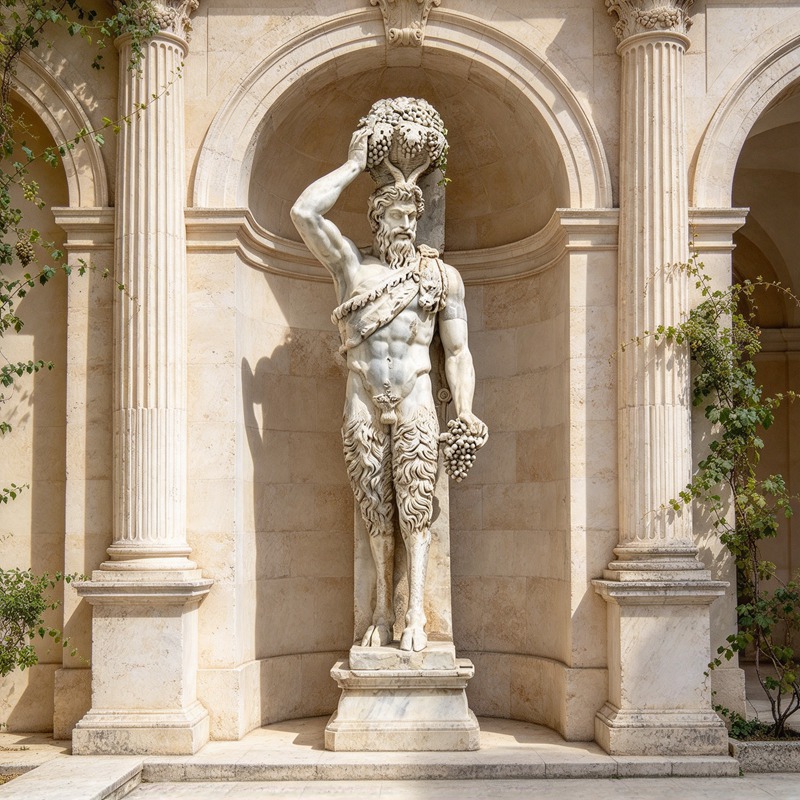
Where to Place a God Pan Statue?
Pan’s connection with nature makes garden placement appealing, but I still assess the specific location. Dense planting, changing sunlight, and surrounding architecture can alter how clearly the figure reads.
I would review these settings differently.
| Proposed Location | Main Opportunity | Main Question |
|---|---|---|
| Beside a garden path | Close viewing of expression and detail | Does the pose leave comfortable passage? |
| Within a planted border | A natural relationship with foliage | Will mature planting hide important features? |
| At the end of a sightline | A clear focal point | Is the outline readable from the intended distance? |
| Near a terrace or classical façade | A relationship with architectural forms | Do the proportions and expression suit the setting? |
| Near a pond | A thematic connection with a natural feature | Have moisture exposure, access, and support been reviewed? |
The practical difference is viewing distance. A nearby statue invites attention to hands, facial details, and surface texture. A distant focal point depends more on a clear silhouette and contrast with its background.
Assess the Garden Before Fixing the Height
I ask for photographs from the positions where the sculpture will normally be seen. I also ask about nearby plants, walls, steps, and any planned pedestal.
A pedestal changes the total height and the viewer’s angle. It should therefore be considered before final proportions are decided, not treated as a later accessory.
Where practical, I suggest marking the approximate footprint on the ground and using a temporary height marker. This is only a visual aid, but it can reveal whether the proposed figure feels too dominant or too easily overlooked.
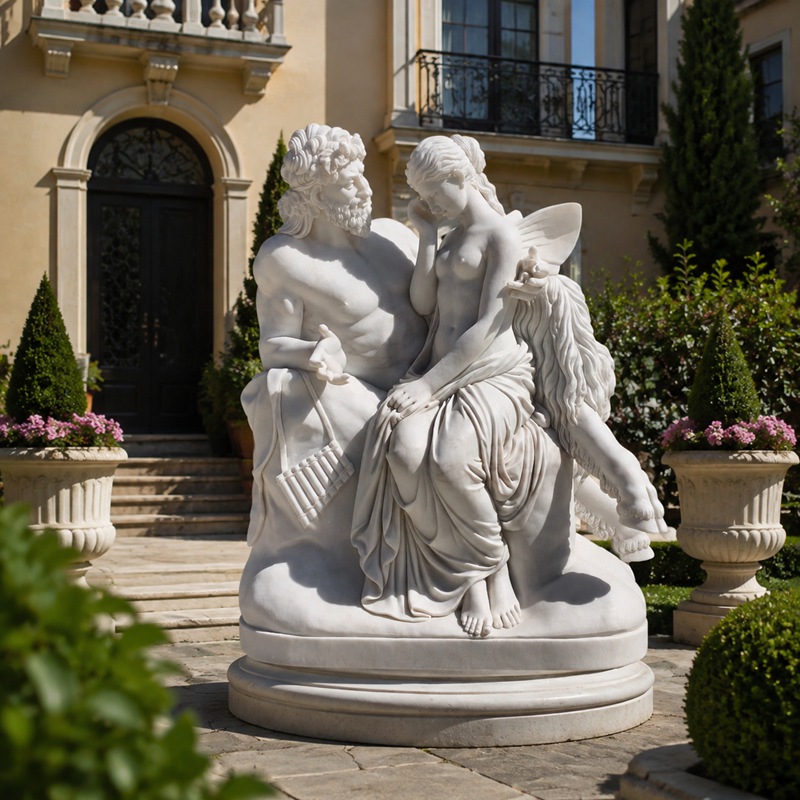
If installed garden comparisons are available, I use them to discuss relationships between sculpture and setting. I would not invent missing dimensions, material details, or outcomes, or present one installation as proof that another site will work equally well.
How to Choose the Right God Pan Statue?
I turn a broad preference into a usable inquiry through two central checkpoints: garden-scale confirmation and multi-angle form confirmation.
The first considers the proposed sculpture in relation to its setting. The second clarifies the figure itself. Neither should be treated as a guarantee of the complete installed result.
Prepare a Clear Inquiry
I recommend gathering the following information before requesting a quotation.
| Information to Provide | Why I Ask for It |
|---|---|
| Garden photographs | To understand planting, architecture, and viewing conditions |
| Available site measurements | To discuss the footprint and overall scale |
| Intended placement | To identify the main viewing directions and access concerns |
| Preferred statue references | To clarify the pose, expression, and attributes |
| Planned base or pedestal | To assess total height and presentation |
| Material and finish preferences | To distinguish structural material from surface appearance |
| Site exposure | To raise relevant weather and maintenance questions |
| Destination and access details | To identify shipping and installation matters requiring further discussion |
I find an annotated reference more useful than “make it exactly like this.” Mark the features that matter most: the tilt of the head, the position of the pipes, the horns, or the shape of the legs. Also identify anything you want changed.
Compare Quotations on the Same Basis
A price comparison is useful only when the proposed scope is comparable. I recommend checking whether each quotation addresses the same dimensions, material, finish, accessories, and base.
Complex poses, detailed accessories, material selection, packing, destination, and installation requirements can affect a quotation. I would not infer these costs from a photograph alone.
For heavy sculptures, foundations, anchoring, lifting, and safe access may need input from an appropriate installer or project professional.[^7] Visual garden assessment does not resolve structural suitability.
Why Choose YouFine for Your God Pan Statue?
My role at You Fine Art Sculpture is to help a private garden customer move from an attractive idea to a clearer customization inquiry.
I can discuss garden scale, compare sculptural forms, and arrange multi-angle design confirmation. These are useful steps when the concern is whether a proposed design will preserve the pose, proportions, and recognizable details you value.
I also keep the limits clear. A design view cannot fully establish surface appearance in outdoor light, and a garden photograph cannot confirm a foundation or installation method.
When comparing YouFine with another supplier, I recommend looking for clear answers rather than broad promises. The important question is whether the proposed form, material, finish, and unresolved site requirements are described well enough for you to make an informed decision.
Frequently Asked Questions
1. How Can I Tell Whether a Statue Represents Pan?
I look for recognizable attributes such as goat-like legs, horns, and pipes, then check any supporting description or documentation. Those features alone do not prove identity, because related mythological figures can resemble Pan.
2. What Size Pan Statue Should I Choose for My Garden?
I would determine size from the location, viewing distance, surrounding planting, architecture, and planned base. There is no universal garden height that suits every setting.
3. Can a Custom Pan Statue Follow My Reference Image?
I can use the reference to discuss the intended form, but one image may leave hidden areas unclear. I recommend additional views and a written list of the pose and details you want preserved.
4. Is Bronze Better Than Stone for an Outdoor Pan Statue?
I would compare the exact bronze or stone proposal, not just the material category. Form, exposure, surface treatment, maintenance, and installation requirements all matter; neither is automatically the better choice.
5. What Should I Ask About Shipping and Installation?
I recommend asking what packing and delivery arrangements are included, how unloading will be handled, and who is responsible for placement and anchoring. Any site-specific lifting or structural questions should be reviewed by an appropriate professional.